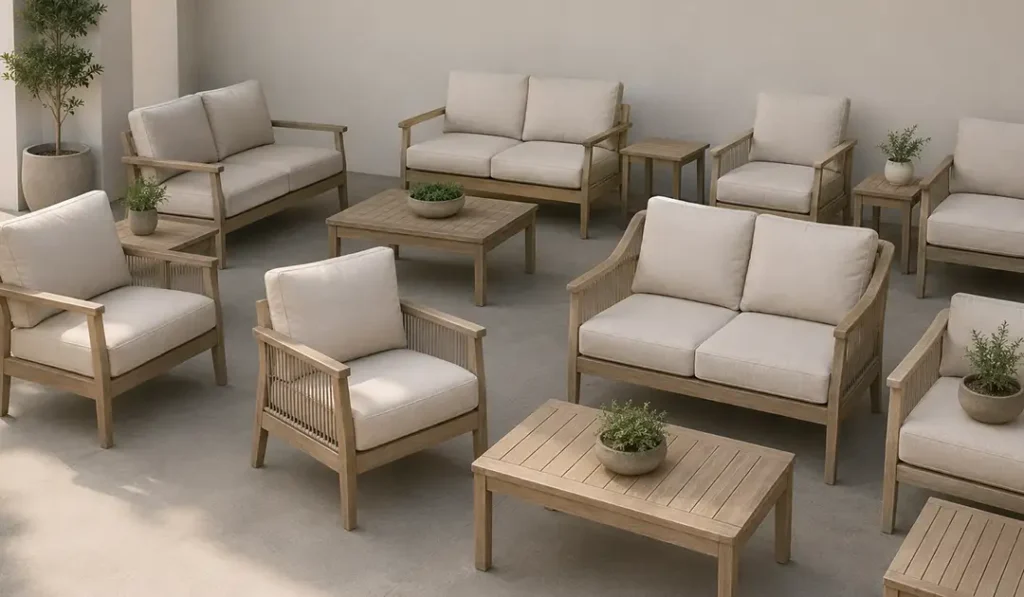
A living room furniture collection feels instantly sellable when buyers can read the full set in seconds. The sofa, lounge chair, coffee table, side table, materials, finish, and comfort cues should feel like one product family, not separate items placed together.
In retail buying, this first impression matters because customers often judge the collection before they ask about dimensions, materials, or price. At MPP Furniture, this review usually starts before sampling, when the team checks whether the collection feels cohesive, looks comfortable on display, and can be repeated in bulk production with the same standard.
For retailers, importers, merchandisers, and product developers working with an Indonesian furniture manufacturer, this is not homeowner styling. It is a buying filter: can the collection attract customers, support a clear retail story, and move toward sample approval with less risk?
Why Sellability Starts Before Customers Compare Specifications
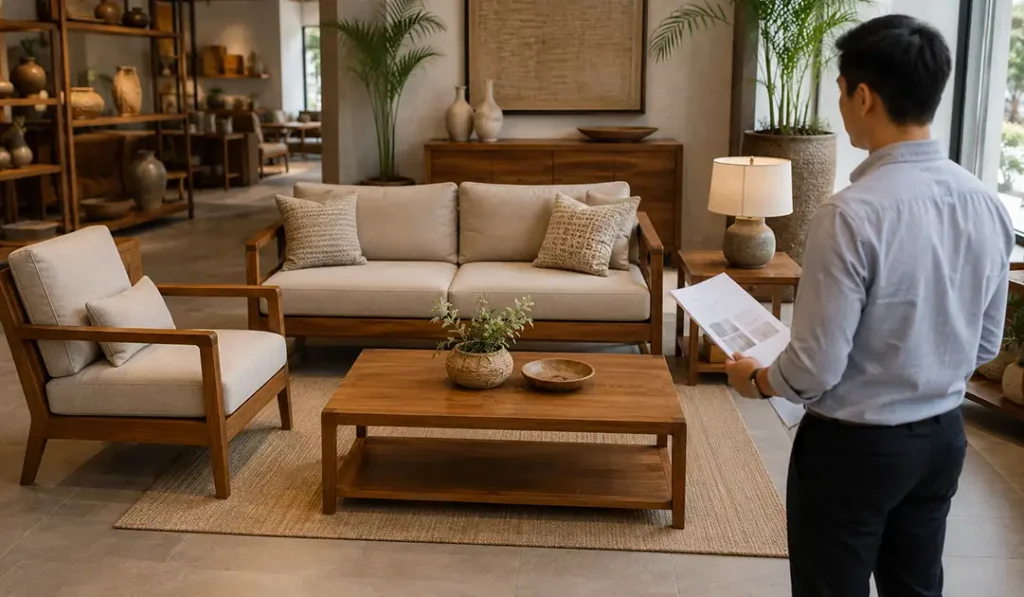
Customers rarely begin by checking frame construction, fabric codes, or wood species. They react first to the display. Does the collection look inviting? Does the sofa look comfortable? Do the tables match the seating and support the same direction?
This first impression works as the first retail filter. A buyer will still review dimensions, materials, packaging, pricing, and lead time later. But the collection must first earn attention because visual merchandising and store atmospherics can shape how customers respond to retail products.
For B2B buyers, sellability starts before the technical review. A living room set may use premium materials, but if it looks cold, random, or hard to understand, it becomes harder to sell.
This is why retailers should review the collection as one retail story, not as separate SKUs. When planning Indonesian furniture collections, the main question is whether the full set can stand together in a showroom, catalog, or online product page without looking mismatched.
Visual Warmth and Comfort Impression Help Customers Trust the Collection Faster
Visual warmth makes a collection feel inviting before customers touch it. In wooden and rattan furniture, this often comes from natural wood tone, rattan texture, soft fabric direction, and a finish that fits the target market.
Comfort impression works in the same way. Customers judge comfort visually before they sit, through cushion volume, visible seat depth, back angle, arm height, and fabric softness.
A modern retail collection does not need to look rustic to feel warm. A clean sofa frame with natural wood, woven rattan detail, and warm neutral cushion can feel calm, comfortable, and easy to display.
The main risk is imbalance. Thin cushions may look attractive in photos but feel less trustworthy on the retail floor. Bulky cushions can also look too heavy when the wooden frame is slim.
From MPP Furniture’s production view, visual warmth and comfort impression should be reviewed before sampling because they affect how buyers read the full collection on display. This helps buyers develop Indonesian living room furniture that feels attractive, consistent, and ready for retail presentation.
Material Balance Keeps the Collection from Looking Random
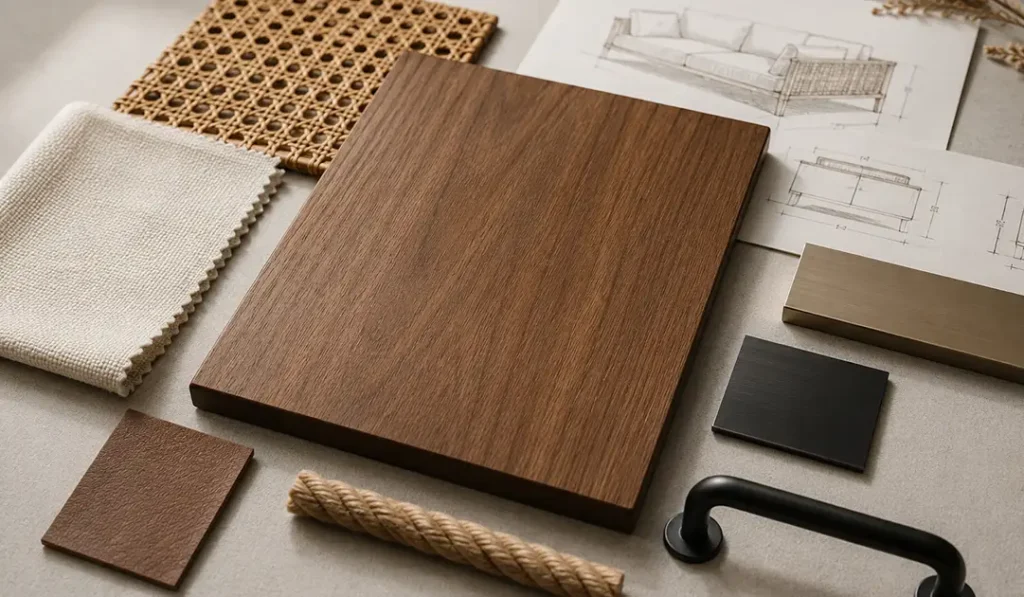
A cohesive living room furniture set does not need the same material on every item. It needs repeated material logic, so the sofa, lounge chair, coffee table, side table, and storage pieces still feel like one product family.
For example, wood can become the main material across the frames and tables, while rattan, fabric, leather, or rope adds texture and comfort. Metal or small hardware can work as an accent, but it should not take over the full collection.
Material balance becomes weak when every piece introduces a new idea. A warm teak sofa, pale rattan lounge chair, black metal coffee table, and grey console may look fine alone, but together they can feel visually noisy.
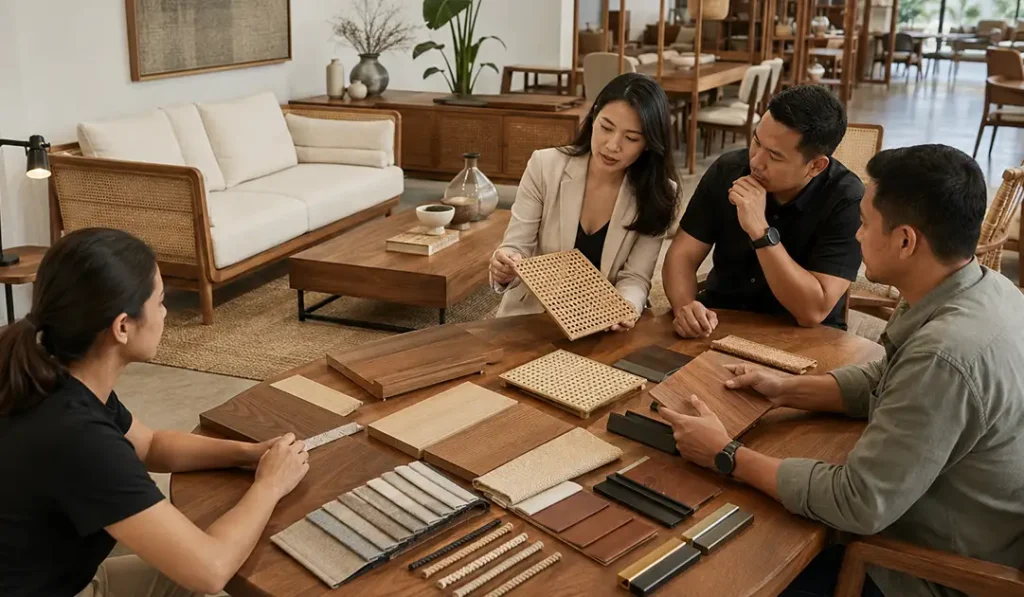
Buyers should decide which material leads the collection and which materials support it before sampling. This decision affects display appeal, production repeatability, weaving consistency, fabric tailoring, metal finishing, and wood finishing accuracy.
Proportion Makes the Collection Feel Balanced on Display
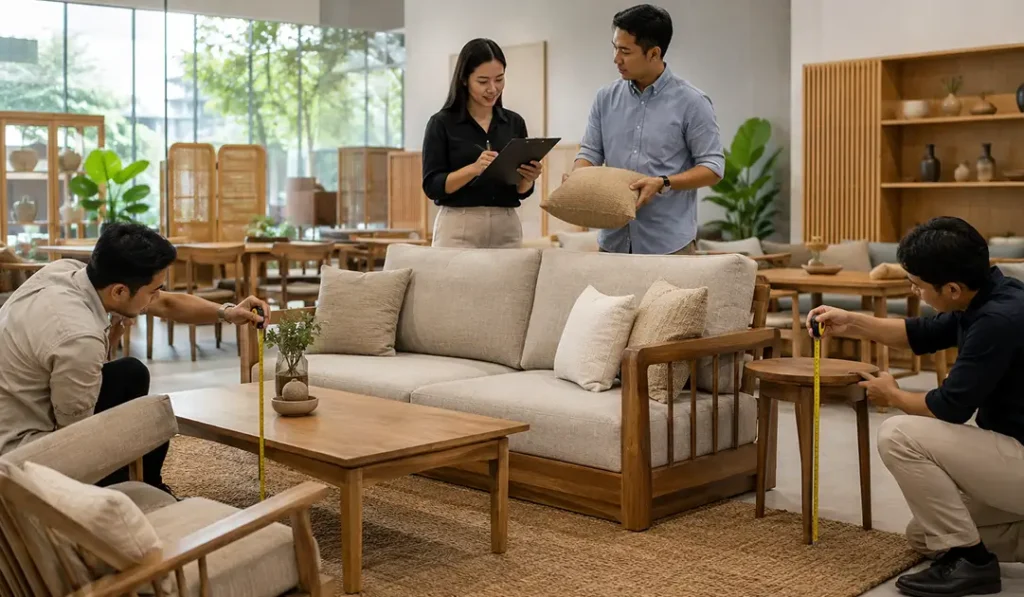
Proportion can make or break the retail impression of a living room furniture collection. A set can use beautiful materials, but still look wrong if the sofa is too low, the coffee table is too high, or the side table feels disconnected from the seating height.
Retail buyers should start with the sofa because it is usually the main scale reference. It has the largest volume and is often the first product customers notice. Once the sofa size and visual weight are approved, the lounge chair, coffee table, side table, cushion thickness, and material thickness should follow the same spatial logic.
A coffee table should feel easy to reach from the sofa. If it is too high, it can look heavy. If it is too low, it may feel weak or less functional. A side table should relate to the sofa arm or lounge chair arm, so it feels natural beside the seating.
Proportion is not only visual. It affects comfort, packaging, cost, production handling, and repeat orders. That is why buyers should review living room dimensions before production before approving a sample, especially when the collection includes a sofa, lounge chair, coffee table, and side table that must feel balanced together.
Finish Direction Gives the Collection a Clear Retail Mood
Finish direction gives the collection a clear mood. It tells customers how to read the set: light and natural, warm and relaxed, deep and premium, clean and modern, or resort-inspired.
Wood tone, rattan shade, fabric color, rope color, leather detail, and metal finish should support one shared direction. If the sofa uses a warm natural frame but the coffee table uses a colder finish, the collection loses clarity.
Finish direction also affects brand fit. A boutique store may want soft natural tones and handcrafted texture. A premium importer may prefer deeper finishes, clean fabric choices, and subtle metal details. A hospitality buyer may need a relaxed material mix with durable finishes for heavy use.
This direction should be set early. If the finish changes after sample development, buyers may face more revisions, longer approval time, and weaker batch consistency.
Custom development helps buyers avoid generic catalog overlap. A consistent finish direction can become part of the brand identity when repeated across sofas, tables, cabinets, and accent pieces.
Sample Approval Turns Visual Sellability into Production Readiness
A retail ready furniture collection is not finished when the first sample looks good in photos. It becomes ready when that sample can guide bulk production.
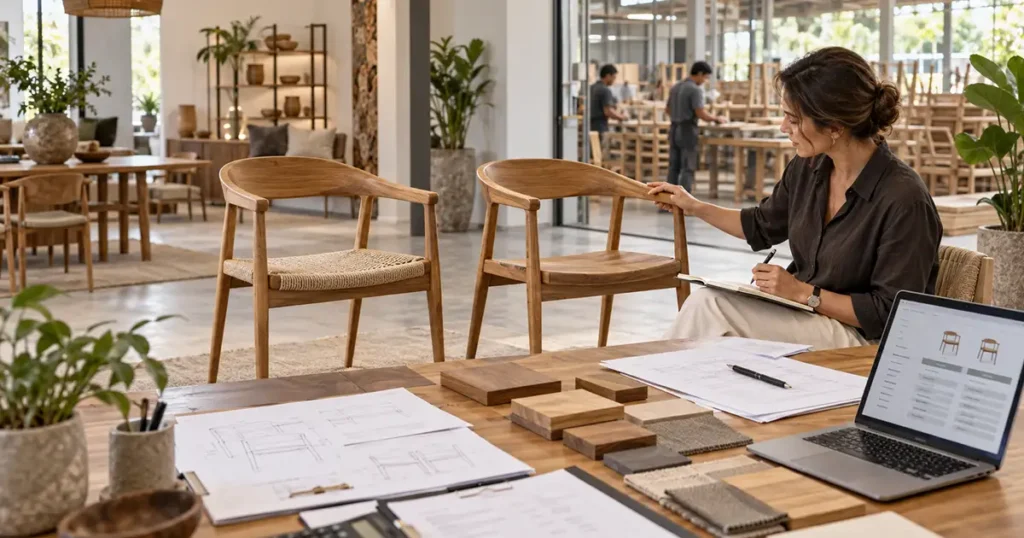
Sample approval should record the agreed materials, dimensions, finish codes, rattan shade, fabric code, cushion volume, hardware, packaging notes, and approved photos. These details help buyers avoid surprises and help the production, finishing, packing, and quality control teams follow the same standard.
This matters most in mixed-material collections because small changes in rattan shade, cushion thickness, or wood gloss can change the full retail mood. Without written approval notes, the gap between sample and bulk production becomes harder to control.
At MPP Furniture, sample approval is treated as a production reference, not only a visual approval. With handcrafted production, in-house processes, quality control at each stage, a 99% client satisfaction rate, and a 0.56% complaint ratio, MPP helps retailers move from collection direction to repeatable bulk production with more confidence.

How Retailers Can Use This Framework Before Developing a Collection
Before starting furniture collection development, retailers can use a simple review process. The goal is not to replace technical checks. The goal is to decide whether the collection direction is strong enough before moving into dimensions, material sourcing, and furniture sample approval.
For buyers who need custom sizing, material adjustment, or private label development, working with a custom furniture Indonesia partner can help turn the early collection direction into a sample that is ready for review.
Quick Buyer Evaluation Framework
| Review Area | Buyer Question |
|---|---|
| First Impression | Does the full collection feel clear within a few seconds? |
| Visual Warmth | Do the tone, texture, and fabric fit the target market? |
| Comfort Impression | Does the seating look comfortable before the customer sits? |
| Material Balance | Do materials repeat across the set with a clear purpose? |
| Proportion | Do seating and tables feel balanced together? |
| Finish Direction | Does the collection project one clear retail mood? |
| Sample Readiness | Can the approved sample guide bulk production with written notes and photos? |
This framework helps retailers judge whether a collection is visually clear, commercially practical, and ready to move into sample review before deeper production checks begin.
Conclusion: Sellable Collections Are Built Through Clear Direction
A living room furniture collection feels instantly sellable when every piece feels connected from the first look. The sofa, lounge chair, coffee table, side table, materials, finish, and comfort cues should support the same buying direction.
For retailers, true sellability is not only about stocking attractive products. It is about building a collection that feels warm, comfortable, cohesive, balanced on display, and ready to move into sample approval.
The clearer the direction is before production, the easier it becomes to present the collection, explain its value, reduce revision risk, and prepare it for bulk orders.
In short, a sellable furniture collection is built through clear visual direction, practical buyer review, and a manufacturing partner that understands how to turn collection ideas into retail-ready products.
Develop a Retail-Ready Living Room Furniture Collection with MPP Furniture
MPP Furniture helps B2B buyers turn early living room collection ideas into review-ready samples through custom wooden and rattan furniture development, OEM production, private label support, in-house production, and quality control at each stage.
FAQ: About Living Room Furniture Collection Sellability
1. What makes a living room furniture collection sellable?
A sellable living room furniture collection feels cohesive, warm, comfortable, balanced in proportion, clear in finish direction, and ready to repeat after sample approval.
2. Why does material balance matter in cohesive living room furniture?
Material balance helps the sofa, lounge chair, coffee table, side table, and storage pieces feel like one product family. It also prevents the collection from looking random on display.
3. How can retailers judge a retail-ready furniture collection?
Retailers can judge a retail-ready furniture collection by checking first impression, visual warmth, comfort impression, material balance, proportion, finish direction, and sample readiness before bulk production.
4. Why is furniture sample approval important before bulk production?
Furniture sample approval turns the approved design into a production reference. It helps the manufacturer repeat the same materials, dimensions, finish, cushion volume, hardware, and packaging standard.
5. Can MPP Furniture help with furniture collection development?
Yes. MPP Furniture supports furniture collection development through custom sizing, material adjustment, private label support, sample approval, in-house production, and quality control for B2B buyer

A versatile content creator with a strong foundation in product photography and videography, and a comprehensive brand strategy. Capable of creating engaging content to connect consumers and producers, web analytics, and engaging visual content to drive interest and growth for a product or brand.
0 Comments