Let's face it: poolside furniture constantly battles harsh conditions like strong sunlight, humidity, water splashes, and pool chemicals. For retailers and project buyers, choosing the wrong material risks costly returns and damage to your brand’s reputation. A chair that looks stunning in a catalog but cracks after a single season quickly becomes a serious business problem.
In this guide, we will break down the exact differences between teak and acacia for poolside environments. By the end, you will understand exactly how durability, maintenance, price positioning, and regional trends influence buying behavior, allowing you to confidently build a collection that maximizes both customer satisfaction and your bottom line.
Why Material Choice Impacts Sales Performance
There is a rapidly growing demand for high-quality poolside furniture across global markets. However, buyers no longer judge furniture solely on its showroom aesthetics; they evaluate it based on how long it lasts and how well it supports a premium lifestyle. Material choice has become a key factor in product success, dictating everything from initial appeal to after-sales performance.
This brings us to the ultimate comparison: teak vs acacia. While both woods offer a beautiful natural aesthetic, not all styles perform equally across different markets and climates. Choosing to partner with reliable Indonesian furniture manufacturers ensures you have access to properly processed materials that align directly with your target market's expectations.
Teak vs Acacia: Key Factors That Influence What Sells
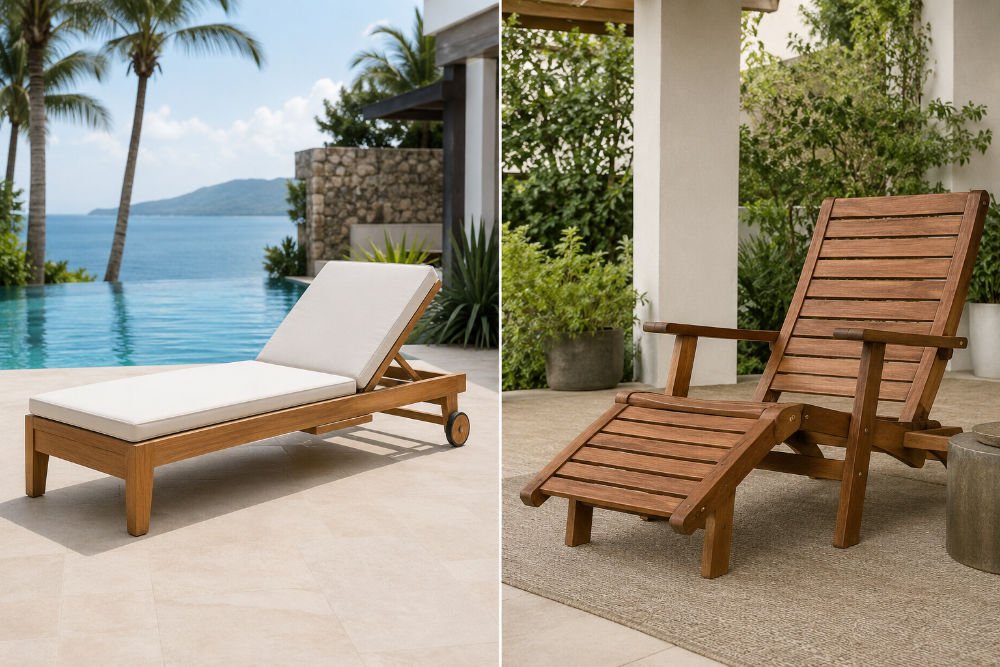
For B2B buyers, the question is never just about which wood is universally better. It is about which wood fits your specific market, price point, and customer lifestyle. Let's explore the core elements that separate these two popular materials.
Durability and Weather Resistance
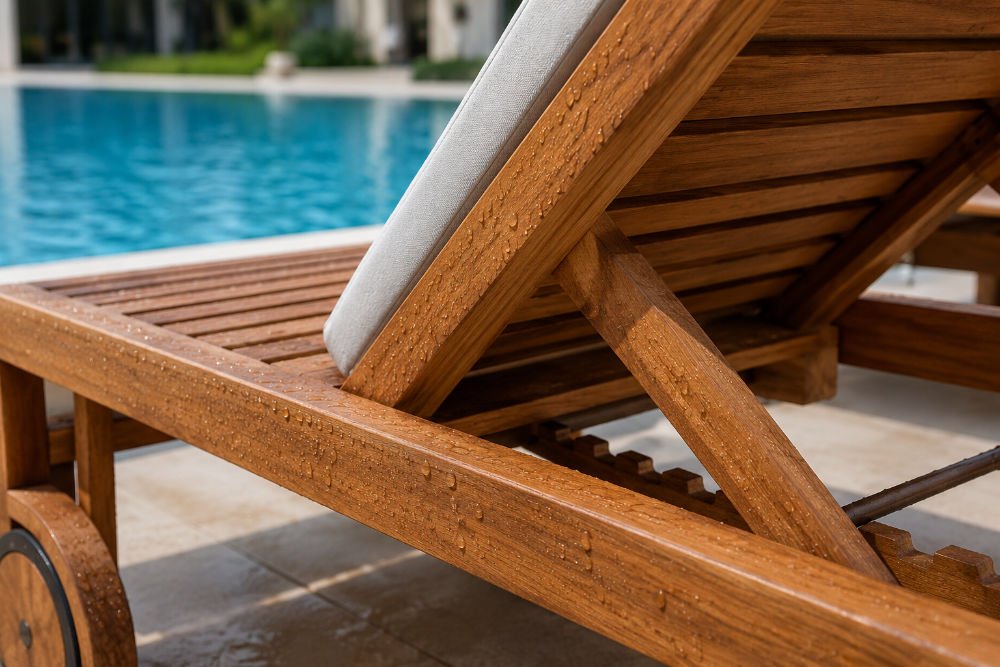
Teak is widely recognized as the premium standard for outdoor durability. Its dense structure and high natural oil content allow it to resist moisture, decay, and insects effectively, even when continuously exposed to sun and rain.
Acacia, while strong, requires much more attention to survive poolside conditions. Its moisture resistance is heavily dependent on the quality of its finishing, meaning customers must be proactive about protection. When sourced from a reputable teak furniture Indonesia factory, teak provides a much safer, long-term asset for heavy-use environments.
Maintenance and Long-Term Practicality
Maintenance expectations directly impact your sales and after-sales pressure. Teak is positioned as a low-maintenance luxury material that naturally develops an elegant grey patina without losing its structural integrity. Acacia, however, demands regular care, oiling, and covering to maintain its look, especially in humid or rainy areas.
Comfort and User Experience
Because poolside furniture is used by people in swimwear, bare-skin comfort is non-negotiable. Teak features a tight, dense grain that rarely splinters and naturally regulates temperature, whereas acacia can develop rough patches if not properly maintained. Offering a well-crafted piece, like an outdoor occasional arm chair made of teak, guarantees a consistently safe and comfortable user experience.
Design Appeal and Market Trends
Teak aligns flawlessly with refined, timeless outdoor design. It is the go-to material for resort-style spaces, coastal homes, and boutique hotels. Acacia provides a rich, warm wood feel that caters beautifully to rustic and contemporary outdoor trends, allowing retailers to offer highly attractive aesthetics without the premium sourcing costs associated with teak.
Price Positioning and Perceived Value
Teak acts as your premium anchor, naturally supporting a higher retail price point because buyers trust its long-term value. Acacia serves as an accessible entry point. In mid-market retail, acacia enables faster inventory turnover by offering a real wood look at a fraction of the cost.
Target Market Fit
Teak is the definitive choice for the hospitality sector and high-end residential projects. Conversely, acacia is a highly strategic choice for covered patios, seasonal retail ranges, or budget-friendly programs, provided the product is marketed honestly regarding its maintenance needs.
Sustainability and Sourcing Considerations
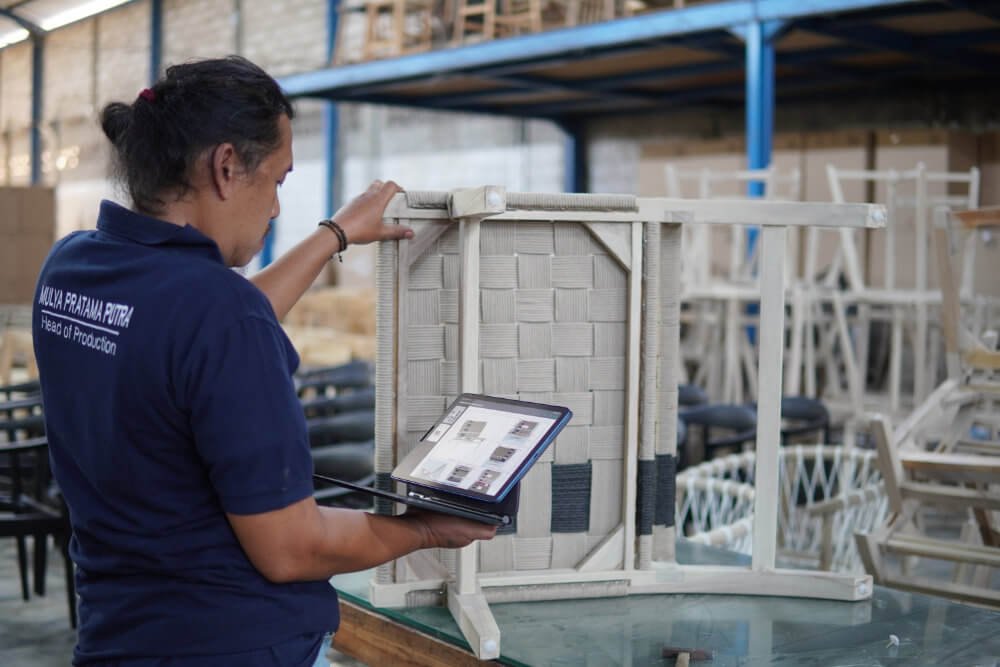
Today's global buyers demand responsibly sourced products, as wood sourcing is deeply tied to brand image and strict customs requirements. The material name alone is no longer enough; suppliers must guarantee legal, consistent, and well-managed production. A trustworthy manufacturer will transparently explain their processes, helping you eliminate business risks before the furniture ever hits your market.
To meet these rigorous global standards, working directly with a highly experienced teak furniture Indonesia factory provides complete control over your product design and manufacturing outcomes. Backed by over 20 years of export experience and fully SVLK-certified facilities, this in-house production approach ensures your poolside collections are consistently export-ready. Ultimately, this level of transparent manufacturing minimizes supply chain risks and maintains an exceptionally low defect rate for your inventory.
Based on MPP Furniture’s extensive production experience, teak consistently proves to be the more strategic wood choice for Indonesian-made poolside furniture. Unlike teak, acacia is rarely utilized as a primary material for outdoor furniture manufacturing within Indonesia. For B2B buyers sourcing directly from the region, choosing teak guarantees a seamless alignment with local material availability, pieces of production knowledge, and long-term outdoor performance expectations.
Furthermore, MPP Furniture prioritizes meticulous construction details to effectively reduce the risk of visible cracking in harsh poolside environments. For example, a specialized V-router detail can be applied to joint areas, particularly where slats connect with frames or where the structure is most exposed to wood movement. This technique makes natural wood shifting less visually obvious and significantly minimizes the chances of cracks appearing clearly on sensitive connection points
Understanding Market Preferences in Poolside Furniture
Climate, lifestyle, and regional design trends heavily influence consumer buying behavior. Understanding these regional shifts makes it clear why certain materials dominate specific markets.
- In Europe, buyers strictly prioritize design consistency, responsible sourcing, and extreme durability. According to a market report by the FAO, countries like the United Kingdom and Denmark are major consumers of teak because its superior weather resistance perfectly supports the region's growing "outdoor living" lifestyle. Therefore, teak clearly dominates premium European collections due to its clean and practical aging process.
- The United States possesses a massive market capable of absorbing large volumes of imported wooden furniture. Premium outdoor retailers often lean toward teak to satisfy their luxury clients. Meanwhile, massive retail channels utilize acacia to provide accessible, seasonal collections for a broader demographic.
- In the Middle East, poolside furniture must withstand intense sun and heavy hospitality use. Because of these harsh environmental conditions, teak remains the absolute standard for luxury resorts and villas in this region.
- For Australia and New Zealand, outdoor living is a daily staple rather than a seasonal luxury. Teak provides unmatched long-term value for exposed outdoor spaces. However, acacia remains highly popular for covered patios and budget-friendly retail ranges.
Understanding these regional shifts makes it clear why teak outdoor furniture from Indonesia is popular among project buyers globally.
How to Choose the Right Style for Your Market
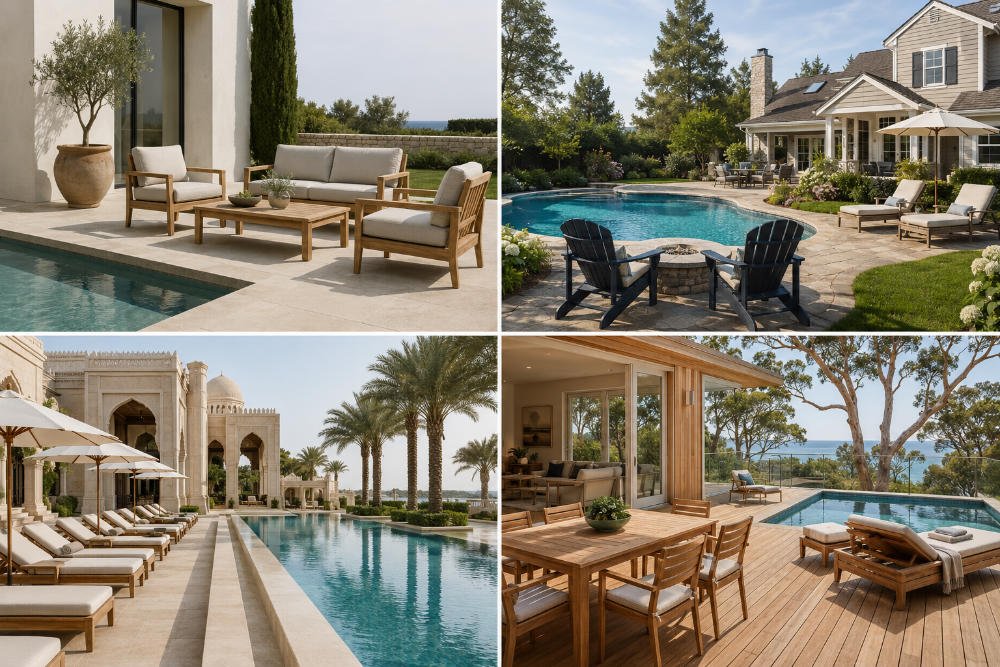
To make the best inventory decisions, you must first analyze whether you are targeting premium villa owners or mid-market seasonal shoppers. Next, strictly consider the local climate and usage environment. If your products will face heavy rain, coastal salt air, or intense sun, teak is the definitive long-term choice.
However, the smartest businesses find a balance between trend-driven aesthetics and long-term value. Developing complementary outdoor furniture collections that incorporate both materials, using teak as the premium anchor and acacia for accessible price points, gives your buyers a complete, flexible catalog.
What This Means for Retailers: Choosing Between Teak and Acacia
- Teak offers unmatched durability and premium appeal, making it ideal for long-term value positioning.
- Acacia provides a cost-effective alternative that supports higher volume sales and faster inventory turnover.
- Teak requires minimal maintenance, which actively enhances customer satisfaction and sharply reduces after-sales issues.
- Acacia needs regular care but remains highly attractive for price-sensitive and trend-driven mass markets.
- Ultimately, a dual-product strategy allows retailers to capture both premium and mass-market segments effectively.
Conclusion
Both teak and acacia hold a valuable place in the poolside furniture industry, but they serve distinctly different markets. The goal is to choose the material that perfectly aligns with your customer demographics, local climate, and price strategy. Lead with teak for clients demanding long-term performance, or utilize acacia for buyers wanting trend-forward styles at a lower barrier to entry.
FAQs About Teak vs Acacia Poolside Furniture
1. Is teak better than acacia for poolside furniture?
Yes. Teak is usually better for poolside furniture because it has stronger natural resistance to moisture, weather, decay, and insects.
2. Is acacia wood good for poolside furniture?
Acacia can be good for poolside furniture when it is properly finished and maintained. It is better for price-sensitive markets than heavy-use premium projects.
3. Which material sells better, teak or acacia?
Teak usually sells better in premium and hospitality markets. Acacia can sell better in price-sensitive markets where customers want real wood at a lower price.
4. Why is teak more expensive than acacia?
Teak is more expensive because it offers stronger outdoor durability, lower maintenance, longer service life, and higher perceived value.
5. Should retailers sell both teak and acacia poolside furniture?
Yes. Selling both helps retailers serve premium buyers and price-sensitive customers in one product range.
Build a Poolside Collection That Sells
Partner with a reliable Indonesian furniture manufacturer to source the perfect teak or acacia pieces for your market. With the right materials, transparent manufacturing, and expert craftsmanship, your outdoor collection will maximize customer satisfaction and boost your bottom line.

I am a Web Designer, Technical SEO Specialist, and writer with 6+ years of experience in website optimization and search visibility. For more than a year, I have supported MPP Furniture’s growth, and I am currently expanding my role as an author to help B2B furniture buyers make more informed business decisions through informative, practical, and impactful articles.
0 Comments