Mahogany remains a practical choice for many furniture programs because it offers warm color, good workability, and flexible finishing. Still, buyers should understand its natural limits before working with an Indonesian Furniture Supplier.
This guide explains which concerns come from the wood itself and which come from weak production control. It also shows what buyers should request before approving a sample or bulk order.
You will learn how color variation, insect risk, and outdoor exposure affect Indonesian mahogany furniture, and how written standards can reduce claims.
Is Mahogany Good for Furniture Despite Its Disadvantages?
Yes, mahogany is good for furniture when the design, market, and placement suit the material. It works well for living room collections, bedrooms, cabinets, dining pieces, and other indoor products that benefit from reddish or brown tones.
Mahogany is easy to shape, sand, and finish. A capable Mahogany Furniture Manufacturer should control timber selection, machining, assembly, sanding, and finishing under one production system.
The real decision is whether the buyer accepts natural variation and the factory can keep it within an approved range.
Natural Characteristics and Preventable Problems Are Not the Same
Natural Mahogany Characteristics
Mahogany heartwood can show reddish, pink, red-brown, or darker brown tones. A 2024 study on Swietenia mahagoni reported that heartwood may darken with age and that its color can vary.
The study examined Swietenia mahagoni, so its findings are biological context, not a rule for every commercial mahogany species used in Indonesian furniture. Buyers should still define an accepted color range.
Preventable Production Problems
Poor sorting, uncontrolled sapwood use, weak moisture control, careless component matching, and uneven finishing are not unavoidable wood traits. They are production problems that should be caught before shipment.
For custom programs, the OEM mahogany furniture in Indonesia process should define accepted wood character, finish range, construction, and inspection points before bulk production starts.
The Main Mahogany Wood Disadvantages Importers Should Understand
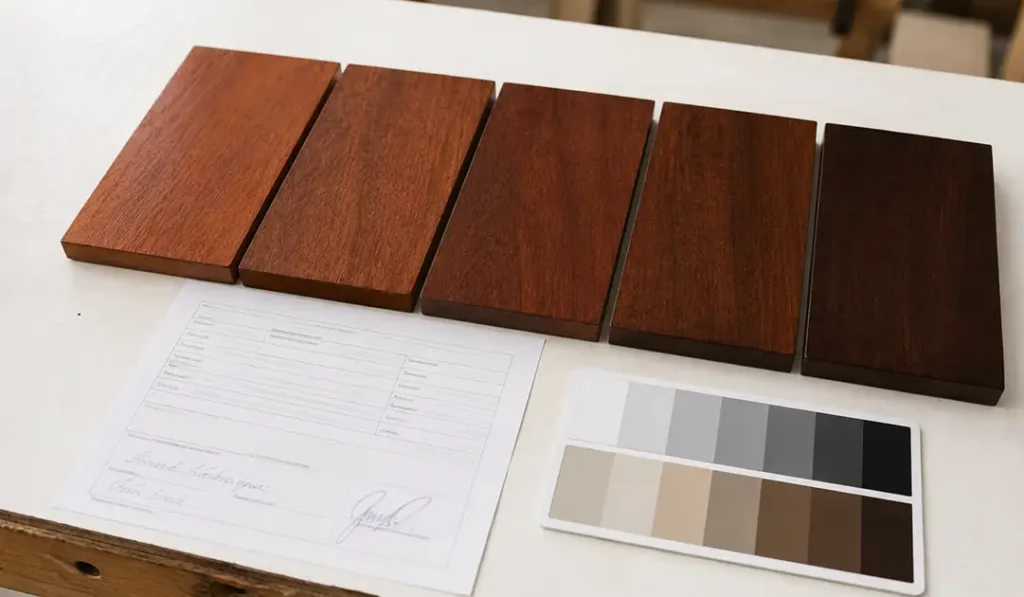
Natural Color Variation Can Affect Bulk Consistency
One approved sample cannot represent every board used in a container order. Buyers should approve a range showing the lightest, middle, and darkest result allowed for the collection.
The factory should also define which tones may appear together on one product. Color variation is natural, but keeping it within the approved range is a production responsibility.
Powder and Insect Damage Require Careful Material Control
Fine powder, small holes, or internal tunneling may indicate wood-boring insect activity, but the cause should be confirmed through inspection. Powder should not be treated as a normal feature of all mahogany furniture.
A 2026 study on Lyctus brunneus found that the beetle selected starch-rich conditions for egg laying. The study used dry hardwood and bamboo in controlled tests, so it gives biological context but does not prove that every mahogany board carries the same risk.
Buyers should ask how the supplier sorts, stores, dries, treats, and isolates suspect timber. Records matter because final inspection may not reveal earlier handling.
Mahogany Is Not Ideal for Every Outdoor Environment
Mahogany can work in covered settings, but it is not the safest choice for constant rain, standing water, strong sunlight, or large humidity changes. A finish can slow moisture movement and surface wear, but it cannot change the basic behavior of the wood.
Buyers planning exposed furniture should review mahogany vs teak outdoor furniture before fixing the material choice. For protected use, the maintenance plan should match the placement and finish system.
How to Import Indonesian Mahogany Furniture More Safely
Define the Material Standard Before Requesting a Quote
Start with a written specification covering species, sapwood acceptance, color range, finish, construction, placement, and destination climate. Clear requirements make quotations easier to compare.
State which surfaces are highly visible and which natural marks are accepted. The guide to solid mahogany bedroom furniture quotes explains how these decisions affect yield, labor, and price.
Approve a Color Range, Not Only One Sample
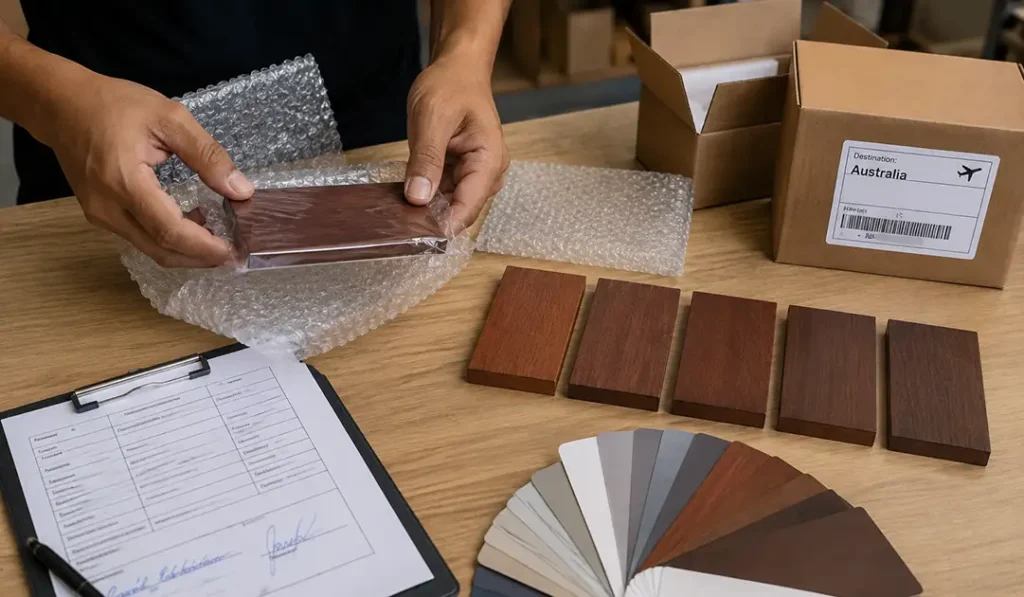
Approve several panels instead of one perfect piece. Keep signed photos of the accepted light, middle, and dark range under agreed lighting.
In August 2026, MPP sent physical mahogany color swatches by air to an Australian buyer after photos and videos showed a significant color difference. Direct swatch approval gave both sides one shared reference before bulk production and reduced the risk of color misunderstanding.
For mixed collections, ask how visible components will be grouped. This helps prevent one item from looking unrelated to the rest of the set.
Verify Drying, Insect Prevention, and Production Controls
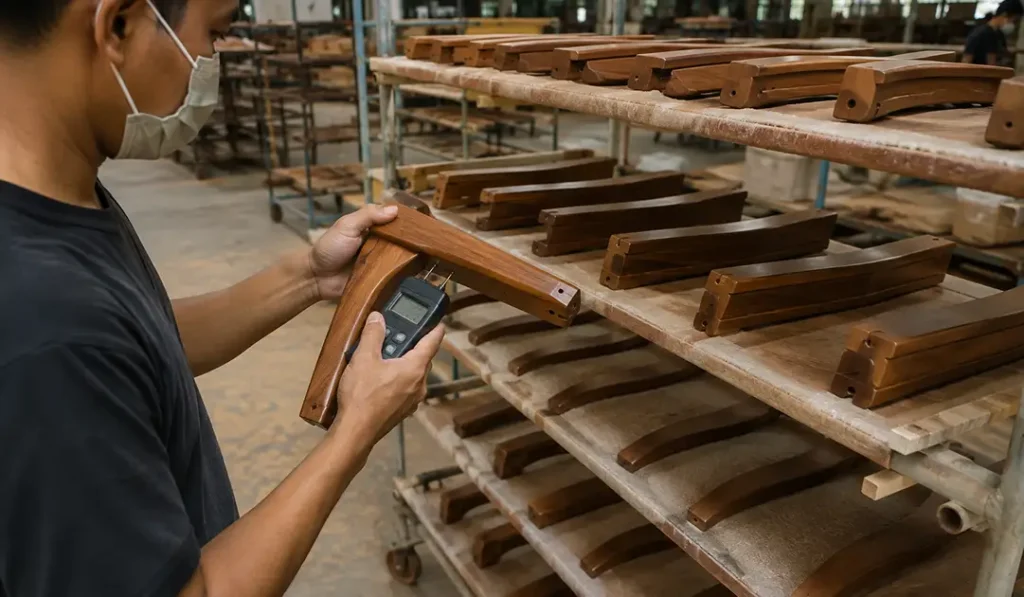
Request moisture readings based on an agreed sampling plan, along with timber receiving logs, storage procedures, insect-prevention records, and notes for rejected units. These records should show that the same process is followed across the order.
Based on MPP’s production runs for international markets, moisture control does not stop when timber leaves the kiln. For semi-outdoor mahogany programs, components are checked against the 10–12% production moisture target and allowed to rest for 24–48 hours after machining before assembly.
This resting period gives the components time to respond after machining, so the production team can identify movement before assembly. It also lowers the risk of later joint and coating problems.
Inspect the Order Before Shipment
Final inspection should cover color range, powder or holes, moisture readings, joints, finish, carton dryness, labeling, and quantity. Check the finished goods against the written standard and signed sample.
The Indonesian patio furniture material guide can help buyers confirm whether mahogany matches a protected outdoor program.
When Mahogany Is Still the Right Choice for Your Market
Mahogany remains suitable when the furniture is intended for indoor or protected use, warm tones support the design, and buyers accept controlled natural variation. It also fits collections where solid wood character adds retail value.
Another material may be safer when the program faces constant weather exposure, allows almost no color variation, or carries high replacement costs. Mahogany works best when the use is clear and the supplier can show how avoidable risks are controlled.
What Importers Should Remember
Mahogany wood disadvantages should be judged by their cause. Color and grain variation may be natural, while uncontrolled matching, poor drying, insect damage, and unsuitable placement need action.
Before bulk production, set the material standard in writing, approve a realistic color range, review production records, and inspect the order. A dependable supplier explains material limits and shows how avoidable risks are managed
Discuss Your Mahogany Furniture Requirements Before Sampling
Before sampling, MPP Furniture can review intended use, destination climate, target color, construction, and order standard. This helps both sides decide whether mahogany fits the program and what evidence should be prepared. MPP supports free consultation, product development, custom design, private label, and OEM programs through in-house production. The process covers material preparation, handcrafted assembly, finishing, inspection, and delivery planning.
FAQ: Mahogany Wood Disadvantages
1. What are the main disadvantages of mahogany wood?
The main disadvantages are color variation, possible mismatch across bulk production, limits in exposed outdoor use, and insect risk under certain conditions
2. Is mahogany good for furniture?
Yes. Mahogany suits many indoor and protected-use products when properly selected, dried, finished, and inspected.
3. Is powder from mahogany furniture normal?
No. Powder is not a normal trait of all mahogany furniture and may indicate insect activity or another issue.
4. Can mahogany furniture be used outdoors?
Mahogany can be used in covered areas with a suitable finish and care plan. It carries more risk under constant rain, standing water, and long open exposure.
5. What should importers request before approving a mahogany order?
Importers should request a written specification, approved color range, moisture records, production evidence, signed sample documents, and a pre-shipment inspection report.

A versatile content creator with a strong foundation in product photography and videography, and a comprehensive brand strategy. Capable of creating engaging content to connect consumers and producers, web analytics, and engaging visual content to drive interest and growth for a product or brand.

0 Comments