To protect mahogany outdoor furniture and preserve its value, place it in a covered area, clean it gently, remove standing water, and follow the care requirements of the original factory finish. Mahogany performs best on sheltered patios, balconies, roofed terraces, and other controlled outdoor spaces rather than areas exposed to constant rain and strong sunlight.
For retailers developing a covered outdoor mahogany furniture collection, clear care guidance helps customers use the product correctly, reduces preventable complaints, and protects the perceived quality of the range. Working with an experienced Mahogany Furniture Manufacturer also helps align finishing specifications, cleaning instructions, and customer care guidance before sample approval or bulk production.
Why Clear Care Guidance Matters
Customers often group all hardwood outdoor furniture into one category. They may assume mahogany needs the same placement and care as teak.
In practice, each wood species responds differently to sunlight, moisture, and temperature changes. Mahogany remains strong and stable when it is properly dried, constructed, finished, and maintained, but it needs more protection from direct weather exposure than teak.
Clear mahogany outdoor furniture maintenance guidance helps customers understand that placement, cleaning, moisture control, and finish inspection must work together. Even well-made furniture can develop finish wear, staining, mold, or moisture problems when it sits below roof runoff, stays under wet cushions, or is cleaned with harsh products.
Retailers should use the same care information across product pages, printed care cards, sales conversations, and customer service replies. This consistency helps teams separate normal aging, customer misuse, and genuine product concerns.
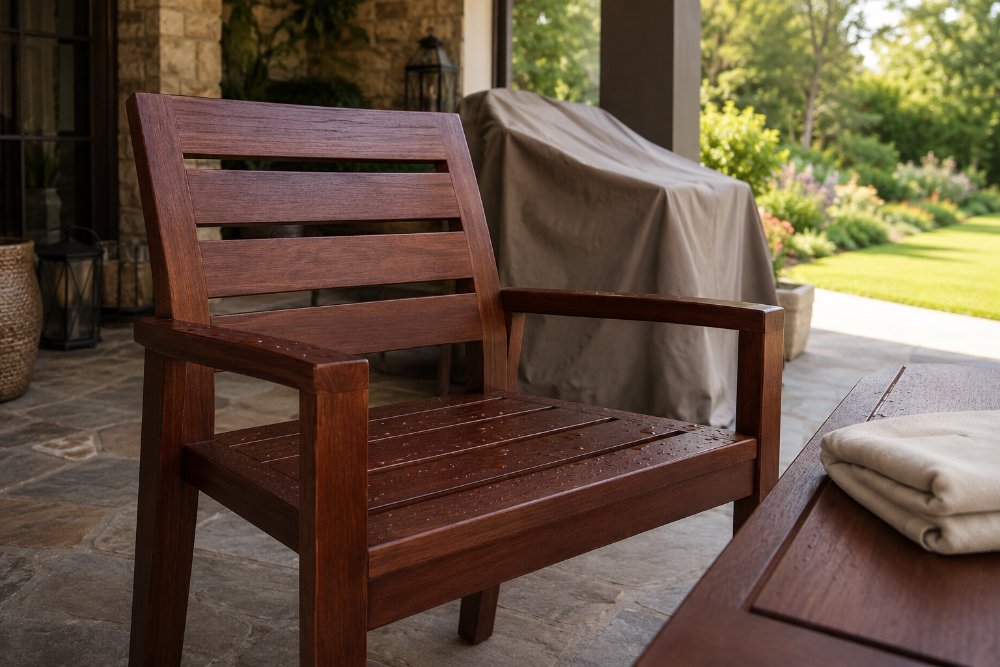
Where to Place Mahogany Outdoor Furniture
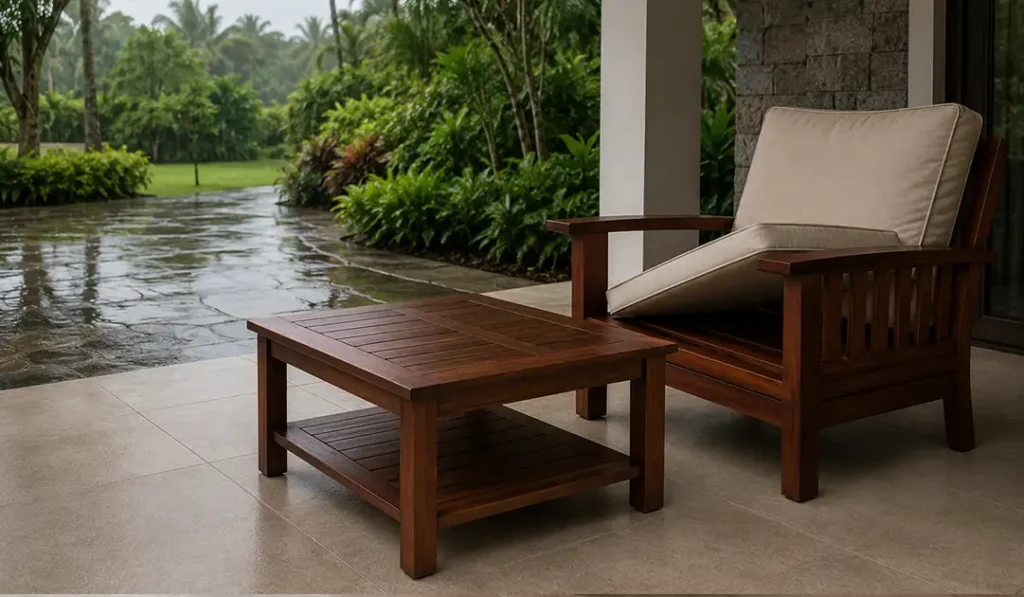
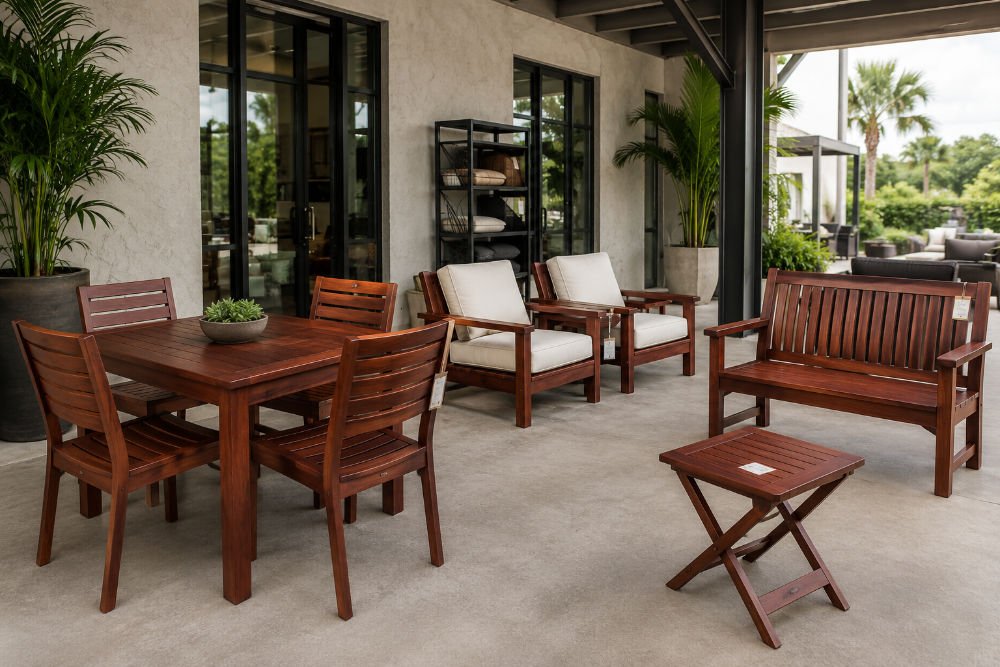
The first step in learning how to protect mahogany wood outdoors is choosing a covered and well-ventilated location.
Suitable placements include:
- Covered patios
- Sheltered balconies
- Roofed terraces
- Partly enclosed outdoor rooms
- Hospitality areas protected by fixed awnings
Keep the furniture away from roof runoff, sprinkler lines, damp soil, and floors where water collects. Furniture feet should not remain in puddles after rain or cleaning.
Covered placement does not mean zero exposure. Wind-driven rain, condensation, reflected sunlight, and high humidity can still affect furniture under a roof. Customers should check horizontal surfaces, lower rails, joints, and feet after wet weather.
Rotating movable pieces can reduce uneven fading when one side receives more sunlight than the other.
A furniture cover cannot correct an unsuitable location. When customers plan to leave furniture in an open garden, beside a pool, or under constant sun and rain, teak is generally the safer option. MPP’s guide to mahogany vs teak outdoor furniture explains the differences in weather resistance, maintenance, and suitable placement.
Clean Mahogany Without Damaging the Finish
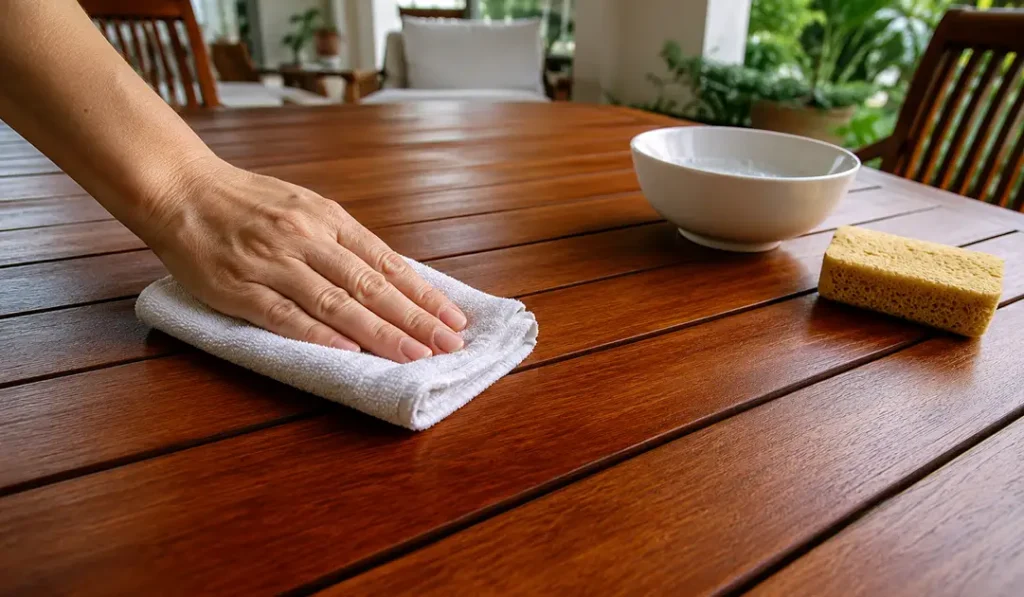
Routine cleaning should remove dirt without wearing down the protective coating.
Start by wiping away loose dust with a soft, dry cloth. Mix clean water with a small amount of mild detergent, then wipe the surface gently with a soft cloth or sponge. Work in the direction of the grain and avoid heavy scrubbing.
Remove soap residue with a clean, damp cloth. Dry visible surfaces and allow air to move around joints, slats, feet, and lower edges.
Furniture near roads, coastal air, trees, swimming pools, or outdoor dining areas may need cleaning more often because salt, pollen, dust, and food residue can build up faster.
Unless approved for the original finish, customers should avoid:
- Pressure washers
- Abrasive pads or hard brushes
- Strong bleach mixtures
- Acidic teak cleaners
- Unapproved solvents
- Generic furniture oils
- Heavy wax buildup
- Unmatched topcoats
A care guide from Weatherend Yacht Finish Care recommends mild detergent, soft cleaning materials, full rinsing, and avoiding abrasives or acidic teak cleaners on coated furniture. Because the guide refers to a specific marine finish, retailers should treat these points as general care principles rather than universal product instructions.
Retailers should not advise every customer to apply oil or varnish. Mahogany furniture may use a film-forming topcoat, a stained coating system, or another factory finish that can react poorly with an incompatible product.
The safest rule is simple: every cleaner, touch-up product, and maintenance treatment should match the original factory finish.
Control Moisture, Rain, and Sun Exposure
Customers asking how to protect outdoor wood furniture from rain should start by removing standing water, improving airflow, and preventing repeated runoff from reaching the same surface.
Repeated wetting and drying place stress on both the wood and its protective coating. Research on exterior wood coatings explains that UV exposure and moisture changes are major causes of outdoor wood weathering.
As wood absorbs and releases moisture, it expands and contracts. This movement may contribute to surface checking and coating wear.
After rain or spills, wipe away standing water as soon as possible. Lift wet cushions so the seat and cushion base can dry separately. Keep leaves and dirt out of drainage gaps.
Do not leave wet towels, plant pots, trays, or decorative items on the furniture for long periods. These objects can hold moisture against the finish and cause dark marks, mold, or uneven wear.
Strong daily sunlight can also speed up color change and finish wear. When possible, place the furniture where direct afternoon sunlight is limited.
Use Covers Without Trapping Moisture
Furniture covers help during storms, wet seasons, long absences, or extended periods of non-use.
Before covering the furniture:
- Clean the surface.
- Let all areas and joints dry.
- Remove wet cushions.
- Clear leaves and dirt.
- Leave space beneath the cover for airflow.
Avoid wrapping damp furniture tightly in plastic. Moisture trapped under an unventilated cover can lead to condensation, staining, mold, and faster finish wear.
Inspect the Finish Before Damage Spreads
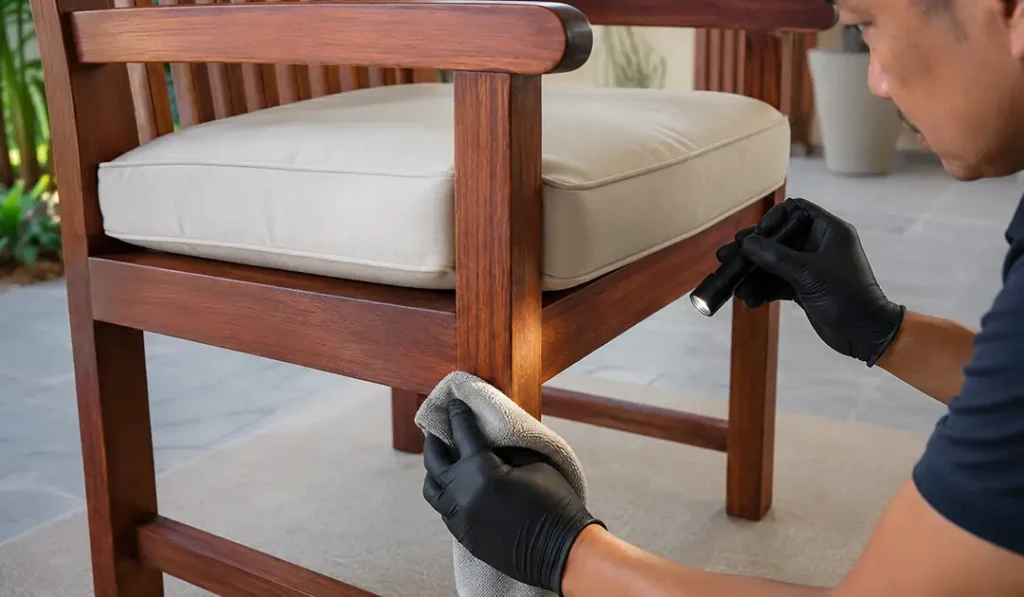
Customers should inspect the furniture before the coating begins to peel or bare wood becomes visible.
| What the customer sees | Possible cause | First response |
|---|---|---|
| Dull or uneven sheen | Early surface wear | Clean, dry, and inspect |
| Darkening after water contact | Lower water resistance | Ask for finish advice |
| Roughness or raised grain | Coating wear or moisture | Stop abrasive cleaning |
| Fine surface lines | Movement or drying stress | Monitor and request guidance |
| Cloudy or white marks | Trapped moisture | Dry and improve airflow |
| Black surface spots | Dirt, mildew, or poor ventilation | Use the approved cleaner |
| Peeling or exposed wood | Coating failure | Request repair support |
| Loose joints | Structural movement | Stop use and contact the supplier |
In one industry case shared by a furniture factory professional, small cracks appeared around joints built mainly with dowels, weak adhesive, and incomplete drying. Adding mortise-and-tenon joinery strengthened the connection and reduced further cracking.
This shows that cracks around joints may come from construction or drying, not only surface care. Retailers should ask the manufacturer to inspect the cause before recommending a repair.
Customers may handle routine cleaning and approved small touch-ups. Wider peeling, growing cracks, repeated water absorption, bare wood, or loose joints need retailer or manufacturer support.
The finish type must be identified before applying a repair product. An incompatible oil, wax, stain, or topcoat can make future repairs harder.
Retailers who need more technical information can read MPP’s guide to the outdoor furniture finishing system.
Store Furniture Properly and Support Customers After Purchase
Seasonal storage reduces exposure during winter, heavy rainy seasons, extreme heat, or long customer absences.
Before storage, clean the furniture and allow all surfaces, joints, slats, and feet to dry. Remove cushions, check for worn finish or loose fittings, and move the furniture into a dry, roofed, ventilated space.
Raise the legs if the floor may become damp, and avoid sealed plastic wrapping. Do not place damp furniture in a closed room because moisture can remain inside joints and lower rails even when the top surface feels dry.
Retailers should also provide a simple mahogany outdoor furniture care card instead of leaving customers to search for generic advice after delivery. The card should cover:
- Suitable placement
- Routine cleaning
- Rain and cushion guidance
- Products to avoid
- Signs of finish wear
- Retailer contact details
Before approving samples or bulk production, buyers should request the coating type, approved cleaner, touch-up method, repair guidance, normal appearance changes, and market-specific care notes.
This is where a dependable manufacturing partner adds value beyond quotation and delivery. As an Indonesian Furniture Manufacturer, MPP manages production in-house, combining skilled handwork, modern machinery, and quality checks from material preparation through finishing.
Buyers can also discuss finishing specifications, free product development, custom designs, and customer care instructions before production.
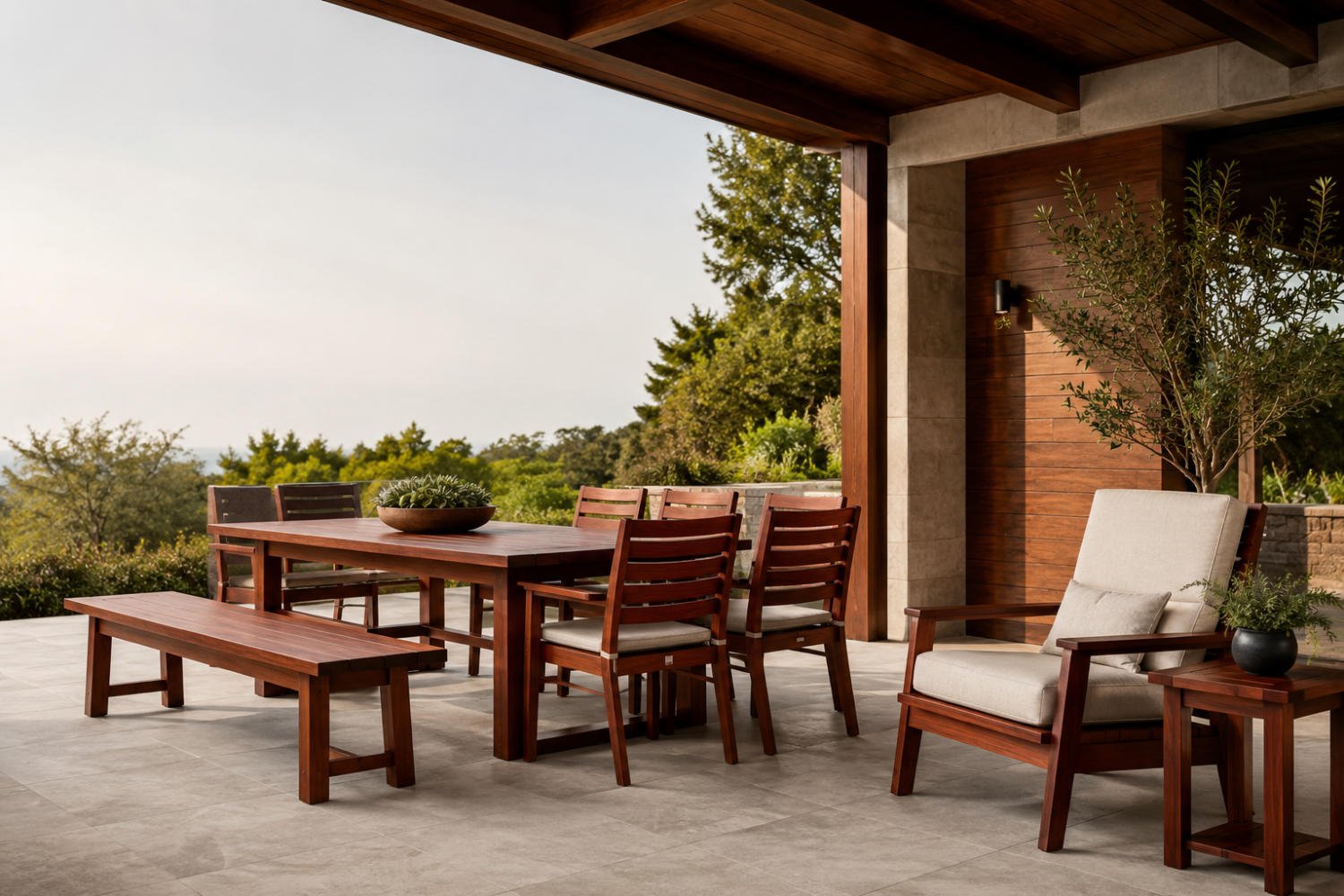
Mahogany Care Checklist
After rain or spills: Remove standing water, lift wet cushions, clear drainage gaps, and allow the furniture to dry.
Routine cleaning: Remove loose dust, use mild detergent and clean water, wipe with a soft cloth, remove soap residue, and dry the surface.
Periodic inspection: Check for dullness, roughness, mold, cracks, peeling, water absorption, and loose joints. Ask before applying oil, wax, stain, or topcoat.
Seasonal storage: Clean and dry the furniture, remove cushions, store it under cover, maintain airflow, and keep it away from damp floors.
Conclusion: Consistent Care Protects Value
Mahogany outdoor furniture performs well in covered or controlled outdoor settings. Gentle cleaning, standing-water removal, regular finish checks, ventilated covers, and seasonal storage help preserve its appearance and service value.
For retailers, clear care instructions also support customer satisfaction and brand reputation. When customers understand where to place the furniture, how to clean it, and when to request support, retailers can reduce preventable claims and provide better after-sales service.
Develop Covered Outdoor Mahogany Furniture With Clear Care Guidance
Planning a covered outdoor mahogany furniture collection? Discuss finishing specifications, cleaning instructions, touch-up guidance, placement limits, and customer care materials with MPP before sample approval or bulk production. .
Mahogany Outdoor Furniture Care FAQs
1. Can mahogany outdoor furniture be left outside?
Mahogany furniture is best placed in covered or protected outdoor areas. Constant rain and strong sunlight can shorten the life of its finish.
2. How do you protect mahogany furniture from rain?
Place it under cover, remove standing water quickly, lift wet cushions, and use a ventilated cover only when the furniture is clean and dry.
3. What should customers use to clean mahogany outdoor furniture?
Use clean water, mild detergent, and a soft cloth or sponge. Check the factory-finish instructions before using oils, waxes, solvents, or specialty cleaners.
4. How often should mahogany outdoor furniture be maintained?
Clean it when dirt builds up and inspect the finish regularly. Touch-up timing depends on climate, exposure, use, and the original coating system.
5. Is fading on mahogany outdoor furniture normal?
Some color change can occur as natural wood and its finish age. Rapid uneven fading, roughness, peeling, or exposed wood should be inspected.

A versatile content creator with a strong foundation in product photography and videography, and a comprehensive brand strategy. Capable of creating engaging content to connect consumers and producers, web analytics, and engaging visual content to drive interest and growth for a product or brand.



0 Comments