When customers start asking for mahogany outdoor furniture, it is natural to consider adding it to your range. The request shows real sales potential, but buyers may not yet understand where mahogany performs best.
This guide will help you decide whether stocking mahogany outdoor furniture makes sense for your market. It covers demand testing, product positioning, care expectations, and supplier checks.
You will also learn where mahogany fits beside teak and which product groups are safer to test first. The goal is to respond to customer interest without creating avoidable stock, return, or warranty risks.
Understanding the Growing Demand for Mahogany Outdoor Furniture
Customer requests are useful demand signals, but they are not confirmed orders. You must ask where the furniture will be placed, what customers expect to pay, and how much care they accept.
The term "outdoor" may mean a roofed patio, sheltered balcony, open garden, or pool deck. Mahogany fits protected settings much better than spaces exposed to constant rain and strong sunlight.
Retailers should track the category, preferred style, budget, and purchase timeline. These specific details will show whether the actual interest supports launching a trial collection.
Why Customers Are Asking for Mahogany Outdoor Furniture
The growing popularity of natural hardwood outdoor furniture
Natural hardwood brings warmth, visible grain, and a home-like feel to patios and roofed dining areas. Customers increasingly prefer these organic qualities over plastic, metal, or synthetic materials.
Customers looking for alternatives to premium teak furniture
Known for its dense, oily heartwood, teak offers extreme weather resistance ideal for premium outdoor furniture and marine construction. This naturally water-repellent timber gracefully ages into a rich tone upon exposure to the elements. For a detailed breakdown of its physical properties, review its comprehensive timber profile on the World Agroforestry database.
Mahogany serves as a beautiful alternative that can sit below teak in price while offering a rich tone and smooth finish. As detailed in the Indonesian mahogany furniture buyer's guide, mahogany occupies a mid-premium tier, whereas teak remains in the upper luxury outdoor tier. It should never be sold as having the same open-air weather resistance as teak.
Outdoor living trends influencing furniture purchasing decisions
Customers increasingly use balconies, patios, and roofed terraces as extra living or dining areas. This shift creates room for refined hardwood furniture designed specifically for protected placement.
Is Mahogany the Right Fit for Your Outdoor Furniture Collection?
Which customer segments typically buy mahogany outdoor furniture
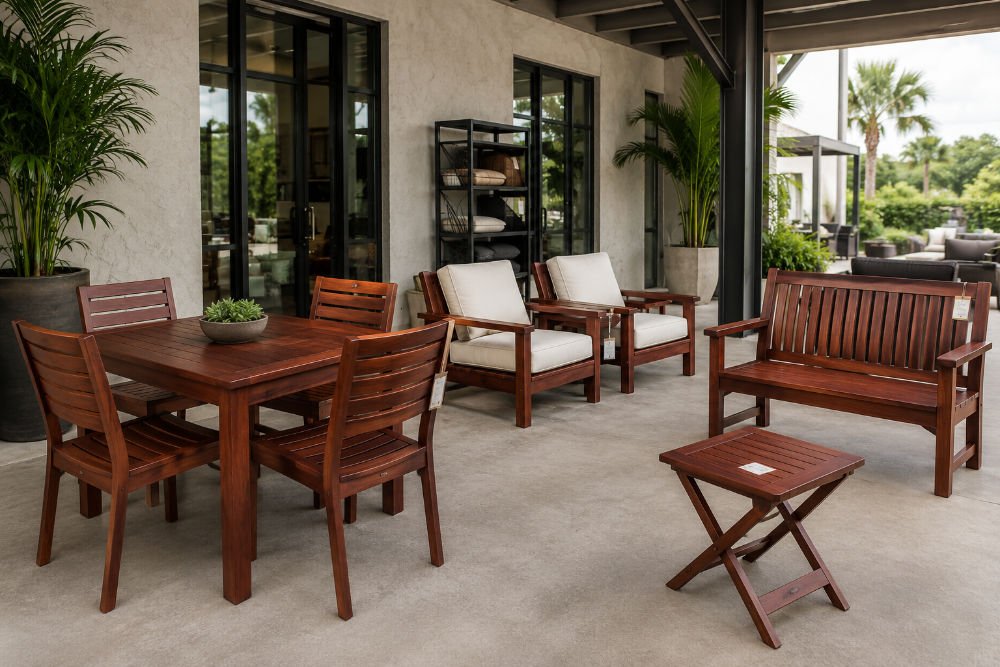
Mahogany strongly suits homeowners with covered patios and apartment residents with sheltered balconies. It also appeals to commercial clients like restaurants with roofed terraces and hotels with protected lounge areas. Ultimately, it attracts buyers who desire classic hardwood elegance without premium teak pricing.
Best-selling mahogany outdoor furniture categories
Retailers should start with compact dining sets, benches, lounge chairs, side tables, and balcony sets. Testing these specific categories is safer before committing to a massive inventory expansion. The guide to ideal mahogany furniture applications explains why this wood performs much better when protected from harsh weather.
Also read our guide to mahogany vs teak outdoor furniture to compare their weather resistance, maintenance needs, pricing, and ideal placement.
How mahogany fits different pricing strategies
A smart pricing strategy places lower-cost woods at the entry level, mahogany in the middle, and teak at the top. This clear tier system helps sales teams explain the differences in appearance, care, placement, and price. To help your team master this product positioning, read also our comprehensive breakdown on mahogany vs. teak outdoor furniture.
To test demand before expanding, begin with samples, display pieces, or a limited SKU group. Track inquiries, quotes, sell-through rates, and care questions closely before placing larger orders.
What Retailers Should Know Before Stocking Mahogany Outdoor Furniture
Understanding durability and weather performance
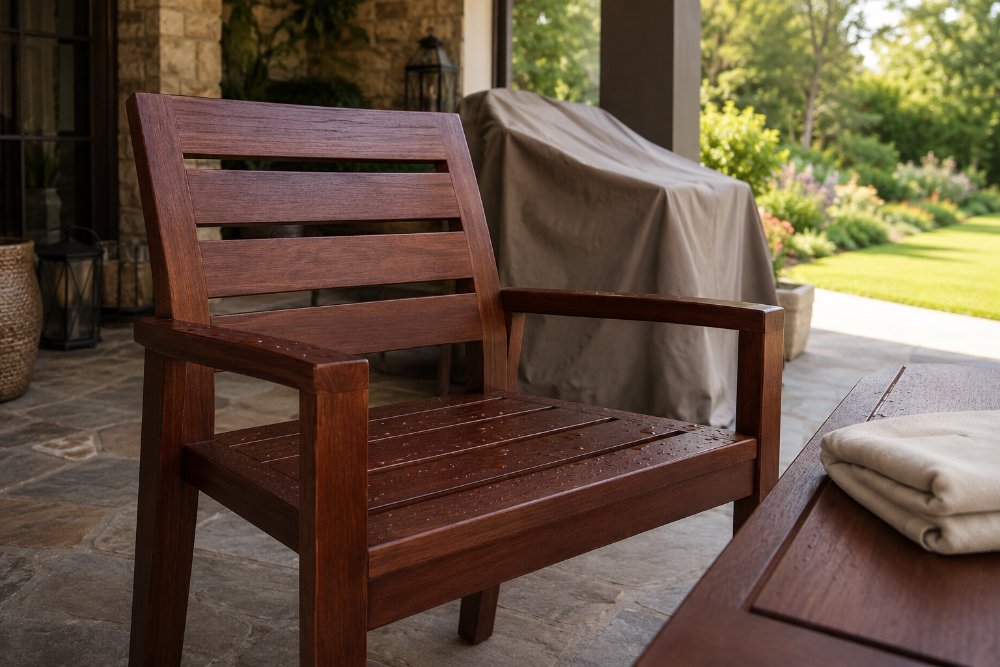
Mahogany can perform beautifully in covered outdoor spaces when properly dried, constructed, sealed, and maintained. However, it is less suitable for open gardens, pool decks, and terraces exposed to regular rain or direct sun.
When evaluating hardwood, retailers often worry about how the material will react to changing humidity and outdoor elements. Fortunately, mahogany boasts a highly stable cross-section that offers impressive resistance to shrinkage and structural deformation. For a deeper dive into its mechanical reliability, the Indonesian state forestry enterprise, Perhutani, highlights mahogany's stable nature as a key advantage for long-lasting woodcraft.
Maintenance requirements customers should expect
Customers must keep the furniture under cover, remove standing water immediately, and inspect the finish as it wears. Using covers and applying seasonal storage can significantly extend the product lifespan in wet, snowy, or high-UV markets.
Why finishing quality has a major impact on outdoor performance
Unlike teak, which is packed with natural oils that can resist paints or cause yellowish stains, mahogany has a remarkably low natural oil content. This characteristic makes it highly adaptable for customized colors or modern opaque finishes.
The finish forms a crucial barrier against moisture, stains, and surface wear. MPP's guide to Indonesian mahogany durability for commercial use explains why a controlled multi-stage coating matters so much for long-term protection.
Climate considerations for different markets
Different global climates require specific structural considerations for mahogany furniture. Humid regions need strict moisture control, while dry regions require sealed end grain to reduce the risk of cracking.
Questions Every Retailer Should Ask Before Choosing a Supplier
Is the wood legally and responsibly sourced?
Always ask the supplier for the species name, plantation source, and official legality records like SVLK documents. These documents support transparent traceability and ensure smooth import customs checks.
Is the wood properly kiln-dried before production?
Request the target moisture range and a dedicated testing report for your specific order. Quality suppliers typically use 10 to 12 percent as a common kiln-dried range, which can be adjusted based on your destination climate.
What quality control processes are in place?
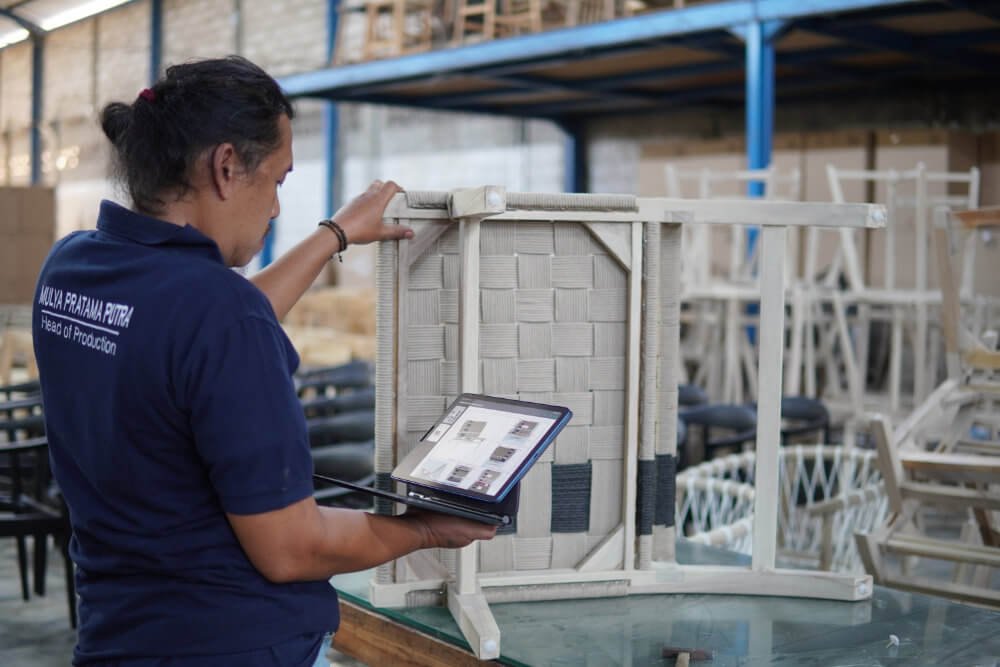
Ask how the factory checks lumber selection, joinery strength, sanding smoothness, coating application, and packing safety. You should request finish panels, production photos, and written pre-shipment inspection records.
Can the manufacturer support OEM or private label projects?
Confirm if the factory supports private label options, custom sizing, packaging, and exclusive design terms. This flexibility is vital if you want to align the products closely with your retail brand identity.
What are the minimum order quantities and production lead times?
Understanding the minimum order quantity (MOQ), sample costs, and production lead times will dictate how easily you can start small. A supplier with flexible terms allows you to launch a trial program without risking massive upfront capital.
Why Many Retailers Source Mahogany Outdoor Furniture from Indonesia
Access to experienced hardwood furniture manufacturers
Indonesia has an established history of hardwood furniture production for the global export market. Buyers can partner with experienced Indonesian mahogany furniture manufacturers that manage everything from drying and machining to finishing and shipping.
Skilled craftsmanship with export-quality production
Reliable factories combine trained local craftspeople, modern machinery, and strict in-house quality controls. Traditional woodworking skills support careful assembly, while machinery helps maintain accurate dimensions. This combination ensures repeat orders match approved samples perfectly.
Flexible customization and private label capabilities
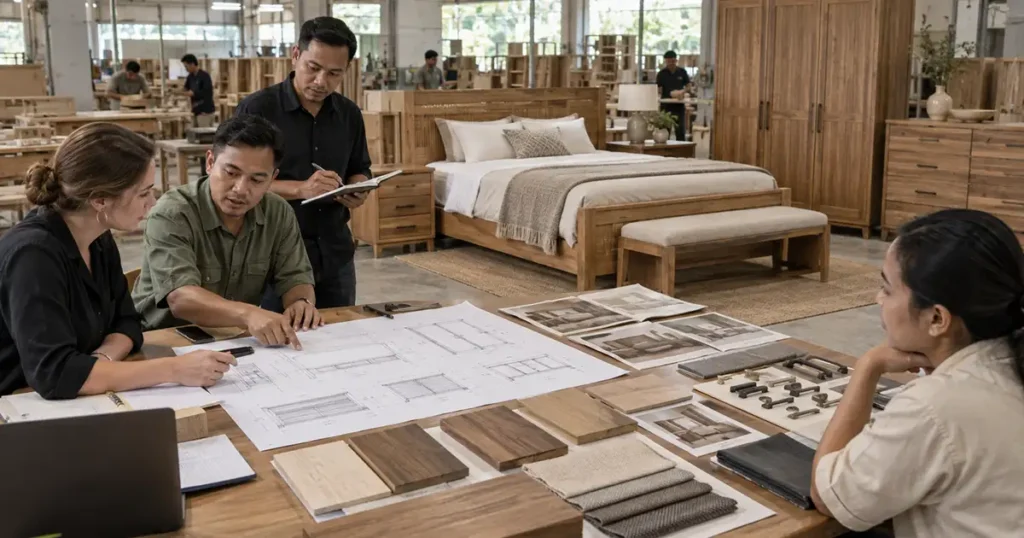
Retailers often need to request new sizes, unique colors, or entirely exclusive collections. Capable suppliers provide product development, OEM, and dedicated private label support. This flexibility allows you to build a collection around your specific market rather than buying standard catalog designs.
Reliable production capacity for long-term retail partnerships
A factory that controls production from raw material drying to final packing significantly reduces third-party handoffs. Working directly with an experienced Indonesian furniture supplier with robust in-house facilities guarantees a smoother transition from a trial product to a repeat collection.
Final Thoughts: Key Takeaways Before Stocking Mahogany Outdoor Furniture
- Assess whether customer demand justifies expanding your outdoor furniture collection. Customer requests are an excellent reason to study the category, but you should avoid placing a large order all at once.
- Position mahogany as a quality hardwood option that serves different market segments. It works best when positioned for protected outdoor use rather than full open-air exposure.
- Consider durability, maintenance, and finishing quality before making purchasing decisions. Explain the specific care requirements to your customers before the final sale to prevent avoidable returns.
- Compare mahogany with other outdoor furniture materials based on your target customers' needs. Use clear pricing tiers to show how mahogany relates to premium options like teak.
- Choose a reliable Indonesian manufacturer that can deliver consistent quality and long-term supply. Partner with a factory that controls drying, construction, finishing, and batch consistency.
At MPP Furniture, we support global buyers through a 16,000 m² fully in-house production facility in Cirebon, Indonesia. With over 20 years of manufacturing experience, rigorous kiln-drying protocols, and a complaint ratio of just 0.54%, we ensure your semi-outdoor mahogany collections meet strict export standards. Reach out to our team to explore reliable OEM, private label, and custom sourcing solutions for your retail business.
Frequently Asked Questions About Stocking Mahogany Outdoor Furniture
1. Is Mahogany Suitable for Outdoor Furniture?
Yes, but with a clear caveat[cite: 12]. Mahogany thrives in covered outdoor spaces as long as it is properly kiln-dried, sealed, and maintained[cite: 12]. However, it is not the best candidate for areas exposed to constant rain or harsh, direct sunlight[cite: 12].
2. Is Mahogany a Lower-Cost Alternative to Teak?
Yes, mahogany naturally fills a more accessible price tier compared to premium teak[cite: 12]. However, it does not share teak's extreme natural weather resistance[cite: 12]. For the best long-term results, you should position it specifically for sheltered patios and roofed dining areas[cite: 12].
3. Which Products Should Retailers Test First?
We recommend starting small with compact dining chairs, side tables, benches, or balcony sets[cite: 12]. Running a limited trial with these items helps you gauge which styles and price points actually turn customer interest into solid orders[cite: 12].
4. What Should Customers Know Before Buying?
Transparency is key when selling this wood[cite: 12]. Ensure your customers understand the ideal placement, water limits, and basic finish care requirements before they complete the purchase[cite: 12]. Providing clear instructions upfront will significantly reduce product misuse and avoidable returns[cite: 12].
Ready to Build Your Mahogany Outdoor Collection?
At MPP Furniture, we support global buyers through a 16,000 m² fully in-house production facility in Cirebon, Indonesia[cite: 12]. With over 20 years of manufacturing experience, rigorous kiln-drying protocols, and a complaint ratio of just 0.54%, we ensure your semi-outdoor mahogany collections meet strict export standards[cite: 12]. Reach out to our team to explore reliable OEM, private label, and custom sourcing solutions for your retail business[cite: 12].

I am a Web Designer, Technical SEO Specialist, and writer with 6+ years of experience in website optimization and search visibility. For more than a year, I have supported MPP Furniture’s growth, and I am currently expanding my role as an author to help B2B furniture buyers make more informed business decisions through informative, practical, and impactful articles.
0 Comments