Requesting a finish change on teak dining chairs during bulk production can happen when market feedback, collection direction, or buyer requirements change after sample approval.
If your production run is already underway, a finish change can still be managed smoothly. The main point is distinguishing between a manufacturer quality issue and a buyer-driven spec change, as each carries very different implications for rework, costs, and timelines.
As an Indonesian Furniture Manufacturer, MPP Furniture relies on strictly approved reference samples so buyers and our production teams work toward the same target before bulk production moves forward. ensure both buyers and our production teams hit the exact same target before bulk work moves forward.
Start With What Has Already Been Approved
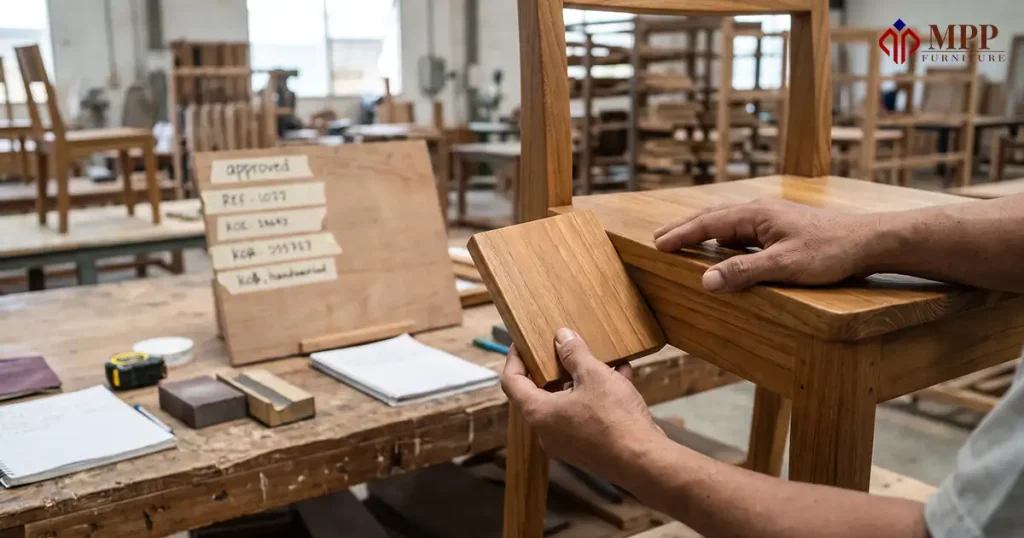
Before discussing a new color, always circle back to your original approval. This includes the approved finish swatch, the physical sample chair, target color, sheen, grain appearance, and the agreed tolerance for natural material variation.
A label like "natural teak finish" gives a general idea, but it lacks the precision of a physical reference. Our guide on matching wood finish and rattan tone highlights a real case from MPP's product development: the wood and woven materials looked fine individually, but once applied to the chair, the wood showed a noticeably warmer undertone. Naturally, the reference sample had to be adjusted before final sign-off.
If you also source outdoor lines, keep in mind that finishing requirements vary depending on environmental exposure. Our Outdoor Teak Dining Furniture range requires a dedicated finishing application rather than assuming one standard coating system works across every product category.
A Finish Change Is Different From a Manufacturer Quality Issue
The first question is simple: Does the current production match the approved reference?
If the bulk chairs do not match the approved swatch, physical sample, or agreed tolerance, the issue should be reviewed as a manufacturing quality matter. But if production matches what was approved and the buyer later requests a different teak furniture finish, it becomes a buyer-requested specification change.
MPP Furniture experienced this during a bulk order where the buyer had approved a warm finish and all products were completed according to the approved sample. The request to change the products to an unfinished appearance came only at the final production stage, when the order was already waiting for packaging.
In this case, the original warm finish was not a production defect because the factory had followed the approved specification. The new unfinished direction was a change requested after the approved finish had already been applied across the order.
Check How Far Bulk Production Has Progressed Before Changing the Finish
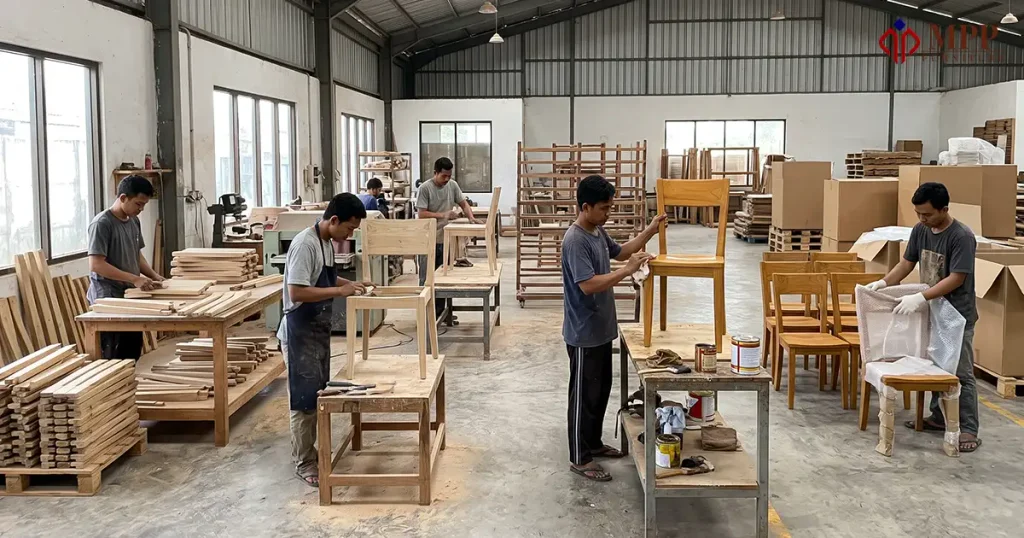
Where your order sits on the production floor directly dictates the amount of rework required. If components are still raw teak and haven't hit the finishing line, pivoting to a new shade is fairly straightforward compared to stripping chairs that already have stain, sealer, or topcoat applied.
During manufacturing, MPP continuously checks production against the approved reference, reviewing multiple units side-by-side. This step is critical because minor color shifts that look negligible on a single chair can stand out immediately when several indoor teak dining chairs are grouped together in a dining setting.
Before locking in any changes, always request an accurate production status update. Knowing exactly how many pieces are still raw, currently in the finishing shop, or fully finished gives both sides a clear, practical basis to negotiate costs and timelines fairly.
Understand What Rework the New Finish May Require
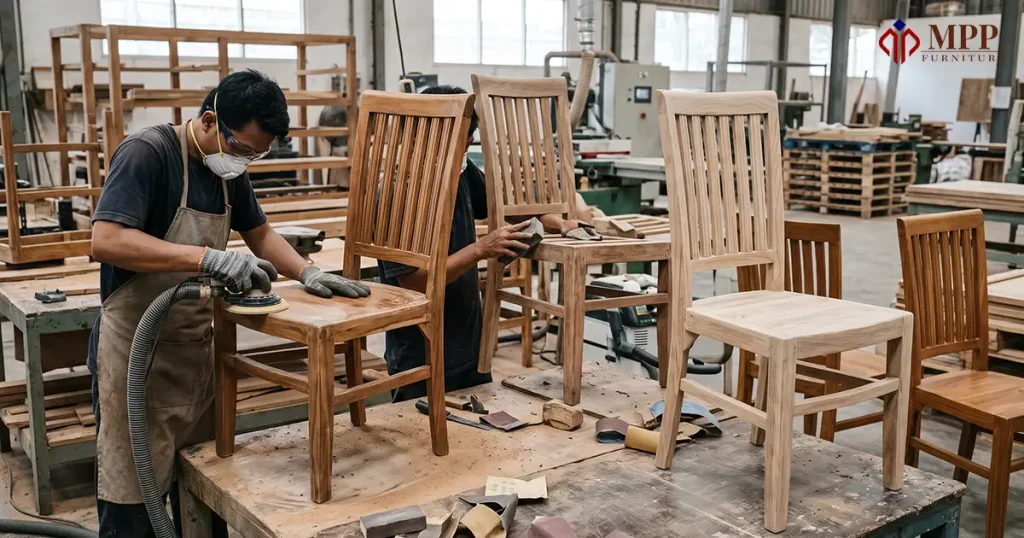
Changing a finish does not always mean applying another color over the existing surface. Depending on the finish system and current production stage, the factory may need to remove or reduce the existing color, prepare the surface again, repeat finishing steps, allow new drying time, and inspect the result again.
In the same MPP bulk production case, the buyer requested an unfinished appearance after all products had already received the approved warm finish and were ready for packaging. Because the color had already been fully applied, we had to carry out a color-removal process and restart the finishing workflow instead of making a simple surface adjustment.
This case shows why production progress matters. Changing unfinished teak before color application is very different from changing products that have already completed the approved finishing process, because work that was previously completed may need to be repeated.
The amount of rework should therefore be assessed from the actual condition of the products, the requested new appearance, and the stage where the change is requested. Buyers should review this impact with the manufacturer before approving the revised finish and authorizing rework.
Why a Buyer-Requested Finish Change Can Add Cost and Lead Time
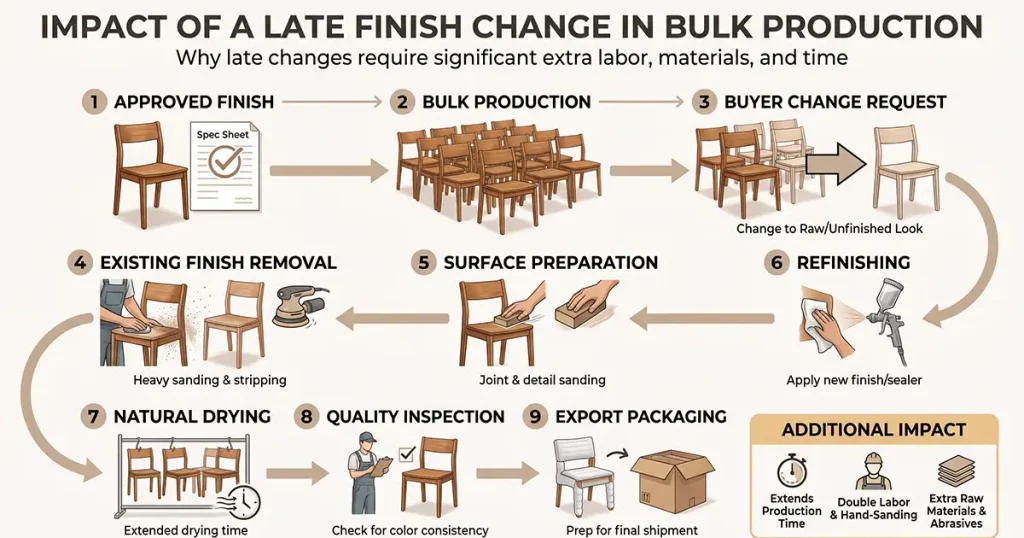
Additional cost is not a penalty for changing an order. It represents work, materials, handling, inspection, or sampling that was not part of the original approved production plan.
For example, the factory may need additional sanding labor, finishing materials, a revised sample, extra color matching, another QC cycle, or further handling of chairs that had already passed an earlier stage. Research on customer change orders in make-to-order manufacturing also shows that specification changes during order fulfillment can generate meaningful additional production costs.
The original lead time may also need revision because the factory must stop affected units, assess the rework, obtain new approval, repeat production steps, allow the finish to dry, and inspect the chairs again. The timing should be recalculated from the actual production position instead of assuming the original shipment date remains unchanged.
Decide Whether Changing the Finish Is Still Worth It
A buyer should compare the commercial benefit of the new color against the cost and timing of the change. Ask why the finish needs to change, how many units are affected, what work must be repeated, what additional cost applies, and how the shipment date may move.
Keeping the approved finish may make more business sense when production is already far advanced and the existing color is still suitable for the collection. Changing it may make sense when the new direction has a strong retail or collection reason, and the buyer accepts the rework cost and revised schedule.
For buyers still reviewing product specifications before production starts, our guide to custom teak indoor dining chairs explains how approved physical samples become references for repeatable bulk production.
Confirm the New Finish Before Rework Continues
Once both sides decide to proceed, the revised finish should become a new controlled reference. Confirm the new swatch or sample, affected SKUs, affected quantity, rework scope, additional cost, revised lead time, and written approval before the factory restarts the affected work.
The earlier the new direction is documented, the easier it is for production and QC teams to compare the reworked chairs against the same target. Buyers who need broader context on finish consistency and chair production can also refer to our teak dining chairs retailer guide.
Final Decision: Treat Mid-Production Finish Changes as a Commercial Decision
A finish change during bulk production is not simply a color request. It is a production decision that should be evaluated through the approved reference, current production stage, required rework, added cost, and delivery impact.
A fair process protects both sides. The buyer remains free to revise the specification, while the manufacturer can explain what has already been completed and what must change before the new finish can be produced consistently.
Need to Review a Finish Change Before Bulk Production Continues?
If your teak dining chair order is already in production and you are considering another finish, MPP Furniture can review the current production stage before rework begins. Share the approved finish, requested new color, product reference, affected quantity, and target shipment date. Our team can review the production impact, revised finish reference, possible rework, additional cost, and timing before you make the final decision.
FAQ: Changing Furniture Finishes During Bulk Production
1. Can I change the finish of teak dining chairs after bulk production has started?
Yes. The change may still be possible, but the factory should first review production progress, the existing finish layers, affected quantity, rework requirements, additional cost, and delivery impact.
2. Who pays for rework if the buyer changes an approved finish?
If production matches the approved reference and the buyer requests a different specification, the rework may carry additional buyer-side cost. The final responsibility should follow the purchase agreement, approval records, and revised commercial agreement.
3. Is a different teak color automatically a manufacturer quality issue?
No. Production should first be compared with the approved finish swatch, physical sample, and agreed variation range. If the production matches those references but the buyer wants another color, it is a specification change rather than a correction of defective work.
4. Can changing the finish affect the original lead time?
Yes. Rework may require repeated surface preparation, color application, coating, drying, inspection, and production scheduling, so the original shipment plan may need to be revised.
5. Should the new finish be approved again before rework starts?
Yes. A revised swatch or physical sample gives the buyer, production team, and QC team the same new reference before affected units move forward.

A versatile content creator with a strong foundation in product photography and videography, and a comprehensive brand strategy. Capable of creating engaging content to connect consumers and producers, web analytics, and engaging visual content to drive interest and growth for a product or brand.



0 Comments