A side table might look stunning in a product catalog, but the real test happens when it finally reaches the end consumer's living room. If the physical build fails to meet expectations, upfront production savings quickly transform into costly return logistics and a damaged brand reputation.
The solid teak vs teak veneer debate is not just about factory pricing; it is about securing price positioning and giving sales teams a compelling story to tell. Let's break down exactly how each option impacts your retail success.
Why This Comparison Matters More Than It Seems
Retailers who buy based purely on the lowest quotation price often misjudge their long-term return risks. For example, solid teak and veneer side tables might look identical in catalogs, hiding their vastly different retail economics. Consequently, any upfront cost advantage evaporates quickly when a fragile surface triggers a wave of consumer complaints.
Conversely, paying a premium for solid teak does not guarantee success if the strategy ignores the buyer's purchasing power. If a specific market will not pay extra for natural wood, those expensive tables will simply collect dust. Ultimately, if you are selecting inventory, protect your margins by matching solid wood to premium buyers and smartly crafted veneer to volume-driven markets.
Solid Teak Side Tables: Strengths and Trade-Offs
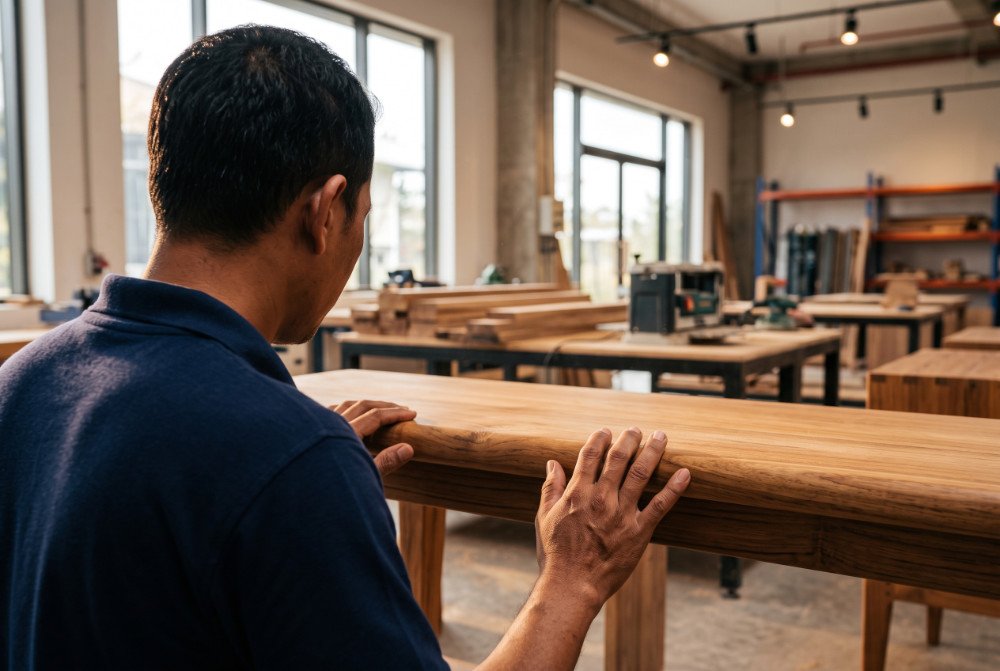
Solid teak hands retail sales teams an unbeatable proposition: what buyers see is exactly what they get. This raw authenticity builds a powerful brand story for furniture collections. However, it naturally comes with a steeper material cost and demands stricter manufacturing oversight.
Long-term durability and repairability
The greatest advantage of a solid teak side table is the sheer amount of workable material beneath its surface. When scratches, dents, or spills occur, the wood can simply be sanded down and refinished like new. If you position your furniture as a lifelong purchase, use this effortless repairability as a primary selling point.
This characteristic also reduces after-sales service costs, as retailers can often fix cosmetic damage instead of replacing the whole unit. Just remember that the label "solid teak" alone does not guarantee a flawless product. Factors like moisture stability and machining accuracy are crucial to the final build.
For buyers who want to understand material grading, read our guide on the difference between Grade A and Grade B teak. Even top-tier teak will warp or crack if a factory fails to manage the drying process properly. In short, solid wood offers flexibility, but it is the factory's discipline that dictates the product's ultimate reliability.
Premium positioning and perceived value to end customers
Selling solid teak as a luxury item feels natural because end consumers instantly grasp what they are paying for. The unique grain patterns, hefty construction, and promise of graceful aging give retailers endless ammunition to justify a premium price tag. If you target a demographic that treats furniture as an heirloom, emphasize these natural characteristics over seasonal decor trends.
For these affluent buyers, the words "solid teak" hold far more magic than a mere "teak-colored finish". However, if you are marketing these pieces, you must be incredibly precise with the promises you make to customers. For a deeper explanation on material variations, read our guide on why not all teak wood is the same.
This material complexity gives retailers a golden opportunity to craft a richer sales narrative. Rather than just name-dropping the wood species, you should sell the craftsmanship, the origin, and the intended lifestyle.
Higher unit cost and its impact on retail pricing
Because solid teak requires significantly more raw timber, upfront factory production costs will inevitably be higher. This price jump becomes glaringly obvious on chunky designs featuring thick tabletops or expansive panels. If you are a retailer absorbing that higher cost, ensure your final price tag can effortlessly cover the premium.
A beautiful margin on a spreadsheet means absolutely nothing if the table sits in a warehouse collecting dust because it is priced out of the market. For a complete cost breakdown, read our guide to furniture pricing from Indonesia. Ultimately, solid teak is a winner only when retailers successfully translate that higher production cost into undeniable prestige for the end consumer.
Teak Veneer Side Tables: Strengths and Trade-Offs
Lower production cost and more accessible retail pricing
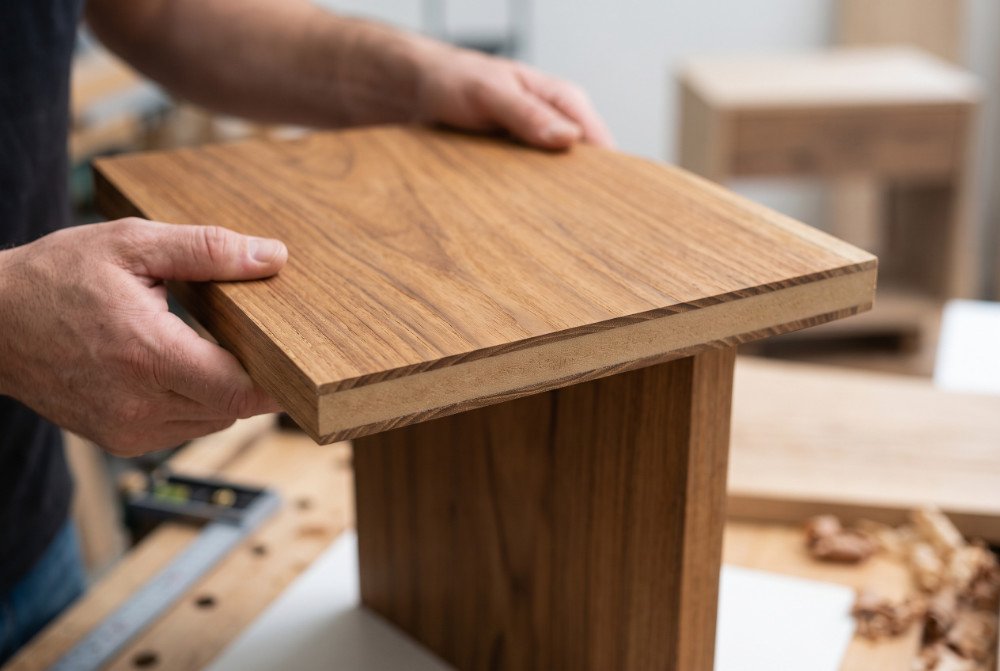
Teak veneer serves as a strategic choice for brands hitting a more aggressive, accessible price point. By using real teak only on the surface layer, manufacturers deliver that coveted visual charm without scaring away price-sensitive buyers. If you want to experiment with new collections, utilize these lower material costs to free up your buying budget.
This approach gives buyers the freedom to test more SKUs, finishes, or sizes in the market before committing to a wildly expensive solid-teak run.
Design flexibility with consistent surface appearance
Veneer grants furniture designers total control over grain direction, ensuring a sleek, uniform look across broad, flat panels. It is perfect for commercial projects or franchise setups where buyers need a consistent aesthetic without wild natural variations. To see how material choice impacts design, read our breakdown on Indonesian coffee tables.
Limitations in durability, repair, and long-term resale value
The trade-off with veneer is its fragile, thin, usable surface. Deep gouges, careless water spills, or overzealous sanding can easily expose the core material beneath, making elegant repairs nearly impossible. When reviewing product specifications, you must also carefully scrutinize the core material itself.
A spec sheet that simply says "teak veneer" hides whether the factory is using MDF or plywood, which behaves very differently in real-world conditions.
Solid Teak vs Teak Veneer: Comparing the Numbers
Cost per unit and margin potential at different price tiers
Instead of asking which is cheaper, you should focus on protecting your margin against inflation. Since raw wood costs recently jumped 23%, relying solely on cheap materials can dangerously squeeze a retailer's profits. Meanwhile, premium solid pieces can command a 15-20% price premium that affluent buyers happily accept, securing a much fatter gross profit.
Expected product lifespan and its effect on return or complaint rates
Solid teak easily invites repair, aligning perfectly with market data showing premium furniture is retained for up to 15 years. In contrast, economy pieces cycle out every 5 to 7 years, exposing veneer options to faster demand swings and return risks. The operational risks are simply different: solid wood faces humidity and joint issues, while veneer risks peeling edges and core damage.
How each option performs across different climates and use conditions
Because natural wood breathes, solid teak demands rigorous kiln drying, keeping moisture strictly below 12% to survive extreme climates. Veneer also holds up surprisingly well on a stable core, provided the adhesives and edge sealing are flawless. Ultimately, if you want to guarantee these tight specs, partner with an experienced teak furniture Indonesia factory that handles this entire process in-house.
Because natural wood breathes and reacts to moisture, rigorous drying is necessary to survive extreme climates. To see how these environmental principles apply to seating positioned in fluctuating environments, learn more in our guide: When Teak Occasional Chairs Make Sense for Semi-Outdoor and High-Humidity Retail Collections.
Which Option Fits Your Retail Strategy

When solid teak justifies a premium price point
Solid teak is the champion material when an audience craves authenticity and generational durability. If you run a design-forward brand, use solid wood for custom joinery that feels intentionally crafted. At MPP Furniture, we adapt these techniques to each design—using pinned mortise-and-tenon for chairs and slotted tongue-and-groove for tables to allow natural wood movement.
When teak veneer supports a volume-driven, accessible price tier
Veneer takes the crown if a retail growth strategy relies on aggressive pricing, visual consistency, and a massive customer base. It is also the smartest engineering choice for modern, boxy designs featuring wide, flat geometric panels. Remember, if you are developing a new line, your goal is not to build the cheapest table possible.
Your goal should always be to craft a piece that feels like an absolute steal at your chosen price point.
Questions to ask your manufacturer before placing a first order
When vetting suppliers, you should always interrogate the factory about their exact veneer substrate, moisture targets, and historical defect rates. Facilities that control their entire production in-house, achieving defect rates as low as 0.56%, offer buyers much better predictability than those outsourcing components. At MPP Furniture, we prioritize this level of operational transparency because partnering with reliable Indonesian furniture manufacturers always beats picking blindly from a generic catalog.
Interrogating your factory about moisture targets and substrate materials is vital, but you also need to structure your initial request properly to avoid manufacturing delays. For a related article on organizing your specifications to secure accurate pricing and production terms, check out How to Get a Quote & MOQ for Indoor Furniture From an Indonesian Manufacturer.
Final Thoughts: Key Takeaways
Solid teak and teak veneer side tables serve entirely different retail strategies, not just different price points. If you are finalizing an inventory decision, your ultimate choice must directly reflect how your specific target customers evaluate quality and value. At MPP Furniture, we highly recommend taking advantage of our flexible initial order minimums to test both options in smaller volumes before committing to a full collection roll-out.
FAQs About Solid Teak vs Teak Veneer Side Tables
1. Is solid teak better than teak veneer for side tables?
Solid teak is usually better for premium collections where durability, repairability, and natural material value support a higher retail price. Teak veneer can be a better fit when retailers need more accessible pricing and consistent surface appearance.
2. Is teak veneer real teak?
Yes. Teak veneer uses a thin layer of real teak applied over a core material such as plywood, MDF, or another engineered panel. The quality of the finished side table depends on both the veneer and the material underneath it.
3. Are solid teak side tables worth the higher cost for retailers?
They can be worth the higher cost when your customers are willing to pay more for natural materials, longer service life, and stronger repair potential. The investment makes less sense when your market is mainly driven by lower retail prices and faster product turnover.
4. How long can teak veneer furniture last?
Teak veneer furniture can last for many years when the substrate, bonding, edge treatment, finishing, and intended use are properly matched. Its repair options are usually more limited than solid teak if the surface becomes deeply scratched or damaged.
5. Should retailers choose solid teak or teak veneer for a new collection?
Choose solid teak when premium positioning, material authenticity, and long-term use are part of your retail promise. Consider teak veneer when accessible pricing, visual consistency, and higher-volume sales are more important to your collection strategy.
Ready to Build Your Side Table Collection?
To start planning your next side table line, explore MPP's furniture collections or contact MPP Furniture to confidently compare solid teak and teak veneer options for your lineup.

I am a Web Designer, Technical SEO Specialist, and writer with 6+ years of experience in website optimization and search visibility. For more than a year, I have supported MPP Furniture’s growth, and I am currently expanding my role as an author to help B2B furniture buyers make more informed business decisions through informative, practical, and impactful articles.
0 Comments