A teak occasional chair can look right on a showroom floor but still be positioned for the wrong environment. For retailers, that mismatch can lead to finish complaints, cushion issues, customer confusion, and a product story that does not match how the chair will be used.
The real question is not whether teak is a good material. It is whether teak's properties, the full chair specification, and your customer's placement conditions line up well enough to justify the choice.
Why Placement Context Changes the Material Conversation
Not all occasional chairs live in the same environment; some sit in fully enclosed indoor spaces, while others face the shifting climates of transitional areas. Retailers often choose materials based on general reputation rather than the specific environment a piece will actually face.
Understanding where teak's advantages actually apply helps retailers position occasional chairs more precisely within a collection.
For a broader view of outdoor performance and buyer trade-offs, read the pros and cons of teak for outdoor furniture. That guide covers full outdoor use, while this article focuses on semi-outdoor and humid collections.
What Makes an Environment 'Semi-Outdoor' or High-Humidity
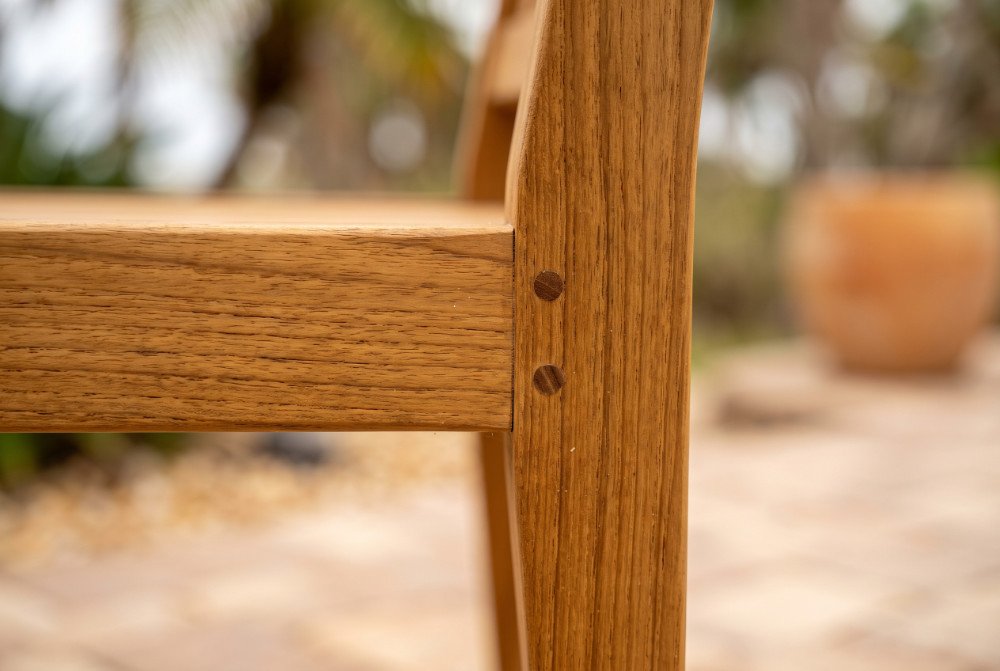
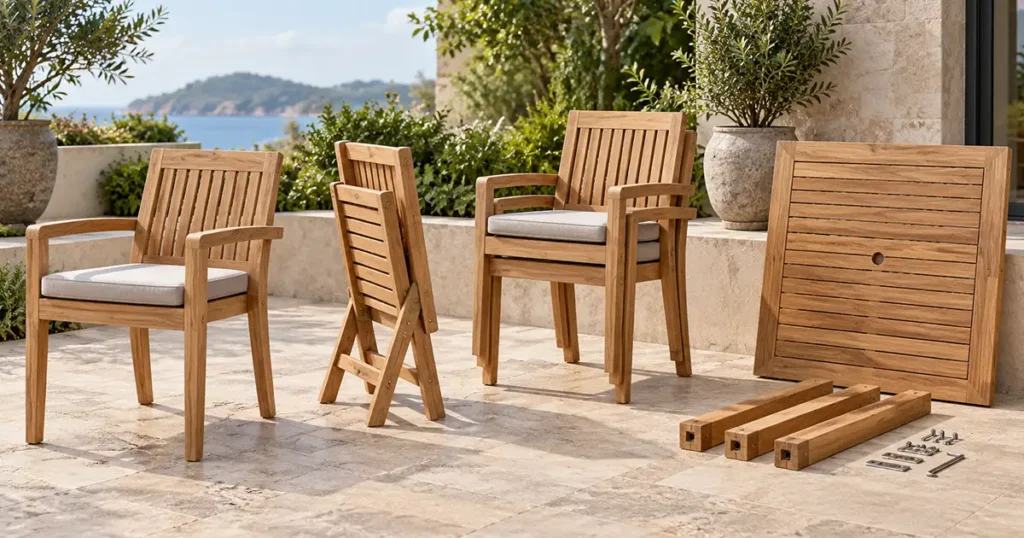
Common semi-outdoor retail contexts: sunrooms, covered patios, coastal climates
Semi-outdoor spaces are protected from direct weather but still exposed to outside air, changing humidity, indirect sunlight, and temperature shifts. Examples include sunrooms, covered patios, enclosed balconies, roofed terraces, and resort lounges.
Customers may treat these areas as indoor rooms even when the furniture experiences outdoor-like conditions. The product specification needs to reflect that difference.
How humidity and temperature swings affect furniture material over time
Wood responds to moisture in the surrounding air, so humidity changes can cause small dimensional movement. Repeated shifts can affect joints, finishes, and how different materials in one chair react together.
Teak often handles moisture changes well, but the frame is only one part of the product. Upholstery, foam, rope, hardware, adhesives, and finishes also need to match the intended placement.
Why fully indoor, climate-controlled spaces face different demands
In a stable indoor room, environmental stress is lower. Teak can still be selected for its appearance or premium positioning, but its moisture-related performance may provide less practical value there.
The material story should support the customer's real use case, not just teaks' reputation alone.
How Teak Performs in Semi-Outdoor and High-Humidity Conditions
Natural moisture resistance and dimensional stability
Teak naturally contains oils that provide excellent dimensional stability compared to most common furniture woods. In fact, technological evaluations show that teak maintains a remarkably low average volumetric shrinkage of just 8.15%. This exceptionally low shrinkage rate is exactly what makes teak highly suitable for applications in environments with fluctuating humidity.
Because of this stability, the wood undergoes minimal deformation even when placed in transitional spaces like sunrooms or covered patios. Your teak occasional chair's joinery stays perfectly tight, significantly reducing the risk of cracking as the air moisture shifts. Ultimately, this reliable performance translates to fewer customer complaints and a much stronger investment for your retail collection.
For more detail on climate exposure, moisture content, and production factors, read how long outdoor teak furniture lasts. It explains why material quality alone does not determine long-term performance.
Long-term appearance retention in fluctuating conditions
Teak can age well, but buyers should still expect surface changes with humidity, light, air movement, or salt-laden coastal air. The finish specification should match the visual result your collection promises.
Retailers should decide whether they want an indoor-style appearance or a more natural aging story. That choice affects finishing, care instructions, and presentation.
Maintenance expectations compared to fully indoor pieces
A semi-outdoor teak chair usually needs more care than the same chair placed indoors. Dust, humidity, occasional dampness, and indirect sunlight can make cleaning and surface checks more frequent.
Retailers should give customers clear placement and care guidance before the product reaches the sales floor.
Where Teak Occasional Chairs Deliver the Most Value
Hospitality and resort-style collections with mixed indoor-outdoor spaces
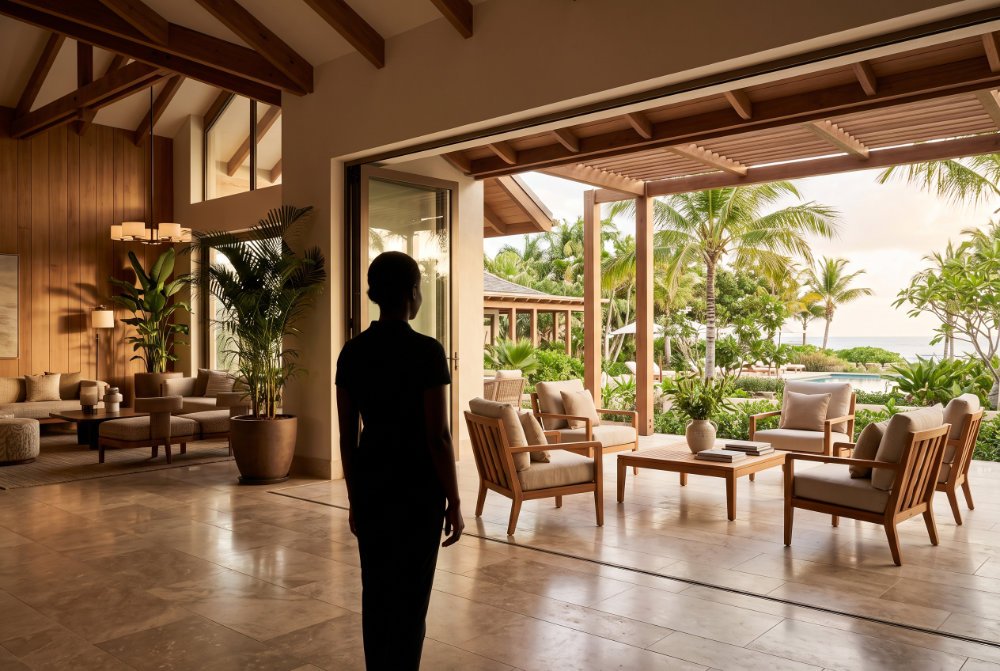
Teak occasional chairs are ideal for hospitality venues where design must flow seamlessly from indoor lobbies to covered terraces. As hotels aggressively expand their open-air areas, B2B buyers increasingly demand furniture that delivers both visual continuity and serious material performance. This strategic choice perfectly answers the growing consumer appetite for comfortable semi-outdoor socialization.
In fact, market forecasts project that wood materials will dominate the global outdoor furniture market with a massive 53.28% share in 2026. Teakwood specifically leads this charge because its natural resistance to moisture and fluctuating temperatures makes it a highly cost-effective investment over time. So, when you position a teak occasional chair for these transitional resort spaces, you are essentially backing your collection with proven global market data.
For a closer look at this project context, read why Indonesian teak furniture is used for hospitality. It covers teak across hotels, resorts, and commercial environments with heavier use.
Retail customers in humid or coastal regions
Retailers serving tropical, subtropical, or coastal markets have a clearer reason to position teak around environmental suitability. Customers in those regions may deal with persistent humidity even when furniture stays under cover.
Instead of selling only a premium wood story, retailers can connect teak to conditions customers actually live with.
Collections marketed on durability across varied conditions
Some collections target customers who want flexible placement between indoor and sheltered exterior areas. Teak can support that promise when the complete chair, not only the wooden frame, has been developed for those conditions.
For buyers comparing purchase price with longer-term product value, read the investment value of teak furniture for B2B buyers. It covers replacement cycles, perceived value, and the commercial logic behind teak positioning.
How to Decide if This Positioning Fits Your Collection
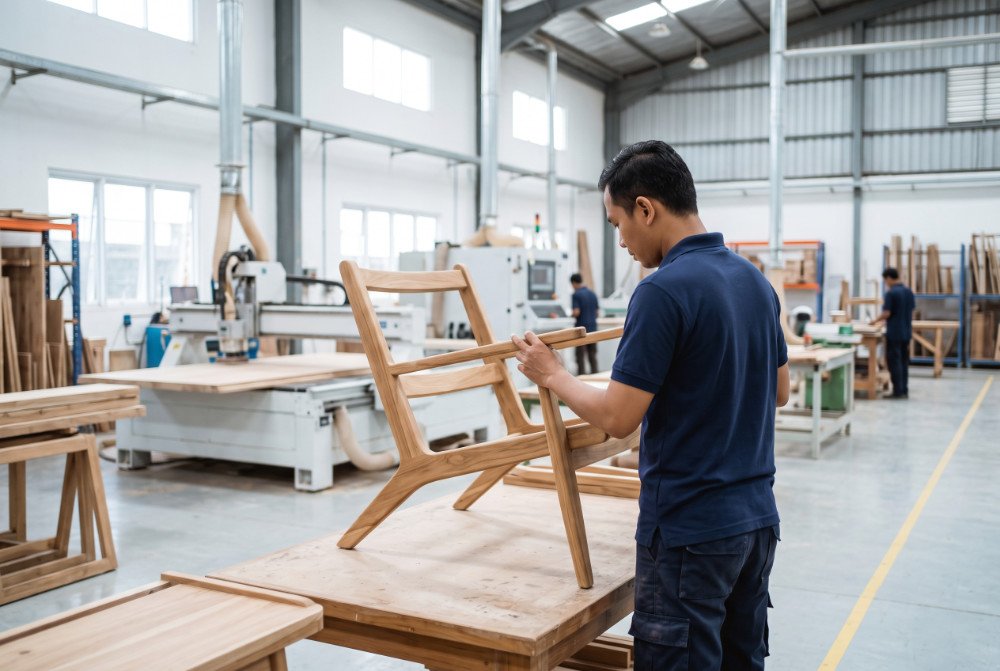
Start with your customer, not just the wood species. Before adding a teak occasional chair to your catalog, carefully evaluate these key factors to ensure your product positioning matches the reality of its environment:
- Consider whether your target customers are shopping for fully indoor or mixed-environment spaces.
- Consider regional climate patterns relevant to your primary customer base.
- Ask your manufacturer how teak's performance claims translate to your specific market.
If your target audience leans heavily toward transitional living, discuss finish, joinery, and placement with experienced Indonesian furniture manufacturers before approving any sample.
At MPP Furniture, we tackle these environmental challenges directly from our 16,000 m² in-house teak furniture factory in Indonesia. We secure your collection's structural integrity through strict kiln-drying to keep wood moisture below 12%, paired with precision CNC joinery. This meticulous control ensures your custom chairs are fully climate-optimized before mass production even begins.
Once you evaluate the regional climate patterns relevant to your primary customer base, you must ensure the furniture's internal mechanics are built to survive. To understand how joinery and moisture preparation dictate the stability of seating frames, read also: Teak Dining Chairs: What Retailers Should Know Before Stocking Them.
Final Thoughts: Key Takeaways on Positioning Teak Occasional Chairs by Environment
Teak occasional chairs make the most commercial sense when the environment gives teak's material properties a real job to do. Semi-outdoor spaces, humid regions, coastal markets, and mixed indoor-outdoor hospitality settings are stronger use cases than stable indoor rooms.
The material story should also match the complete chair specification. Frame, finish, joinery, upholstery, foam, rope, hardware, and care expectations should support the same placement promise.
If your collection is aimed at humid or semi-outdoor use, discuss the market and placement conditions before finalizing the design. That gives you a better basis for customization and a clearer story for customers.
FAQ: Teak Occasional Chairs in Semi-Outdoor & Humid Spaces
1. Is teak wood only meant for fully outdoor furniture?
No. While famous for outdoor durability, teak's exceptionally low volumetric shrinkage makes it highly effective for semi-outdoor spaces like sunrooms and enclosed balconies where humidity constantly shifts.
2. Does high humidity damage teak occasional chairs?
Not when properly manufactured. By keeping the wood moisture content strictly below 12% during kiln-drying and using precision joinery, teak easily withstands humid conditions with minimal deformation.
3. Do semi-outdoor teak chairs require different maintenance than indoor pieces?
Yes. Because they are exposed to indirect sunlight, changing temperatures, and occasional dampness, they require slightly more frequent cleaning and surface checks than pieces sitting in climate-controlled rooms.
4. Why should retailers choose teak for a mixed indoor-outdoor collection?
Teak offers seamless visual continuity across transitional spaces like resort lobbies and covered patios. It delivers premium indoor aesthetics while packing the necessary structural durability to handle environmental stress.
Ready to Engineer Your Teak Occasional Chair Collection?
Ensure your collection is climate-optimized before mass production begins. Explore MPP's in-house teak manufacturing capabilities or discuss your custom semi-outdoor collection requirements with our team.

I am a Web Designer, Technical SEO Specialist, and writer with 6+ years of experience in website optimization and search visibility. For more than a year, I have supported MPP Furniture’s growth, and I am currently expanding my role as an author to help B2B furniture buyers make more informed business decisions through informative, practical, and impactful articles.
0 Comments