A factory says it can produce 30 containers a month. That sounds reassuring, until your order is delayed because the same factory already has several large programs running at the same time.
For procurement managers, the real risk is not finding a factory with a big number. It is finding out too late that the number does not match your product, your delivery window, or the factory's actual workload.
Before committing to a large or repeat order, you need to look beyond claimed capacity and test how the manufacturer plans to produce your specific order. The difference between a confident promise and a realistic production plan can save months of delays, quality problems, and uncomfortable conversations with your own customers.
Why a Capacity Number Alone Doesn’t Tell You Much
A monthly production number needs context. "30 containers per month" could describe the factory's best month, a normal average, or the maximum output under ideal conditions.
It also may not reflect the type of furniture you are ordering. A simple solid-wood table, a teak dining chair, and a woven rattan chair can require very different amounts of labor, machining, sanding, finishing, and inspection time.
Capacity also changes when several buyers are producing at once. A manufacturer may have the physical ability to produce your volume, but that does not mean the same capacity is available during the period you need.
Retailers and importers should also separate sample performance from production performance. A good sample proves that the factory can make the product once, while larger production tests whether the same result can be repeated under schedule pressure.
For a deeper explanation of what can happen when production scales beyond the supplier's systems, read our guide to wood furniture supplier quality issues.
A factory’s blazing-fast output means nothing if your containers get stuck at the port waiting for clearance. Despite recent infrastructure upgrades, average dwelling times at major Indonesian export hubs like Semarang still hover around five days due to multi-agency bureaucracy. If your supplier calculates lead times based solely on factory floor capacity and ignores these logistical delays, your delivery schedule is already in trouble.
What to Look at Instead of the Headline Number
Facility Size and Workforce Count Relative to the Claimed Output
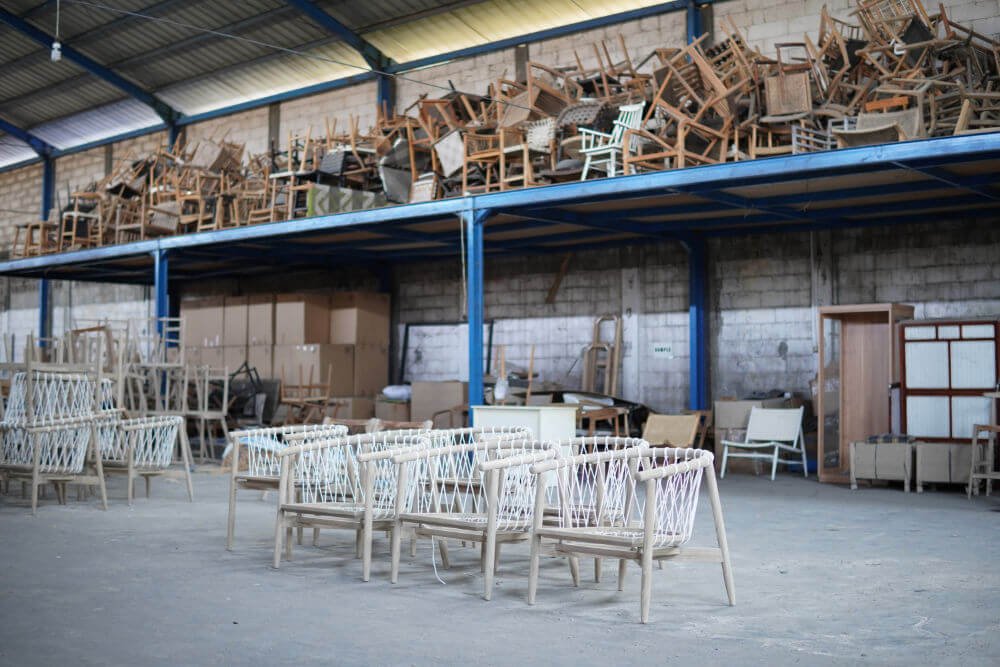
A massive facility means very little if the actual worker count does not logically support the promised monthly output. You need to look closely at the number of active operators stationed at relevant machines, sanding areas, finishing spaces, and packing lines.
Imagine a manufacturer claiming they can ship 30 containers of hand-woven rattan chairs per month, yet a quick floor tour reveals only ten active weavers on site. The math simply does not work out. This glaring discrepancy proves that labor-heavy stages like hand sanding, weaving, or inspection will instantly bottleneck their impressive theoretical capacity.
On the flip side, a smaller factory with a highly organized production flow might handle a focused product category much more efficiently than a giant but chaotic warehouse. You are looking for a realistic balance between the physical workspace, the human resources, and the quoted production numbers.
If you are currently evaluating outdoor suppliers, raw labor scale is only half the story. Read our guide on what to look for in a teak garden furniture manufacturer to understand how material expertise directly impacts a factory's true output.
How the Manufacturer Handles Concurrent Orders from Multiple Buyers
Most factories build for several buyers simultaneously. The critical factor is how they allocate their finite resources like workers, machines, and finishing space among those overlapping projects.
A massive factory floor loses its advantage if 90 percent of its capacity is already booked by a major global retailer. Understanding how a manufacturer schedules its workload ensures your order receives dedicated attention instead of just fighting for leftover resources.
Whether Capacity Is Described in General Terms or Specific to Your Product Category
General capacity claims are less useful than product-specific estimates. Ask how many units of your actual chair, table, cabinet, or woven product can realistically be completed per week or per month.
Construction complexity can change output significantly. A chair with hand weaving, detailed joinery, several finishing steps, or custom packaging may move through production much slower than a simpler model.
At MPP Furniture, your product’s specific complexity dictates our timeline, not a generic factory estimate. Occasional items and seating like dining chairs, tables, and sofas take 45 to 65 days, while heavy case goods like sideboards, cabinets, and credenzas require a 90-day window. We meet these realistic targets by balancing 50% machine automation for speed and consistency with the meticulous artisan touch that adds true artistic value.
Questions That Reveal Real Capacity vs Claimed Capacity
Start by asking for a realistic delivery date built around your exact quantity and SKU mix. A generic estimate tells you much less than a schedule tailored to your product specifications.
Next, directly ask how many other large orders will be running during your production window. This reveals the actual available capacity rather than the theoretical maximum factory output.
You should also ask which specific stage is most likely to slow down your order. A capable manufacturer knows their bottlenecks and can clearly explain whether weaving, sanding, finishing, or drying will take the most time.
Do not forget to ask what happens if a larger client suddenly requests a rush order. Their answer will show whether your production slot is strictly protected by careful planning or if it relies on whichever client shouts the loudest.
Finally, clarify if any part of your order might be produced outside the facility. If subcontracting is part of their system, you need to know who controls the timing and quality standards.
Signs a Manufacturer Is Overstating Their Capacity
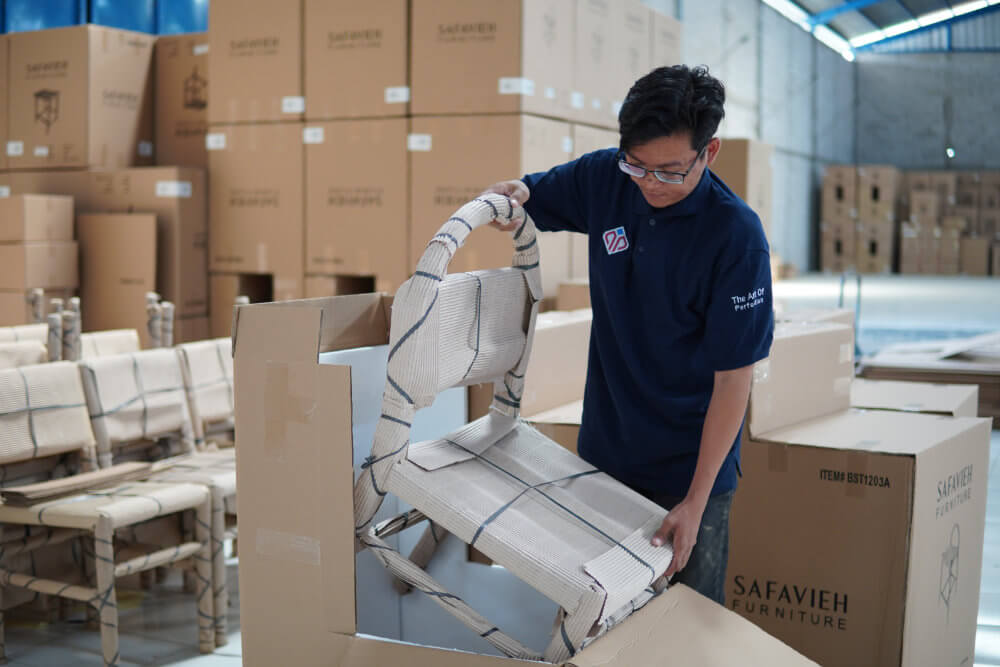
Delivery Estimates That Don’t Change No Matter How Large the Order Gets
Be careful when the quoted production time stays almost identical for very different order sizes. Moving from 200 pieces to several containers usually changes labor allocation, material preparation, finishing time, inspection, and packing.
A reliable manufacturer should be able to explain why the schedule changes or why it does not. The explanation matters more than the promise.
Vague Answers When Asked About the Current Production Schedule
Statements such as "no problem," "we have plenty of capacity," or "we can handle any quantity" are easy to say. They do not show how your order will fit into the factory's current workload.
Ask for a simple production sequence instead. You should be able to understand when materials are prepared, when production starts, which stages follow, and when inspection and packing are expected.
Reluctance to Show the Factory Floor or Provide a Virtual Tour
A reliable supplier will proudly walk you through their active production lines. Pay close attention if a manufacturer constantly finds excuses to avoid a live video call or refuses to show anything beyond their perfectly curated sample room.
Claiming poor internet connection on the factory floor or restricting access due to vague confidentiality rules can be a major red flag. It often means the bustling factory they described is either completely empty or entirely overwhelmed with other commitments.
For a deeper explanation of what buyers can verify during a visit, read why visiting an Indonesian furniture supplier is important.
How to Confirm Capacity Before You Commit
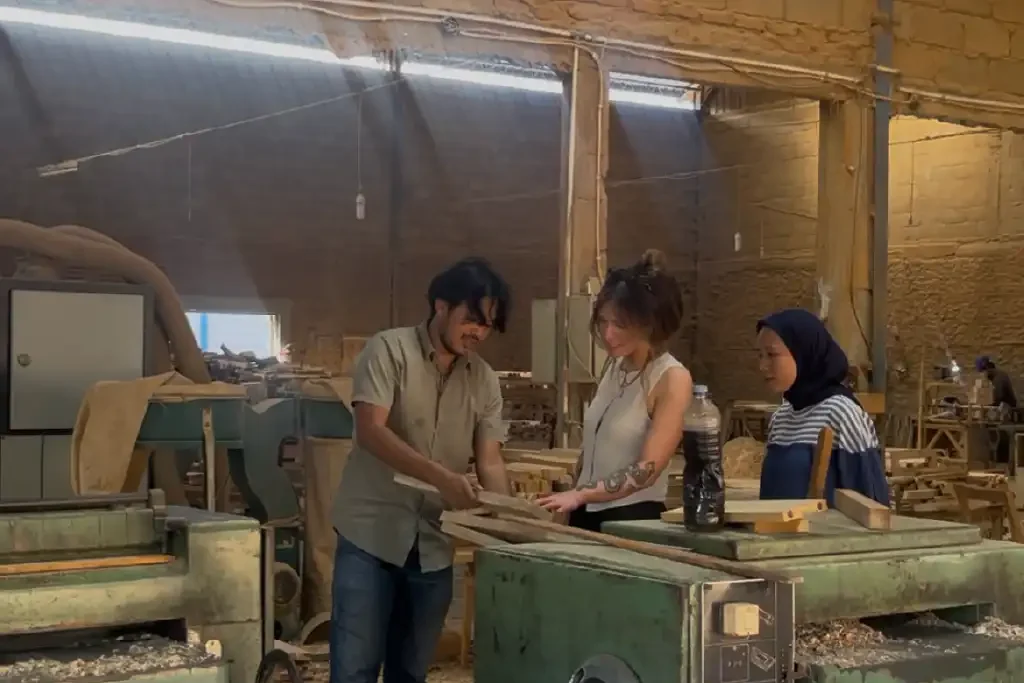
Start by requesting a live virtual tour or an in-person visit specifically focused on your product category. During this tour, insist on seeing the relevant machinery, the current work in progress, and the packing stations to verify their operational scale.
Then, ask for references from buyers who have placed orders similar to yours. A glowing review from a client with your exact volume is much more valuable than a famous name who only buys a few pieces a year.
You should also ask the manufacturer to map out the expected weekly output for your specific order. This breaks down their promised delivery date into a measurable plan you can actually track.
Finally, placing a mid-size trial order is the ultimate practical test. It allows you to evaluate their production control, communication habits, and schedule reliability before you risk scaling up your volume.
If you are comparing Indonesian furniture manufacturers for a large program, always discuss your product mix and target delivery period upfront before making any final commitments.
Final Thoughts: Takeaways Before You Place a Large Order
A production capacity number does not tell you whether your order will be completed on time. You need to know how much capacity is available for your product during your required production period.
Ask about current workload, product-specific output, bottlenecks, concurrent orders, and production allocation. Then confirm the answers through a factory visit, comparable buyer references, or a mid-size trial order.
The goal is not to find the factory with the biggest number. It is to find a manufacturer that can explain its limits, plan your order realistically, and repeat the same standard when your volume grows.
Frequently Asked Questions Before Placing a Large Order
1. Why shouldn't I trust a standard "30 containers a month" claim?
A headline number usually represents maximum output under perfect conditions, not actual availability. It ignores concurrent orders from other buyers and the specific labor required for your unique product.
2. What is the biggest red flag during a factory evaluation?
Constant excuses to avoid a live virtual tour or restricting access to the active production floor. A capable manufacturer is always proud to show you their facilities and current work in progress.
3. How can I safely test a supplier's true production capacity?
Start with a mid-size trial order instead of jumping straight into a massive commitment. This practical test reveals their real scheduling reliability and quality control under actual production pressure.
4. Does the type of furniture really change the production timeline?
Absolutely. A simple solid wood table moves through the factory much faster than a hand-woven rattan chair or a heavy credenza. Construction complexity always dictates the realistic pacing of your order.
Ready to Place a Large Order with Confidence?
Stop guessing about production capacity. Partner with a transparent Indonesian manufacturer that builds realistic schedules and dedicated production slots around your specific product requirements.

I am a Web Designer, Technical SEO Specialist, and writer with 6+ years of experience in website optimization and search visibility. For more than a year, I have supported MPP Furniture’s growth, and I am currently expanding my role as an author to help B2B furniture buyers make more informed business decisions through informative, practical, and impactful articles.



0 Comments