Importing furniture from Indonesia to the USA in 2026 means paying closer attention to duties and customs requirements before placing your order. For first-time importers, the real concern is not just how much the furniture costs, but whether unexpected duties, missing documents, or customs delays could affect your retail margins.
A container may leave an Indonesian factory on schedule, yet still face delays at a US port because the HTS classification is incorrect or the Lacey Act information is incomplete. So, what must you prepare before shipping, and which costs should you calculate before committing to a purchase?
This guide explains the documents, customs steps, filing deadlines, and duties US furniture importers need to understand under the 2026 trade rules.
What Changed and What Stayed the Same for US Imports in 2026
On July 23, 2026, the US Trade Representative announced new Section 301 tariffs related to forced-labor import restrictions. Indonesia falls within the 10% tariff group, with the action following the earlier Section 122 surcharge period.
However, the basic customs process remains the same. Importers still need an importer of record, a customs bond where required, Importer Security Filing (ISF), and customs entry documentation.
Certain upholstered wooden furniture, kitchen cabinets, and vanities also face Section 232 duties of 25%. The scheduled rates increase to 30% for covered upholstered furniture and 50% for covered cabinets and vanities on January 1, 2027, unless revised.
Importantly, products subject to Section 232 are excluded from the July 2026 Section 301 action. This means your product's HTS classification determines which additional duty applies, rather than automatically combining both tariffs.
Steps 1 to 3: Get Set Up Before the Factory Ships

Register as Importer of Record and Arrange a Customs Bond, Which Formal Entries Over $2,500 Require
The importer of record (IOR) is legally responsible for accurate declarations, applicable duties, and customs compliance. Commercial shipments valued above $2,500 generally require formal entry and customs bond coverage, subject to exceptions.
Before ordering, arrange your importer identification and confirm whether a single-entry or continuous bond suits your shipment frequency.
Choose a Licensed Customs Broker Who Handles Furniture and Wood Products
A licensed customs broker can coordinate entry filings, review HTS classifications, and identify applicable customs requirements. Choose one experienced in wooden furniture, rattan products, and plant-material declarations.
Your broker handles filings under your authorization, but the importer remains responsible for the information provided.
Classify the Product Under the Right HTS Code Before You Confirm the Price
Furniture classification depends on its construction, materials, and intended use. To US Customs, furniture isn't just furniture; it’s strictly categorized by the room it lives in. A teak dining table, for instance, typically lands under subheading 9403.40 for kitchen use, while a wooden bed frame sits under 9403.50 as a bedroom essential. Nailing down this exact designation early is the secret to avoiding unexpected tariffs, since a tiny classification shift dictates how Section 301 duties hit your landed cost.
Ask your broker to review the product specifications before confirming landed costs. For buyers still arranging factory selection and quotations, our guide to buying furniture from Indonesian suppliers explains the earlier sourcing decisions.
Documents to Collect From Your Indonesian Factory
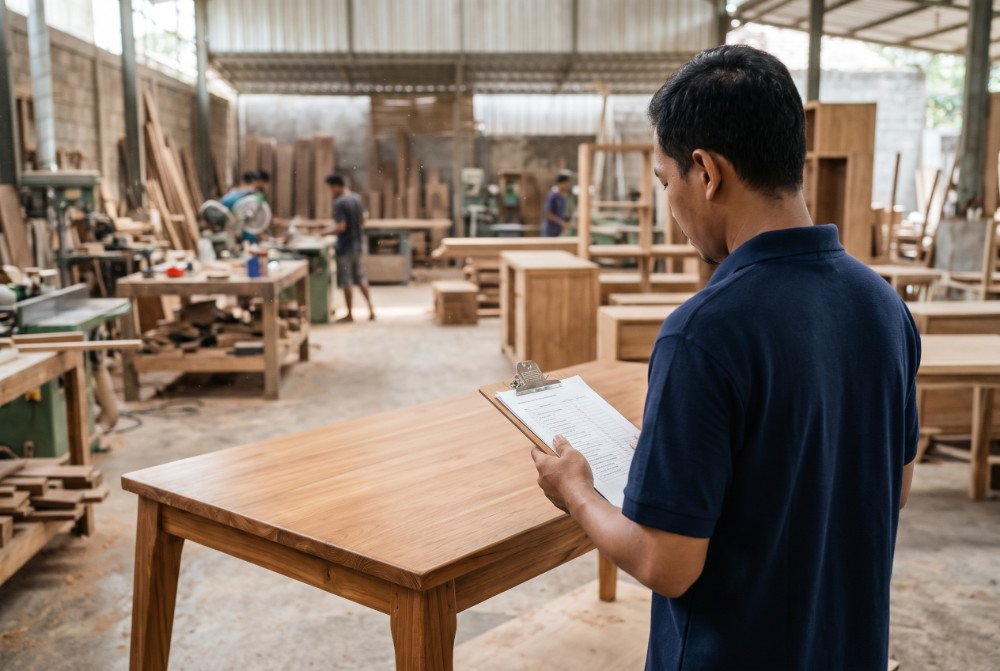
Accurate documentation begins with matching the purchase order, commercial invoice, and packing list. Product descriptions, quantities, unit values, materials, and consignee information should be consistent across documents.
Request the following before shipment:
- Commercial invoice and detailed packing list.
- Bill of lading issued by the carrier.
- SVLK wood-legality documentation and supporting species information.
- Certificate of origin when needed for customs verification.
- Applicable wood-packaging treatment records and product labels, including upholstery law labels where required.
SVLK supports Indonesian timber legality verification, but it does not replace US import declarations. For more information about its role in export preparation, read our guide to SVLK certification for furniture imports.
At MPP Furniture, our forwarding partners have shared too many cases where inconsistent paperwork or incorrect HS codes caused unexpected clearance delays and extra costs. While you should always ask your US customs broker to verify the exact HTS classification, our in-house export team protects your timeline by proactively preparing documentation and maintaining consistent product specifications across all paperwork before the container ever loads.
The Lacey Act Declaration: What US Importers Must File
Furniture Made of Wood or Rattan Generally Needs a Lacey Act Import Declaration, Filed Through ACE or on APHIS PPQ Form 505
Many wooden and rattan furniture products fall within Lacey Act declaration requirements, depending on their HTS classification and applicable exclusions. Importers should verify coverage before shipment.
Since January 1, 2026, APHIS no longer accepts paper PPQ 505 declarations. Required declarations must instead be submitted electronically through ACE or the APHIS Lacey Act Web Governance System (LAWGS).
The Declaration Covers the Plant’s Scientific Name, Harvest Country, Quantity, and Value
A Lacey Act declaration identifies the plant material used in imported products, including its scientific name, harvest country, quantity, and value.
For example, a teak chair may require information identifying Tectona grandis and the country where its timber was harvested. The furniture's manufacturing country is not necessarily the timber's harvest country.
The Importer of Record Is Responsible, So Ask the Factory for Species and Origin Data Before Shipping
The US importer is responsible for the required declaration, even when a customs broker submits it.
Ask your Indonesian manufacturer for accurate species and origin records while preparing the order. Waiting until the container reaches the US may leave too little time to resolve missing information.
For a broader explanation of documentation and production risks before buying directly, read our guide to importing furniture from Indonesia.
The Timeline: From Booking to Release
For applicable ocean shipments, the ISF must generally be submitted at least 24 hours before cargo loading onto the US-bound vessel. Certain remaining information can be supplied later under CBP rules, but late or inaccurate filings can lead to penalties.
Once the shipment arrives, your broker coordinates cargo release and customs entry. The normal entry-summary deadline is within 10 working days after entry, with estimated duties deposited according to CBP requirements.
Allow extra time for possible inspections, documentation reviews, or customs holds. These delays can affect warehouse receiving and scheduled product launches.
For retailers planning seasonal arrivals, our article on how far in advance to plan furniture imports from Indonesia explains how to work backward from your intended selling date.
What Your Duty and Cost Stack Looks Like
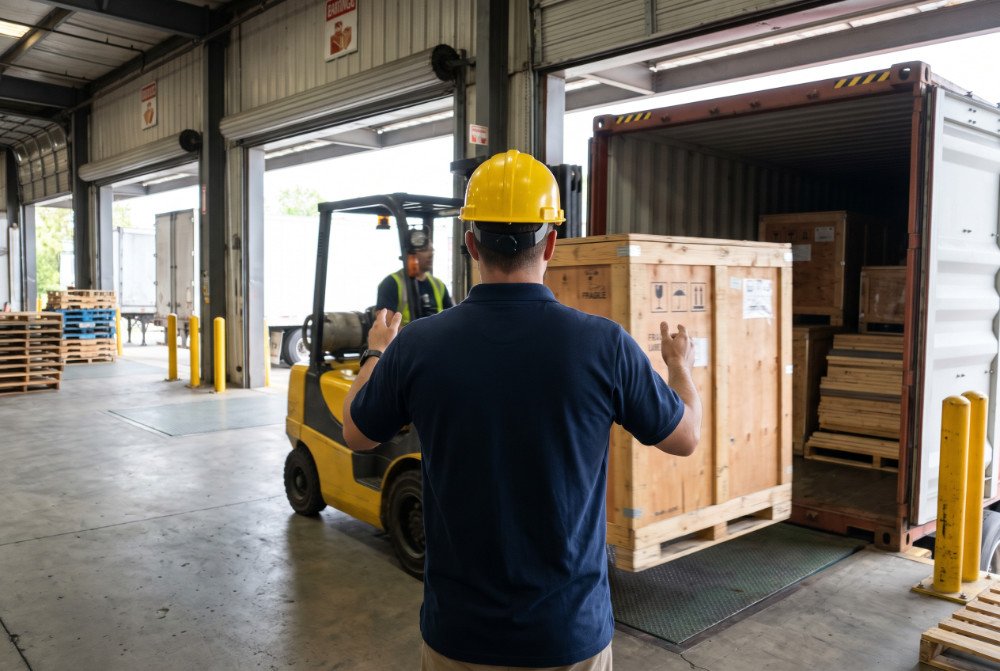
US import duties depend on the correct HTS classification, applicable base duty, and any additional trade measures.
A typical cost calculation includes:
- Furniture purchase value and applicable base duty.
- Section 301 duty for covered Indonesian products, or Section 232 duty where applicable.
- Merchandise Processing Fee (MPF) and Harbor Maintenance Fee (HMF), where applicable.
- Customs broker fees, bond costs, ocean freight, insurance, and inland delivery.
For example, a hypothetical $20,000 customs-value shipment subject to a 10% Section 301 duty would incur $2,000 in that additional duty alone. Base duties and other applicable charges must be calculated separately.
Agree on an Incoterm before ordering, such as FOB, to clarify freight responsibilities. At MPP Furniture, we typically work with FOB arrangements that distinguish our export preparation responsibilities from the buyer's destination costs.
For further cost planning, read our guide to hidden costs when buying furniture from Indonesia, including destination handling and other expenses that may affect resale margins.
Common First-Import Mistakes to Avoid
Choosing the HTS Code After the Price Is Already Agreed
Selecting an HTS code after confirming the purchase price can make your landed-cost estimate unreliable. Confirm classification with your broker before approving the final order.
Missing the ISF Deadline Because Factory Paperwork Arrives Late
A delayed shipping schedule does not remove ISF filing obligations. Share supplier, buyer, cargo, and shipment information with your broker before vessel loading.
Leaving Lacey Act Species Data Until the Shipment Is Already at Port
Thinking you can just figure out the exact botanical name of a wood species while your container is sitting at the Port of Los Angeles is a costly gamble. If APHIS flags your shipment for missing or vague Lacey Act data, your furniture isn't going anywhere.
You will instantly face unexpected demurrage fees and customs holds while frantically emailing a factory that is operating in a completely different time zone. Treat species and harvest origin data as a strict prerequisite; if you don't have it, the container doors shouldn't close.
Working with experienced Indonesian furniture manufacturers can help buyers obtain accurate production and export information before shipping, although US customs filings remain the importer's responsibility.
Final Thoughts: Key Takeaways Before You Place Your First US Order From Indonesia
Importing furniture from Indonesia to the USA requires more than arranging factory production and ocean freight. Under the 2026 tariff rules, buyers must confirm applicable duties while following existing customs, ISF, and Lacey Act requirements.
Before committing to your first order, appoint a broker, arrange importer registration and bond coverage, verify product classification, and request complete documentation from your supplier.
At MPP Furniture, we support buyers with handcrafted wooden and rattan furniture, in-house quality control, export documentation, and custom product development. If you are preparing a US retail collection, explore our custom furniture manufacturing services or contact our team for a free sourcing consultation.
Frequently Asked Questions on Importing Indonesian Furniture
1. Do I have to pay both Section 301 and Section 232 duties on my furniture order?
No, these tariffs are not automatically combined. Products that are subject to Section 232 duties are explicitly excluded from the July 2026 Section 301 action. The specific additional duty applied is determined by your product's HTS classification.
2. At what commercial value do I need to arrange a customs bond?
Commercial shipments valued above $2,500 generally require formal entry and customs bond coverage.
3. Can I still submit a paper form for my Lacey Act declaration?
No. Since January 1, 2026, APHIS no longer accepts paper PPQ 505 declarations. All required declarations must be submitted electronically through ACE or the APHIS Lacey Act Web Governance System (LAWGS).
4. When is the exact deadline to file the Importer Security Filing (ISF)?
For applicable ocean shipments, the ISF must generally be submitted at least 24 hours before the cargo is loaded onto the US-bound vessel. Missing this deadline can lead to penalties.
Ready to Place Your First US Order From Indonesia?
At MPP Furniture, we support buyers with handcrafted wooden and rattan furniture, in-house quality control, export documentation, and custom product development. If you are preparing a US retail collection, explore our custom furniture manufacturing services or contact our team for a free sourcing consultation.

I am a Web Designer, Technical SEO Specialist, and writer with 6+ years of experience in website optimization and search visibility. For more than a year, I have supported MPP Furniture’s growth, and I am currently expanding my role as an author to help B2B furniture buyers make more informed business decisions through informative, practical, and impactful articles.
0 Comments