Choosing between teak and eucalyptus outdoor furniture is not just about which sample looks better. You need a collection that meets your price targets, suits its intended setting, and comes with care requirements customers can accept.
Teak has a higher above-ground durability rating and lower moisture movement than rose gum (Eucalyptus grandis), the eucalyptus example below. This guide helps you decide whether those advantages justify the quoted cost or whether a specified eucalyptus product meets your needs for less.
You will review outdoor performance, maintenance, and sourcing costs, then identify the supplier checks needed before placing a bulk order.
Teak vs Eucalyptus: Material Differences
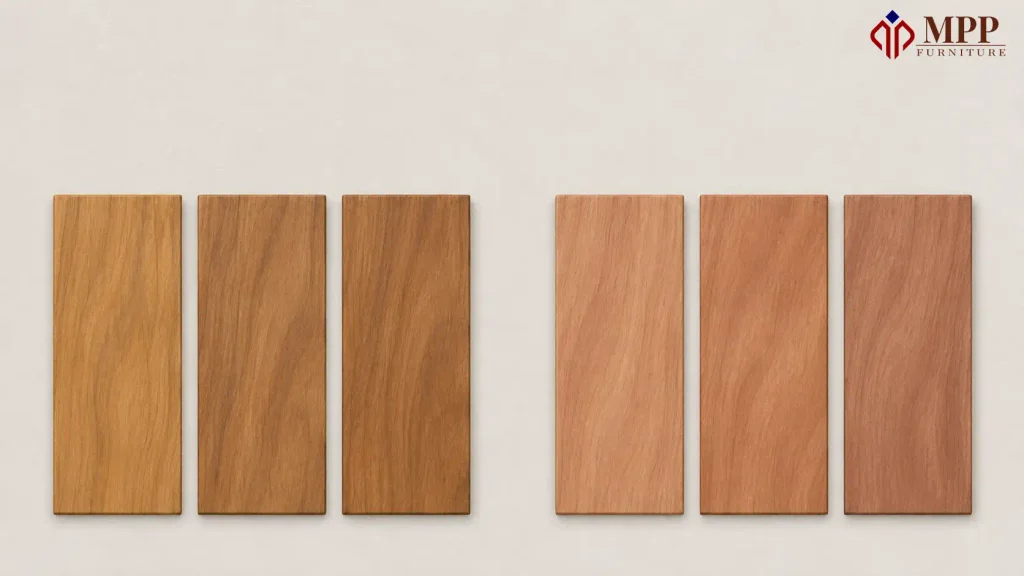
A useful teak vs eucalyptus wood comparison starts with identification. Genuine teak is Tectona grandis, whose heartwood is rated very durable in The Wood Database’s teak profile.
For a species-specific example, WoodSolutions’ profiles of teak and rose gum, Eucalyptus grandis, provide the comparison below.
| Characteristic | Teak | Rose gum, Eucalyptus grandis |
| Above-ground durability | Class 1, very durable | Class 2, durable |
| Movement with moisture changes | Very low | Medium |
| Natural heartwood color | Golden brown | Pink to red-brown |
Durability ratings apply to heartwood, not untreated sapwood, the outer wood. This example does not represent every eucalyptus species. Confirm the botanical name and heartwood content in your quotation rather than treating a timber rating as a finished-furniture lifespan guarantee.
How Do Teak and Eucalyptus Perform Outdoors?
For the same moisture change, the table indicates less expansion and contraction in teak than in rose gum. For buyers, that makes rose gum’s joint design and movement allowances worth closer review. Neither durability rating replaces good construction: WoodSolutions’ natural durability guidance warns that trapped moisture and poor ventilation can accelerate decay.
At MPP, our factory experience points to a less visible risk: chair corner blocks made from leftover wood that skips proper drying. These small supports can develop mold or joint movement after shipment, so ask suppliers how they check hidden components.
For either material, distinguish sheltered placement from full exposure in your purchase brief. A covered dining area and an uncovered poolside setting call for different exposure assessments. Request drainage details and product-test evidence for the intended use, rather than accepting “outdoor suitable” without explanation.
Maintenance Requirements and Long-Term Appearance
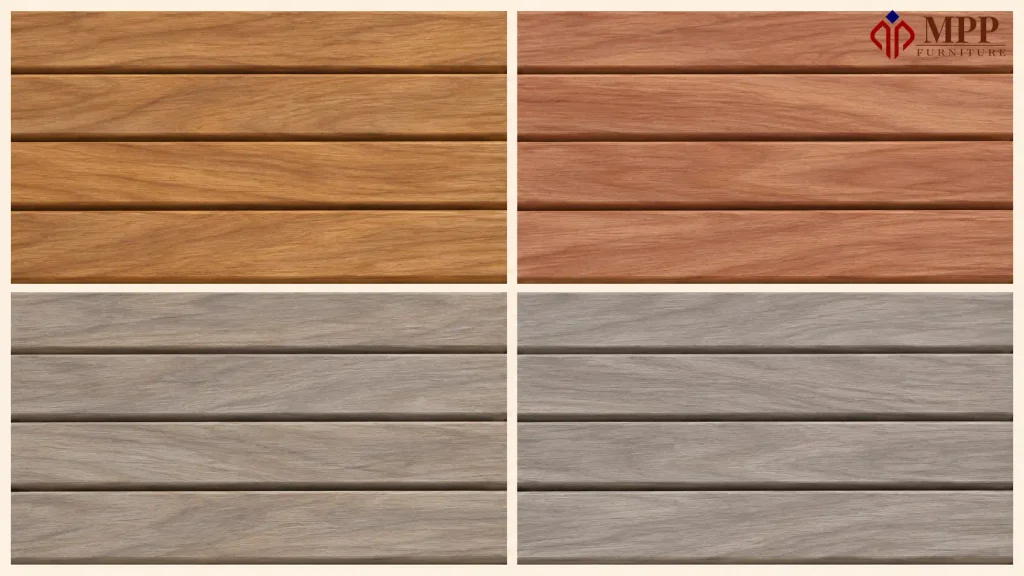
Untreated teak can turn silver-grey, while preserving its original color requires appropriate care. Eucalyptus can also weather grey; DTY’s product guidance separates care for its oil-finished, painted, and naturally weathered eucalyptus furniture.
In our teak production, we keep finishing in-house under our quality control and offer options tailored to buyer preferences. Our guide to how teak furniture ages outdoors explains choices ranging from oil finishes to protective coatings.
Approve the finish and its care instructions together, including cleaning, recoating, and seasonal storage where relevant. Use new and weathered product photographs so customers can choose their preferred appearance. Do not promise unchanged color without explaining the upkeep.
Initial Sourcing Cost vs Long-Term Value
Teak’s higher material cost can put pressure on inventory budgets, as discussed in our guide to the pros and cons of teak for outdoor furniture. A lower eucalyptus quote may suit a price-sensitive collection, but only after a like-for-like comparison.
Compare equivalent dimensions, joinery, hardware, finishes, quantities, and delivery terms. Use quoted packing volumes and weights to calculate freight instead of assuming one material always ships more cheaply. Also confirm who pays replacement and freight costs when a warranty claim is accepted.
When comparing eucalyptus vs teak outdoor furniture, assess margins after landed costs, markdowns, and after-sales allowances. Keep customer maintenance expenses separate from retailer costs. Use your sales and claims history for estimates, rather than assuming a higher selling price delivers a better margin.
What Should Retailers Verify Before Sourcing?
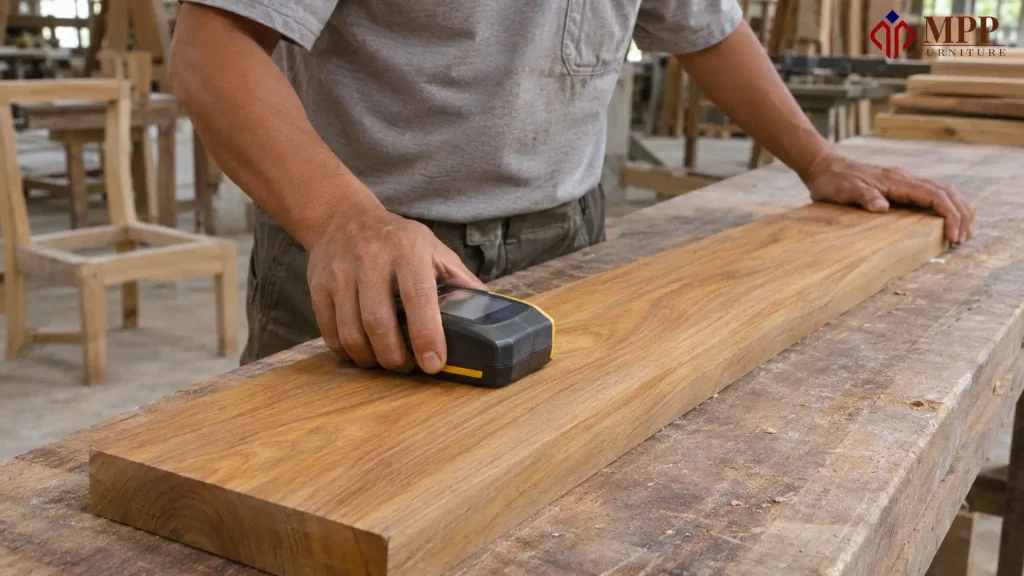
Request the botanical name, timber source, heartwood requirements, and moisture records. USDA guidance on moisture content recommends preparing wood at a moisture content suited to its service conditions, so ask how the supplier selects its target.
At MPP, timber above our documented 12% moisture-content limit returns to the kiln rather than entering production. We check again before machining and assembly, and before shipment, as described in our moisture control process for export furniture. That limit describes our production process; agree on a suitable target with your supplier and ask what happens when a batch fails.
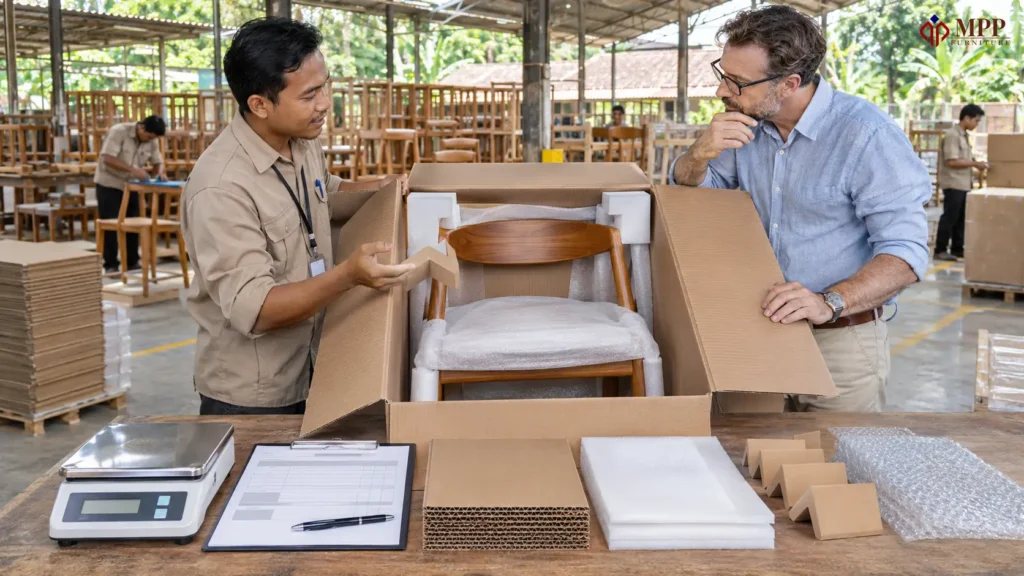
For outdoor furniture, teak vs eucalyptus is only part of the decision: approve the reference sample, joints, finish, relevant test reports, packaging, and warranty terms. For cushioned teak products, also ask about finish adhesion and potential staining of light-colored fabrics, risks discussed in our manufacturing guidance.
Which Material Fits Your Outdoor Furniture Collection?
Consider eucalyptus outdoor furniture when the specified species, construction, and care requirements meet your market needs at a workable landed cost. It can suit an accessible-price collection without being treated as a lower-quality substitute. Reject an incomplete specification, not a material name.
Consider teak when its documented performance and appearance justify the cost for your customers. When assessing an Indonesian Teak Furniture Manufacturer, review construction, finishing, and quality control alongside the quotation. Your target margin and stock plan still need to support the investment.
For mixed customer groups, separate ranges may work better than naming one winner. Give each range its own exposure recommendation and care instructions.
Final Thoughts: Choose Materials Based on Total Value, Not Just Price
Your teak vs eucalyptus outdoor furniture decision should connect product performance, customer care, and commercial fit. Choose the complete specification you can confidently sell and support, not just the lowest quote or the most familiar wood name.
Develop Outdoor Furniture That Fits Your Market
Planning a teak collection? Share your drawings, target prices, finish preferences, and quantities with our team. Request a free consultation with MPP Furniture to discuss custom development for your market.
FAQs: Retailers Sourcing Teak and Eucalyptus Outdoor Furniture
1. Can eucalyptus replace teak in an existing furniture design?
Not as an automatic material swap, because timber species differ in strength and moisture movement. Ask your manufacturer to review component dimensions, joints, and fixing positions before producing a new prototype. Approve the revised design through suitable testing rather than carrying over the teak version’s approval.
2. How can retailers verify FSC claims for teak or eucalyptus furniture?
Check the supplier’s certificate status and product scope in FSC’s public database. Specify the certification requirement when ordering, then check that the invoice or delivery documents identify the certified products, FSC claim, and supplier’s certificate code. A certificate shown on a supplier’s website does not establish that your particular order is FSC-certified.
3. Does eucalyptus outdoor furniture have a shorter lead time than teak?
Not automatically; production readiness, material availability, factory capacity, and pending approvals affect the schedule. Compare quotations using the same starting and finishing milestones, such as approved specifications and deposit receipt through to container loading. Keep shipping time separate so a shorter production estimate does not become an unrealistic delivery promise.
4. Is an approved sample enough before placing a first bulk order?
A sample helps you evaluate the design, but it does not demonstrate consistency across a production batch. Consider a limited trial order with several units of representative models to assess repeatability, packing, communication, and corrective action before scaling. Treat the trial as a production assessment, not proof of long-term outdoor durability.
5. What spare parts should retailers arrange before launching either collection?
Request a model-specific list of replaceable items, such as foot glides, bolts, and cushion covers where applicable. Agree part codes, replacement prices, delivery times, and how long support will continue after a model is discontinued. Confirm compatibility before ordering replacements, even when two teak or eucalyptus designs look similar.

A versatile content creator with a strong foundation in product photography and videography, and a comprehensive brand strategy. Capable of creating engaging content to connect consumers and producers, web analytics, and engaging visual content to drive interest and growth for a product or brand.

0 Comments