Your living room collection looks right, but its furniture cost leaves too little margin at your target retail price. Redesigning the range would undo work you already approved.
To reduce furniture cost without redesigning the collection, set buying targets, compare specification changes across products, then approve revised samples and quotations. This guide helps you assess those options while protecting the agreed design and quality.
For buyers sourcing Indonesian Living Room Furniture, the review covers product priorities, finishes, cushions, wood, and sample costing. Keeping the design means protecting agreed features, not making different materials look identical.
Why Is Your Living Room Collection Over Budget?
Furniture pricing includes upholstery, weaving, finishing, production work, and packing, not just timber. Curves and detailed joints still require work when cheaper wood is used.
At MPP Furniture, we have received requests based on a sketch alone. Before sampling, we prepared a 3D render and technical drawing, reviewed material options, and confirmed details with the buyer.
Ask your furniture manufacturer which specifications were priced and which remain undecided. Our guide to what affects furniture pricing from Indonesia explains the cost areas to review.
Set the Target Buying Price Before Changing Materials
Build your furniture pricing strategy from the selling price your market can support, using a target-costing approach. Allow for your required margin and buyer-side costs to establish a buying-price limit.
For each product code, or SKU, record the quotation, target buying price, quantity, and features that cannot change. The difference between the quoted and target unit price is the gap to review. For illustration, a US$140 quoted price against a US$125 target leaves a US$15 gap.
Compare furniture wholesale pricing at matching quantities and commercial terms. Check which delivery and handling costs are already included, so you do not count them twice.
Which Living Room Products Should You Review First?
Start with products where acceptable revisions could contribute meaningfully to the collection budget. Use these review prompts, not a ranking of guaranteed savings.
Suggested living room product review
| Product | Cost areas to review | Features to protect |
| Sofa or loveseat | Cushions, fabric, frame, packing | Comfort, support, proportions |
| Armchair | Exposed wood, weaving, finish | Shape, visible details, seating feel |
| Coffee or side table | Timber use, construction, finish | Top profile, dimensions, stability |
For illustration, saving US$12 on 100 side tables contributes US$1,200, compared with US$500 from saving US$25 on 20 sofas. These hypothetical figures are not MPP quotations.
Each product still needs its own price check. Where an armchair defines the collection’s look, review less distinctive details elsewhere before changing that chair.
Review Finishing, Cushions, and Production Options Before Replacing Wood
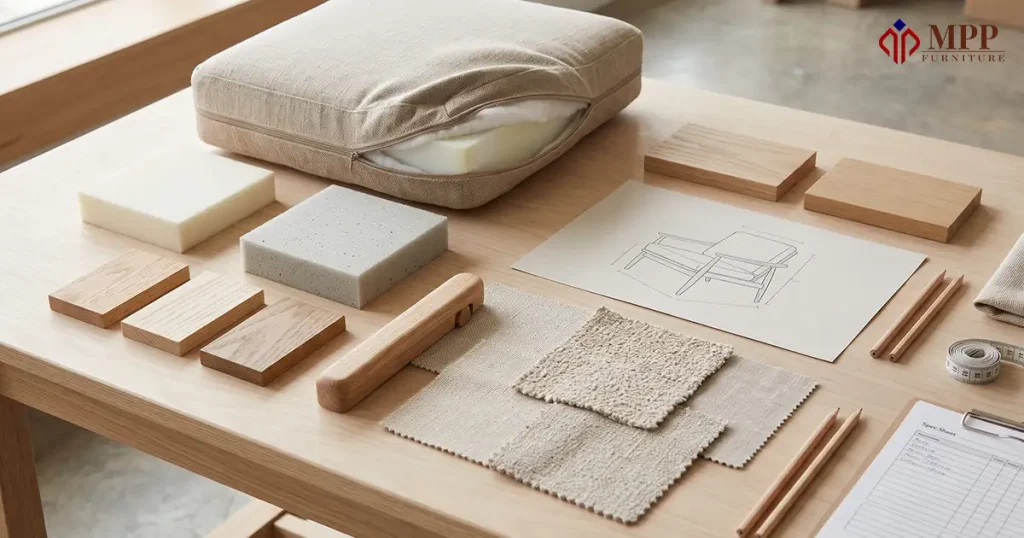
Finishing and Cushion Specifications
Ask whether another finishing process can meet the same color, sheen, texture, and surface-performance requirements. Compare the proposed sample and finished-product price, not coating prices alone.
For cushions, review foam or filling, fabric, thickness, and comfort together. For indoor-only seating, ask whether outdoor-grade materials are necessary, while retaining the required performance. Do not treat a different seating feel as an unchanged specification.
Construction, Repeated Components, and Packing
Ask about shared components where designs already allow them, and packing improvements that retain protection. Our production combines handcrafting, advanced machinery, and quality checks at each stage; those checks remain part of the review.
When Should You Keep Teak or Consider Mahogany and Sungkai?
Keep teak when its material identity supports your premium positioning. Consider sungkai for a lighter appearance or assess mahogany for cost-conscious indoor production, subject to sample and quotation review. These are starting points, not interchangeable specifications or fixed price rankings.
In July 2026, we reviewed an Australian buyer’s teak indoor dining-chair collection against their retail target and preference for a lighter natural look. We discussed sungkai and developed a new sample before approval.
That was a dining-chair project, not a living-room savings case. Apply the same approval discipline and compare how much changing wood can reduce furniture cost at finished-product level.
Protect the Collection Design When a Material Changes
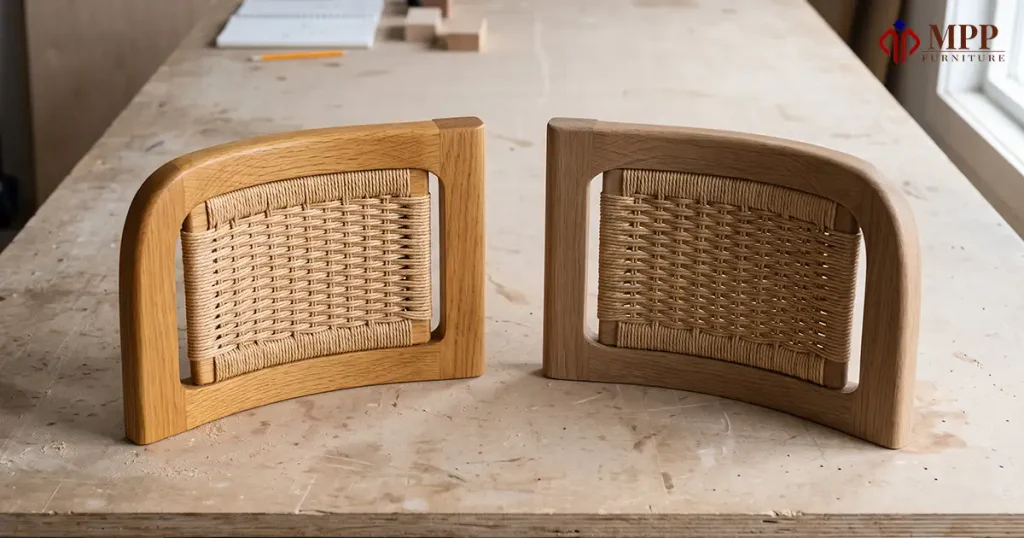
Define the dimensions, silhouette, visible details, comfort, and function that must remain unchanged. Review drying and construction because wood can shrink or swell as moisture changes. Matching color alone is not material approval.
In one MPP development, the wood finish and weaving color looked suitable separately, but the wood appeared too warm together. We adjusted the finish reference before approval. Review combined materials, not isolated swatches.
If a substitute appears unexpectedly, pause approval and request the reason, specification differences, and checks needed. Record the agreed change in your technical brief for the furniture manufacturer before accepting it for production.
Re-Sample and Re-Cost Before Approving the Revised Collection
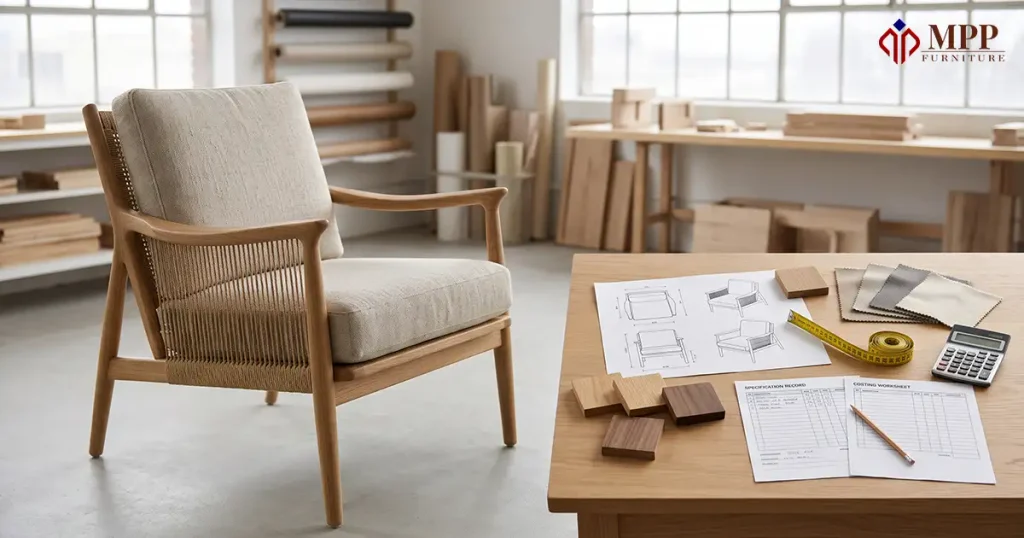
Your revised furniture costing, specification sheet, and quotation should describe the same approved sample. Check design, comfort, construction, finishing, and function, then record the version and approval. Use that reference for production quality checks.
Quote-level collection saving = sum of [(original unit price − approved revised unit price) × planned quantity] across all SKUs. Compare matching quantities and commercial terms, then account separately for changes in sampling, testing, and freight. Record each SKU as within target, still above target, or awaiting sample approval.
Final Thoughts: Reduce Furniture Cost, Protect the Design
Reducing furniture cost is not simply about choosing cheaper wood. Start with your target buying price, review each product’s specifications, and protect the design, comfort, and quality your collection needs. Judge the savings on the finished product, not one material alone.
Before production, match the sample, specifications, and furniture costing. If acceptable changes cannot close the gap, review the commercial target rather than quietly lowering the agreed quality.
Review Your Collection Budget With MPP Furniture
Share your drawings, planned quantities, current specifications, target market, and target buying prices. As an Indonesian Custom Furniture Manufacturer , we offer free consultation and free product development to review options for your collection. Confirm physical sample, testing, and shipping charges separately.
FAQs: Reducing Living Room Furniture Costs
1. Can buyers reduce living room furniture costs without changing the collection design?
Yes, when approved material or production changes lower the finished cost while preserving the agreed design and performance. Review the revised sample and quotation together; a substitute material does not guarantee that your target price will be reached.
2. Which living room products should buyers review first?
Review products with a meaningful buying-price gap, acceptable revision options, and enough planned volume to affect the budget. Compare their potential contribution to collection savings, not simply their unit prices.
3. Should buyers choose cheaper wood before reviewing cushions and finishing?
No. Review timber alongside finishing, cushions, production work, and packing. A lower wood price affects only part of the furniture cost and may not close your buying-price gap.
4. Do material changes require a new sample and quotation?
Material changes need updated specifications and costing, plus a review of the affected features. Confirm which samples and tests are needed, then approve the revised product reference before bulk production.
5. What should buyers provide for a furniture cost review?
Share your drawings, planned quantities, current materials, finish references, target market, and target buying price. Include the design, comfort, and quality requirements that must stay unchanged, so your furniture manufacturer can assess alternatives against a clear brief.

A versatile content creator with a strong foundation in product photography and videography, and a comprehensive brand strategy. Capable of creating engaging content to connect consumers and producers, web analytics, and engaging visual content to drive interest and growth for a product or brand.
0 Comments