Buyers often expect all teak to perform equally, although its real-world longevity depends heavily on manufacturing quality. Outdoor teak furniture can last anywhere from 20 to 50 years, depending on its placement, environmental exposure, maintenance, and the intensity of daily use.
This article will explain why the lifespan of outdoor teak furniture matters for your business, how outdoor environmental conditions and climate exposure affect the wood’s aging process, and the key factors that ultimately determine how long your furniture will last.
Understanding these variables is the first step to partnering with a reliable teak furniture Indonesia factory for your next shipment.
Why Outdoor Furniture Lifespan Matters for Buyers
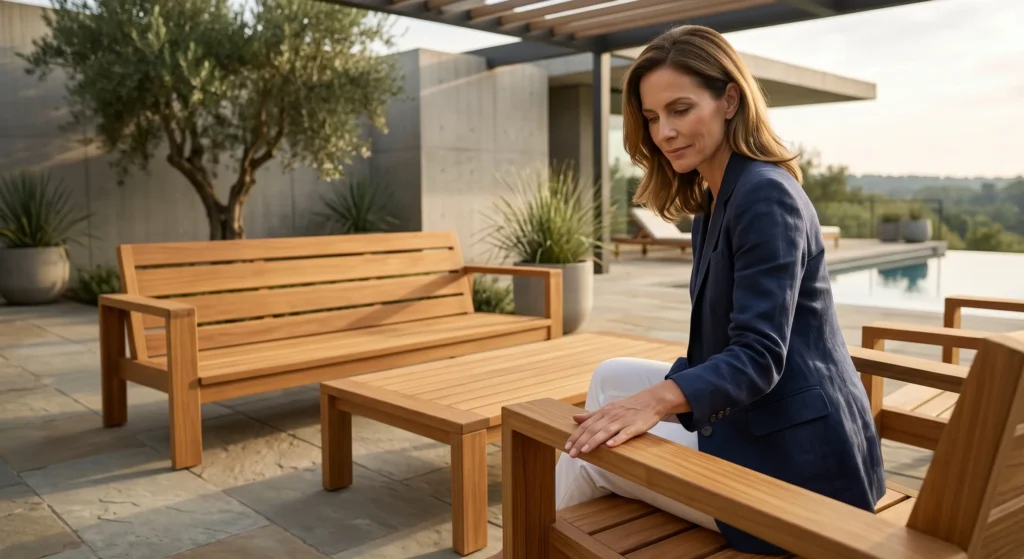
For furniture sellers and suppliers, longevity is a financial measure. Importing a container of outdoor furniture enhances your brand’s reputation.
- Decreased Claim Rates: Durable products lead to fewer warranty requests and replacements.
- Customer Loyalty: Teak that ages gracefully promotes repeat customers and generates word-of-mouth recommendations.
- Market Positioning: Retailers can classify high-quality teak furniture as a superior long-term investment since its longevity largely relies on environmental factors, frequency of use, and adequate maintenance throughout the years.For a distributor, longevity is not just a characteristic; it is a rationale for why teak wood is ideal for outdoor furniture sellers aiming to uphold substantial profit margins.
For furniture retailers and distributors, durability is a financial metric; it is a reason why teak wood is best for outdoor furniture retailers looking to maintain high-profit margins.
How the Outdoor Environment Affects Teak Furniture Lifespan
According to Van Hall Larenstein, Teak furniture is exceptionally resilient for outdoor use due to its inherent oils and tight wood grain. Nevertheless, sunlight and UV exposure can slowly alter teak’s original color into a silver-gray patina and dry out the wood’s surface over time.
Research from the MDPI Materials Journal also explains that humidity, rain, and UV radiation affect the weathering and durability of teak wood surfaces.
In coastal areas, salt-laden air may accelerate corrosion on metal joints or hardware used in teak furniture and speed up outdoor material weathering. Even so, teak remains one of the best materials for outdoor furniture due to its natural resistance to moisture and decay.
Key Factors That Determine Outdoor Teak Furniture Longevity in Real-World Use
For retailers, grasping these real-world factors is essential for establishing precise customer expectations and minimizing post-purchase grievances regarding the performance of outdoor teak furniture.
Surface Placement and Ground Moisture Exposure
Typically, teak furniture situated on a solid surface (like concrete, a stone patio, or a wooden deck) will endure longer than furniture set directly on grass or dirt. Furniture legs that touch the ground directly will soak up moisture, speeding up the deterioration process.
Climate Conditions: Dry Regions vs High-Humidity Areas
Outdoor teak furniture performs well in different climates, but each environment affects the wood differently.
In dry and low-humidity regions like the American Southwest, extreme heat can extract moisture from the wood faster, leading to surface drying and potentially resulting in minor cracks over time. In contrast, regions with high humidity such as Southeast Asia subject teak furniture to continual moisture and regular rainfall, which can promote the growth of mold, mildew, and dirt accumulation on the surface if not maintained regularly.
Usage Intensity
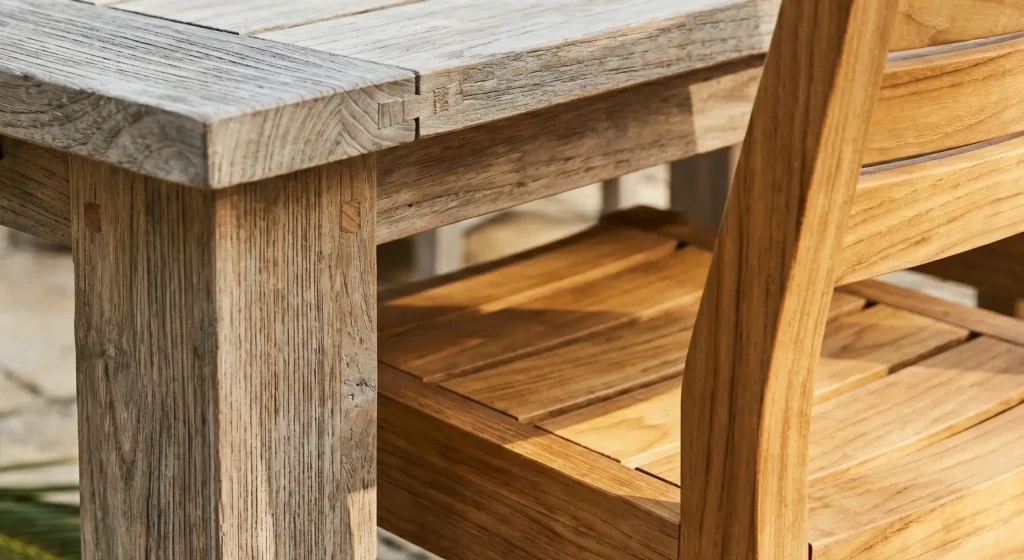
A teak dining set utilized in a resort or eatery undergoes significantly harsher daily wear than home furniture; because of frequent use, spilled beverages, the continual movement of chairs, and ongoing cleaning, the structure faces ongoing stress, making strong mortise-and-tenon joints crucial for maintaining long-lasting stability.
Organic Debris Management
Outdoor teak furniture can age prematurely if not properly maintained. Organic materials like shed leaves, water pools from rain, or bird feces can lead to surface conditions that encourage mold and moss growth.
Why Indonesian Teak Wood Is Known for Long Outdoor Durability
Indonesian Teak (Tectona grandis) is famous worldwide because of the country's perfect growing conditions and well-managed plantation practices. The combination of volcanic soil and tropical rain patterns leads to wood containing a remarkably high level of natural oils and silica. This distinctive structure is what makes teak wood excellent for challenging environments. These elements function as a natural water repellent and pest repellent, enabling the wood to stay stable despite being subjected to heavy rain or strong tropical sunlight.
Discover more about why teak outdoor furniture from Indonesia is popular among global importers and how it continues to set the industry standard.
How Long Can High-Quality Teak Outdoor Furniture Last?
When manufactured to professional standards, high-quality teak furniture can easily last 20 to 50 years and often much longer under proper manufacturing and maintenance conditions.
| Untreated | Teak will naturally develop a silvery-grey patina as part of the normal aging process outdoors. This color transition is cosmetic and does not automatically indicate structural damage. |
| Maintained | For buyers who prefer to maintain the original golden-brown appearance, occasional cleaning and the use of appropriate outdoor protection systems can help preserve the surface appearance more consistently over time. |
Not All Teak Furniture Has the Same Lifespan
The "Teak" label can be misleading. To ensure longevity, buyers must look deeper into the technical specifications of the manufacturing process.
It is a common misconception that all teak is equal; however, understanding why not all teak wood is the same is vital for any serious buyer seeking to ensure longevity.
Grade A Teak vs. Lower Grades
- Grade A: Taken from the heartwood of mature trees. It is rich in oils, has a consistent color, and contains no sapwood.
- Grade B/C: Includes sapwood or timber from younger trees. It lacks the oil density of heartwood, making it prone to rot and insect infestation.
For buyers evaluating raw material quality, understanding the differences between Grade A and Grade B teak furniture is also important before making sourcing decisions.
Moisture Content and Kiln Drying
The biggest enemy of wood furniture is internal tension. Quality manufacturers utilize a strict kiln-drying process to reach an Equilibrium Moisture Content (EMC) of 8% to 12%. If the wood is too wet when the furniture is built, it will shrink and crack once it reaches the lower humidity of markets like Europe or North America.
Why Construction Quality Matters
Even the best wood will fail if the joinery is weak. Professional-grade outdoor teak relies on Mortise and Tenon joinery.
Unlike screws or glue alone, this interlocking connection allows the wood to move slightly with temperature changes without losing its structural bond.
Finishing Systems and Outdoor Protection
Research on outdoor wood weathering shows that using a combination of paint coatings with preservatives or water repellents can provide more effective protection against cracking, microbial growth, and surface deterioration during long-term outdoor exposure, especially for teak wood used in exterior environments.
Common Reasons Outdoor Teak Furniture Fails Prematurely
- Poor Moisture Control: Using "air-dried" timber instead of kiln-dried timber leads to catastrophic warping.
- Sapwood Inclusion: Sapwood decays rapidly; its presence in outdoor furniture is a ticking time bomb for rot.
- Low-Quality Adhesives: Outdoor pieces require specialized, weather-resistant glues (like polyurethane or epoxy-based resins) to prevent joint separation.
- Inadequate Joinery: Relying on metal brackets or simple butt joints instead of traditional woodworking techniques.
Is Teak Outdoor Furniture Worth the Investment?
From a lifecycle cost perspective, teak is one of the most economical choices available. While the initial "landed cost" of a Grade A teak collection is higher than that of acacia or eucalyptus, the cost-per-year is significantly lower. A teak bench that lasts 40 years is far more valuable to an end-consumer than four cheaper benches that need replacing every decade.
When analyzing long-term ROI, it becomes clear that teak wood is the best Indonesian outdoor furniture for those seeking a balance of luxury and longevity.
Conclusion
The lifespan of outdoor teak furniture is a direct reflection of the manufacturer’s standards. By focusing on Grade A heartwood, precise kiln drying, and traditional mortise and tenon joinery, Indonesian manufacturers provide products that don't just "last"—they age gracefully. For importers and retailers, these technical details are the keys to building a high-trust, high-margin outdoor furniture category.
Ready to Source Premium Teak for Your Outdoor Furniture Collection?
Let's discuss how we can support your long-term business strategy with durable, high-quality teak furniture manufactured for reliability and premium positioning.
FAQs About Outdoor Teak Furniture
1. What happens if teak furniture is left untreated?
It will naturally transition from golden-brown to a sophisticated silvery-grey patina within 9 to 12 months.
2. Why must teak wood be kiln-dried before manufacturing?
Kiln-drying brings the wood to an optimal 8-12% moisture content to prevent catastrophic warping and cracking in dry climates.
3. What is the most reliable joinery method for teak furniture?
Mortise and tenon joinery allows the wood to naturally expand and contract without compromising the structural bond.
4. How do you clean naturally weathered teak?
Simply wash the furniture once or twice a year using a soft-bristle brush and a mild soapy water solution.
5. Can teak furniture survive freezing winter conditions?
Yes, teak is highly resilient to freezing temperatures and snow, though using a breathable cover reduces spring cleaning.

0 Comments