For professional buyers sourcing from Indonesian furniture manufacturers, choosing a supplier isn’t just about price; it’s about reliability, consistency, and trust for B2B buyers. That’s where in-house production becomes a game-changer. Unlike subcontracted suppliers, Indonesian furniture manufacturers or suppliers with full in-house production offer tighter quality assurance, faster lead times, and fewer mistakes. If you're sourcing furniture for wholesale, interior projects, or retail, this article explains why manufacturers like MPP Furniture offer a serious advantage.
What Is In-House Production in Furniture Manufacturing?
Core Definition
In-house production means that the manufacturer handles every step of the process internally, from selecting raw wood to final packaging. This is the opposite of outsourcing, where third-party vendors or subcontractors do various stages.
How It Compares to Subcontracted Production
Outsourced production can lead to inconsistent quality, poor communication, and a lack of accountability. In-house means one team, one standard, and one point of contact. If you plan to visit your furniture supplier in Indonesia, seeing their production setup in person can reveal this difference clearly.
Learn How to Avoid Pitfalls by Visiting Indonesian Furniture Suppliers
4 Reasons In-House Production Gives Manufacturers an Edge
For professional buyers, furniture retailers, wholesalers, project contractors, and interior designers, working with a fully in-house manufacturer isn’t just a preference. It’s a risk-reduction strategy. Whether you're managing container shipments, product launches, or large installations, reliability and consistency become critical. Here's why in-house production matters:
1. Full Quality Control at Every Step
Why buyers need this: Quality issues like cracked wood, uneven finishes, or loose joinery can damage your brand and cost you rework time. With in-house production, the manufacturer controls everything, from kiln-drying the wood to final packing. You get one standard, one system, and one accountable partner.
From our experience as an Indonesian furniture manufacturer: We can oversee every stage, from the selection of raw teak, mahogany, mindi wood, etc, to the final packaging. If defects occur at any stage, our internal QC can respond immediately, minimizing disruptions and preventing quality issues from spreading to the next process.
Supported by research: A study by Steffen Kinkel et al. (2016) found that companies investing in in-house manufacturing saw increased productivity and profitability, while over-reliance on outsourcing often led to quality and innovation issues (ResearchGate).
Additional Insight: Internal QC teams ensure ongoing compliance with international standards, reducing warranty claims and shipment rejections. This helps furniture buyers build stronger reputations in their markets. Our major complaint per year is only 0,5% from the thousands of furniture we’ve sent to buyers per year
2. Faster Lead Times and Predictable Scheduling
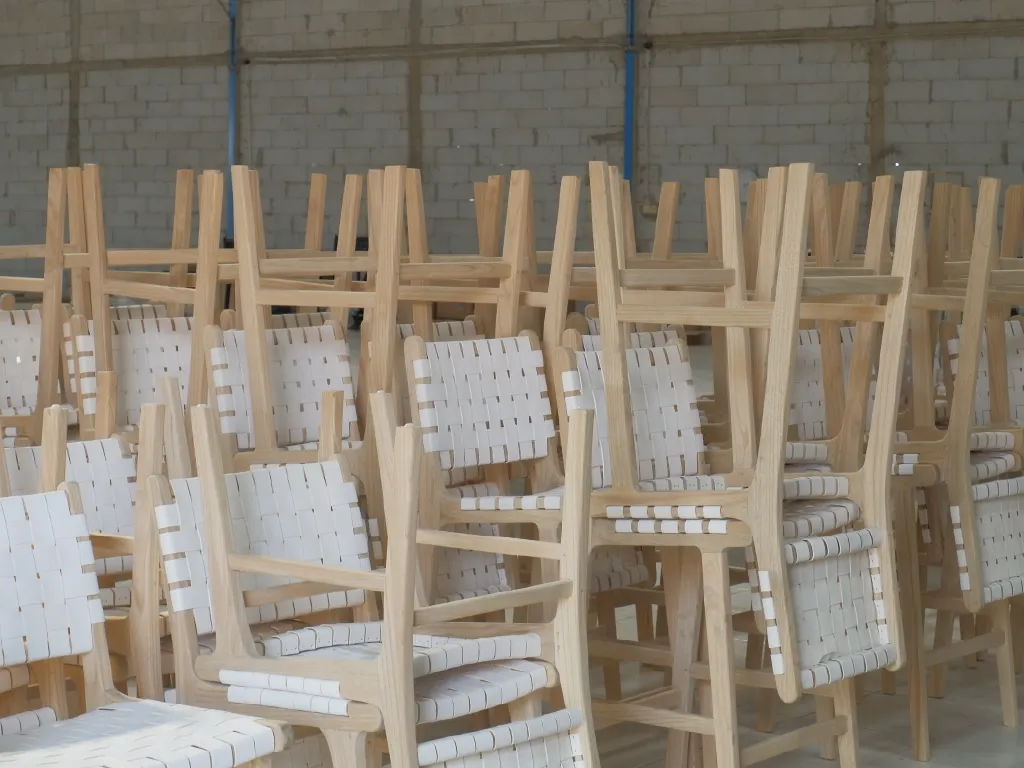
Why buyers need this: Missed shipping windows or delayed installations can wreck timelines, especially during peak seasons or project deadlines. In-house production reduces external dependencies, allowing for smoother workflows and realistic delivery commitments that you can count on.
From our experience: When we manage production fully in-house, we control the schedule; there’s no need to wait on third-party timelines. For example, in subcontracting, if a batch of semi-finished goods arrives damaged, we must return it to the subcontractor, which wastes time and adds transportation overhead. That’s a type of production waste (muda in lean manufacturing), specifically under "transportation waste."
Industry source: A 2022 Deloitte report on manufacturing agility found that firms with integrated production processes had 35% faster average lead times than those with decentralized or outsourced models (Deloitte).
Additional Insight: Full in-house scheduling gives production managers the ability to prioritize orders based on shipping schedules and customer deadlines, improving reliability.
3. Furniture Customization and OEM/Private Label Flexibility
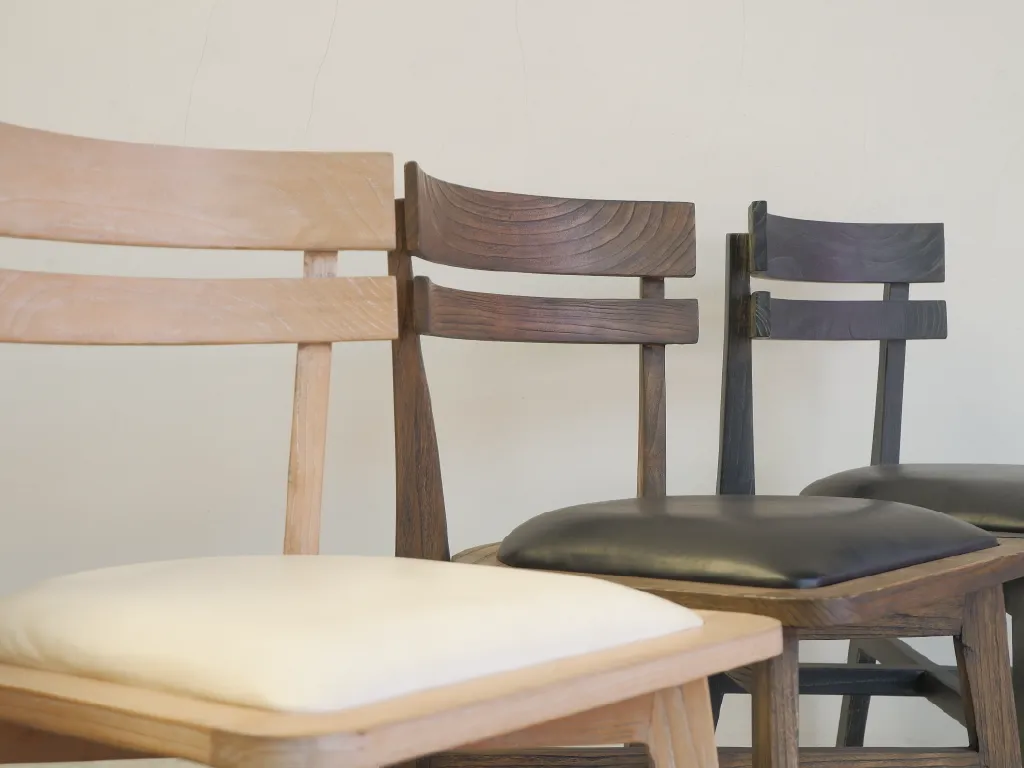
Why buyers need this: Want a specific wood finish? Need to resize a design? Or bring your ideas to reality? In an outsourced setup, even small changes go through layers of back-and-forth. In-house manufacturers like MPP Furniture can prototype and revise quickly, helping you launch custom products or branded collections without delay.
From our experience: Imagine sourcing from Indonesian furniture suppliers, such as trading companies. You want to make a custom request — you communicate your idea to the trading company, but they have to pass that message to the actual manufacturer. Not only does this slow things down, but there's also a risk of the message being filtered or miscommunicated. In contrast, with in-house production, we receive your request directly, respond directly, and execute directly.
Supported by research: A study by Wu et al. (2023) on customized furniture systems found that integrated manufacturing execution systems significantly reduced lead times and error rates in custom production scenarios (ResearchGate).
Additional Insight: Quick response to design revisions increases speed to market — critical for seasonal collections or project-based procurement.
4. Consistent Product Quality for Repeat Orders
Why buyers need this: Buyers working on long-term contracts or repeat container orders need batch consistency, the same finish, the same dimensions, and the same durability. In-house manufacturers maintain internal records, tools, and teams that ensure what you receive today will match what you reorder months later.
From our experience: Imagine your customer reorders a product they loved, but the second batch doesn’t match. It’s a disappointing experience that can lead to a poor review and damage your brand. In-house production avoids this by using controlled processes and tooling that maintain consistent standards over time.
Supported by research: A 2024 review in the Systems journal emphasized that early quality control measures and unified processes in vertically integrated furniture factories lead to significant improvements in batch consistency and reduce defects over time (MDPI).
Additional Insight: Consistency strengthens brand identity, especially for retailers selling standardized SKUs or collections across locations.
Risks of Indonesian Furniture Suppliers That Subcontract Production
1. Delayed Timelines and Bottlenecks
Subcontracted supply chains are fragmented. Some steps, such as frame production, are handled by subcontractors. If one part is late, the entire production timeline gets pushed back. Communication between vendors adds another layer of complexity and risk.
Additional buyer insight: There's also time lost moving materials from the main supplier's facility to the subcontractor’s workshop. This inter-facility transport adds lead time and logistics hassle.
Real-world risk: A study by PwC (2021) on global supply chains revealed that 60% of product delays in manufacturing industries stem from misaligned third-party timelines.
2. Quality Control Gaps
With different workshops involved, maintaining a consistent standard is nearly impossible. Each may follow their process, use different materials, or interpret specs differently. Buyers often end up receiving products that vary in size, color, or finish.
Buyer impact: One of our colleagues shared that their subcontractor-run production created batch-to-batch inconsistencies, and quality control became harder the more they scaled.
Consequence: This leads to more rejected containers, increased return rates, and loss of trust from downstream customers.
3. Difficulty with Custom Orders and Revisions
In outsourced setups, design feedback needs to be relayed across multiple teams, often without shared systems or clear documentation. This slows down prototyping and increases the chance of misinterpretation.
Operational issue: Any change requires coordination meetings, realignment, and often renegotiation of scope, which drains time and resources.
Final thought: In-house production eliminates these gaps by providing a single team with full visibility and control over product specs, lead times, and quality — resulting in smoother operations and happier customers.
Indonesian Furniture Suppliers: In-House vs Subcontracted Comparison
| Feature | In-House Furniture Supplier | Subcontracted Furniture Supplier |
| Quality Control | Full internal QC team at each stage | QC often varies per subcontractor |
| Lead Times | Faster, more predictable schedules | Vulnerable to vendor delays |
| Customization | Direct design revisions with the production team | Slower due to communication layers |
| Batch Consistency | Standardized finish, material, and process | Higher risk of variation between batches |
| Communication | Single point of contact, real-time updates | Indirect, more prone to miscommunication |
| Problem Resolution | Immediate handling within the factory | Delayed due to external coordination |
| Cost of Delay or Defect | Minimized with fast in-house fixes | Increased due to transport & backtracking |
Manufacturers with in-house systems can handle document preparation, container consolidation, quality inspection, and loading, all under one roof. They’re also better equipped to comply with certifications like SVLK and offer traceability for teak and mahogany.
Learn more about the advantages of sourcing teak wood furniture from Indonesia in the context of compliance and sustainability.
This vertical integration builds confidence with buyers who prioritize legal sourcing, long-term partnerships, and operational transparency.
Conclusion: MPP Furniture and In-House Production in Action
Choosing an Indonesian furniture supplier with full in-house production isn’t just a tactical decision; it’s a strategic advantage. It’s the best way to secure quality, speed, and long-term reliability in your sourcing process. Here is the reason why the buyers trust us
At MPP Furniture, we operate with 100% in-house production. From sourcing solid wood to packaging export-ready furniture, everything is done under one roof. This allows us to:
- Offer fast custom/OEM support
- Provide free new product development for B2B buyers
- Help first-time importers with consultation on container planning
We’re proud to be an Indonesian furniture manufacturer trusted by global retailers, designers, and wholesalers.
✅ Ready to collaborate with a true Indonesian furniture manufacturer?
📦 Request a sample or schedule a consultation today.
🤝 Connect via LinkedIn
📺 Watch our factory tour
✆ Contact us via WhatsApp for the fastest response
FAQ
How to buy furniture from Indonesia?
Buyers can choose to purchase directly from manufacturers or through agents/trading companies. Direct collaboration with manufacturers ensures better pricing, transparency, and customization flexibility. Trading companies may suit small-scale buyers, but often lack quality control authority. If you're unsure how to begin, here's a detailed guide on how to buy furniture from Indonesian suppliers.
What makes a good Indonesian furniture supplier?
A reliable supplier offers in-house production, transparent communication, consistent QC, export-readiness, and the ability to support small MOQs or mixed containers. Responsiveness and SVLK certification are also important. You can explore the 3 key factors in a good Indonesian manufacturer here.
What’s the difference between a teak furniture manufacturer and a general supplier?
Teak manufacturers specialize in durable outdoor pieces and often carry FSC or SVLK certifications. They understand drying techniques, joinery, and finishing better than generalists.
Why should I choose an Indonesian furniture manufacturer with in-house production?
Because it ensures better quality control, faster lead times, and consistent results, it reduces the risk of delays or defects in your shipment.
Can in-house manufacturers handle custom furniture orders more efficiently?
Yes. They offer direct communication, quicker prototyping, and better alignment on design specs, without middlemen or delays from third parties.
Are lead times shorter with in-house manufacturing?
Absolutely. Since there are no external dependencies, in-house manufacturers can stick to production schedules more accurately.
How does in-house production impact product quality?
It improves consistency. The same teams handle the process from start to finish, which leads to uniform quality, especially important for repeat orders.
What are the risks of working with subcontracted furniture suppliers?
You may face inconsistent quality, delays, and communication breakdowns, especially if changes or customizations are needed.

Hi, I’m Salman, founder of MPP Furniture, an Indonesian furniture manufacturer serving global retailers and project-based clients.
I began my career in my family’s export-oriented furniture company, gaining hands-on experience in production, construction, finishing, material performance, and product development. With a clear understanding of how international buyers evaluate furniture quality and reliability, I founded MPP Furniture to deliver export-ready products with consistent standards.
Here, I share insights from the perspective of a furniture manufacturer working directly with production teams on the factory floor, focusing on manufacturing and supplier evaluation.
Connect on LinkedIn
0 Comments