Most furniture buyers lose money not because of price or design, but because they choose the wrong Indonesian furniture manufacturer.
The real problem is this: issues usually do not appear during the sample or inquiry stage. They appear after the deposit is sent, production starts, and the goods arrive at your warehouse.
This article gives you a practical checklist to evaluate Indonesian furniture manufacturers before sending a deposit, so you can reduce sourcing risk early.
Why Choosing the Wrong Indonesian Furniture Manufacturer Can Cost More Than You Think
Choosing the wrong Indonesian furniture manufacturer does not fail instantly. The impact shows up later, after the deposit is sent, production takes time, and the goods finally arrive at your warehouse. By then, the problem is no longer at the beginning; it is at the end of the process.
A sample may look perfect. But in real production, we often see inexperienced manufacturers struggle with wood cracks, loose joinery, and inconsistent dimensions. These issues lead to rework, delays, and unstable shipment timelines. And if the products fail after arrival, the cost becomes even harder to recover.
Another common issue is misrepresentation. Some suppliers present themselves as manufacturers, but in reality, they outsource production to multiple small workshops. This creates inconsistency and removes accountability from the process.
In practice, the highest cost is not in ordering the furniture. It comes from delayed shipments, missed product launches, customer complaints, and loss of trust in your brand.
This is why evaluation must happen before you send a deposit, not after production begins.
When Should You Evaluate a Furniture Manufacturer?
You should evaluate a furniture manufacturer before the three critical moments:
- Before sending any deposit
- Before approving samples
- Before confirming MOQ
From our experience at MPP Furniture, after more than 20 years serving global furniture buyers, most sourcing problems happen because evaluation is done too late.
In practice, buyers usually follow two approaches. Some visit the factory first to evaluate the manufacturer while reviewing the products. Others request samples first, then use the visit to validate both the sample and the production system.
A proper evaluation should happen early, when you still have full control to choose, compare, and walk away if needed.
Before evaluating suppliers, it is also important to understand whether sourcing from Indonesian furniture manufacturers fits your business model and timeline.
Quick Checklist to Identify the Right Indonesian Furniture Manufacturer
This is the most important part. Use these questions to filter suppliers before you move forward.
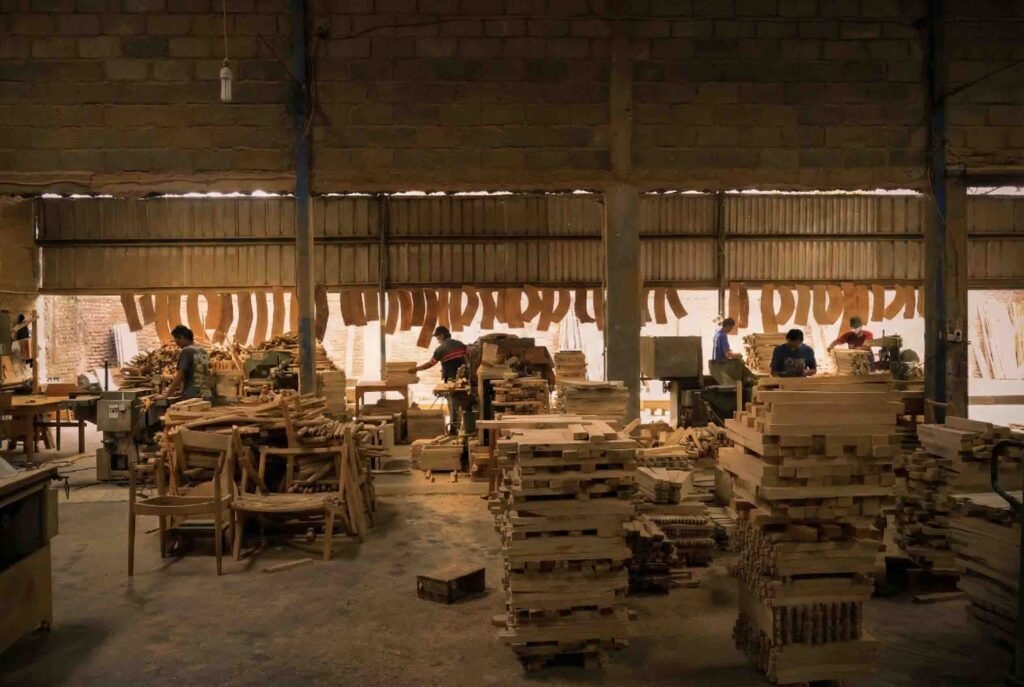
1. Do They Control Production In-House?
A real Indonesian furniture manufacturer controls production under one system, from raw material to final packaging.
If production is outsourced to multiple workshops, quality and timelines become unpredictable. There is no single standard, and no clear accountability when problems happen.
Manufacturers with in-house production can maintain consistent quality and respond faster when issues occur.
You can verify this during a factory visit or even through a virtual tour. Pay attention to whether they can clearly explain their production flow, system, and quality control process.
From our experience at MPP Furniture, controlling production in-house allows us to maintain consistency across every stage, not just in the final product.
2. Do They Have the Right Machinery for Consistent Production?
Even skilled craftsmanship has limitations. Human work alone cannot guarantee consistency at scale. This is why machinery must support craftsmanship.
There are three critical machine groups you should check:
- Kiln dry chamber
- Joinery machines such as tenon, mortise, planer, and jointer
- Panel saw for accurate cutting
Without these, factories rely heavily on manual labor, increasing variation between batches. You can explore what the mandatory machinery of Indonesian furniture manufacturers is
For example, without proper tenon and mortise machines, each joint may differ slightly in size and shape. This leads to inconsistent strength across products, especially in chairs.
At MPP Furniture, we combine craftsmanship with complete machinery such as a kiln dry chamber, CNC mortise, planer, jointer, spindle, panel saw, and finger joint systems. This is how we maintain consistency across production.
As a result, our defect rate in 2024 was only 0.54% across hundreds of thousands of pieces shipped.
3. Can They Explain Their Wood Preparation Process Clearly?
This is where many inexperienced manufacturers fail. They do not fully understand how wood behaves.
Ask two simple questions:
- What is your moisture content target?
- How do you dry the wood?
An experienced manufacturer will answer clearly. For export furniture, the moisture content should be below 12%. Drying usually combines air drying and kiln drying, depending on wood type and size.
If they cannot explain this clearly, it usually means the process is not controlled.
4. Do They Understand Joinery and Structural Stability?
Good furniture is not only about appearance. It is also about construction.
You should ask:
- What types of joints are used?
- Why are they used?
- How do they handle wood movement?
For example, at MPP Furniture, we use mortise and tenon joints for chair structures, and tongue and groove systems for table tops. These are designed to provide strength and allow natural wood movement.
In real production, poor joinery often leads to cracking, loose parts, and long-term product failure.
5. Are Their MOQ and Production System Realistic for Your Business?
MOQ reflects how a factory runs its production. On one side, high MOQ can strain your cash flow. On the other side, a very low MOQ can signal unstable production planning.
In short, MOQ should match both your business capacity and the factory’s production system.
At MPP Furniture, we offer flexible MOQ structures as long as it fits container optimization. This helps our buyers test the market before scaling.
Explore the MOQ mistakes when importing from Indonesian furniture manufacturers
6. Do They Communicate Clearly and Transparently?
This is often overlooked, but it is one of the strongest signals.
Pay attention to how they communicate:
- Are the answers clear or vague?
- Do they explain or avoid the question?
- Do they admit limitations?
A reliable manufacturer communicates like a partner, not just a seller.
Red Flags That Indicate a High-Risk Supplier
Use these red flags as an early filter. If you see one or more of these, it is a sign to slow down or walk away.
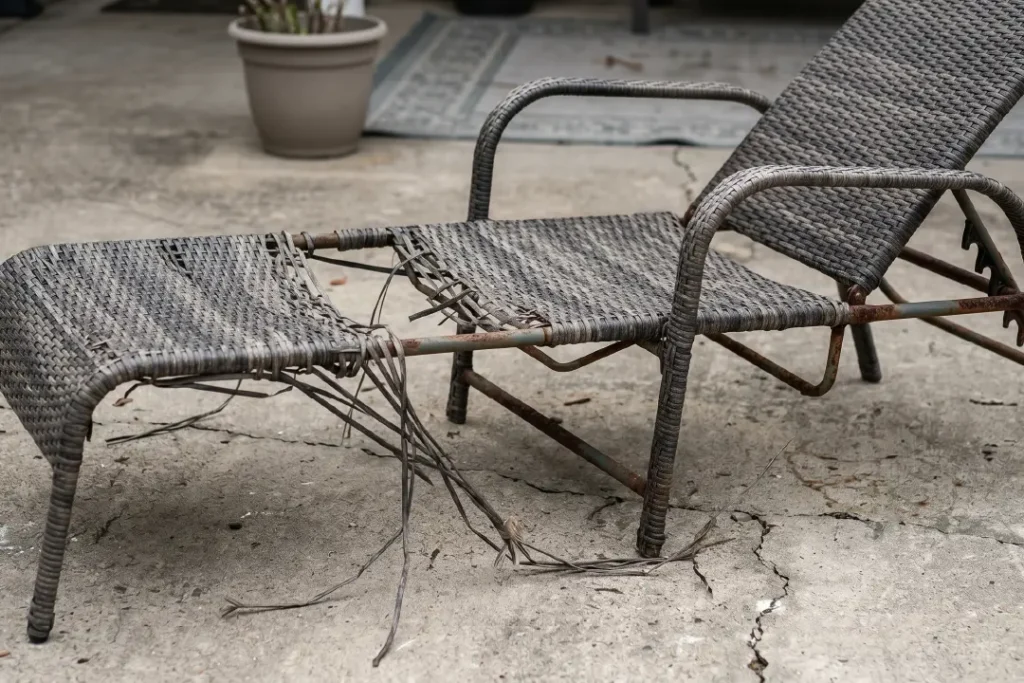
1. Pricing Too Competitive and Unrealistic
From our discussions with external quality control teams, pricing that is significantly below market level usually means something is being compromised.
In most cases, this includes lower-grade materials, skipped production steps, and simplified construction to reduce labor costs.
Unrealistic pricing can also indicate that production is outsourced to small workshops, where there is little to no overhead, but also no consistent quality control.
2. No Clear Production System
If a supplier cannot clearly explain how their production flows, it usually means heavy outsourcing and a lack of structured quality control.
This leads to inconsistent results because there is no standard process being followed.
A clear production system shows that the factory operates with defined procedures and checkpoints. This is what allows consistent quality across batches, not just in samples.
3. Inconsistent Answers About Materials
Pay close attention to how the supplier answers technical questions. If the answers change over time or differ between team members, it indicates there is no internal standard.
It also reflects a lack of experience. A manufacturer with real production experience will give consistent and clear answers because their system is already defined. Consistency in answers reflects consistency in production.
4. Overreliance on Samples Only
Most manufacturers can produce a good sample. But not all of them can reproduce the same quality at scale.
Sample production usually involves more attention to detail, more experienced workers, and a limited quantity. This is why samples can look perfect, while production results may not match.
If a supplier focuses only on samples but avoids discussing production systems, it is a strong warning sign.
Why Samples Alone Are Not Enough to Evaluate a Manufacturer
A good sample does not guarantee a reliable manufacturer. We have seen this happen in real projects.
One of our buyers previously worked with a supplier in Indonesia. During the sampling stage, everything looked perfect. The design, finishing, and overall quality met expectations.
But when the order went into production, the situation changed. During quality control, the buyer found a high number of defects. The products did not match the sample in consistency, structure, and finishing quality.
After further investigation, the root cause became clear. The supplier produced the sample in one place, but handled mass production in a different workshop. In this case, the supplier was acting as a trader, not a real manufacturer.
This is why evaluating the production system is more important than evaluating the sample alone.
How to Validate a Manufacturer Before Placing Your First Order
After understanding the checklist and red flags, the next step is simple. You need a structured way to validate a supplier before moving forward.
- Start with a sample: Validate design, proportion, and basic structure
- Move to Technical Discussion: Discuss material preparation, joinery system, finishing method, and production flow
- Verify Production System: Through a factory visit or a virtual audit, you can check machinery, workflow, and quality control
- Begin with a small order: You can order with 20ft or 40HC for the first order to test output consistency before scaling up.
Final Thought: The Right Manufacturer Is a System, Not Just a Product
A good product can be made once, but a reliable system produces consistent results over time. This is the difference between a supplier that looks good in samples and a manufacturer you can depend on for long-term business.
If you want to reduce risk when sourcing from an Indonesian furniture manufacturer, focus on how the factory works, not just what they show. Evaluate their system, ask the right questions, and validate before sending a deposit.
If you are currently comparing suppliers, it helps to discuss your project with a manufacturer who can explain both product and production clearly. You can start with a simple conversation to validate your options before making a decision.
Looking for a Reliable Indonesian Furniture Manufacturer?
If you are evaluating suppliers and want a second opinion, you can start with a simple discussion. At MPP Furniture, we work closely with B2B buyers to review designs, develop products, and explain production systems clearly No commitment needed. Just clarity before the decision.
FAQs How to Identitfy the Right Indonesian Furniture Manufacturers Before Sending a Deposit
1. How do I identify a reliable Indonesian furniture manufacturer?
A reliable manufacturer controls production in-house, uses proper machinery, and can clearly explain their process from material to finishing.
2. Can I rely only on samples when choosing a supplier?
No. Samples show appearance, but production consistency depends on the factory system, not the sample alone.
3. What is the biggest risk when importing furniture from Indonesia?
The biggest risk is choosing a supplier without validating their production system before placing a deposit.
4. Why is MOQ important when selecting a manufacturer?
MOQ affects your cash flow, inventory, and risk level. It reflects how the factory operates, not just pricing.
5. Should I visit the factory before placing an order?
Yes. A visit helps verify production capability, quality control, and whether the supplier is a real manufacturer.

Hi, I’m Salman, founder of MPP Furniture, an Indonesian furniture manufacturer serving global retailers and project-based clients.
I began my career in my family’s export-oriented furniture company, gaining hands-on experience in production, construction, finishing, material performance, and product development. With a clear understanding of how international buyers evaluate furniture quality and reliability, I founded MPP Furniture to deliver export-ready products with consistent standards.
Here, I share insights from the perspective of a furniture manufacturer working directly with production teams on the factory floor, focusing on manufacturing and supplier evaluation.
Connect on LinkedIn
0 Comments