Retail buyers spent years building dining assortments around pale woods and budget mixed materials. Now, a frustrating gap is emerging as customer inquiries shift toward darker woods and substantial heritage furniture. If your showroom only offers light oak while shoppers seek traditional styling, you are likely leaving significant retail margin behind.
Adding mahogany dining sets is about strategically timing your inventory before competitors catch on. Success requires understanding customer intent, evaluating the economic upside, and planning for strict manufacturing and ocean freight lead times for 2027. Read on to discover how to spot market signals and capture this premium demand.
Why Mahogany Dining Is Having a Moment Again

Mahogany is meeting several trends at the same time. House Beautiful reported that Moe’s Home’s 2026 forecast saw interest in darker woods rise 262% year over year, with dining tables close behind sideboards among the categories driving that interest.
High Point Market coverage points in the same direction. Fall 2025 showrooms brought back Chippendale, Windsor, and Klismos dining chairs, while darker and richer woods appeared across collections, suggesting traditional forms are being reworked rather than simply copied from the past.
This shift away from pale oak is not isolated to the dining room, as bespoke kitchen designers are seeing the exact same movement. Experts at Harvey Jones note a massive departure from sterile minimalism toward rich, chocolatey timbers that offer grounded luxury. They emphasize that natural materials like solid dark wood are becoming staples because their timeless, warm quality rarely dates.
Dining is a natural place for this shift because the table is often the largest visual anchor in the room. Recent coverage of formal dining rooms also points to renewed interest in dedicated gathering spaces, giving substantial tables, sideboards, and dining chairs more room to carry character.
Mahogany fits this movement because its history is already tied to statement dining tables, formal chairs, cabinets, and heirloom furniture. For a broader look at why the material is returning to premium interiors, read why mahogany furniture is reclaiming its place in high-end interiors.
The updated look is also less glossy and formal than many buyers remember. For a design-focused view of matte finishes, warmer palettes, and modern ways to use darker wood, read how modern mahogany interior design is being reworked for current interiors.
What Most Retailers Currently Stock Instead
Light-toned Scandinavian dining sets that dominated the past decade
Light oak and Scandinavian sets remain strong sellers, with the MPP factory seeing high demand for these warm-light tones from Australia, South Africa, and South Korea. Retailers should not abandon these proven minimalist and coastal collections just because dark woods are trending.
The real opportunity is in assortment balance. While light-toned furniture thrives in those regions, rising demand for dark mahogany and heritage styling primarily comes from buyers in Europe and the US. Adding a darker statement piece creates contrast on a pale showroom floor, giving your customers a premium alternative.
Budget mixed-material sets that skip solid hardwood entirely
Another large part of the market competes through price, using veneers, engineered panels, metal bases, or combinations that reduce material cost. These sets can work well for entry-level customers, but they answer a different buying motive from solid hardwood furniture built around material presence and long ownership.
A retailer considering mahogany should compare customer intent, not just ticket price. The customer choosing a low-cost set may not be the same person looking for a substantial table with a heritage or investment-furniture story.
A gap between what’s trending in design media and what’s actually on showroom floors
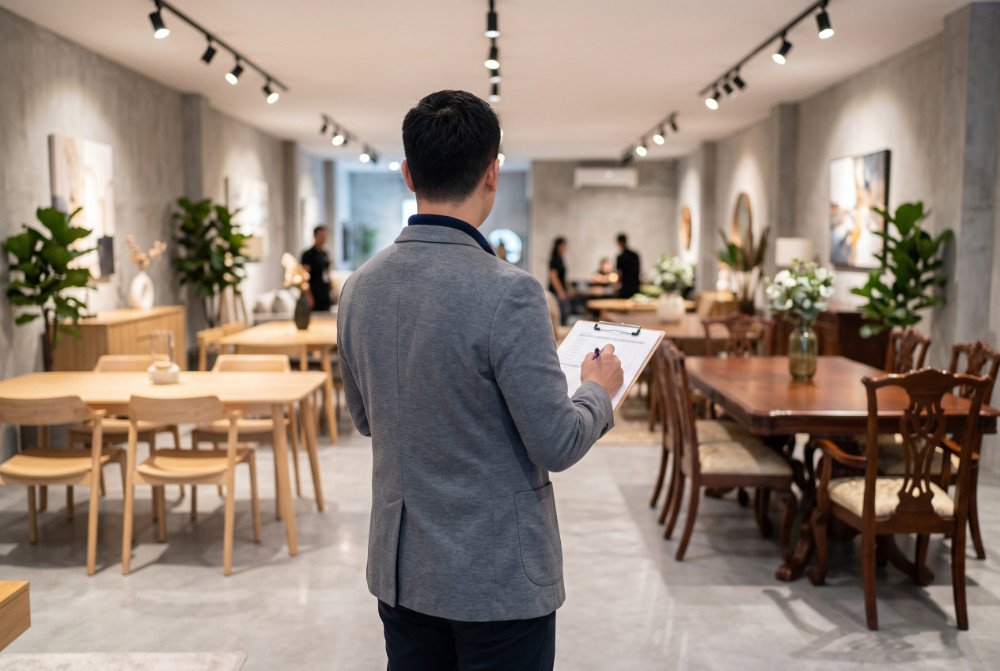
The exact assortment varies by store format, but a distinct gap is emerging. Design media and platforms like Pinterest are increasingly featuring substantial, dark-wood dining tables anchoring formal rooms with mixed-era aesthetics. Yet, when customers walk into a typical showroom, they are often met exclusively with slim-profile, pale oak or minimalist veneer sets.
This creates a stark disconnect between what the customer is inspired to buy and what is actually available to purchase. This gap presents a useful question for buyers: does your showroom give customers seeking that heritage direction anything convincing to choose? If the answer is no, this gap is worth addressing before competitors fill it first.
Signs the Gap Is Becoming a Missed Opportunity
One signal is customer language. When shoppers begin using words such as “heritage,” “traditional,” “dark wood,” “antique-inspired,” or “statement table,” those terms can show how the trend is reaching the sales floor.
A second signal is competitor movement. Repeated dark-wood launches, richer finishes, and refreshed traditional silhouettes can show that multiple buyers are responding to the same shift.
A third signal is the dining room itself. Separate dining rooms are receiving renewed design attention, so customers may be more willing to treat the table as a focal purchase rather than a background item.
If your current category is heavily built around teak, compare the role each material plays rather than replacing one with the other. For a deeper retail assortment view, read how Indonesian teak dining furniture works when retailers match material, price, and market fit.
What to Watch Before Expanding Into Mahogany Dining
Whether your customer base skews toward traditional or transitional aesthetics
Mahogany does not require a fully traditional store. It can work for transitional customers who want warmth and history but still prefer cleaner lines, softer upholstery, or less ornament than classic reproduction furniture.
Before expanding, review what your customers already buy around shape, finish, chair style, and room setting. To seamlessly match your market's aesthetic, a direct Indonesian mahogany furniture manufacturer like MPP Furniture provides dedicated in-house R&D support to translate your specific designs into production-ready samples. This allows you to confidently develop custom traditional or transitional collections while maintaining strict quality consistency across bulk orders.
How mahogany dining pricing compares to what you currently stock
While budget mixed-material or veneer sets compete fiercely on low ticket prices, solid mahogany dining furniture operates on a different economic model. A mahogany statement piece will have a higher landed cost, but it answers the demand for "forever furniture," allowing retailers to command a significantly higher retail price and target margin.
Accurately calculating this margin requires understanding the impact of ocean freight on large, solid hardwood items. Proper container planning optimizes freight rates and avoids unpredictable surcharges, ensuring your final retail price remains competitive. A safer approach is to test the category with a focused table or sideboard to gauge price resistance and customer response before opening a wider program.
Lead time considerations if you want inventory in place for the 2027 season
The 2027 conversation has already started, with design forecasts pointing toward dark antique furniture, heritage references, craftsmanship, and pieces with visible history. A retailer planning for 2027 should work backward from the desired floor date rather than wait until the direction becomes obvious.
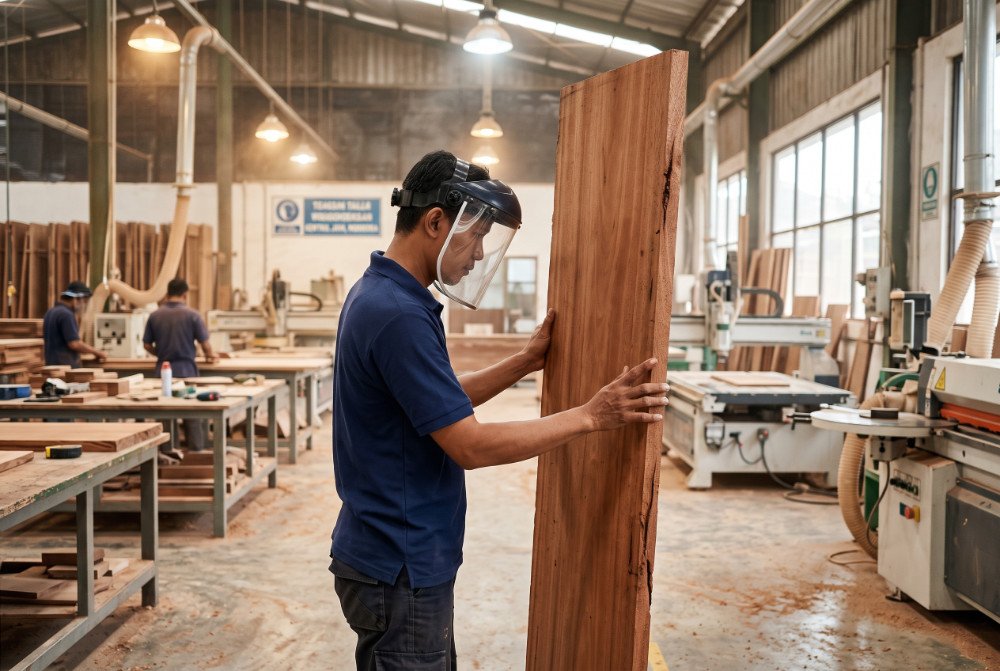
Product development still involves strict timber grading, structural approvals, production planning, and quality control. Working early with established Indonesian furniture manufacturers ensures compliance with stringent wood legality verifications (SVLK) without disrupting your schedule, giving you room to review and adjust samples before bulk execution.
Retailers must also factor in ocean freight timelines, which typically add 20 to 40 days to delivery schedules. For bulky mahogany tables, planning Full Container Loads (FCL) is essential to lower per-unit costs and minimize damage risks. This logistical reality means your 2027 buying decisions must be finalized long before the trend peaks.
Navigating these manufacturing and shipping timelines requires a reliable partner with fully in-house production to prevent unexpected delays. With over 20 years of experience, MPP Furniture offers predictable lead times, typically 75 days for new product development, ensuring your 2027 collections arrive on schedule. This factory-direct control guarantees batch-to-batch consistency, from the initial timber grading to the final export packaging.
Final Thoughts: Takeaways on the Mahogany Dining Signal
Mahogany dining is benefiting from a broader return to darker woods, traditional references, dedicated dining rooms, and furniture that feels more permanent. The opportunity is not to chase a trend blindly, but to notice when those signals begin matching what your customers are asking for.
- Design momentum around heritage and darker wood is landing naturally in the dining category.
- Many assortments may still be weighted toward the lighter and lower-cost directions of the previous decade.
- Customer language and competitor launches can help retailers judge when interest is becoming commercially relevant.
- Because development and shipping take time, planning for the 2027 season should begin before demand becomes obvious.
Frequently Asked Questions About Mahogany Dining Programs
1. Is mahogany furniture too traditional for modern retail stores?
Not at all. Today's mahogany dining sets often feature matte finishes, clean lines, and transitional silhouettes. They are designed to add warmth and contrast, blending perfectly with modern or neutral interiors.
2. How long does it take to import custom mahogany dining furniture?
Developing a new collection typically takes about 75 days for production, plus an additional 20 to 40 days for ocean freight. Retailers should plan their inventory at least a full quarter ahead of the targeted selling season.
3. Do I need a massive budget to test mahogany in my showroom?
No. You do not need to overhaul your entire floor. Many retailers successfully test this category by introducing a single-statement dining table or a focused sideboard to gauge customer response before committing to a larger program.
4. How do I ensure the mahogany furniture complies with import regulations?
The safest approach is to partner with an established Indonesian manufacturer. A direct factory partner will manage strict timber grading and provide full wood legality verifications (SVLK), ensuring your shipment clears customs without delays.
Ready to Expand Your Dining Assortment with Mahogany?
To start planning your 2027 inventory, explore MPP's dining room furniture collections or contact us to discuss custom, private-label, or OEM mahogany development.

I am a Web Designer, Technical SEO Specialist, and writer with 6+ years of experience in website optimization and search visibility. For more than a year, I have supported MPP Furniture’s growth, and I am currently expanding my role as an author to help B2B furniture buyers make more informed business decisions through informative, practical, and impactful articles.
0 Comments