The global demand for high-quality Indonesian outdoor furniture has exploded, driven by contemporary resort and residential design trends. But for the project manager or procurement specialist, this aesthetic shift introduces a serious technical dilemma: How do you balance the desire for modern, visually light designs (rope, mesh) against the proven durability and weather resistance of the established benchmark (synthetic weave)?
The outdoor weave material choice you make today isn't just about appearance; it's a strategic decision that determines your asset's lifespan, warranty risk, and Total Cost of Ownership (TCO). As a project manager, you’re buying years of service and minimizing the need for costly replacements.
This guide is designed to cut through the marketing noise and equip you with three essential tools: a technical framework for outdoor weave material selection, a clear understanding of the four elemental failure risks, and a non-negotiable sourcing checklist. We will provide a direct, framework-based comparison of the three primary synthetic weaving methods available from top Indonesian furniture manufacturers:
- Weave: High-Density Polyethylene (HDPE)—The industry baseline for longevity.
- Rope/Cording: Primarily Polypropylene (Olefin)—The modern, sleek aesthetic trend.
- Mesh/Sling: PVC-Coated Polyester—The high-tension, technical stability solution.
Why Outdoor Weave Material Selection is the Key to Failure Mitigation: Understanding the Pain Points
We know the true cost of sourcing errors isn't the furniture unit price; it’s the cost of replacement, warranty claim processing, and client dissatisfaction when a piece fails in its third season. Choosing the right material is your primary risk-mitigation strategy.
The difference between a successful 10-year investment and a disastrous 3-year failure often comes down to protecting against these four core elemental threats:
The Four Horsemen of Furniture Failure
| Threat | Description & Resulting Damage |
|---|---|
| 1. UV Damage | The invisible killer. Intense sun exposure degrades polymer chains, leading to brittleness, cracking, and rapid fading. This is the single biggest risk to any plastic or textile and is defined by the material's UV-hour rating. |
| 2. Moisture & Humidity | In high-humidity climates (like Indonesia's coastal regions), moisture causes biological growth (mold and mildew) in untreated textiles and, critically, initiates corrosion in frames. |
| 3. Chemical Vulnerability | This is the operational risk, especially in hospitality. Poolside furniture is exposed to chlorine, while general maintenance uses harsh cleaning solvents. These chemicals can aggressively damage the fiber's chemical bonds. |
| 4. Structural Failure | The material's inability to retain shape under load. This appears as sagging, loose knots, and loss of tensile strength, requiring replacement even if the material is cosmetically sound. |
The TCO Rule
A common trap in sourcing Indonesian outdoor furniture is prioritizing a lower initial price. However, if that lower cost comes with a material rated for only 2,000 UV hours instead of 5,000, you are setting yourself up for a 5-year replacement cycle instead of a 10-year one. The resulting labor, shipping, and material costs over a decade mean the "cheap" option delivered a much higher TCO. As strategic partners, we always prioritize consistent, verified quality to help you "Grow Together" by minimizing future expenses.
Category 1: Weave (HDPE Synthetic Rattan)
When sourcing high-quality Indonesian furniture, premium HDPE (High-Density Polyethylene) weave is your low-risk, high-longevity choice. It has been the industry standard for a decade because it is engineered to be a workhorse.
A. The Quality Metrics You Must Demand
Because low-cost synthetic products often use "regrind" (recycled material that compromises UV stability), you must demand specific technical proof from your Indonesian furniture supplier:
- UV Certification is Non-Negotiable: The gold standard is a material certified with a minimum 5,000-hour Xenon Arc Radiation testing rating. This guarantee ensures color consistency and structural integrity for approximately 5 years of continuous, heavy exposure before noticeable degradation.
- Homogeneous Pigmentation: The colorant should be contained throughout the fiber, not just surface-treated. This prevents the color from peeling or showing white scratches if the surface is abraded, which is essential for high-traffic commercial use.
- Frame Integrity is Paramount: The weave is only as strong as its foundation. The frame must be powder-coated Aluminum or durable Indonesian teak. Reject steel frames completely; in any humid or coastal environment, steel is a guaranteed failure point that will rust, stain, and compromise the structural integrity.
The Natural Rattan Caveat: As a reliable Indonesian furniture manufacturer, we must stress that natural rattan (cane, seagrass, water hyacinth) is strictly an indoor or covered conservatory material. It rapidly cracks, molds, and loses structural strength when exposed to rain and sun, negating its use for true outdoor projects.
To see examples of our most popular, high-performing teak and rattan designs that sell globally, view our selection of teak and rattan furniture that sells.
If you are looking to procure high-value Indonesian outdoor furniture, see our selection of teak patio furniture sets for retailers.
Category 2: Rope & Cording (Olefin/Polypropylene)
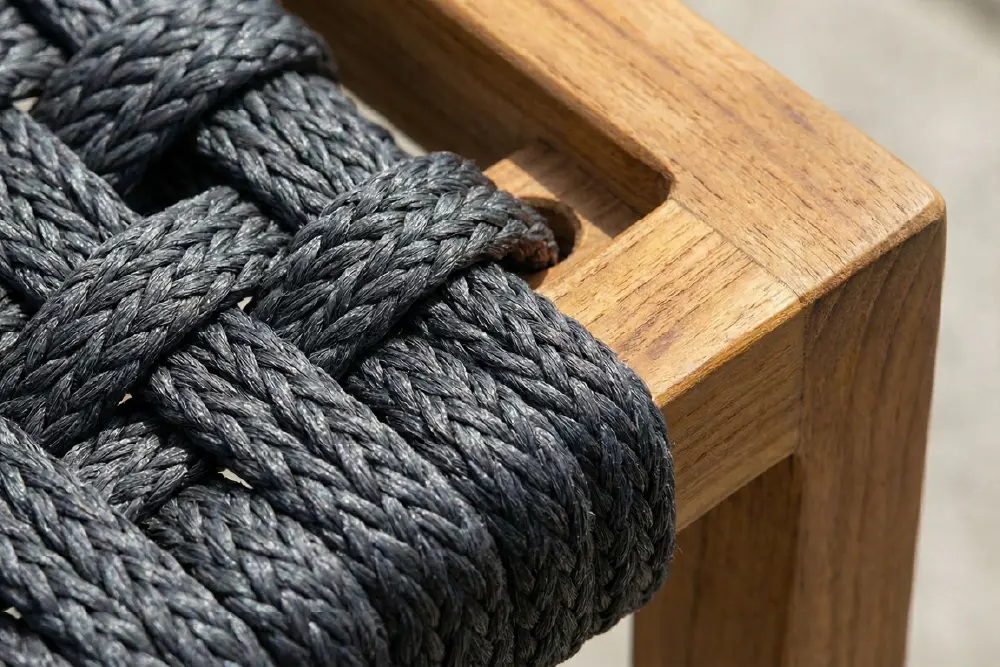
Rope outdoor furniture is currently the top aesthetic trend in design, offering a visually lighter, sleeker profile than traditional wicker. However, this aesthetic comes with a clear, documented trade-off that project managers must understand.
A. The Performance Reality
The dominant material used in this trend is Olefin (Polypropylene).
| Performance Metric | HDPE Weave (Baseline) | Rope (Olefin/Polypropylene) | The Risk |
|---|---|---|---|
| Commercial Lifespan | 5–10+ years | 3–6 years before significant wear | Leads to higher TCO due to accelerated replacement. |
| UV Rating | 5,000+ hours | ~2,000 hours | Shorter fade warranties, quicker material fatigue in intense sun. |
B. Critical Failure Points for Rope
- Chemical Vulnerability: Olefin rope has a high sensitivity to chlorine and common solvents. For a hotel, resort, or property with a swimming pool, you need strict Standard Operating Procedures (SOPs) to ensure the material isn't damaged during routine cleaning or splashed by pool water. Olefin is chosen for its superior properties, as detailed in this guide to Olefin/Polypropylene Performance Ropes.
- Knot Failure and Sagging: Unlike continuous strand weaving, rope depends entirely on specialized knots (macrame, half hitches) to maintain tension. If the rope material lacks temperature stability and becomes overly pliable in the heat, those crucial knots will loosen, leading directly to structural sag and failure.
Failure Mitigation: The longevity of rope outdoor furniture is entirely anchored in the frame. Since the rope has a shorter predicted life, the structural value is carried by the frame. Insist on the strategic pairing of Olefin rope with a premium Aluminum frame or durable Indonesian teak furniture to stabilize the entire structure and justify the investment.
Review our collection that strategically implements this pairing on our page dedicated to teak and rope outdoor furniture in Indonesia.
Category 3: Mesh & Sling (PVC-Coated Polyester)
For applications requiring maximum stability, such as high-traffic lounge seating or tensioned sling-backs, PVC-coated polyester mesh (like Phifertex or Textilene) is the superior engineering choice.
- Engineered for Tension: This outdoor weave material's fundamental technical advantage is its dimensional stability. It is manufactured by weaving PVC-coated polyester yarns, giving it low-stretch characteristics that make it highly resistant to the sagging seen in less stable materials.
- Antimicrobial Protection: Many premium mesh fabrics are infused with antimicrobial agents. In humid climates, this is invaluable, as it actively inhibits the growth of mold, mildew, and bacteria throughout the fabric's life.
- Ideal Application: When you need a highly breathable, quick-drying surface that will not sag under heavy commercial use, this category provides the most technically reliable textile solution.
For complementary products, explore our line of high-quality outdoor cushion furniture trends designed to meet commercial standards.
For a deeper technical overview of the engineering specifications of PVC-coated yarns, consult this guide to outdoor furniture sling fabrics.
Conclusion: The Project Manager’s Sourcing Checklist
Making an informed material choice is how we "Grow Together", ensuring the furniture assets you procure deliver consistent quality and low maintenance for years. Having established the technical framework and the four elemental failure risks, this final section delivers the actionable tools you need: the prescriptive guide for material selection and the non-negotiable quality assurance protocol.
Here is your final prescriptive guide for procuring from any Indonesian furniture supplier:
| Project Priority | Recommended Material | Critical Sourcing Check |
|---|---|---|
| Maximum Longevity & Lowest TCO | Weave (HDPE Rattan) | Must have 5,000-hour UV certification and homogeneous pigmentation. |
| Modern Aesthetics & Design | Rope (Olefin) | Mandatory pairing with an Aluminum or Teak frame. Establish SOPs for chlorine avoidance. |
| High Structural Stability (No Sag) | Mesh (PVC Polyester) | Verify integrated Antimicrobial technology for wet environments. |
For more information on sourcing a wide variety of durable Indonesian outdoor furniture, visit our dedicated supplier page.
Your Non-Negotiable Quality Assurance Protocol
Before signing the contract, you must confirm these three details, which are the hallmarks of a reliable furniture manufacturer with in-house quality control:
- Frame Material Verification: Confirm the outdoor piece uses a powder-coated Aluminum frame or well-finished Teak wood. Reject steel.
- UV Quality Certification: Demand documented proof of 5,000-hour Xenon Arc testing for HDPE, or a clear UV-hour rating for Olefin/Rope materials.
- Structural Execution: Verify that the supplier controls the weaving process in-house (our 20+ years of experience in vertical integration ensures this). Loose weaves and poor knotting are the fastest paths to structural failure.
By focusing your procurement decision on these core materials and construction specifications, you mitigate the risk of premature failure and secure a higher return on investment for your project.
Beyond outdoor items, explore our full product capacity, including high-design interior pieces like our leather woven bar stools for modern projects.
Make Us Your Strategic Partner. Don't let design trends compromise your project's durability. Consult your material and certification needs directly with our manufacturing experts.
Planning your next best-selling collection?
Request catalog, pricing info, MOQ, and custom options today — we’ll respond quickly.
Frequently Asked Questions (FAQ)
What is the most durable material for commercial outdoor furniture?
The most durable, low-risk material for long-term commercial outdoor furniture is HDPE (High-Density Polyethylene) Synthetic Rattan. When sourced from a reliable Indonesian manufacturer using a powder-coated Aluminum frame, it offers the best protection against UV failure and boasts a commercial lifespan of 5–10 years.
Can I use natural Indonesian rattan furniture outdoors?
No. Natural Indonesian rattan (cane, seagrass, or water hyacinth) is not suitable for full outdoor use. It is highly susceptible to moisture, which causes rapid mold growth, cracking, and structural failure. Natural materials must be restricted to covered or semi-indoor conservatory environments.
What is the best frame to use for outdoor furniture use?
The best frames for outdoor commercial use are powder-coated Aluminum and Teak wood. Aluminum is mandatory in coastal or humid environments because it is naturally rust-proof and lightweight. Teak is a high-grade natural option known for its durability, natural oils, and exceptional weather resistance, especially when paired with materials like Olefin rope.
What does the 5,000-hour UV certification mean?
The 5,000-hour UV certification is a quality benchmark, often achieved through the Xenon Arc test, indicating the material's resistance to brittleness, cracking, and fading from sunlight. For project managers, this rating is the key metric that guarantees the material will maintain its aesthetic and structural integrity for extended commercial use.

Versatile Digital Marketing & Creative Specialist with a strong foundation in graphic design, product photography, and comprehensive brand strategy. Proven ability to bridge the gap between physical products and digital presence, translating complex concepts into high-converting marketing assets. Adept at leveraging SEO, web analytics, and engaging visual content to drive business growth and elevate brand identity in competitive markets.
0 Comments