Retailers rarely struggle to find a teak dining room chair. The harder part is finding a chair that feels distinctive enough to support a specific retail collection without losing the natural character that makes teak attractive in the first place.
Leather gives retailers another way to shape that product direction. When used with purpose, it can add contrast, softness, and perceived comfort while keeping teak as the main material story.
From the perspective of an Indonesian Furniture Supplier, this article explains why teak and leather work as one product concept, why dining chairs suit the pairing, and when the added material creates enough retail value to justify the cost.
Why Teak and Leather Work Well Together
Teak and leather work well because each material contributes something different. Teak brings visible grain, warm tones, and a strong natural identity, while leather adds softness, texture, and contrast.
Teak can define the frame and overall shape, while leather supports areas such as the seat or backrest. For retailers sourcing Indonesian Indoor Furniture, this keeps the chair recognizable as teak wood furniture rather than an upholstered chair with wooden legs.
How Leather Changes the Direction of a Teak Dining Chair
An all-teak dining chair gives a stronger solid-wood expression. Adding leather can make the same basic concept feel softer, more refined, or more contemporary depending on how the material is applied.
This does not always require a completely new frame. A retailer may keep an established silhouette and use material treatment to create another product direction.
Ethnicraft uses a similar idea in its collection extensions, where a familiar dining chair appears in brown varnished teak with a black leather seat. The useful lesson for retailers is that material changes can refresh a product while keeping its original identity recognizable.
Why Dining Chairs Are a Good Format for Teak and Leather
Dining chairs have clear visual zones such as the frame, legs, seat, and backrest. This makes it easier to give teak and leather separate roles without making the product look too busy.
Leather also makes sense in areas that come into direct contact with the user, so a leather seat or backrest feels functional rather than decorative.
Mixed-material seating can also make production differences easier to notice. In MPP's Sungkai and leather production, uneven leather spacing, sanding, leg angles, or finish variation become more visible when several pieces are displayed together.
Why Teak Should Remain the Material Hero
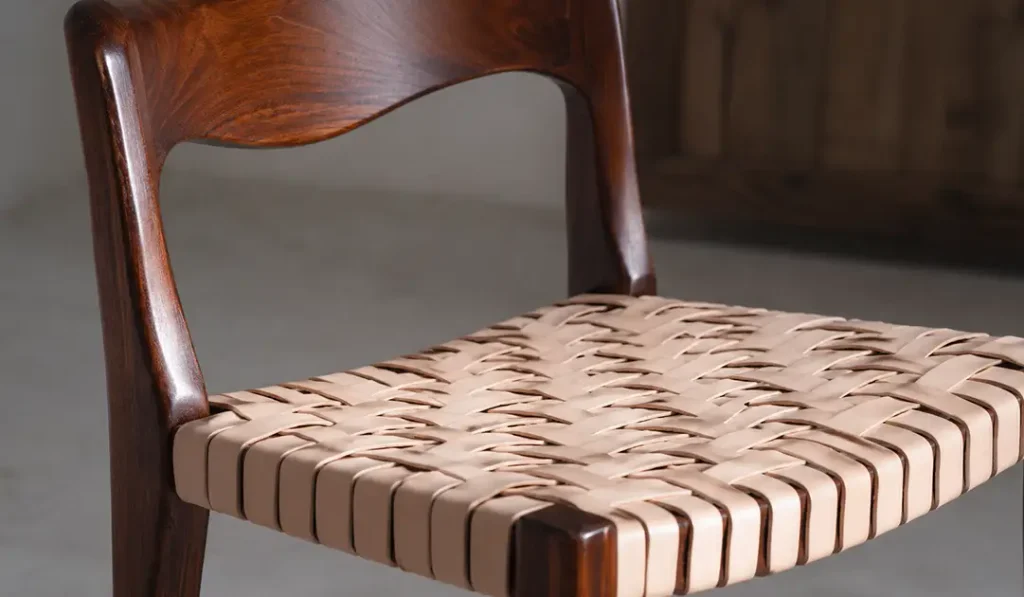
More leather is not always better. If too much of the chair is covered, the product can lose the visual reason for being positioned as a teak dining room chair.
Visible grain, exposed legs, frame proportion, and wood finish should still communicate teak clearly. Leather should support the design rather than replace the wood visually.
A simple test is to look at the chair without its description. If teak is no longer easy to notice, the leather may be taking too much attention away from the defining material.
How Teak and Leather Can Build a Stronger Dining Collection
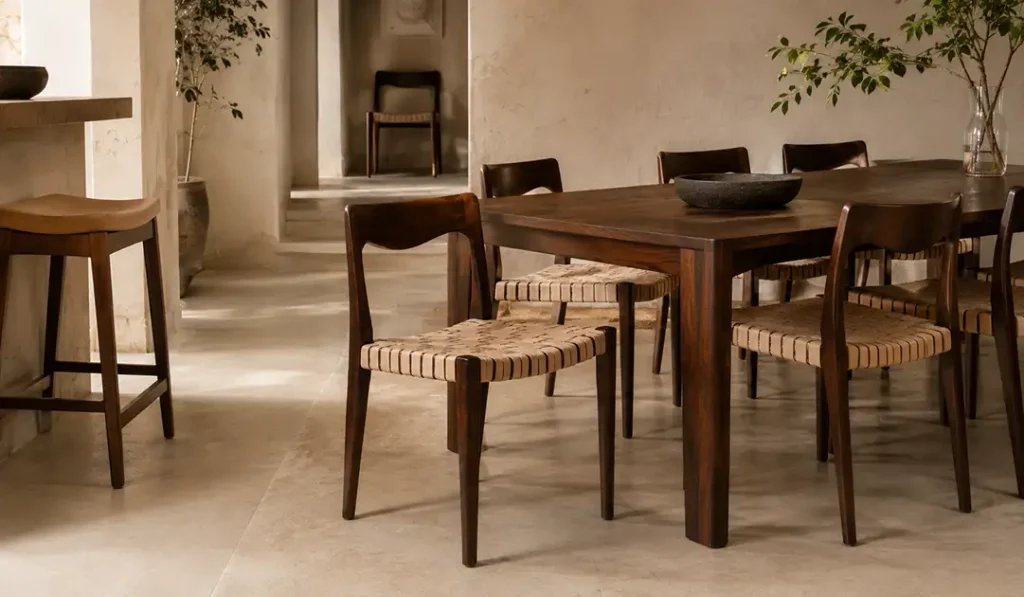
Retailers usually sell a dining chair as part of a wider collection. Chairs may sit beside tables, benches, counter stools, cabinets, or other indoor furniture.
Repeating a controlled material story across selected products can help those pieces feel connected without using leather in exactly the same way on every item.
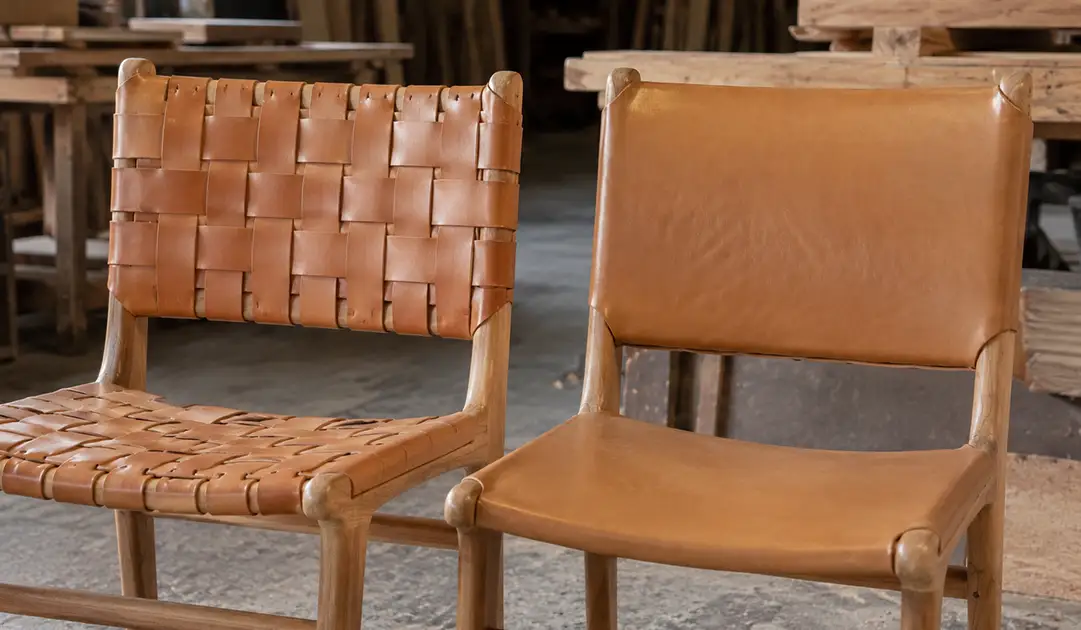
Does Adding Leather Create Enough Retail Value?
Adding leather means more material, workmanship, production steps, and quality-control points. The added cost makes sense only when customers can see or feel the difference.
Leather may improve differentiation, comfort perception, or collection identity, but complexity alone does not create retail value.
MPP's guide to protecting indoor furniture retail margins follows the same principle: higher specifications make more sense when they create visible value or a stronger reason to buy. If leather does not change customer perception enough, an all-teak version may be the better product.
What Retailers Should Check Before Developing a Teak and Leather Dining Chair
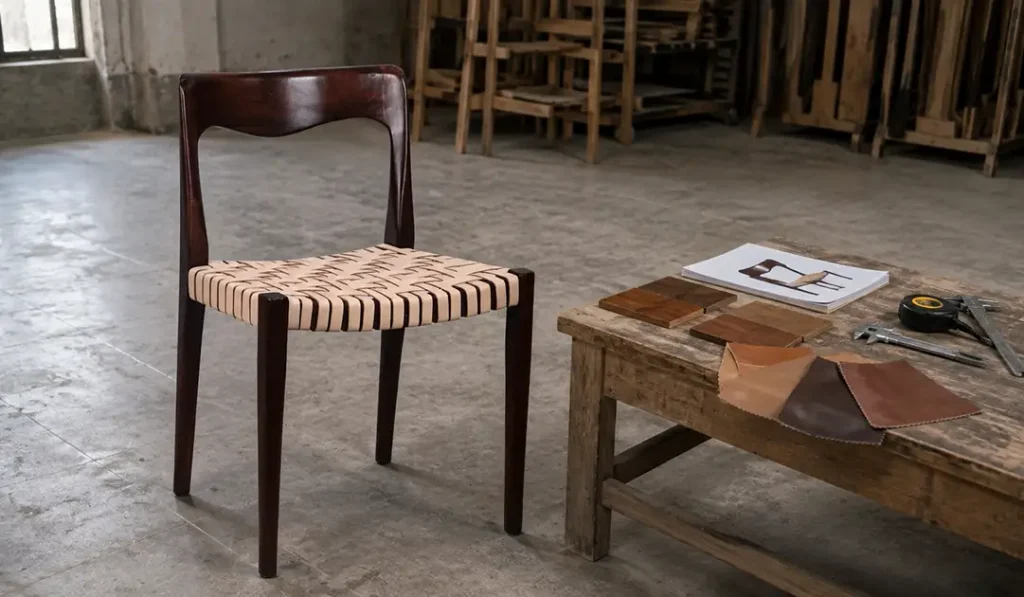
Is Teak Still Clearly Visible?
Look at the frame, grain, exposed wood surfaces, and overall silhouette. The chair should still read clearly as teak furniture even after leather is added.
Does the Leather Add a Clear Retail Benefit?
Leather should contribute to differentiation, comfort perception, collection direction, or target-market fit. If its role is difficult to explain, it may not need to be there.
Does the Combination Fit the Wider Collection?
Review the chair beside the tables, stools, benches, and other products it may be sold with. A strong standalone chair can still feel out of place if its material story does not connect with the wider assortment.
MPP Furniture is currently developing a teak and leather dining chair for a buyer in Greece that is preparing to move into bulk production after sample approval. During development, the main points that required adjustment were the chair construction, leather color, and teak finishing.
This experience shows why the buyer's direction should be confirmed before bulk production. The manufacturer's role is to translate that direction into a workable construction and an approved sample that can be repeated in production.
Can the Concept Support More Than One SKU?
A well-planned chair concept may also support related seating or another material treatment later. But each variation should still follow the same collection identity instead of creating unrelated products.
For custom or private-label development, the goal is to decide what the material change should add to the product, then test that direction through development and sampling.
Final Thoughts
Teak and leather work best when each material has a clear role. Teak should remain the main material identity, while leather should add contrast, comfort perception, or a useful retail direction.
Before development moves forward, retailers should ask whether teak is still clearly visible, whether leather adds a real customer benefit, and whether the chair fits the wider collection. If those answers are clear, the combination has a stronger commercial reason to move toward sampling and production.
Develop Your Teak and Leather Dining Chair Collection With MPP Furniture
Planning a custom teak and leather dining chair collection? MPP Furniture can support product development, sampling, and bulk production based on your retail direction.
FAQ: About Sungkai Wood and Leather Counter Stools
1. Is teak a good material for indoor dining chairs?
Yes. Teak works well for indoor dining chairs because it offers a strong wooden structure, visible grain, and a natural material character that can support many retail directions.
2. Why combine teak with leather on dining chairs?
Teak gives the chair its main wood identity, while leather adds contrast, softness, and perceived comfort. The combination works best when each material has a clear role.
3. Does leather make teak dining chairs look more premium?
It can, but leather alone does not make a chair feel more premium. Material proportion, placement, workmanship, wood finishing, and overall design still shape customer perception.
4. Can the same teak dining chair design use different leather finishes?
Yes, depending on the chair construction and collection direction. Different leather treatments can give the same core frame another retail expression without requiring a completely new design.
5. Can teak and leather dining chairs be customized for retail collections?
Yes. Retailers can discuss frame design, dimensions, teak finish, leather application, private-label requirements, sample development, and bulk production with the manufacturer before approving the final collection.

A versatile content creator with a strong foundation in product photography and videography, and a comprehensive brand strategy. Capable of creating engaging content to connect consumers and producers, web analytics, and engaging visual content to drive interest and growth for a product or brand.
0 Comments