Retailers often reach the same point: the teak and leather direction is decided, and a reference image seems ready to send to a factory. But a chair that looks simple in a photo can still leave major production decisions open.
This guide will help you turn that visual concept into a specification a manufacturer can quote, sample, approve, and repeat in bulk. The goal is to reduce assumptions before cost and production planning are discussed.
We will cover product direction, leather application, material details, construction, commercial requirements, sampling, approval, and bulk production. If you are still deciding why the material pairing fits your collection, read our guide to teak dining room chairs with leather first.
Start With a Clear Product Direction
Define what role the chair will play in the collection before discussing measurements or finishes. Each indoor dining chair should be considered around its design direction, retail position, proportions, expected comfort, and how visible the teak should remain.
Also separate what must stay from what the manufacturer may adjust. A curved back or exposed frame detail may define the product identity, while hidden construction may allow some adjustment for production.
Decide How Leather Will Be Applied Before Detailed Development
Leather should be defined as part of the product structure, not added as a late finish choice. Decide whether the chair uses woven leather, upholstered leather, or another defined application.
That choice affects visible teak, component proportions, attachment points, and production. If the application is not yet decided, use our guide to woven vs upholstered leather for teak indoor dining chairs before detailed sampling.
Specify the Teak and Leather, Not Just the Visual Look
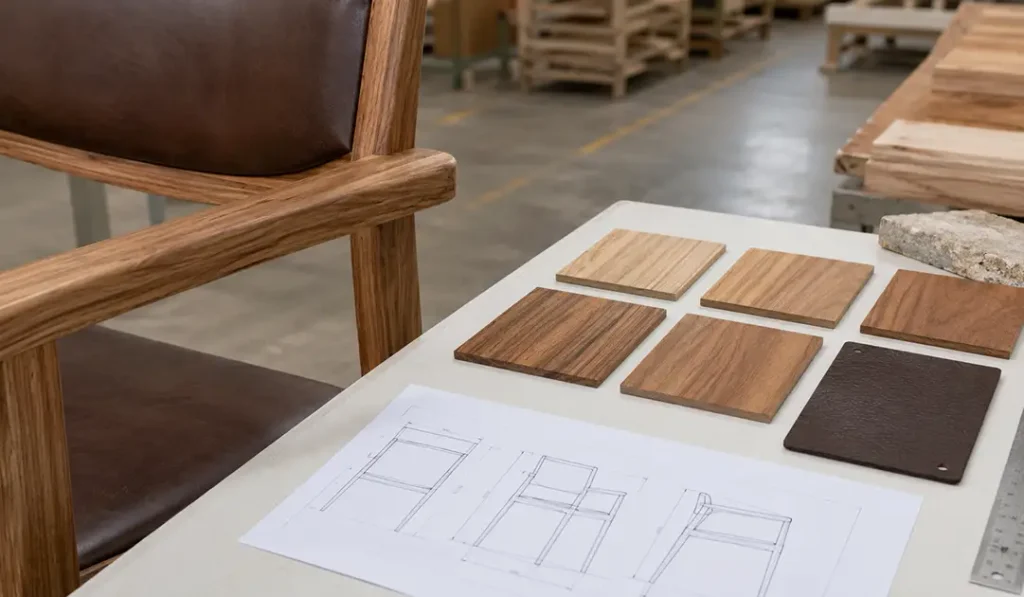
Define the Teak Specification
State teak as the required wood species, then define the finish direction, target color, sheen level where needed, and visible grain expectations. An approved finish sample is more useful than broad descriptions such as “natural teak” or “medium brown.”
Define the Leather Specification
Define the leather type, color, surface appearance, and feel where relevant. For woven applications, include strap width and layout details; for upholstered versions, define the padding and seat profile.
For retailers developing teak leather dining chairs, clear material references help the manufacturer translate the intended design into repeatable production details. A leather swatch, approved color reference, and application details give both sides something precise to review.
Make the Leather Application Work With the Chair Construction
The timber frame and leather application should be developed together. With woven leather, the frame needs suitable attachment areas and enough support for the planned strap layout and tension.
With upholstered leather, the frame must allow for padding, leather thickness, seat profile, attachment, and clean transitions into exposed teak. Small structural changes may be needed without changing the intended appearance.
A manufacturer should explain these changes before sampling. The goal is to translate the concept into a chair that can be produced repeatedly, not to redesign the original direction.
Define Commercial Requirements Before Requesting a Quote
A meaningful quotation needs more than a product image. Share order quantity, target MOQ, SKU or finish count, dimensions, packaging needs, shipping configuration, Incoterm, destination, and delivery timing where available.
The purpose is not to make the RFQ longer. It is to make competing quotations refer to the same chair and the same commercial assumptions.
For buyers sourcing Indonesian Indoor Furniture, the process is clearer when both sides move from product direction and specification to commercial requirements, quotation, sample development, approval, and bulk production.
Develop and Approve the Sample Before Bulk Production
The sample should confirm dimensions, comfort, teak finish, leather color, application, construction, workmanship, and whether the design is suitable for repeat production.
Treat the first sample as a development tool. If something needs adjustment, revise the specification, document the change, and confirm it before approval.
Where practical, review the physical chair against the agreed specification. Photos cannot fully communicate seating feel, movement, leather tension, or physical finish.
Turn the Approved Sample Into a Bulk Production Reference
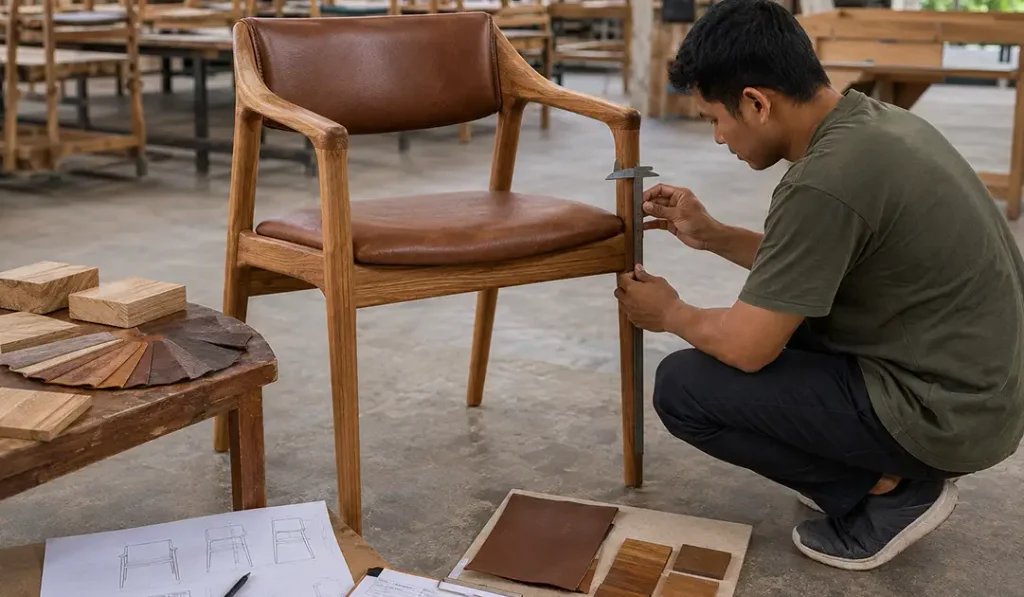
After sample approval, the agreed details should become production references, including dimensions, teak finish, leather color, weaving or upholstery details, construction, workmanship, and agreed tolerances for natural material variation.
In August 2026, a buyer from the USA approached MPP Furniture for a bulk order but requested one sample of each product before moving forward. Once completed, the team will compare approved finishing swatches, dimensions, leather colors, weaving details, construction, and overall consistency before full production.
This gives the production and in-house quality control teams the same references throughout manufacturing. They can compare bulk results with details already reviewed during development.
Look Beyond the First Sample
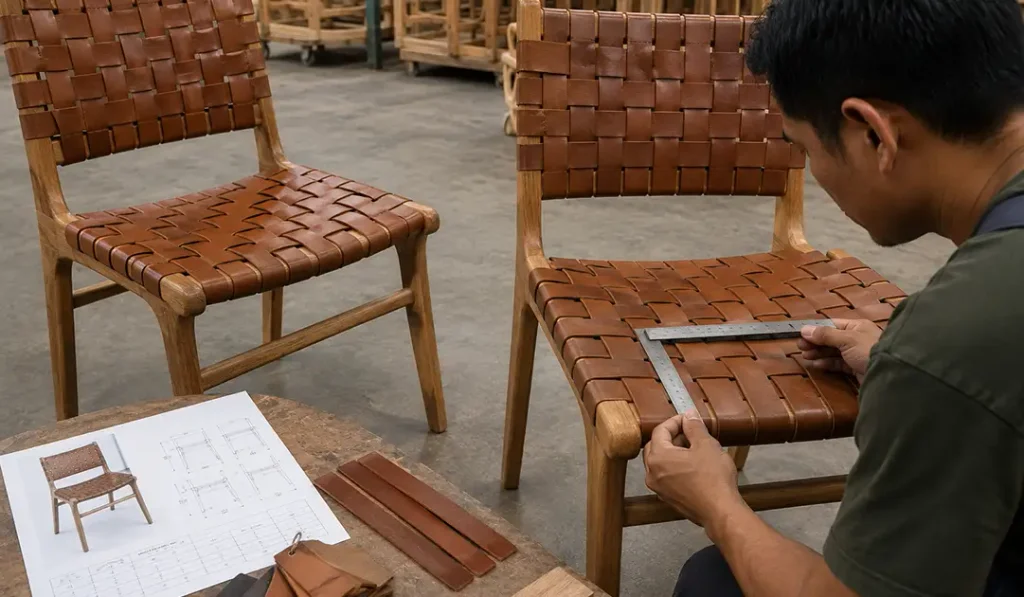
A good sample shows that the product can be made correctly once, but the supplier still needs to repeat that direction across the order. Component dimensions, finishing, leather preparation, assembly, and inspection must stay aligned with the approved reference.
During one production run, the first chairs showed a small difference in leather spacing compared with the approved sample. MPP stopped that part of the process, adjusted the spacing reference with the production team, and checked the next pieces before continuing, preventing the variation from spreading across the batch.
The approved sample should remain an active reference during production and quality inspection. A USDA Forest Service study on furniture product development also separates prototype development from full production, supporting a separate check for scale feasibility.
For retailers working with an Indonesian Furniture Supplier, the better question is not only, “Can this factory make the chair?” but also, “Can it keep the approved direction consistent when production increases?”
Final Thoughts: From Specification to Repeatable Production
Developing custom teak indoor dining chairs with leather is less about sending a reference image and more about removing uncertainty before production begins. When product direction, material details, construction, commercial requirements, and the approved sample are clearly defined, retailers can compare quotations more fairly and assess whether a manufacturer can reproduce the chair consistently across bulk orders.
Developing Custom Teak and Leather Dining Chairs for Your Collection?
If you already have a reference design, technical drawing, or initial product concept, MPP Furniture can help review the specification, refine the construction, develop the sample, and prepare your custom teak and leather dining chair for bulk production. Share your project details with our team to discuss the next step from quotation to product development.
FAQ: About Custom Teak Dining Chairs With Leather
1. What information should I provide when requesting a quote for custom teak dining chairs?
Provide the product reference, dimensions, material specifications, leather application, quantity, finish variants, packaging, Incoterm, destination, and target delivery timing. Better-defined information means fewer quotation assumptions.
2. Should I choose woven or upholstered leather before developing the sample?
Yes. Woven and upholstered leather require different frame, attachment, padding, and production considerations, so the application should normally be decided before detailed sampling.
3. Why is an approved sample important before bulk production?
An approved sample gives the buyer and manufacturer a physical reference for dimensions, finish, leather application, construction, and workmanship. It turns development decisions into a reference for production.
4. Can a furniture manufacturer adjust the construction without changing the original chair design?
Yes. A manufacturer may recommend small or hidden structural changes when they improve leather attachment, production feasibility, or repeatability without changing the agreed visual direction.
5. Can custom teak dining chairs be produced in different leather colors or finishes?
Yes. Each variation should have an approved leather and finish reference so production is not based on verbal color descriptions.

A versatile content creator with a strong foundation in product photography and videography, and a comprehensive brand strategy. Capable of creating engaging content to connect consumers and producers, web analytics, and engaging visual content to drive interest and growth for a product or brand.
0 Comments