When you source wholesale commercial furniture for your retail business or commercial project, achieving true quality requires a strict process. Finding a reliable supplier is often the hardest part of the job for decision-makers in the furniture industry. Many buyers face delayed shipments, inconsistent finishes, or structural failures. These problems usually happen when a supplier relies heavily on subcontractors instead of managing the work themselves.
Buying direct factory furniture from an Indonesian furniture manufacturer with 100% end-to-end in-house production is the safest way to avoid these risks. Complete control over the manufacturing lifecycle means every single piece is accountable to one standard. There is no guessing game about where the wood came from or who sanded the final product.
In this article, we will explain exactly how in-house manufacturing protects your investment. We will look at how processing raw logs, combining engineering with traditional craftsmanship, and applying strict quality control checkpoints result in superior furniture for your business.
Key Takeaways:
- Complete Accountability: End-to-end in-house manufacturing eliminates the delays and quality inconsistencies often caused by fragmented supply chains.
- Precise Material Control: Processing raw logs directly guarantees strict moisture control and supports legal, ethical sourcing (SVLK/FSC compliance).
- Structural Integrity: Fusing modern machinery with generational Indonesian craftsmanship prevents flaws and ensures highly consistent batch quality.
- Streamlined Customization: Direct communication with the factory floor accelerates B2B OEM projects and dramatically lowers defect ratios.
Why In-House Production Matters for B2B Furniture Buyers
Fragmented supply chains create fragmented accountability. If a dining chair arrives with a cracked joint, an Indonesian furniture supplier using sub-contractors might blame the external assembly workshop. At the same time, the assembly workshop might blame the mill that provided the wood. As a result, the buyer is left dealing with the financial loss and unhappy retail customers.
In-house production fixes this problem directly. As noted by global logistics leaders at the Mediterranean Shipping Company (MSC), managing an end-to-end supply chain under one roof eliminates fragmented accountability and removes the margin for error. A single management team oversees the product from the moment a raw log enters the facility to the moment the finished chair goes into a shipping container.
This level of control eliminates the inconsistencies associated with subcontracting. For example, a factory can make sure that the exact same stain formulation is used on batch one and batch ten. This means your retail store or interior design project will always receive products that match your original approved samples. In short, in-house manufacturing removes the middleman entirely.
Read our comprehensive breakdown on why choosing a direct manufacturer is the safest option for your furniture supply chain.
How Each Furniture Production Step Affects Final Quality
Every stage of furniture making carries risks. A small mistake in the early stages will multiply into a massive defect by the time the product is finished. Because of this, handling every step internally is the only way to guarantee long-term durability.
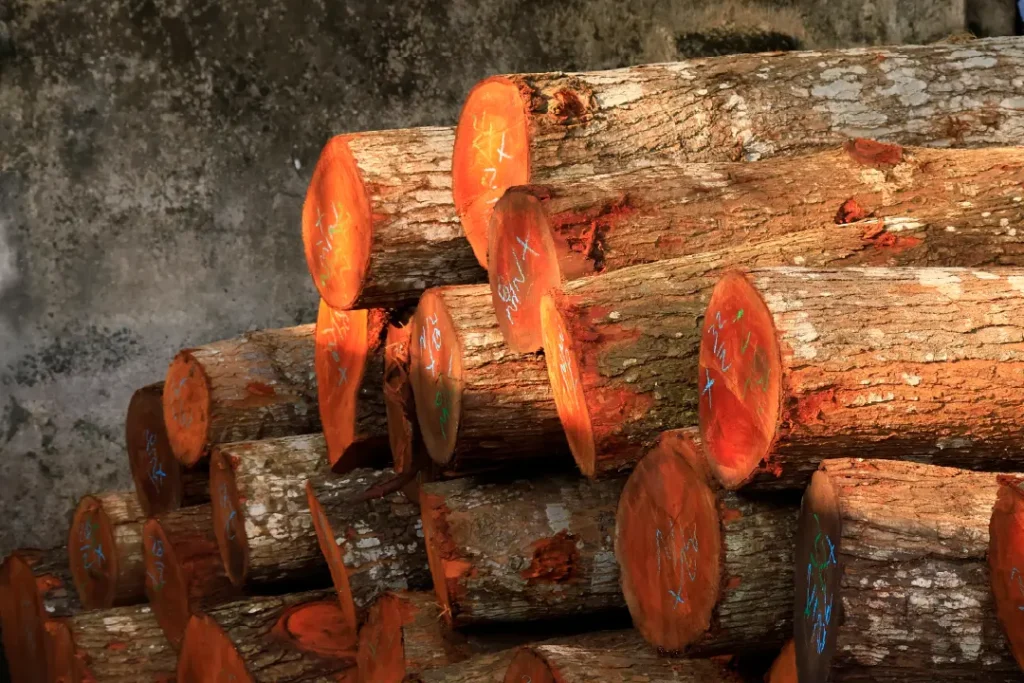
Processing Raw Materials Directly
The foundation of high-quality custom solid wood furniture starts long before the wood is cut into legs or tabletops. It starts with the tree itself. Many suppliers take the easy route by purchasing pre-processed wood planks from external vendors. But this approach is risky because the buyer does not know the drying and treatment history of those planks.
If wood is dried too quickly or unevenly, it will warp, crack, or split after it reaches a different climate. By processing local raw logs directly, an in-house factory takes full control over the moisture content. Raw material processing is handled meticulously. According to wood science research from the Oklahoma State University Extension, drying lumber in carefully controlled kilns is the most effective way to reach the exact moisture percentage needed to prevent warping during international export.
Also, sourcing logs locally allows the factory to select the best grade of wood right from the source. This traceability makes sure that only the most stable and beautiful grain patterns make it to the production line.
This is especially critical when sourcing from Indonesia. The region offers access to world-class, premium hardwoods like teak and mahogany. However, international B2B buyers must prioritize sustainability and legality. Working with a direct manufacturer that strictly adheres to the official SVLK (Indonesian Legal Wood) compliance standards, as outlined by the EU's FLEGT Licence Portal, guarantees that your raw materials are ethically and legally sourced.
Additionally, partnering with factories that maintain Chain of Custody certifications from the Forest Stewardship Council (FSC) ensures your materials are responsibly tracked from the forest to the final product, shielding your brand from ESG compliance risks in your home market.
Learn more about the specific requirements and benefits of sourcing FLEGT-licensed legal wood and timber in Indonesia.
Bringing Engineering and Craftsmanship Together
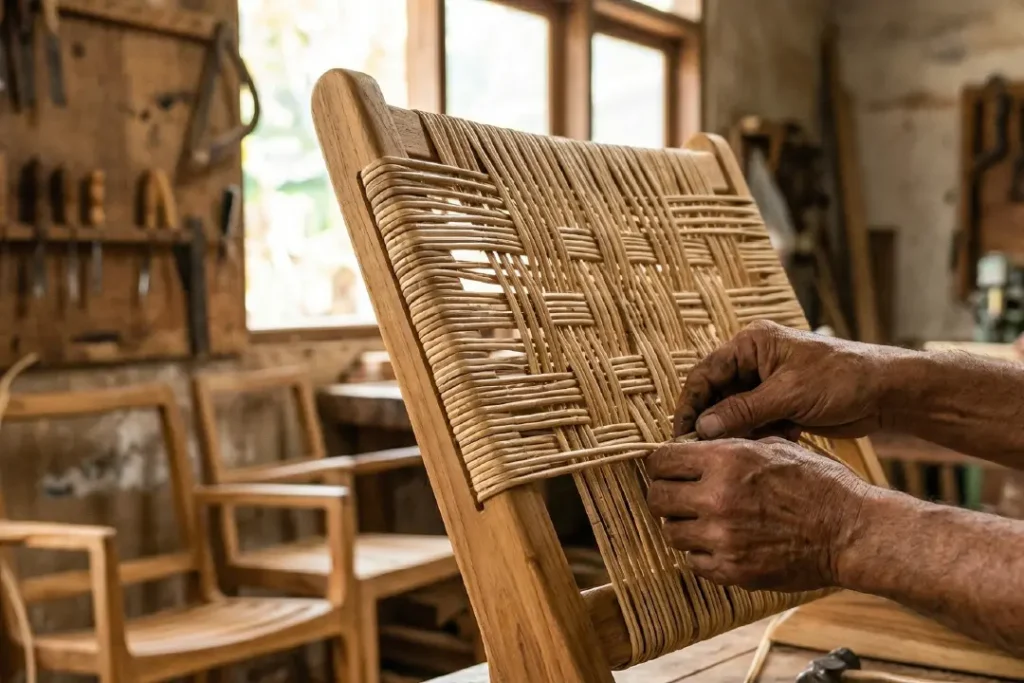
Designing a beautiful chair is one thing. Engineering it to hold 250 pounds safely for ten years is another. When companies outsource their production, they often experience a disconnect between the designer's vision and the actual factory floor. Sub-contractors might cut corners on joinery to save time.
In an end-to-end furniture production facility, technical engineers and traditional artisans work under the same roof. Solid wood furniture milling is guided by precise machinery to achieve exact dimensions. Next, skilled artisans take over to apply the fine, expertly handcrafted details that machines simply cannot replicate.
In Indonesia, this craftsmanship is often generational. Artisans bring decades of inherited woodworking knowledge to the factory floor, ensuring a level of character and precision in the finishing details that mass-production lines simply cannot achieve.
This combination of modern engineering and traditional furniture craftsmanship prevents structural flaws before they happen. Engineers calculate the load-bearing requirements, and artisans execute the complex joinery with total accuracy. This means the structural integrity of every item is verified by both data and human experience.
Strict Quality Control at Every Stage
You cannot test quality into a product at the very end of the line. Quality must be built into the product from day one. Factories that rely on external workshops often only inspect the final delivered goods. By then, it is too late to fix internal structural problems without tearing the furniture apart.
A dedicated in-house manufacturer places quality control checkpoints at every single stage of the build. This ensures flawless execution. Typical checkpoints include:
- Kiln Drying: Checking exact moisture content.
- Milling: Measuring the precision of every cut.
- Assembly: Testing the structural strength of joints.
- Finishing: Examining smoothness and color consistency.
Because the product never leaves the facility, defects are caught immediately. A hidden knot? Rejected before assembly. This proactive attention to detail builds a highly consistent product. It guarantees long-term value for business clients.
Clear Communication for Custom Projects
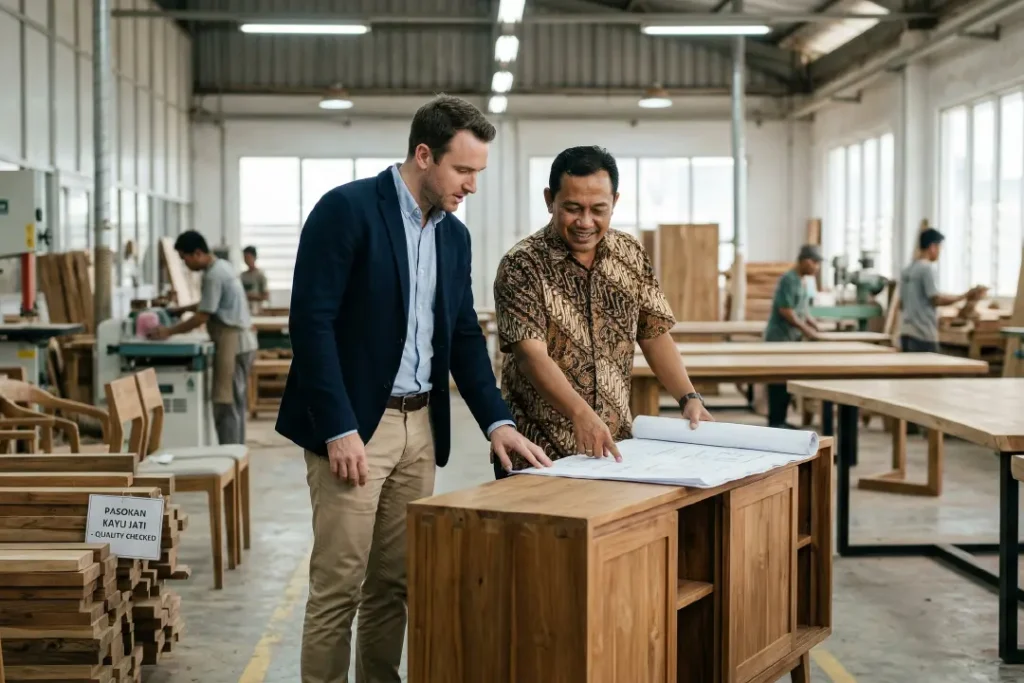
B2B buyers frequently need custom modifications to fit specific retail trends or commercial space requirements. Trying to communicate custom specifications through a middleman to an external workshop often leads to expensive mistakes. Measurements get lost in translation, and prototypes take months to complete.
Working with a direct factory changes the entire dynamic. You have a direct line of communication to the people actually making your goods. This setup speeds up problem-solving dramatically. If you need a specific backrest angle adjusted, the factory manager can walk down to the floor, speak directly to the engineer, and make the change that same day.
This direct access allows for highly precise custom builds, private label creation, and OEM services. You get exactly what you asked for, faster and with far less friction.
Ensure your custom orders go smoothly by avoiding these common MOQ mistakes when working with Indonesian furniture manufacturers.
The MPP Furniture Manufacturer Standard: Built to Last
Finding a reliable manufacturer means finding a partner who values your business reputation as much as their own. When you partner with an integrated Indonesian furniture factory, you secure the final quality of your brand. Modern machinery pairs seamlessly with traditional craftsmanship.
At our facilities at MPP Furniture, this direct control allows us to offer incredible benefits to B2B clients. Because we eliminate sub-contractor markups, we provide free consultation and new product development. You work directly with our team to create exclusive custom designs tailored entirely to your market.
In practice, this end-to-end control leads to highly measurable results. A well-managed in-house operation often boasts a 99% client satisfaction rate. By eliminating external variables, the complaint ratio can drop to an astonishing 0.56%. This means you spend less time handling customer returns and more time growing your business.
For a complete walkthrough of the purchasing and logistics process, explore our step-by-step guide to importing furniture from Indonesia.
Conclusion
The quality of your furniture is only as strong as the supply chain that builds it. Fragmented production creates risks, delays, and structural inconsistencies. When you choose to buy furniture directly from the factory with full in-house capabilities, you are actively protecting your investment.
From the careful processing of raw logs to the final quality control checkpoints, end-to-end manufacturing guarantees accountability. It brings engineers and artisans together to build products that are structurally sound and visually stunning. For B2B decision-makers, partnering with a fully integrated B2B furniture manufacturer is the smartest and safest choice for long-term success.
Ready to Secure Your Supply Chain with Direct Factory Furniture?
Eliminate the middleman and guarantee superior quality with our 100% in-house manufacturing process. Let's discuss your next commercial project or custom collection today.
FAQs About Direct Factory Furniture Production
1. What does end-to-end in-house furniture production mean?
End-to-end in-house production means that a single factory handles every step of the manufacturing process. This includes sourcing and drying raw logs, milling, assembly, finishing, and final packaging, completely without the use of external sub-contractors.
2. Why is it better for a factory to process raw logs instead of buying pre-cut planks?
Processing raw logs allows the factory to control the drying process and the wood's moisture content. This prevents the wood from warping or cracking when the furniture is shipped to different global climates.
3. How does direct factory production improve quality control?
With direct factory production, quality control checkpoints are placed at every stage of the build. Inspectors can catch and fix small issues during milling or assembly before the product moves to the finishing stage.
4. Can I get custom furniture designs from an in-house manufacturer?
Yes. Working with a direct manufacturer allows for clear, direct communication. This makes it much easier to request highly precise custom builds, OEM services, and private label products without the mistakes often caused by middlemen.
5. How does in-house manufacturing reduce customer complaints?
By eliminating sub-contractors, the factory controls the consistency of the joinery and the finishing. This high attention to detail directly reduces structural failures, resulting in complaint ratios as low as 0.56%.

Versatile Digital Marketing & Creative Specialist with a strong foundation in graphic design, product photography, and comprehensive brand strategy. Proven ability to bridge the gap between physical products and digital presence, translating complex concepts into high-converting marketing assets. Adept at leveraging SEO, web analytics, and engaging visual content to drive business growth and elevate brand identity in competitive markets.
0 Comments