Custom living room furniture works best when every material has a clear role before sample development starts. For retail buyers, the goal is not to style a home. The goal is to build a sellable living room furniture collection that looks unified, can be repeated in bulk, and supports the brand’s market position.
In June 2026, a buyer from Australia came to MPP Furniture with a preference for wood, rattan, and aluminum accents for a living room collection after reviewing several indonesian living room references. The direction was clear, but those materials still needed proper coordination. If the wood tone, rattan texture, aluminum finish, and room color direction are not discussed early, the final collection can look random once the sofa, lounge chair, coffee table, and side table are placed together.
From a manufacturer’s view, material coordination should happen before sample approval, not after the first production order. Customers see the full living room furniture collection, not each product alone. That same logic applies to materials.
Why Material Coordination Matters in Custom Living Room Furniture
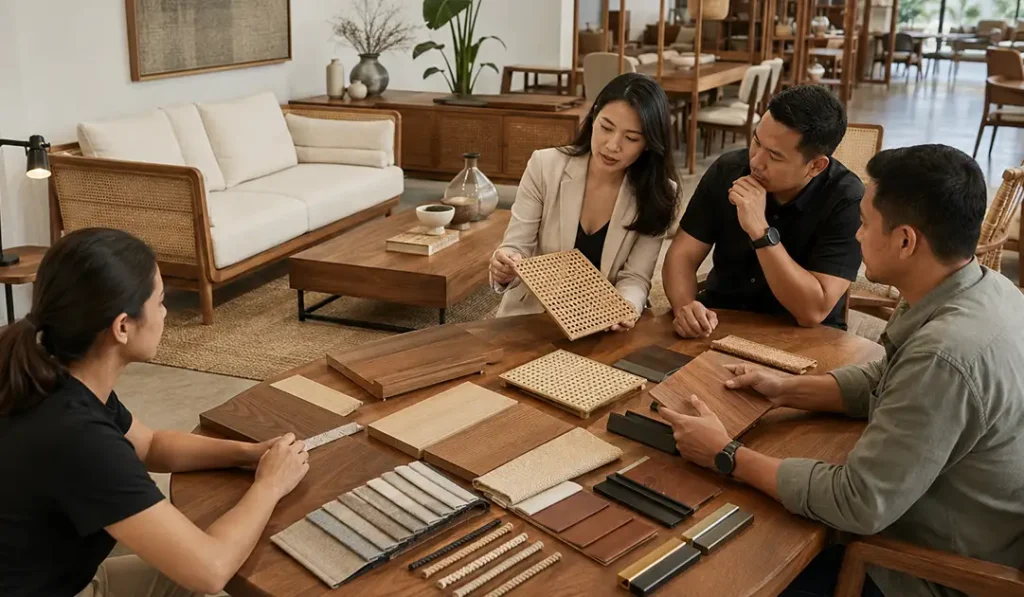
Material coordination helps buyers and manufacturers define a clear direction before a custom living room furniture collection moves into sample development. It gives the sofa, lounge chair, coffee table, side table, and console one shared material logic, so the collection feels connected from the start.
For retailers, this makes the set easier to present as one product family. For the manufacturer, it also makes production easier to plan, from material preparation to finishing and quality control notes.
The problem starts when every item uses a different material mix without a clear reason. For example, the sofa may use wood, the lounge chair may use rattan, the coffee table may use aluminum, and the console may use a different wood finish. Each product may look fine on its own, but the full collection can lose its direction when placed together.
Start with a Clear Material Hierarchy
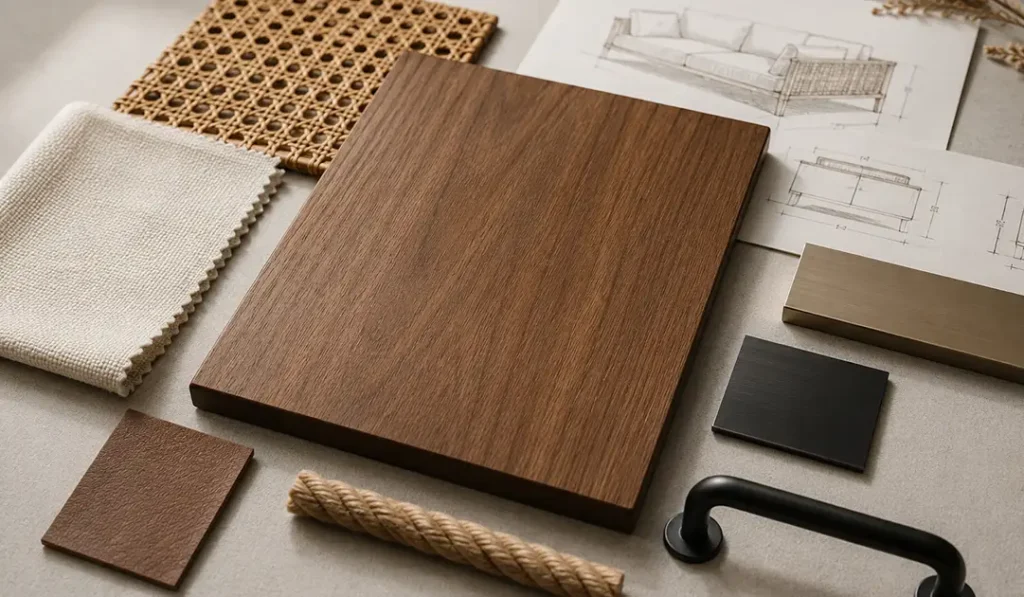
A material hierarchy helps buyers decide which material should lead the collection and which materials should support it. Without this hierarchy, mixed material furniture can become too busy.
Main Material as the Collection Foundation
The main material is usually the most visible and repeated material in a custom living room furniture collection. In many collections, this material is wood because it can appear across the sofa frame, lounge chair frame, coffee table, side table, cabinet, or console.
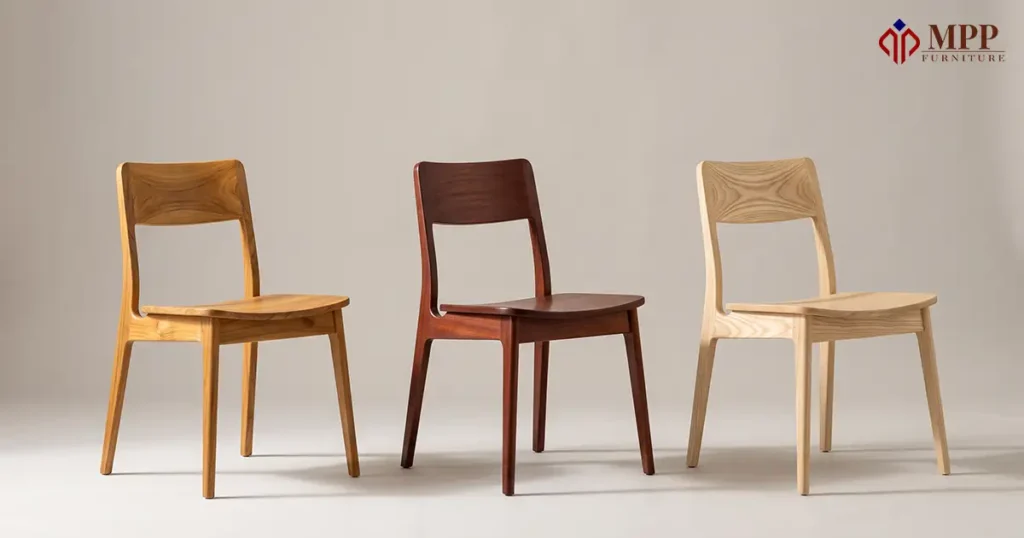
When buyers choose the main material early, the manufacturer can plan the structure, finish direction, and material match with better control. Wood also sets the base tone of the collection. Natural sungkai can create a lighter indoor look, teak can bring a warmer and stronger character, while mahogany can support a deeper indoor finish.
Once this foundation is set, other materials such as rattan, fabric, leather, rope, and metal accents should follow the same direction instead of creating a separate look.
Supporting Materials for Texture and Comfort
Supporting materials add comfort, texture, and market character to a custom living room furniture collection. Rattan can soften the frame, fabric can shape the sofa mood, leather can work as a small detail, and rope can add a relaxed resort feel.
A good example is the rattan and sungkai wood furniture combination, where sungkai provides structure while rattan adds flexibility, texture, and a lighter handcrafted feel. This same thinking helps buyers plan any mixed material furniture collection before sample development.
Accent Materials for Small Details
Accent materials should stay controlled. Metal, for example, can work well on leg caps, drawer pulls, brackets, or slim trims. But when metal appears too much, it can compete with the natural materials.
A good accent supports the full collection and repeats in small ways across several pieces. If aluminum is used on a coffee table base, the same tone can appear on side table details or cabinet pulls.
Choose the Wood Direction Before Adding Other Materials
Wood direction should usually be decided first because it affects structure, finish, color, cost, and production handling. Before adding rattan, fabric, leather, rope, or metal accent, buyers should decide the wood species, tone, grain direction, finish level, and target use.
This step is practical, not only visual. The Oklahoma State University guide on Dimensional Changes in Wood explains that wood gains and loses moisture from surrounding air, so dimensional changes can affect furniture quality. Poor planning can lead to warping, cracking, or buckling.
At MPP Furniture, we have seen how one wood decision can affect the full material plan. In a custom living room furniture project, wood tone needs to be reviewed together with rattan shade, aluminum finish, cushion color, and room color direction before sampling. This is why wood selection should match the market, climate, product use, and supporting materials before sample approval.
Balance Texture and Finish Direction Across the Collection
In product development discussions, the issue is usually not the material choice itself, but how many materials compete at once. Wood, rattan, fabric, leather, rope, and metal can work together in one living room collection, but each material needs a clear role.
A cohesive furniture collection does not need the same material on every product. It needs repeated logic. For example, if the sofa uses natural wood, rattan side panels, cream fabric, and black metal detail, the coffee table or console should repeat part of that direction.
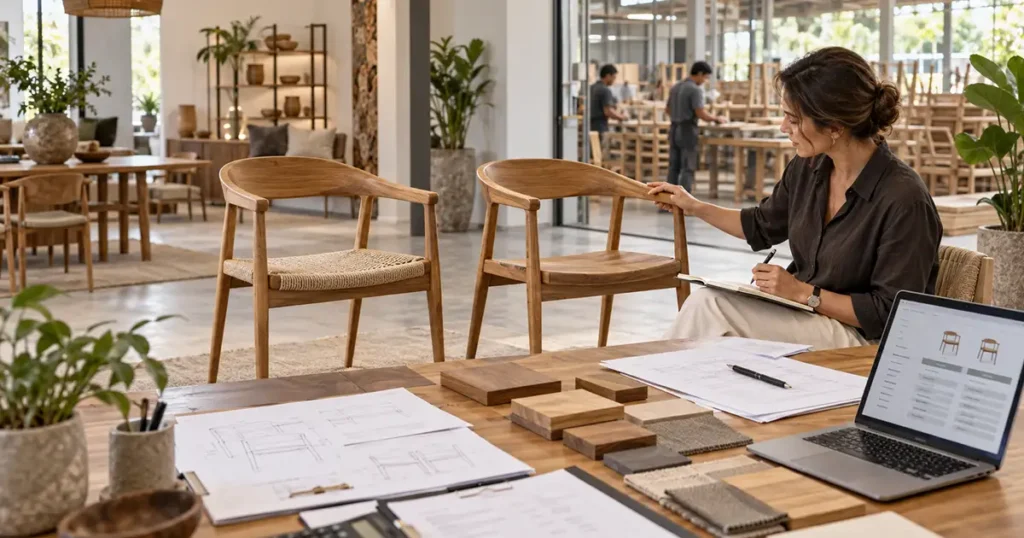
Finish direction should also be locked before sample approval. Buyers should decide the wood finish tone, rattan shade, fabric color, leather tone, rope color, and metal finish early, so the sample can become a reliable reference for bulk production.
Apply the Material Mix Across Living Room Pieces
The easiest way to control a custom furniture collection is to assign material roles by product type. Each piece should repeat part of the same material direction, so the living room set feels planned across seating, tables, and storage pieces.
Sofa and Lounge Chair as the Main Material Reference
The sofa and lounge chair should become the main material reference because they hold the largest visual and comfort area. The wood frame, cushion fabric, rattan panel, leather detail, or rope weaving used here will set expectations for the rest of the set.
If the sofa uses a warm wood frame with rattan side panels and cream fabric, the lounge chair can have its own shape, but the material language should still feel related.
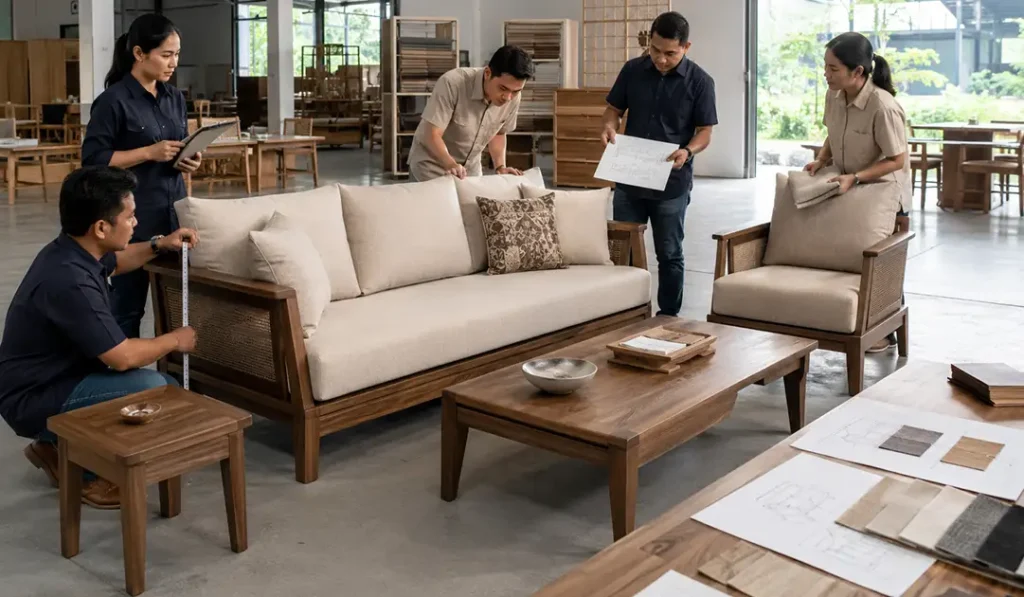
Coffee Table and Side Table as Material Repeaters
Tables are useful repeaters in a mixed material furniture collection. A coffee table can repeat the same wood tone from the sofa frame, while a side table can repeat the metal accent from the lounge chair. A lower shelf can use rattan to connect with seating panels.
This keeps the coffee table and side table connected to the main seating direction, without forcing every product to use the exact same material mix.
Cabinet, Console, or Accent Pieces as Supporting Items
Cabinets, consoles, and accent pieces should support the collection direction. They can use closed wood surfaces, rattan door panels, metal pulls, or small leather details, but they should not introduce a new material style that makes the set feel like a different product line.
Check Production Feasibility Before Sample Development
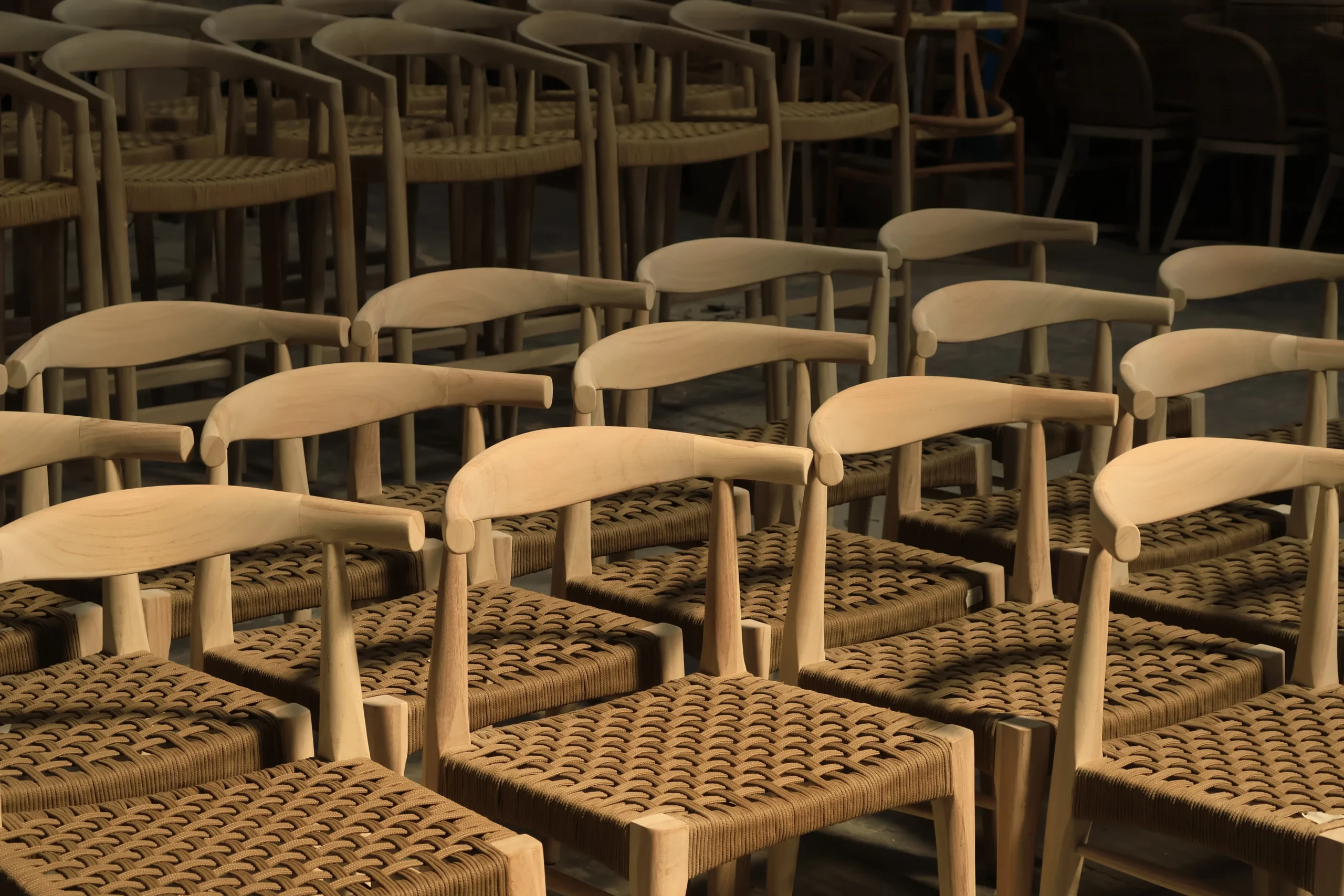
A mixed material design must be beautiful, sellable, and repeatable. Before sample development, buyers should ask whether each material can be sourced, processed, assembled, finished, packed, and repeated within the target timeline and budget.
Rattan needs weaving consistency, rope needs tension control, fabric needs proper fit, leather needs shade and thickness control, metal needs finish consistency, and wood needs drying, construction planning, and finish control.
This is where an experienced custom furniture manufacturer can help buyers connect design ideas with material use, production methods, and repeat order needs. The goal is not only to make a good sample, but to make a collection that can be produced again with the same standard.
Use Sample Approval to Lock the Material Standard
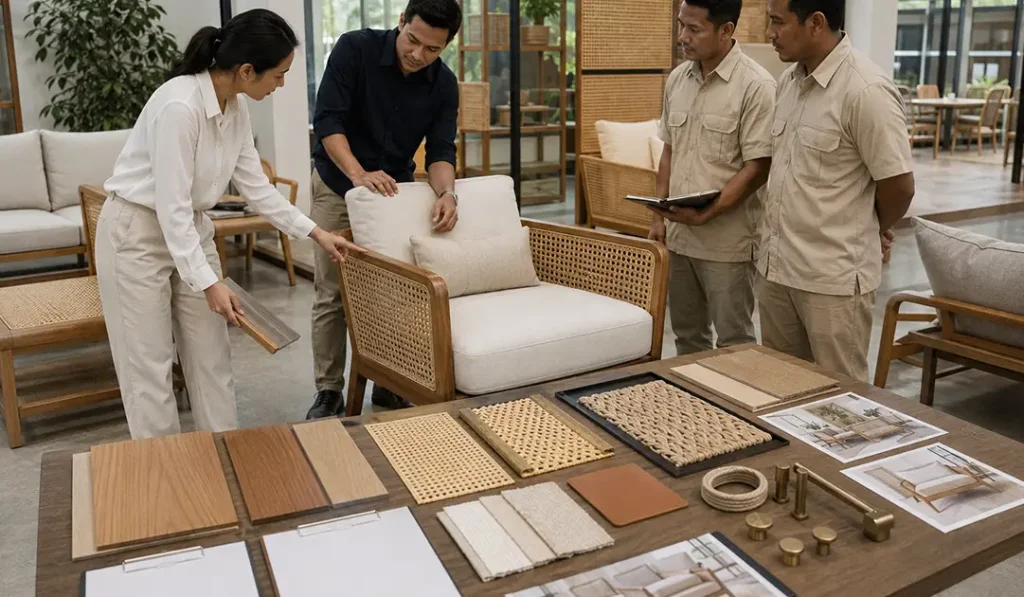
Sample approval should lock the material standard in writing. Do not approve a sample with only “looks good.” Record the wood species, finish code, rattan shade, weaving pattern, fabric code, leather tone, rope color, metal finish, coating level, hardware, packaging notes, and approved photos.
At MPP, sample approval for mixed material furniture is treated as a production reference. It helps the buyer, designer, merchandiser, and factory team follow the same standard when the project moves from one sample to bulk production.
As an Indonesian Furniture Manufacturer, MPP Furniture helps buyers turn material direction into custom living room furniture through material review, sample approval, in-house production, and quality checks across each stage.
Final Thoughts: A Cohesive Collection Starts with Controlled Material Choices
Custom living room furniture should not begin by adding every attractive material into one set. It should begin with a clear material direction, where wood, rattan, fabric, leather, rope, and metal accents each have a defined role.
For retailers, this makes the collection easier to present, explain, and sell as one product family. For manufacturers, it makes sample review, material preparation, finishing control, and bulk production easier to repeat. When material coordination is handled before sample approval, the final living room collection has a better chance to look planned, feel connected, and stay consistent for future orders.
Develop Custom Living Room Furniture with Controlled Material Direction
Planning a custom living room furniture collection for retail, import, boutique, hospitality, or brand use? MPP Furniture can help you review wood, rattan, fabric, leather, rope, and metal accent direction before sample approval and bulk production
FAQ: Custom Living Room Furniture Material Coordination
1. How do retailers combine materials in custom living room furniture?
Retailers should start with one main material, then add supporting and accent materials with repeated use across the collection. This helps the final set look cohesive and easier to repeat in bulk production.
2. What material should be chosen first for a living room furniture collection?
Wood direction should usually be chosen first because it affects structure, finish tone, color matching, cost, and production handling.
3. Can wood, rattan, fabric, leather, rope, and metal work together in one collection?
Yes. These materials can work together when each one has a clear role. Wood can lead the structure, rattan can add texture, fabric can support comfort, and metal can stay as a small accent.
4. What should buyers check before approving a mixed material furniture sample?
Buyers should record the wood species, finish code, rattan shade, weaving pattern, fabric code, leather tone, rope color, metal finish, coating level, hardware, packaging notes, and approved photos.
5. Why work with a custom furniture manufacturer for material coordination?
A custom furniture manufacturer can connect design ideas with material sourcing, sample review, production limits, quality checks, and bulk production repeatability.

A versatile content creator with a strong foundation in product photography and videography, and a comprehensive brand strategy. Capable of creating engaging content to connect consumers and producers, web analytics, and engaging visual content to drive interest and growth for a product or brand.
0 Comments