When investing in premium interiors, mahogany furniture remains a definitive standard. The ideal applications for this exceptional hardwood are high-end indoor pieces that require strong structural reliability and refined aesthetics, specifically expansive executive desks, heavy storage case goods, large-surface dining tables, and intricately carved seating.
This article breaks down exactly why mahogany dominates these specific categories. The following sections explore the core mechanical advantages of the timber—from its 1.5 T/R shrinkage ratio to its remarkable optical chatoyance—and explain how these raw metrics translate into lifelong performance for different furniture types.
The biological resilience of the wood will also be addressed to clarify why its luxurious finish is best preserved in climate-controlled environments.
The Core Advantages: What Makes Mahogany a Premier Choice?
Mahogany has remained a preferred material in high-end furniture design because its technical characteristics support both premium aesthetics and product longevity. For quick reference, the following table outlines the key mechanical properties that dictate its performance, utilizing baseline data from The Wood Database:
| Technical Metric | Value | Primary Manufacturing Benefit |
|---|---|---|
| Specific Gravity (Oven-Dry) | 0.52 | Balances structural density with ease of cutting. |
| Janka Hardness | 4020 N | Resists surface denting while allowing precise carving. |
| Volumetric Shrinkage | 7.5% | Maintains overall dimensional stability in varying climates. |
| T/R Shrinkage Ratio | 1.5 | Prevents severe cupping and warping in wide panels. |
| Modulus of Rupture (MOR) | 80.8 MPa | Provides high bending strength for load-bearing frames. |
| Modulus of Elasticity (MOE) | 10.06 GPa | Ensures stiffness and prevents sagging across long spans. |
Exceptional Workability
One primary reason why mahogany is used for carved furniture lies in the precise balance between its density and surface hardness. Mahogany typically exhibits an oven-dry specific gravity (SG) of 0.52 alongside a Janka hardness rating of 4020 N.
To put this into perspective, teak possesses an SG of 0.55 and a Janka rating of 4740 N. Mahogany delivers almost the same structural density as teak, yet its slightly softer hardness profile allows cutting tools to pierce and shape the material with significantly less resistance.
Machinability is further enhanced by how the timber is milled. Mahogany naturally presents a mostly straight grain with occasional interlocked or wavy patterns. Selecting the right milling cut—such as quarter sawn lumber—further enhances its stability.
The predictable nature of this wood provides several distinct manufacturing advantages:
- Reduced Tool Wear: The 4020 N Janka rating prevents the rapid dulling of high-speed steel and carbide-tipped cutting tools.
- Clean Machining: Tooling blades slice cleanly through the wood fibers, allowing for the consistent creation of intricate components, tight curves, and precise edge profiles without splintering.
- Defect Reduction: The material shapes dependably, ensuring the resulting furniture boasts crisp details and an heirloom-quality finish without structural weak points.
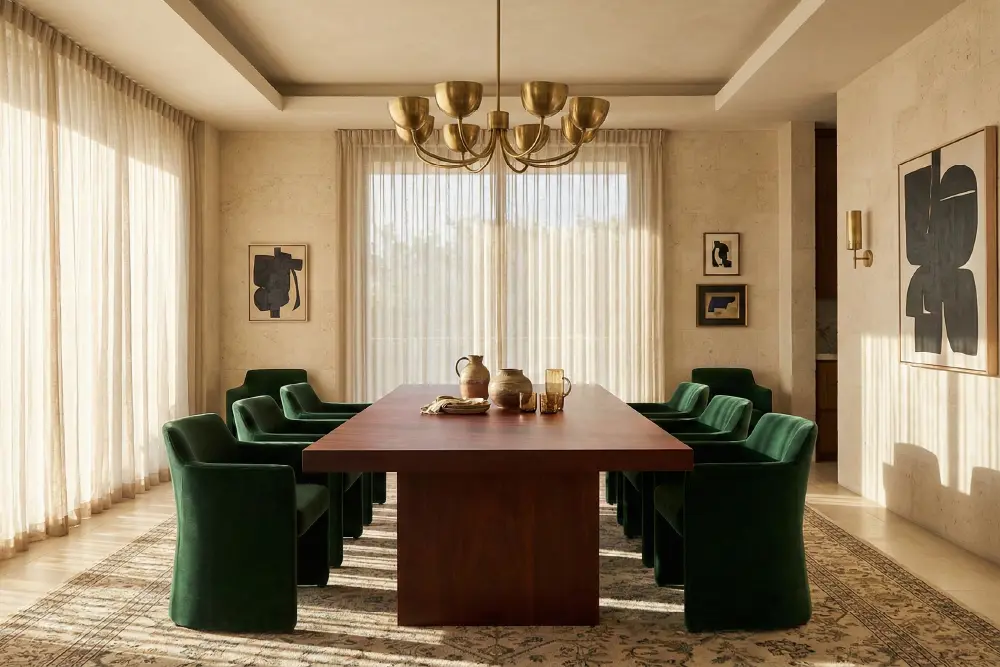
Superior Dimensional Stability
Dimensional stability stands as one of mahogany’s strongest advantages for indoor furniture applications, backed by highly favorable shrinkage metrics. Once properly kiln-dried and its moisture content is regulated, mahogany demonstrates a low volumetric shrinkage of only 7.5%.
Even more critical for furniture construction is its Tangential to Radial (T/R) shrinkage ratio, which sits at a highly stable 1.5. This optimal ratio is driven by a tangential shrinkage rate of 4.3% and a radial shrinkage rate of 2.9%. In woodworking, a T/R ratio close to 1.0 indicates that the wood will experience minimal cupping, twisting, or warping as environmental humidity fluctuates.
These metrics translate to highly predictable wood movement. Large continuous panels remain flat and stable even after years of indoor use.
This structural reliability becomes critical for mahogany case goods and broad horizontal planes, where excessive internal movement creates unseemly gaps, binding mechanisms, or misaligned framing.
When properly kiln-dried, the timber behaves predictably in climate-controlled environments. This ensures heavy doors and wide structural panels remain consistently aligned year after year.
High Durability and Density
Mahogany provides exceptional resistance against mechanical stress, daily wear, and structural loading. This performance is quantified by its Modulus of Rupture (MOR) at 80.8 MPa and Modulus of Elasticity (MOE) at 10.06 GPa.
The MOR metric indicates high bending strength, meaning mahogany can support significant weight before failing. Meanwhile, the 10.06 GPa MOE demonstrates excellent stiffness and resistance to deflection under load.
These structural properties help furniture maintain long-term integrity, a balance that proves useful for pieces requiring both load-bearing capacity and refined detailing.
Exposed sofa frames and large executive desks benefit directly from these mechanical metrics, resisting sagging across wide spans and withstanding daily physical impacts without denting easily. Furthermore, this strength directly supports complex joinery systems, ensuring mortise and tenon joints remain rigid and secure within architectural framing.
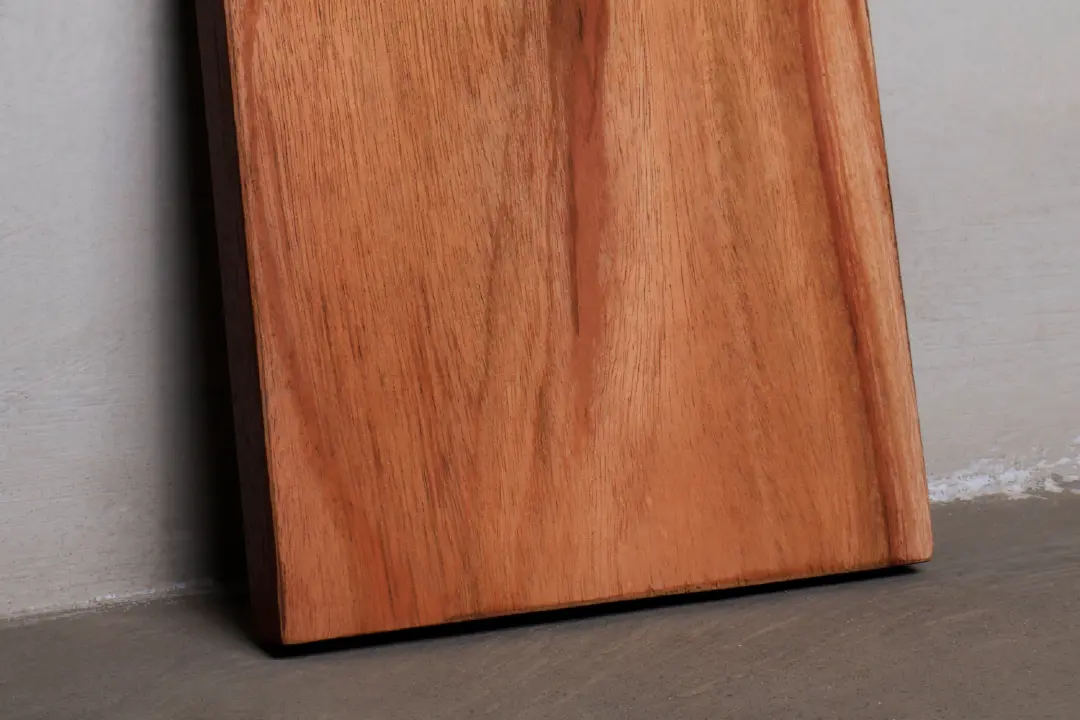
Premium Finishing Profile
Mahogany is widely recognized for its ability to produce rich, uniform finishes. This exceptional finishing behavior relies on two key biological characteristics:
- Diffuse-Porous Structure: The even distribution of pores throughout the growth rings allows the wood to absorb stains with strict consistency. Although dense hardwoods do not absorb finishing agents as deeply as more porous softwoods, this distribution prevents the blotchiness common in other species, creating a consistent tone across large surfaces.
- Natural Vessel Occlusion: Unlike timber species with large pits that develop tyloses, mahogany features small pits where the ray parenchyma secretes tannin or gum-like substances. These resinous materials, alongside occasional chalky deposits naturally found in the timber, physically block and occlude the vessels.
This natural blockage hardens when the wood is dried, limiting excessive stain bleed-through and creating a dense, smooth canvas for surface coatings.
This predictable behavior results in a deep, uniform luster highlighting the wood's natural figure, giving the final piece a highly refined finish.
Patina and Chatoyance
Beyond its uniform stain absorption, mahogany possesses two sought-after optical characteristics: chatoyance and patina. Chatoyance refers to the wood's natural luminescence, creating a three-dimensional shimmer where the grain appears to shift and glow depending on the viewing angle and lighting conditions.
As the timber ages in a controlled environment, it develops a beautiful patina, slowly deepening into more complex, warmer reddish-brown hues through natural oxidation and ambient light exposure.
To maximize these exceptional visual values, the wood requires a stable, climate-controlled environment. Natural oxidation and ambient lighting allow the timber to mature gracefully.
Protecting the wood from extreme environmental shifts ensures the chatoyance and rich patina deepen over time, providing interior spaces with an aesthetic evolution that can be appreciated for generations.
Mahogany Case Goods and Storage
Mahogany handles the diverse engineering requirements of large storage furniture exceptionally well, satisfying distinct mechanical demands depending on the specific interior application.
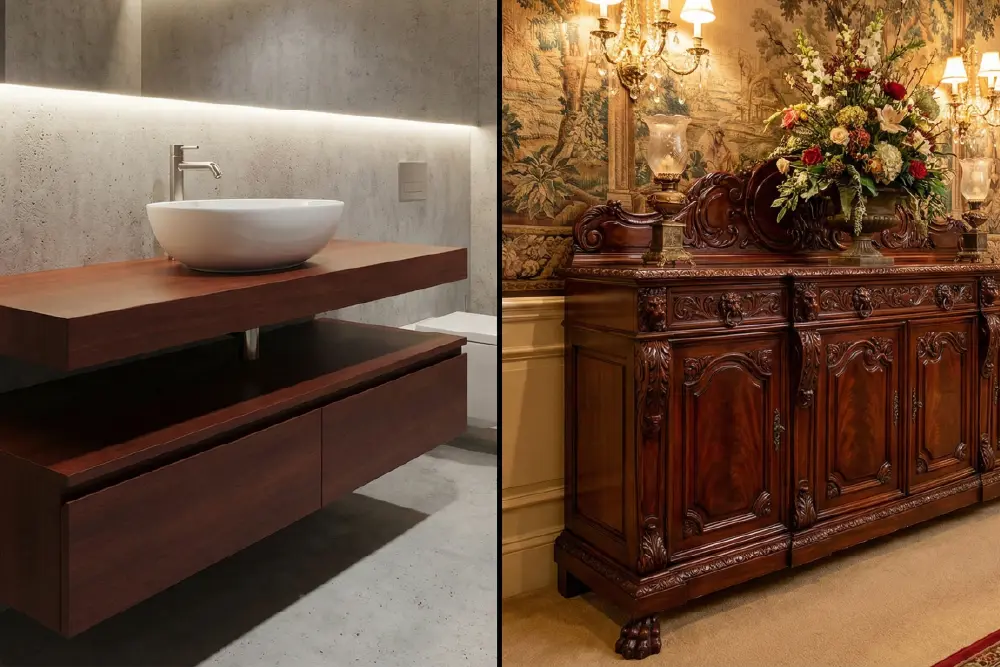
Wardrobes and Armoires
Wardrobes and armoires present a unique engineering challenge due to their tall, expansive vertical panels and heavy swinging doors. Mahogany's low Tangential to Radial (T/R) shrinkage ratio proves vital in this application, preventing tall doors from bowing or cupping as environmental humidity fluctuates.
This low-shrinkage profile keeps vertical panels plumb over time. Furthermore, the timber's inherent density provides exceptional screw-holding capacity.
Massive solid wood doors rely heavily on hinges carrying significant weight loads. Mahogany ensures these metal fasteners remain tightly embedded in the frame. This prevents doors from sagging or dragging along the bottom frame after years of use, ensuring the piece functions reliably for decades without needing constant repairs.
Sideboards and Credenzas
Sideboards and credenzas are subjected to severe horizontal loading, frequently supporting heavy items such as large displays, hospitality equipment, or stacks of tableware. In these horizontal applications, mahogany's high Modulus of Elasticity (MOE) takes precedence.
The wood's structural stiffness allows for the design of long, uninterrupted horizontal spans without the need for obtrusive center support legs.
Utilizing mahogany for structural framing guarantees that these wide horizontal planes will resist sagging under prolonged static loads, maintaining crisp linear aesthetics in dining rooms and living spaces.
Dressers and Chests of Drawers
Dressers and chests of drawers must withstand constant kinetic movement as drawer boxes are pulled, pushed, and slammed repeatedly.
Mahogany is highly valued in this application; its fine-grained structure allows for the cutting of precise dovetail joints, establishing the structural integrity needed to resist racking forces. When using traditional wooden drawer runners, mahogany provides low friction and precise dimensional tolerances.
This ensures drawers glide smoothly without binding or seizing up when ambient room humidity fluctuates, guaranteeing that daily operation is never interrupted by a jammed drawer.
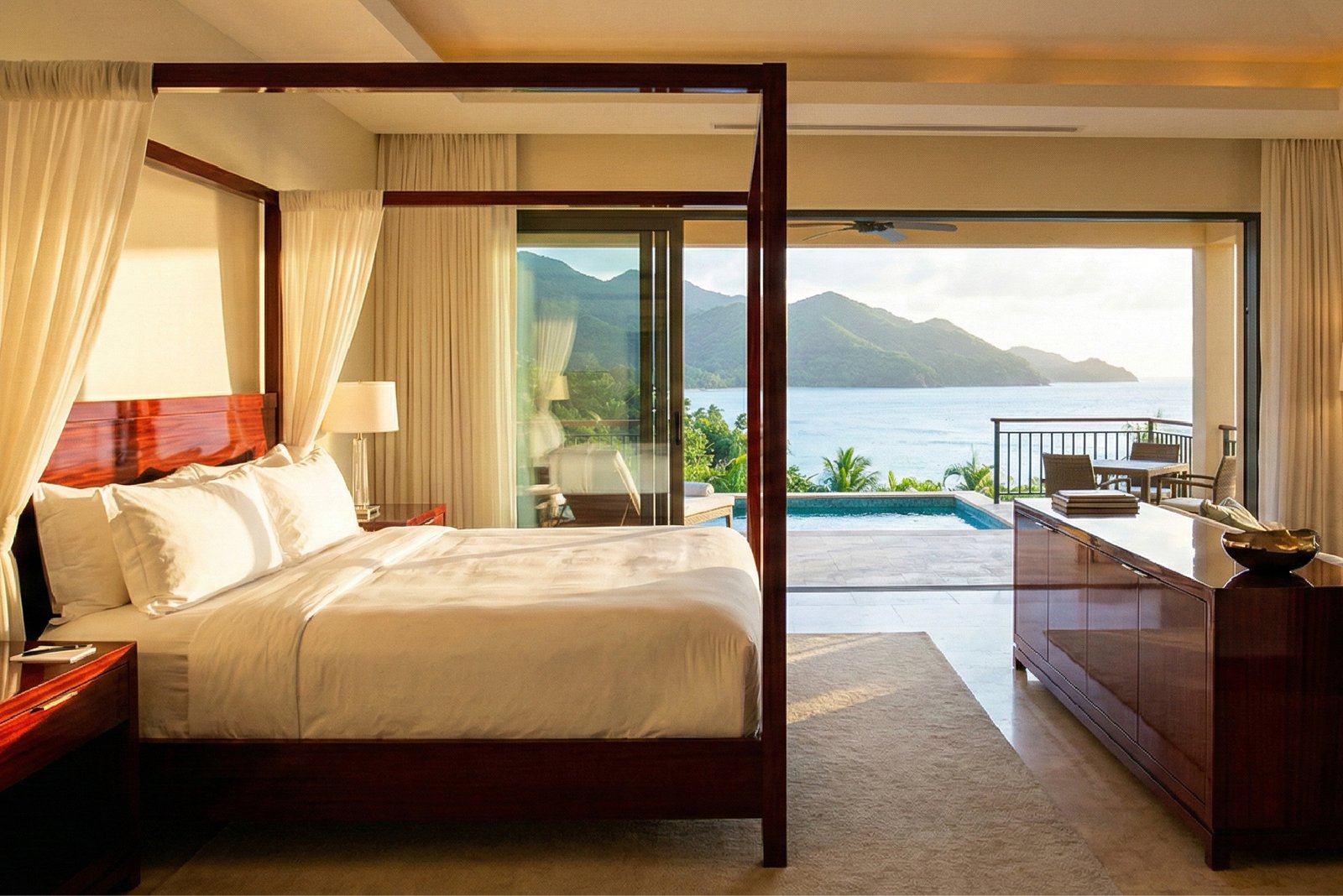
Large-Surface Tables and Desks
Expansive horizontal planes serve as the perfect canvas to showcase mahogany’s premier optical qualities and flawless grain consistency.
Dining Tables
Mahogany dining tables benefit directly from the natural availability of long, wide boards, allowing for dramatic, uninterrupted grain matching across the entire tabletop.
This wide-board construction minimizes distracting glue lines so the wood's natural figure flows seamlessly from end to end.
Combining this striking centerpiece with the timber's optimal T/R shrinkage ratio ensures these expansive boards remain flat over time. Meanwhile, its high Modulus of Rupture (MOR) provides the heavy load-bearing strength needed to keep the table structurally sound without compromising its aesthetic.
Solid Mahogany Executive Desks
Solid mahogany executive desks remain a definitive standard for premium corporate environments. The expansive horizontal planes serve as the perfect canvas to showcase the wood's premier optical qualities.
As natural light sweeps across a large, clear desktop, the natural chatoyance creates a commanding, three-dimensional shimmer. Over time, the developing patina adds a warm, historic depth that synthetic laminates simply cannot replicate.
Structurally, the wood's high Modulus of Elasticity (MOE) ensures these wide spans resist sagging under the weight of heavy office equipment.
By pairing these luxurious optical traits and mechanical stiffness with the precise machinability required for hidden cable management routing, mahogany serves as the ultimate statement piece for a high-end office, projecting immediate authority and functional reliability.
Structural Seating
Seating furniture must withstand constant weight distribution, yet in premium interior design, the true value of a mahogany frame lies in its commanding visual synergy with high-end fabrics.
Dining and Accent Chairs
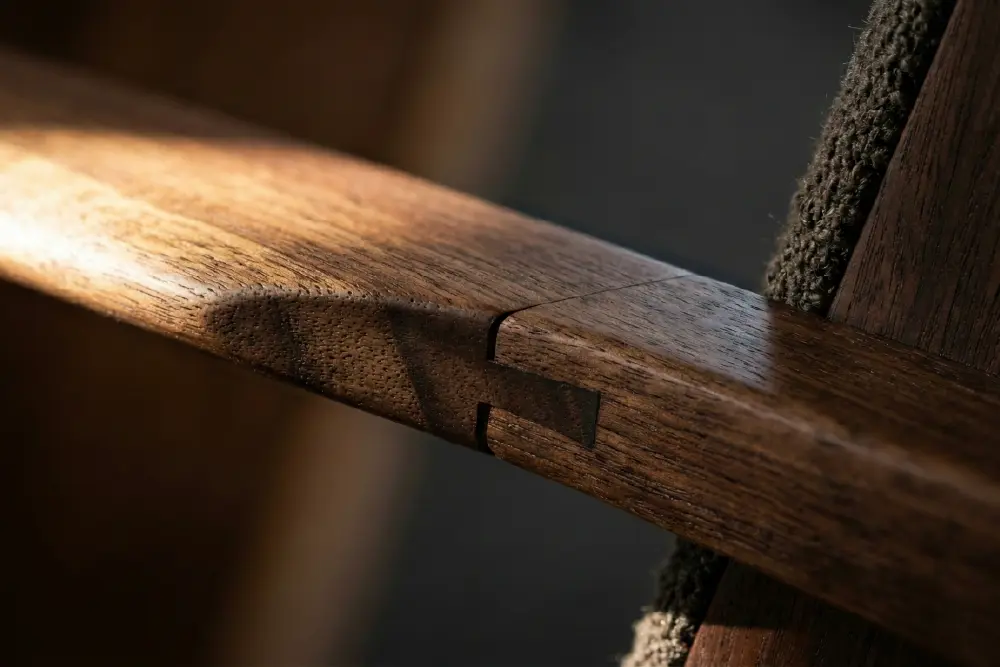
Dining and accent chairs frequently serve as the visual focal points of formal rooms. Mahogany’s mechanical properties support rigid mortise and tenon construction, preventing joints from loosening under constant weight distribution.
Beyond mechanics, the wood elevates the luxurious feel of the seating. The rich, warm undertones of mahogany provide a distinct visual contrast when paired with premium upholstery such as silk, velvet, or top-grain leather.
The timber's clean machinability produces elegant turned legs, gracefully swept backs, and detailed armrests that exude sophistication and perfectly frame the seating fabric.
Exposed Wood Sofa Frames
Exposed sofa frames demand a material that bridges the gap between foundational support and artistic expression. The chatoyance and developing patina of the exposed wooden trim, sweeping armrests, and polished legs add an undeniable layer of prestige to the seating arrangement.
When combined with plush upholstery, the finished mahogany elements catch the ambient room light, drawing the eye and anchoring the space.
This interplay between fine textiles and meticulously finished hardwood creates a highly refined interior focal point.
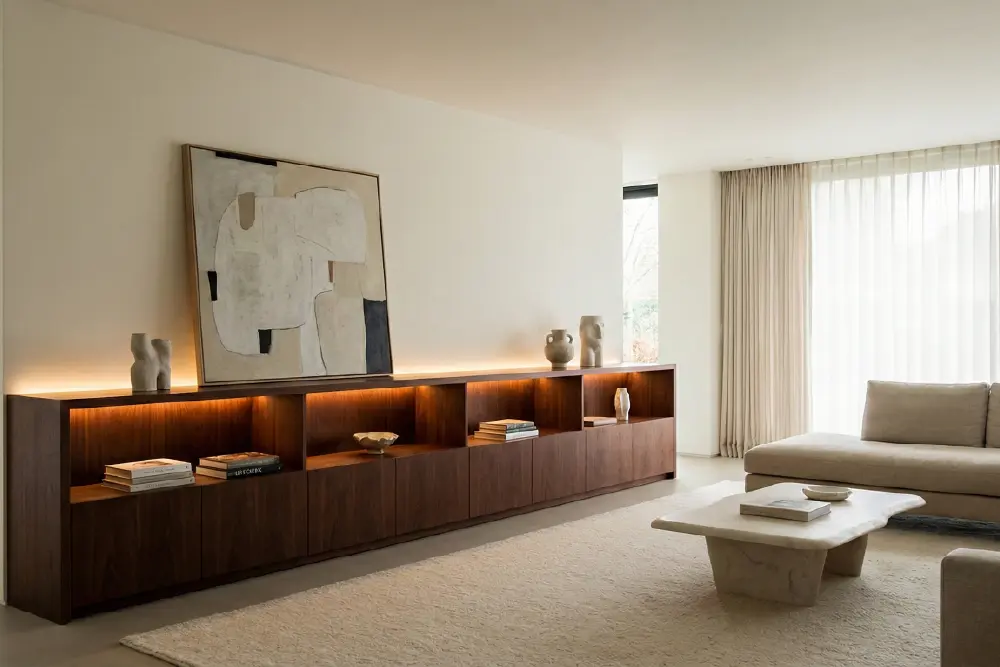
Intricately Carved and Detailed Pieces
The expansive panels and prominent structural accents found on large case goods and seating serve as perfect blank canvases for ornamentation. Mahogany boasts exceptional machinability and low tear-out resistance, allowing artisans to frequently enhance these large surfaces with elaborate carvings to maximize the luxury appeal of the final piece.
Why Mahogany is Used for Carved Furniture
Massive wardrobe doors, wide sideboard facades, and broad executive desks present unique opportunities for decorative embellishment where detailed relief carving breaks up the visual monotony of flat wood planes.
Mahogany supports this transformation due to its tight grain structure, which prevents splintering during both CNC routing and delicate hand-carving.
This predictable machinability allows artisans to embed sharp, intricate motifs and deep profiles directly into the wide boards. This turns heavy storage or workspace panels into refined masterpieces that elevate the entire room.
Bed Frames and Structural Accents
Beyond flat panels, mahogany excels in three-dimensional shaping for prominent structural components like massive bedposts, fluted table legs, and sweeping headboards that rely on complex turnings.
The timber maintains low internal tension once properly kiln-dried, reducing the risk of cracking or splitting while the wood is shaped on a lathe or heavily carved.
Relying on mahogany for custom projects and classic reproductions guarantees that the most intricate focal points of the furniture retain strict precision and structural integrity over a lifetime of use.
Environmental Limitations: Indoor vs. Outdoor Use
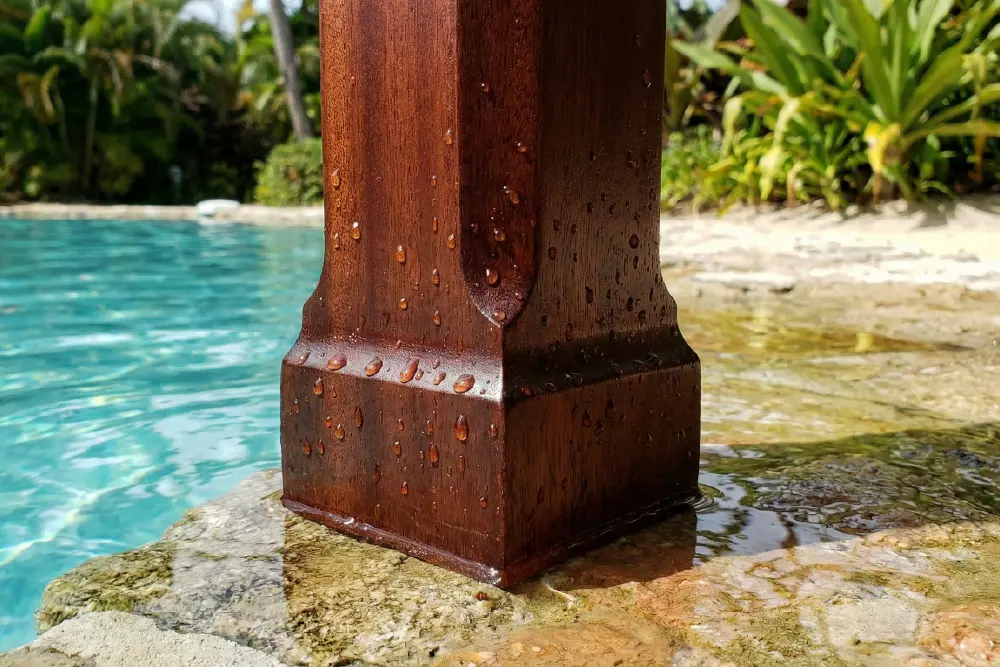
While mahogany is overwhelmingly favored for indoor applications, categorizing it as completely unsuitable for outdoor use ignores its actual biological resilience. The true limitation of outdoor mahogany involves aesthetic degradation rather than immediate structural failure.
Structural Resilience and Extractive Substances
According to research by Mohammad Muslich and Sri Rulliaty in the paper "The Resistance of Mahogany (Swietenia macrophylla King.) Wood Against Marine Borers", older mahogany timber develops a high concentration of extractive substances that naturally block the wood's pores.
As the tree matures, the ray parenchyma secretes tannins and resinous gums that occlude the vessels. Though mahogany lacks the high silica or natural oil content found in teak, this internal vessel blockage provides a highly effective barrier against moisture intrusion and decay.
From a purely structural standpoint, mature mahogany possesses genuine durability for outdoor placement and resists environmental rot admirably.
Aesthetic Vulnerability: UV and Patina Degradation
The primary reason mahogany is restricted to indoor environments involves the preservation of its premier optical qualities. Mahogany's chatoyance and rich patina are exceptionally sensitive to ultraviolet (UV) radiation.
Direct UV exposure rapidly bleaches the wood, stripping away the shimmering depth. While the surface begins to turn silvery-gray, the wood often retains patchy reddish-brown undertones because of the natural tannins and resins trapped deep within its pores.
Keeping mahogany indoors ensures its visual luxury matures gracefully over generations, leaving outdoor applications to woods like teak that are selected more for raw weather resistance than optical shimmer.
Sustainable Sourcing and SVLK Compliance
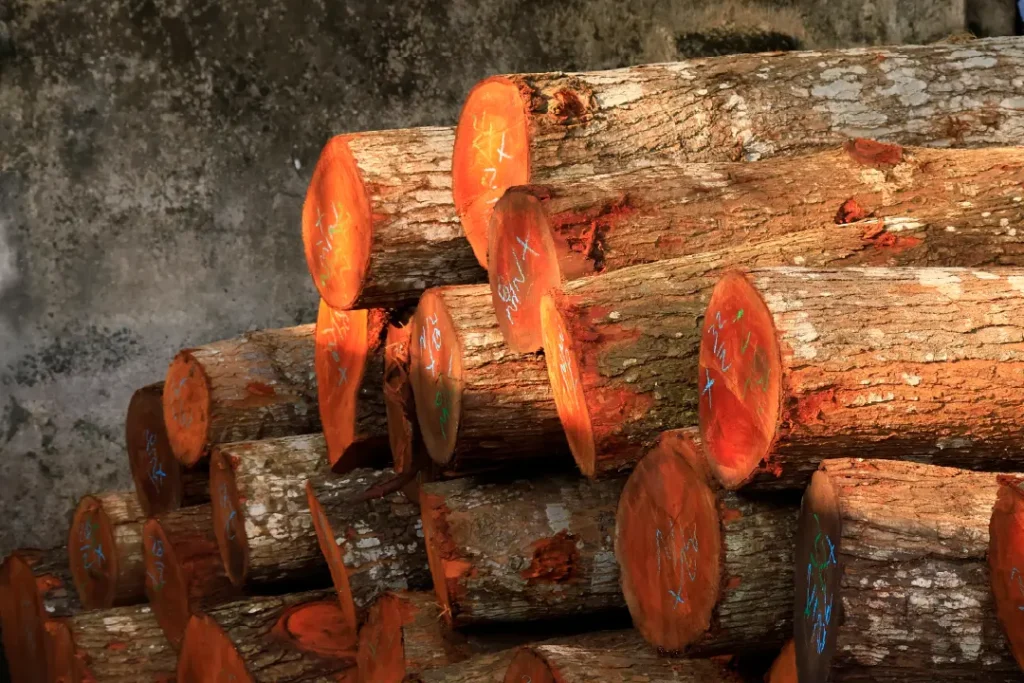
For international buyers, architects, and high-end distributors, material provenance carries as much weight as mechanical performance. Sourcing timber from regulated environments ensures long-term ecological balance and fulfills strict global import compliance.
Commercial mahogany sourced from Indonesia relies heavily on Perhutani plantations. As verified by global distribution data from the Kew Royal Botanic Gardens, Swietenia macrophylla has been successfully introduced and cultivated across Indonesia specifically for this purpose.
These government-managed forestry programs strictly regulate harvesting cycles, ensuring that only mature timber with fully developed extractive substances enters the supply chain.
Furthermore, as outlined by the Forest Legality Initiative, reputable Indonesian furniture suppliers operate under the strict SVLK (Sistem Verifikasi Legalitas Kayu) certification system.
This national timber legality assurance system guarantees that all mahogany utilized in production is legally harvested, traceable, and environmentally sustainable. Prioritizing SVLK-certified mahogany provides verifiable assurance regarding international environmental compliance while securing the highest grade of raw material for premium manufacturing.
Conclusion
Mahogany continues to be one of the most dependable materials for premium indoor furniture. From wardrobes and dining tables to carved bed frames and solid mahogany executive desks, the material supports structural reliability backed by quantifiable data—such as its stable 1.5 T/R ratio and 10.06 GPa MOE—while delivering a consistent, high-end visual presentation.
To elevate premium interior spaces, investing in properly kiln-dried pieces from a trusted Indonesian furniture supplier guarantees a combination of mechanical endurance and artistic refinement.
Whether developing heavy storage goods, expansive dining tables, or requiring custom mahogany manufacturing, mahogany remains the definitive choice for bringing long-term consistency, luxury, and masterful craftsmanship into the home or office.
Ready to Elevate Your Next Collection with Premium Mahogany?
Let’s collaborate on your custom mahogany projects. From expansive executive desks to intricately carved case goods, our manufacturing team is here to bring your vision to life.
FAQs About Mahogany Furniture
1. Is mahogany good for executive office desks?
Yes. Mahogany provides dimensional stability, smooth finishing, and structural durability, which makes it suitable for premium executive desks and conference tables.
2. Why is mahogany commonly used for carved furniture?
Mahogany machines cleanly with minimal tear-out, so it supports detailed carving, fluted legs, and intricate decorative elements.
3. Can mahogany furniture warp over time?
Properly kiln-dried mahogany has strong dimensional stability. When moisture content is controlled, the wood resists severe warping and panel movement.
4. Is mahogany suitable for outdoor furniture?
Mahogany is better suited for indoor furniture because prolonged UV and moisture exposure can damage the finish and internal wood structure.
5. What makes mahogany attractive for commercial furniture manufacturing?
Mahogany combines stable grain behavior, strong joinery support, and consistent finishing quality, which helps maintain reliability across large commercial production runs.

Versatile Digital Marketing & Creative Specialist with a strong foundation in graphic design, product photography, and comprehensive brand strategy. Proven ability to bridge the gap between physical products and digital presence, translating complex concepts into high-converting marketing assets. Adept at leveraging SEO, web analytics, and engaging visual content to drive business growth and elevate brand identity in competitive markets.
0 Comments