Testing a new furniture supplier should not feel like placing a large order with your fingers crossed. Even after factory visits, sample approvals, and good early conversations, real production can still reveal problems: inconsistent quality, delayed updates, unclear communication, or finishing that does not match the approved sample.
That is why a trial order is an important step when evaluating Indonesian furniture suppliers. It helps retailers see how a supplier actually works during production, not only how they present themselves before the order starts.
In this article, we will discuss how to structure a trial order, what to evaluate during the process, and how to decide whether a supplier is ready for larger orders. The goal is simple: test first, reduce risk, then scale with more confidence.
Why a Trial Order Matters Before Switching Furniture Suppliers
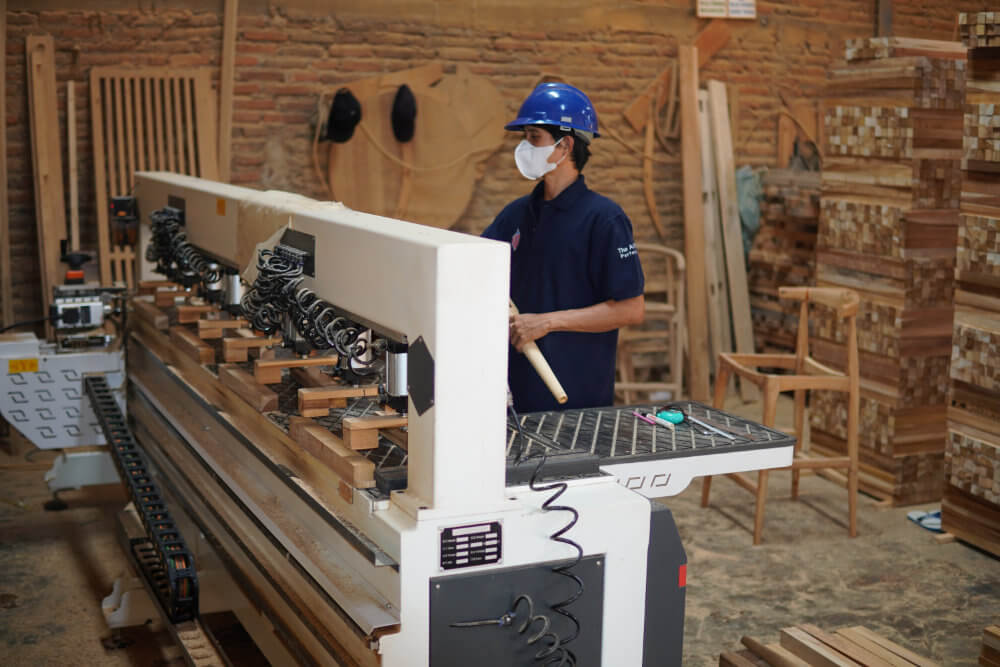
Changing suppliers is not only a sourcing decision. It affects your product promise.
When you switch suppliers, you expect the furniture to arrive in good condition, match the approved design, and be ready to sell. But furniture sourcing does not always work that neatly.
Before starting a trial order, it also helps to review how to choose the best Indonesian furniture manufacturers for export, so you can shortlist suppliers with the right production capability, export experience, and communication standards.
A dining chair can arrive with cracks. A table may have uneven finishing. Patio furniture may have weak construction or parts that do not fit properly. Worse, the issue may only appear after the product reaches your customer.
When that happens, customers do not blame the factory behind the product. They blame your store.
A trial order helps reduce this risk before it becomes a larger business problem. We also explain how the wrong Indonesian furniture manufacturer can hurt your store’s reputation in a separate guide.
This is why a trial order matters when testing new Indonesian furniture suppliers. It helps you see how the supplier operates before you trust them with a full collection, seasonal launch, or larger production order.
A trial order gives you room to catch issues while the order size is still manageable. It helps your team review the supplier’s quality, communication, timing, and problem-solving style before scaling.
What a Trial Order Really Means in Furniture Sourcing
A trial order is a first test order with a smaller quantity than a regular bulk order. It can be a 20-foot container, a 40-foot HC container, or another agreed quantity that still makes sense for production.
The purpose is simple: to see how the supplier performs when real production starts.
This is different from a sample. A sample is usually one piece per SKU. It helps you review proportion, ergonomics, construction, material feel, finishing direction, and whether the product looks attractive enough to sell.
A trial order tests supplier performance. Instead of producing one piece, the supplier needs to produce several pieces per SKU while keeping the result consistent.
During production, the supplier must prepare raw materials, form components, assemble frames, sand surfaces, apply finishing, check quality, pack products, and prepare shipment details. They also need to follow your specifications, manage coordination, and keep communication clear.
Think of it like a first date with a production schedule. You are not asking for forever yet, but you are watching how they show up.
A good trial order does not need to be huge. It needs to be representative. The goal is not only to buy products, but to collect proof before placing bigger orders.
If you are still evaluating Indonesia as a sourcing destination, you can also read our guide on whether Indonesian furniture is worth sourcing for business buyers.
How to Structure a Trial Order for Better Evaluation
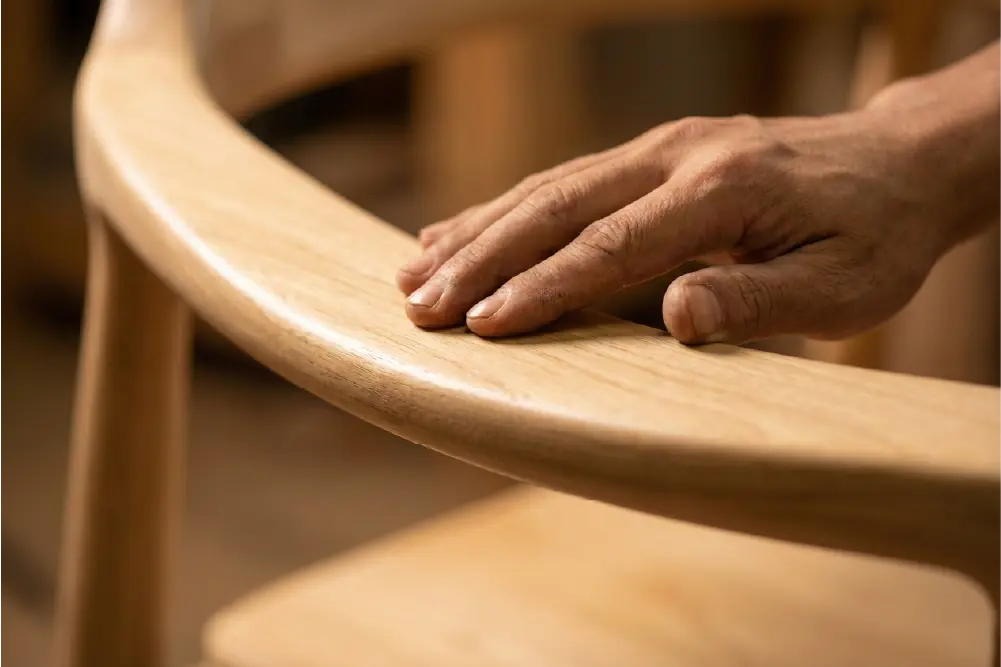
A trial order gives better insight when it is planned properly. The goal is not just to place a smaller order, but to create a fair test of how the supplier works during real production.
To get useful results, retailers need to choose the right products, define clear details, and agree on how success will be measured.
1. Start with a Limited but Representative Product Range
Choose a small group of products that reflects what you want to sell. You may include chairs, tables, cabinets, rattan accent pieces, or outdoor items, depending on your future collection plan.
The range does not always have to be very small. One MPP buyer from Australia started with a 20-foot container for their first trial order. The order included more than ten SKUs, with different chair types and models. This gave the buyer a better view of how MPP handled variation, finishing, packing, and production coordination across different products.
The point is not to order as many SKUs as possible. The point is to choose products that represent your real business needs.
You can also review existing Indonesian furniture categories first, then select products that match your store’s price point, style, and customer expectations.
2. Define Clear Specifications and Expectations
Before production begins, confirm the product specifications in writing. This includes dimensions, wood type, rattan type, finish color, cushion fabric, hardware, packaging method, labels, carton marks, and acceptable tolerances
Also, decide how approvals will work. For example, ask for finishing samples, production photos, or pre-packing photos before the order moves forward.
This step may feel detailed, but it prevents bigger problems later. A small misunderstanding about color, size, cushion thickness, or carton marks can create extra work, delays, or products that do not match your store’s standard.
At MPP Furniture, this planning stage is part of the consultation process. Retailers can discuss product direction, custom requests, and new development ideas before production starts, so fewer details are left to guesswork.
3. Set Measurable Success Criteria
Before placing the order, define what success means. This makes the trial order easier to review later.
For example, success may mean:
- Quality should match the approved sample direction.
- Production should follow the agreed timeline.
- Communication should be clear and timely.
- Packing should protect the products during export handling.
- Documentation should match the order details.
- Any issue should be handled with a practical solution.
This gives your team a fair way to decide whether to scale, repeat, revise, or stop.
Without clear criteria, a trial order can become too subjective. One person may focus on finishing, another may focus on lead time, while another may care most about packing. Clear criteria help everyone judge the supplier using the same standard.
What to Evaluate During a Furniture Trial Order
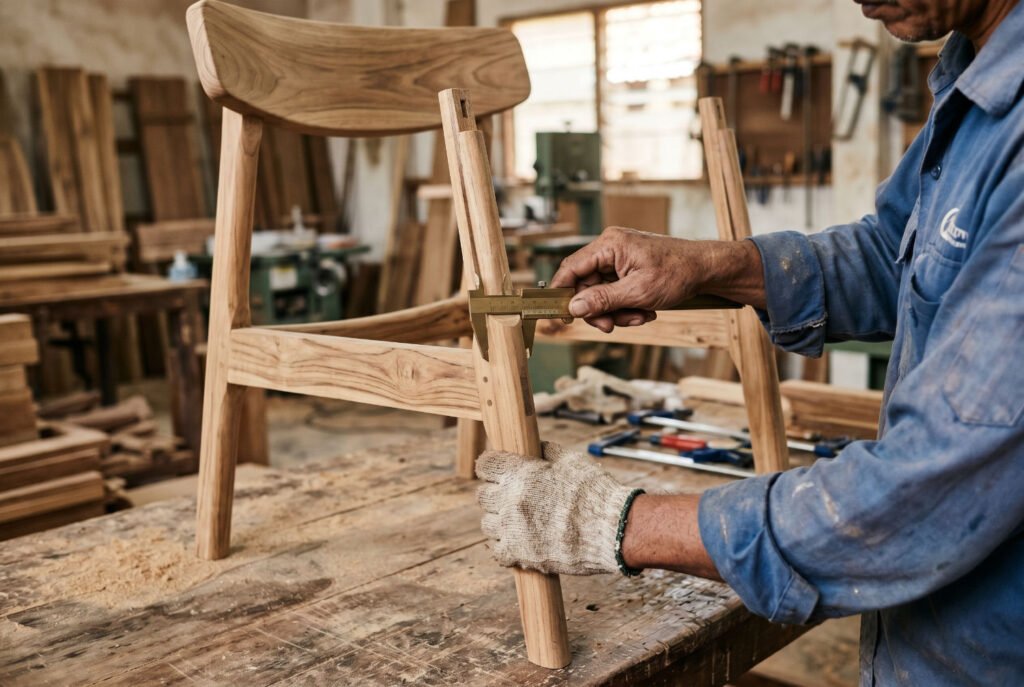
A trial order helps you see how the supplier actually works, not only how the final product looks. So, evaluate both the product and the process.
1. Product Quality and Consistency
Check whether the order matches the approved standard. Review dimensions, joinery, sanding, finishing, weaving, cushion fit, balance, and hardware placement.
Do not check only the best-looking unit. Compare several pieces because consistency is what your customers expect when they buy from your store or catalog.
For wooden furniture, also ask how the moisture content is controlled. Poor wood preparation can cause cracks, warping, loose joints, or finishing issues after the products arrive in your market.
For a deeper explanation, read our article on why kiln-dried wood matters for Indonesian furniture before export production.
2. Production and Lead Time Reliability
Timeline discipline matters as much as product quality. Compare the promised timeline with actual progress.
Did production start on time? Were materials ready? Did the supplier update you before the delays happened?
A reliable supplier does not hide production challenges. They explain issues early and give a realistic plan, so you can protect launches, showroom setup, campaigns, and cash flow.
3. Communication and Responsiveness
Good communication reduces rework, confusion, and last-minute surprises.
During the trial order, check whether the supplier answers clearly, confirms changes in writing, asks questions when details are unclear, and sends useful progress updates.
Fast replies are helpful, but clear replies are what keep production on track.
4. Attention to Detail in Execution
Small details often show the supplier’s real production culture.
Check weaving neatness, sanding smoothness, color consistency, label placement, packing strength, and carton mark accuracy.
These details affect how your products arrive, how your warehouse team handles them, and how your customers feel when they receive the item.
At MPP Furniture, handcrafted work is supported by machinery and stage-by-stage quality checks to keep design accuracy, finishing consistency, and export preparation under better control.
Trial Order Evaluation Checklist
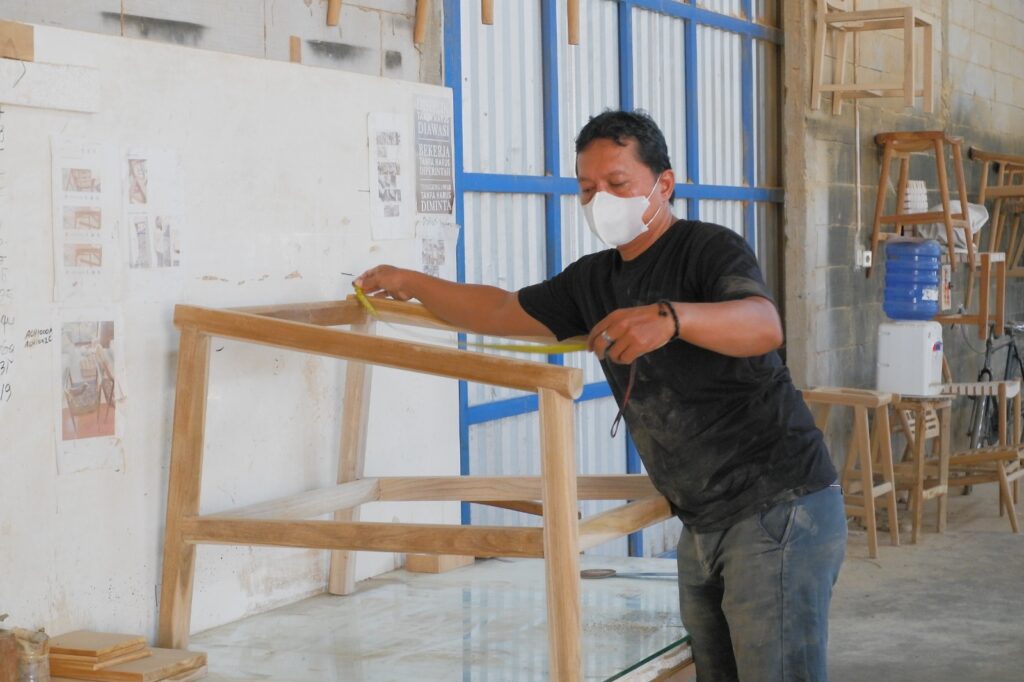
Use this checklist after the trial order is completed. It helps your team decide whether the supplier is ready for repeat orders, needs revision, or should not be scaled yet.
| Evaluation Area | What to Check | Good Sign |
|---|---|---|
| Product quality | Dimensions, joinery, sanding, finishing, weaving, cushion fit, and hardware placement | Products match the approved sample direction and written specifications |
| Consistency | Several pieces from the same SKU, not only the best-looking unit | Quality stays stable across multiple pieces |
| Timeline | Production start, progress updates, finishing stage, packing, and shipment readiness | Supplier follows the agreed schedule or explains changes early |
| Communication | Response clarity, written confirmations, and production updates | Supplier gives clear answers and does not leave your team guessing |
| Packing | Product protection, labels, carton marks, and loading preparation | Goods are packed properly for export handling |
| Documentation | Product details, invoice, packing list, and shipment information | Documents match the order details |
| Problem solving | How the supplier handles changes, defects, or delays | Supplier offers practical solutions instead of vague excuses |
A checklist like this keeps the decision practical. Instead of asking, “Do we like this supplier?”, your team can ask, “Did this supplier prove they can support our next order?”
How Experienced Retailers Reduce Risk When Switching Suppliers
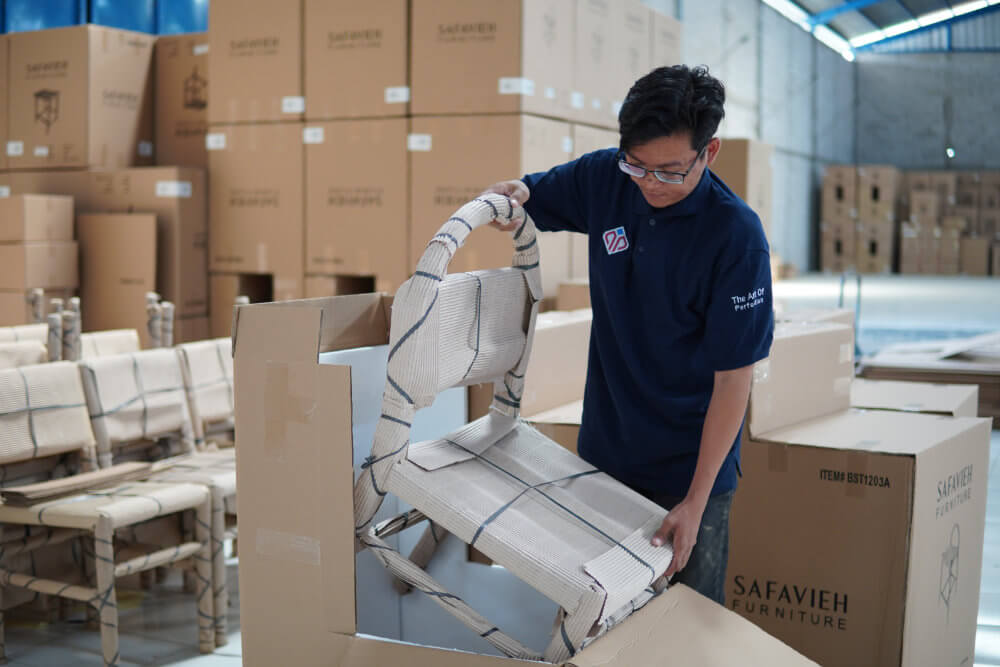
A safer path is sample, trial order, repeat order, then larger volume. This gives you proof at each stage.
Some retailers also use dual sourcing while transitioning. This means they keep the current supplier active while testing a new one.
Another smart move is to scale by category. For example, start with a few dining chairs or rattan accent pieces before moving into a full indoor collection. Or test one outdoor range before building a larger teak program.
Clear records also help. Keep approved specs, finish references, production notes, packing photos, and issue reports from the trial order. These become your reference for repeat orders.
For growing retailers, this process protects both cash flow and customer trust. It also helps the supplier understand your standards before the relationship becomes bigger.
Main Takeaway: Test First, Then Scale with Confidence
A trial order is the safest way to test a new furniture supplier before committing to larger production.
Samples are useful, but they do not show the full picture. A small production run reveals how a supplier manages real work: quality, timing, communication, packing, documentation, and problem-solving.
For furniture retailers, that proof is worth having before a full collection, seasonal launch, or private label program, depending on the supplier.
Start small, measure clearly, and scale only when the supplier has earned your trust.
To plan a safer first order, discuss your trial order goals with MPP Furniture and choose the products that best represent your next retail collection.
Start with a Safer Trial Order.
Ready to test a new furniture supplier without jumping straight into a large order? MPP Furniture helps retailers plan trial orders for wooden and rattan furniture through clear product discussion, custom development support, in-house production, and stage-by-stage quality control. Discuss your first trial order with MPP Furniture today.
Discuss your first trial order with MPP Furniture today.
FAQs: Furniture Sourcing Trial Orders
1. What is a trial order in furniture sourcing?
A trial order is a first test order with a smaller quantity than a regular bulk order. It helps retailers evaluate how a supplier performs during real production, including quality, timing, communication, packing, and consistency.
2. Is a sample enough before placing a larger furniture order?
No. A sample is useful for checking one piece per SKU, including proportion, ergonomics, construction, and finishing direction. But a sample does not show whether the supplier can produce several pieces per SKU with consistent results.
3. How many products should retailers include in a trial order?
Retailers should choose a limited but representative product range. The order can include several SKUs that reflect the future collection, such as chairs, tables, cabinets, rattan pieces, or outdoor furniture.
4. What should retailers check during a furniture trial order?
Retailers should check product quality, consistency, lead time, communication, packing, documentation, and how the supplier solves problems. These points show whether the supplier is ready for larger orders.
5. When should retailers scale to a bigger order?
Retailers should scale only after the supplier proves they can meet agreed standards for quality, timing, communication, packing, and issue handling. A bigger order should come after the supplier earns trust through real production performance.

Hi, I’m Salman, founder of MPP Furniture, an Indonesian furniture manufacturer serving global retailers and project-based clients.
I began my career in my family’s export-oriented furniture company, gaining hands-on experience in production, construction, finishing, material performance, and product development. With a clear understanding of how international buyers evaluate furniture quality and reliability, I founded MPP Furniture to deliver export-ready products with consistent standards.
Here, I share insights from the perspective of a furniture manufacturer working directly with production teams on the factory floor, focusing on manufacturing and supplier evaluation.
Connect on LinkedIn
0 Comments