For furniture retailers and wholesalers, mahogany can work as a practical core material for indoor furniture because it combines dependable durability, strong perceived value, competitive mid-premium positioning, and flexibility across multiple product categories.
This makes indoor mahogany furniture suitable for buyers building repeatable assortments across dining, bedroom, living, and accent furniture. But the commercial decision should not be based on wood species alone.
You also need to assess finished-product cost, construction, design, target market fit, and production consistency, because overlooking these factors can result in products that look attractive but do not perform commercially.
This article explains how to evaluate mahogany from a retail and wholesale perspective, so you can decide whether it fits your assortment strategy, price positioning, and repeat-order plan.
Mahogany Provides the Durability Needed for Everyday Indoor Furniture
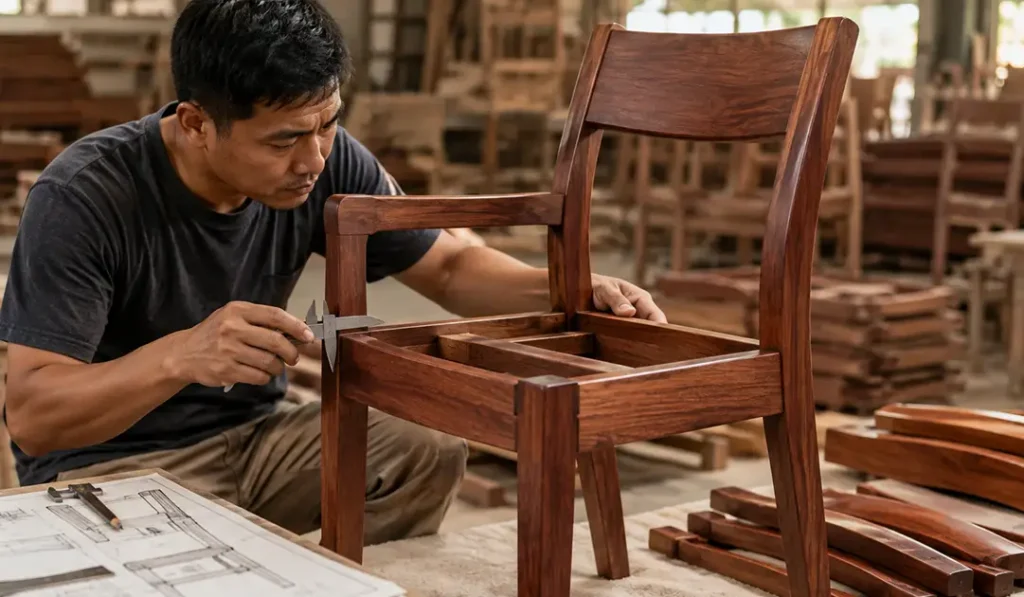
Properly dried and correctly constructed mahogany furniture is well suited to everyday indoor use. Dining chairs are moved daily, tables carry repeated loads, beds require stable construction, and cabinets or dressers go through constant opening and closing.
Mahogany’s hardwood properties allow manufacturers to produce furniture that combines visual appeal with practical performance. For retailers, this matters because product positioning should not depend on appearance alone. A dining table may attract a customer because of its grain and finish, but long-term satisfaction also depends on stable construction, accurate joinery, and proper wood preparation.
Wood species is only one part of the result. Moisture control, component selection, machining, joinery, assembly, sanding, finishing, and insect treatment can all affect how the finished furniture performs.
Based on discussion with our production team, if wood preparation and insect control are not handled properly, a product may look fine when delivered but develop insect problems later. This can lead to customer complaints, returns, or damage to the retailer’s brand reputation.
This becomes even more important when the same design is reordered across several production runs. You need more than a good first sample; you need manufacturing consistency that can be repeated across future orders.
Mahogany also has material limitations that you should understand before placing larger programs. We discuss these in more detail in our guide to mahogany wood disadvantages
Mahogany Has an Appearance That Supports Higher Perceived Value
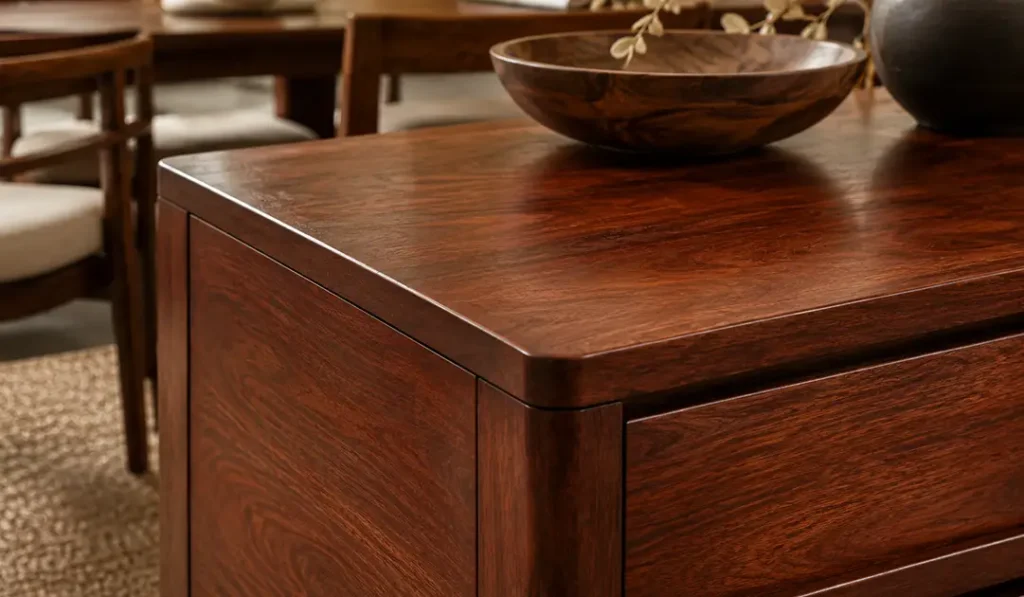
Mahogany has a natural visual character, with distinctive grain and a warm reddish-brown tone that can make furniture feel more established and suitable for indoor collections.
That matters in retail because customers often form their first impression from the overall shape, material appearance, and display presentation. Mahogany gives the product a stronger material identity, which can support positioning above entry-level commodity furniture.
This does not mean every mahogany product needs decorative carving or a traditional design. The material can work across classic, transitional, and cleaner contemporary styles depending on the proportions, details, finish, and hardware.
For retailers who want a more coordinated visual direction, mahogany can also be used across related product families. We cover this approach in more detail in our guide to mahogany wood furniture for warm indoor collections
Mahogany Can Offer a Competitive Balance Between Cost and Retail Positioning
Even though mahogany can offer a competitive price, it should not be judged by timber price alone. For retailers and wholesalers, the better question is whether the finished product economics work for the intended market.
The unit cost from Indonesian furniture suppliers depends on several factors, including design complexity, production efficiency, material consumption, accessories, packaging specifications, finishing requirements, and other product details.
This means two mahogany products can have a significant price difference even when they use the same wood. A simple example is a dining chair with arms versus one without arms. The armchair uses more wood, while the armless version may allow more efficient L-shape packaging, which can also reduce FOB cost.
The more important questions are whether the material fits the target customer, whether the final retail price makes sense, and whether the finished SKU leaves enough room for the retailer’s required margin.
A commercially successful material is not simply affordable. It needs to fit the market position of the collection.
Mahogany Gives Retailers More Flexibility in Building and Stocking an Indoor Assortment
One reason mahogany can work as a core material is its ability to support several indoor furniture categories. You can use mahogany across dining, bedroom, storage, and accent furniture, which gives you more flexibility when expanding an assortment.
Build Core and Supporting Products Around the Same Material Direction
A mahogany assortment can start with core products such as:
- dining tables,
- dining chairs,
- sideboards,
- beds,
- dressers,
- cabinets.
Supporting products can then extend the range through bedside tables, consoles, coffee tables, side tables, benches, and smaller accent furniture.
A connected assortment can come from a shared material direction, finish family, proportions, design language, or hardware approach. This allows each SKU to have its own function while still feeling related when displayed together.
For retailers, this can make assortment planning more efficient. Instead of creating a separate material concept for every furniture category, you can develop several products around one direction.
It can also support cross-category sales. For example, customers who respond well to a mahogany dining collection may also be interested in related consoles, cabinets, or bedroom pieces.
Expand the Range Around Products That Generate Repeat Orders
You do not need to launch a large mahogany range at once. A more controlled approach is to start with selected products, monitor customer response, identify SKUs with stronger repeat demand, and then develop supporting products around those winners.
For example, a successful dining table program may later expand into dining chairs, sideboards, consoles, or related storage pieces.
This approach helps you avoid developing a full collection before the market shows which products deserve more investment.
It also changes the role of the furniture supplier. Instead of only reproducing individual drawings, a capable mahogany furniture supplier can help develop related products around proven designs, target prices, and assortment needs.
For retailers and wholesalers, this creates a clearer path from the first order to a repeat program.
Why Retailers and Wholesalers Source Indonesian Mahogany Furniture from MPP Furniture
Building a repeatable mahogany assortment requires more than selecting the right wood. Retailers and wholesalers also need consistent production, flexible product development, controlled manufacturing, and a supplier that understands how mahogany behaves during production.
MPP Furniture is a direct manufacturer of Indonesian mahogany furniture for B2B buyers, including retailers and wholesalers.
Consistent Production for Repeat Orders
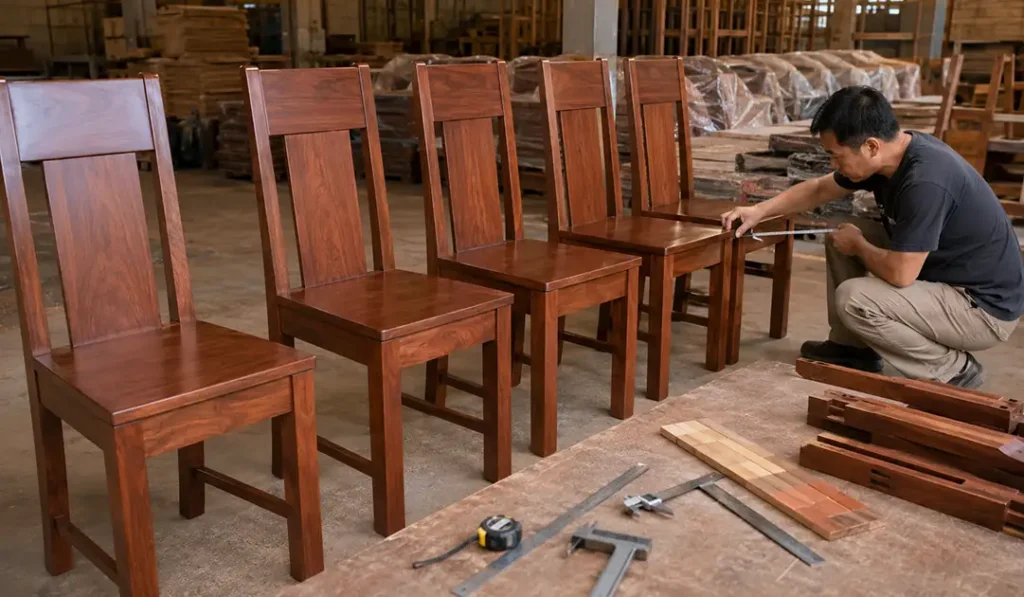
Once a product starts generating repeat orders, the specification, dimensions, construction, finish, and quality level need to remain consistent.
MPP combines skilled craftsmanship, machinery, and quality control throughout production to help approved designs stay consistent across production runs. In 2024, MPP recorded a complaint ratio of only 0.54%, reflecting the focus on production consistency and quality control across B2B orders.
Custom Design, OEM, and Private Label
MPP supports custom design, OEM, and private-label programs for buyers who want products developed around their own market, price position, and assortment direction.
Free consultation and free new product development also allow buyers to discuss concepts and specifications before moving into sampling or wider production.
In-House Manufacturing and CNC Machining
Production is handled in-house, including machining and other manufacturing stages. CNC machining helps support accuracy and repeatability, especially for components that require consistent dimensions across larger orders.
Keeping production in-house also makes it easier to connect product development, sampling, production, and quality control within one manufacturing process.
Experience in Handling Mahogany Material
Mahogany has its own production risks, so understanding the material is important. Proper drying, moisture control, component selection, insect treatment, construction, and finishing all affect the final result.
With more than 20 years of experience producing furniture, MPP has worked with mahogany across different product types and production requirements. This experience helps the team identify and manage common mahogany weaknesses during production, especially when buyers need the same products to be reordered consistently.
For businesses sourcing beyond mahogany, MPP also works as an Indonesian furniture supplier across a broader range of wooden and rattan furniture programs.
Conclusion
Mahogany can be a practical core material for indoor furniture because it combines durability, perceived value, competitive positioning, and flexibility across dining, bedroom, storage, and accent categories.
For retailers and wholesalers, the decision should go beyond wood price alone. Product design, construction, production efficiency, target pricing, and manufacturing consistency determine whether the final assortment fits your market.
If you are planning a mahogany furniture range, MPP Furniture can support product development, custom design, OEM, private label, and direct manufacturing from Indonesia.
FAQs: Mahogany Indoor Furniture Assortment
1. Is mahogany good for indoor furniture?
Yes. Properly dried and correctly constructed mahogany works well for dining, bedroom, living, storage, and accent furniture used indoors.
2. Is mahogany furniture suitable for everyday use?
Yes. Mahogany can support regular household use, but finished-product durability also depends on drying, joinery, construction, dimensions, and finishing quality.
3. Is mahogany furniture expensive?
Mahogany can support a mid-premium furniture position, but cost depends on more than the wood. Product size, construction, hardware, upholstery, finishing, packaging, and order specifications all affect the final price.
4. What types of indoor furniture can be made from mahogany?
Mahogany can be used for dining tables, chairs, sideboards, beds, nightstands, dressers, cabinets, consoles, coffee tables, benches, and other indoor accent furniture.
5. Can retailers use mahogany as a core furniture assortment material?
Yes, when its appearance, finished-product cost, retail price, and product categories fit the retailer's target market. It works especially well when buyers want to develop related products across several indoor categories rather than source isolated SKUs.

Hi, I’m Salman, founder of MPP Furniture, an Indonesian furniture manufacturer serving global retailers and project-based clients.
I began my career in my family’s export-oriented furniture company, gaining hands-on experience in production, construction, finishing, material performance, and product development. With a clear understanding of how international buyers evaluate furniture quality and reliability, I founded MPP Furniture to deliver export-ready products with consistent standards.
Here, I share insights from the perspective of a furniture manufacturer working directly with production teams on the factory floor, focusing on manufacturing and supplier evaluation.
Connect on LinkedIn
0 Comments