Three furniture factories send you quotations for the same dining chair. One offers $85, another $95, and the third $110. The $85 offer looks like the obvious winner until shipping, tariffs, and product specifications change the calculation.
For furniture retailers and procurement managers, comparing furniture supplier quotes after the 2026 tariff changes requires more than checking factory prices. A cheaper quotation can become the most expensive shipment when duties, freight, quality differences, and payment terms are included.
So, how do you find which supplier actually offers better value? These five steps help you compare quotations on equal terms before committing your purchasing budget.
Why Quotes From Different Countries Rarely Compare Directly
Furniture quotations often look similar but describe different products and responsibilities. One factory may use premium solid teak, while another uses a lower grade, simpler joinery, or thinner packaging.
The differences continue beyond production. An EXW quote excludes costs that an FOB quote already includes, while destination-specific tariffs add another expense the supplier may not calculate.
Payment terms, minimum order quantities (MOQ), and lead times also affect cash flow. A low unit price becomes less attractive when you must purchase excess inventory or pay a large deposit months before delivery.
The goal of furniture quote comparison is to measure what each supplier will actually cost you, not just what appears on the quotation.
Step 1: Normalize the Specification
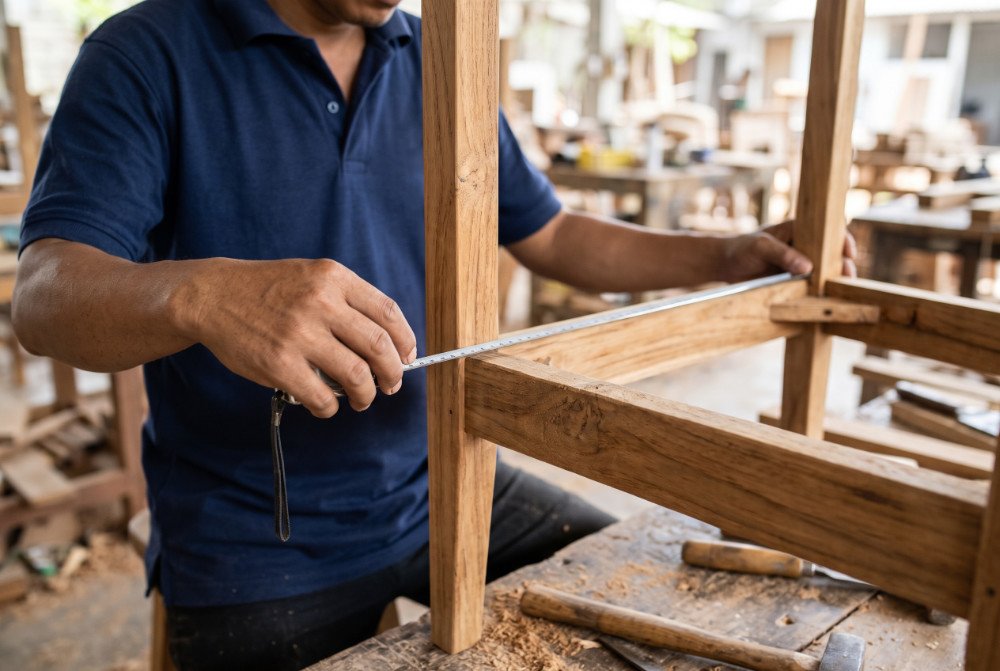
Before comparing prices, send every supplier the same request for quotation (RFQ). Include approved drawings, materials, construction details, packaging requirements, and quantities.
Same wood species and grade, same moisture target, and same construction method
A solid teak chair should not be compared directly with a chair using different wood grades or construction methods. Even within teak, the proportion of heartwood and sapwood can affect price and outdoor performance.
Specify acceptable wood grades, target moisture content, joint construction, and dimensions. These details reduce the risk of comparing products that only look identical in photographs.
For a closer look at how material grades and craftsmanship influence factory prices, read our teak furniture pricing guide, where we share the story of a European buyer who discovered that the cheaper teak furniture he purchased from another supplier contained a high proportion of sapwood. Simply identifying the wood species is not enough; ensure that you also verify the wood grade before assuming that two price quotes are truly equivalent.
Same finish, hardware, and cushion or weave specification
Finishing systems, hardware grades, cushion materials, and rattan weaving specifications can change production costs considerably. Ask suppliers to identify what is included rather than accepting descriptions such as "premium finish."
Use approved material samples and measurable specifications wherever possible. This gives manufacturers the same production target.
Same packaging, carton testing, and labeling requirements
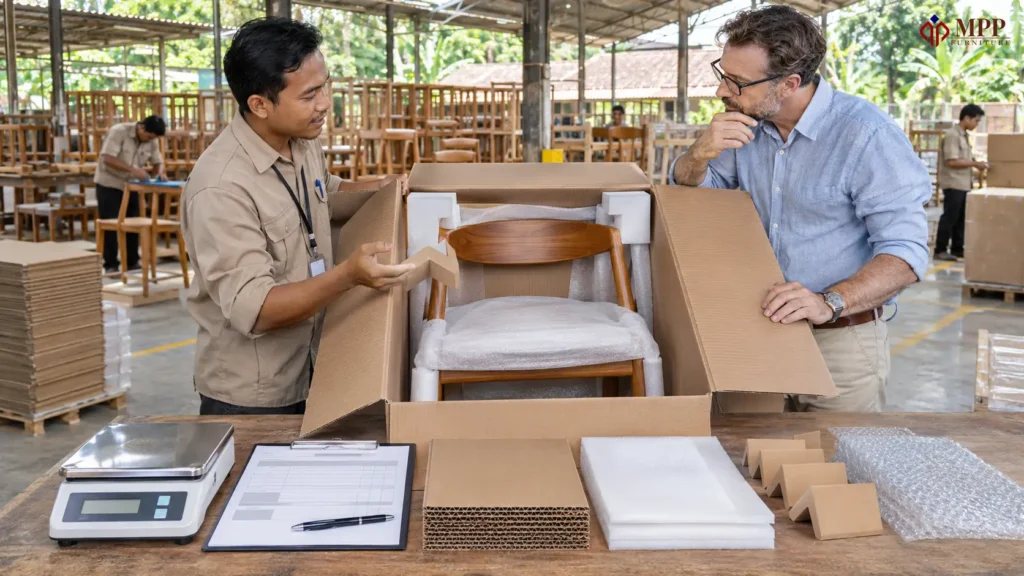
Packaging can make an inexpensive product expensive after shipping damage. Specify carton strength, corner protection, drop-test requirements where applicable, and retail labeling.
Also request packed dimensions and cubic meters per unit. Bulky packaging reduces container capacity and increases freight cost per chair.
Step 2: Put Every Quote on the Same Incoterm
A $90 EXW quotation and a $100 FOB quotation cannot be compared directly. EXW generally transfers transport responsibilities much earlier, while FOB includes delivery and loading aboard the nominated vessel at the agreed port.
Convert each offer to the same commercial basis, preferably FOB at the named loading port or your intended purchasing term. Add missing inland transport, export handling, loading, and documentation charges without counting included expenses twice.
For example, a $90 EXW chair with $12 in allocated origin charges becomes $102 on a comparable FOB-cost basis. The $100 FOB offer may actually be cheaper.
For a clearer explanation of how lead time, MOQ, and EXW, FOB, or CIF terms affect sourcing decisions, read our guide to three factors when sourcing from Indonesian furniture manufacturers.
Always meticulously review what each supplier explicitly excludes from their initial offer. Pay close attention to hidden gaps like inland freight, terminal handling charges, or mandatory drop-testing fees, as these missing elements will quickly inflate your final invoice.
Step 3: Add Duty by Country and HTS Line

The 2026 tariff situation makes both country-of-origin and product comparisons especially complex. You must precisely evaluate Section 301 tariffs, which do not just impose penalty tiers based on origin but also feature highly specific product exemptions.
Beyond origin, U.S. Section 232 measures add product-specific hurdles, such as the hefty 25% base rate on upholstered wooden furniture. However, do not simply stack these tariffs blindly on your spreadsheet. Recent USTR updates reveal a tricky overlap: products already hit by Section 232 are explicitly exempted from certain July 2026 Section 301 actions.
This unpredictable regulatory rollercoaster where one tariff might actually cancel out another is exactly why you must verify the latest HTS rulings with your customs broker rather than relying on outdated assumptions.
Never apply one assumed tariff percentage to every furniture product from a country. Confirm the exact Harmonized Tariff Schedule (HTS) classification, origin, applicable measures, exemptions, and expected customs entry date with your customs broker.
For EU imports, check the applicable classification and origin in TARIC. Duty calculations may also involve trade preferences or other product-specific measures.
Add the verified duties to your comparison sheet, using the proper customs value and calculation rules. Include a separate contingency scenario because rates may change before the shipment enters customs.
For example, a $20,000 customs value subject to an illustrative 15% duty would generate $3,000 in duty. This is only a calculation example, not a current tariff rate for any country.
Step 4: Add Freight, Insurance, and Time Cost
Request freight quotations from each origin to the same destination, using matching shipment volumes and delivery requirements. Freight rates, transit times, and destination handling charges can vary significantly between routes.
Calculate the total landed cost using the relevant product, origin, freight, insurance, duty, clearance, tax, and delivery expenses. Keep recoverable import VAT or GST separate when evaluating your actual business cost.
Also compare deposit requirements and production timelines. A supplier offering lower prices but longer lead times may tie up your purchasing budget and delay inventory turnover.
For buyers who want to identify expenses that frequently appear after the factory quotation, read our guide to hidden costs when buying furniture from Indonesia.
Step 5: Compare Risk, Not Just Price
While buyers often obsess over import duties, a May 2026 UNCTAD report reveals that non-tariff measures like mandatory certifications impose higher costs than tariffs for 88% of countries. Poorly navigated regulatory hurdles can hit your margins like an invisible 28% tax, easily wiping out any savings from a cheap factory quote.
Beyond compliance, that low landed cost is only valuable if the furniture arrives correctly, meaning you must weigh manufacturing consistency right alongside your financial spreadsheets.
Legal wood documentation: SVLK and FLEGT, Lacey Act data, and EUDR traceability
For Indonesian furniture, verify SVLK documentation and FLEGT licensing for EU-bound products. Reputable suppliers are transparent about this; for example, MPP Furniture is officially registered as MULYA PRATAMA PUTRA in the national SVLK registry. Additionally, U.S. importers must check applicable Lacey Act declarations regarding wood species and harvest origin.
EU buyers must also assess EUDR obligations and applicable implementation dates. These requirements differ, so ask suppliers for traceability evidence before confirming large orders.
Defect rate, QC process, and sample approval
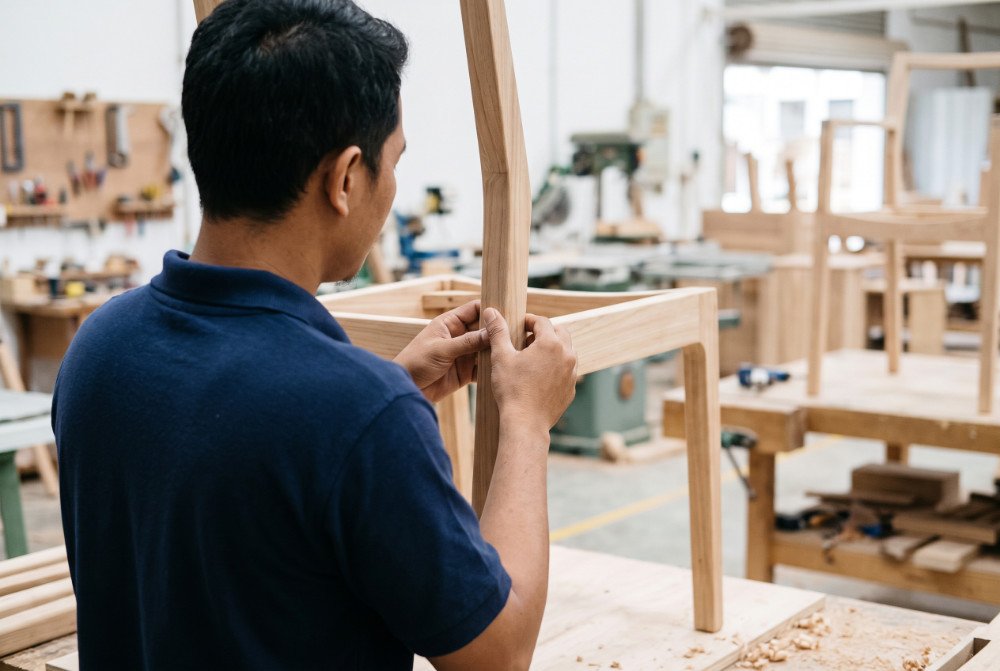
An attractive quotation loses value when damaged or defective products generate replacements, refunds, and customer complaints. Compare inspection procedures, sample approval, moisture checks, and acceptable defect limits.
At MPP Furniture, we embed quality checks throughout the entire in-house production process rather than waiting for the end. We check construction and dimensions after sanding, review finishing and weaving, and inspect for scratches or alignment issues before packing. When comparing quotes, always ask suppliers which specific checks happen during production—not just whether a basic final inspection is offered.
MOQ flexibility and consistency across repeat orders
A supplier requesting 500 chairs may offer a lower price than one accepting 200, but excess stock creates inventory risk. Compare minimum quantities against your actual sales forecast.
Also consider whether the factory can reproduce the same finish, dimensions, and materials across repeat orders. Consistency protects your product collection and reduces unnecessary redevelopment work.
For retailers assessing the complete process before ordering, our guide to importing furniture directly from Indonesia explains production, documentation, and delivery risks in greater detail.
Final Thoughts: Key Takeaways Before You Choose a Quote
The lowest furniture quotation is not necessarily the best purchasing decision. Compare furniture supplier quotes using matching specifications, Incoterms, verified duties, freight, payment conditions, and supplier reliability.
Build one comparison sheet and update it when tariffs or shipping costs change. Your final decision should reflect both landed cost and the risk of receiving products that cannot meet your customers' expectations.
At MPP Furniture, we help international buyers evaluate wooden and rattan furniture specifications, customization options, and export quotations. As one of the Indonesian furniture manufacturers serving B2B markets, we offer free consultation and product development support to help buyers plan their collections.
Have several furniture quotations to compare? Share your product specifications with our team and request a detailed FOB quotation to support your next sourcing decision.
Frequently Asked Questions
How do you compare furniture supplier quotes fairly?
Standardize product specifications and Incoterms, then calculate landed cost using verified duties, freight, and destination charges. Compare quality and supplier risks separately.
Should furniture importers compare FOB or CIF prices?
Either can work if every quotation is converted to the same cost basis. FOB often makes ocean freight comparisons easier because buyers can obtain independent freight quotations.
How do 2026 tariffs affect furniture quotations?
Tariffs can change the final import cost based on product classification, origin, and entry date. Buyers should confirm applicable measures before placing orders.
Why might a more expensive supplier cost less overall?
Better packaging, lower defect rates, and dependable delivery protect your margins. A slightly higher factory price doesn't guarantee perfection, but investing in a reliable partner significantly reduces financial risks from damaged goods, compliance failures, or delays.
Ready to Make Your Next Sourcing Decision?
At MPP Furniture, we help international buyers evaluate wooden and rattan furniture specifications, customization options, and export quotations. Share your product specifications with our team and request a detailed FOB quotation to support your business.

I am a Web Designer, Technical SEO Specialist, and writer with 6+ years of experience in website optimization and search visibility. For more than a year, I have supported MPP Furniture’s growth, and I am currently expanding my role as an author to help B2B furniture buyers make more informed business decisions through informative, practical, and impactful articles.

0 Comments