A hotel chair can look perfect in a sample room and still become a problem six months after opening. Loose joints, finish damage, difficult cleaning, and inconsistent replacement pieces rarely show up in the product photo, but they quickly become expensive once hundreds of guests start using the furniture every day.
For retailers, dealers, and project buyers, the real question is not whether a piece looks good. The question is whether its construction, finish, testing, and maintenance requirements fit the actual hotel or restaurant operation, because a poor specification can turn a good-looking order into recurring complaints, repairs, and replacement costs.
The following hotel and restaurant furniture checklist helps you examine those risks before approving a sample or placing a commercial order.
What Commercial Use Changes Compared With Home Use
Furniture in hotels, restaurants, and cafés experiences repeated sitting, dragging, spills, cleaning, and movement throughout the day. Residential furniture may face the same activities, but usually at a much lower frequency.
This changes how buyers should evaluate commercial-grade furniture for hotels. Instead of judging appearance alone, retailers and project buyers need to compare the product against the intended use, cleaning routine, guest traffic, and written project specification.
Material selection is also connected to the environment in which the furniture will work. For a closer look at teak in hospitality settings, read why hotels and resorts rely on Indonesian teak furniture, including its use in dining, terraces, poolside, and resort applications.
A solid wood dining table in a family home can easily last 15 to 30 years, but that timeline shrinks dramatically under the relentless traffic of a hotel or restaurant. This accelerated wear is exactly why residential furniture cannot simply be dropped into a commercial floor plan.
In the commercial realm, acceptable durability is often strictly defined by the specific project requirements, local building codes, or the hotel operator's rigid brand standards. Before falling in love with a chair's silhouette, always ask for those written specifications first. This ensures you are sourcing a piece that actually checks all the operational and legal boxes right from the start.
Durability Checks: Frame, Joinery, and Load
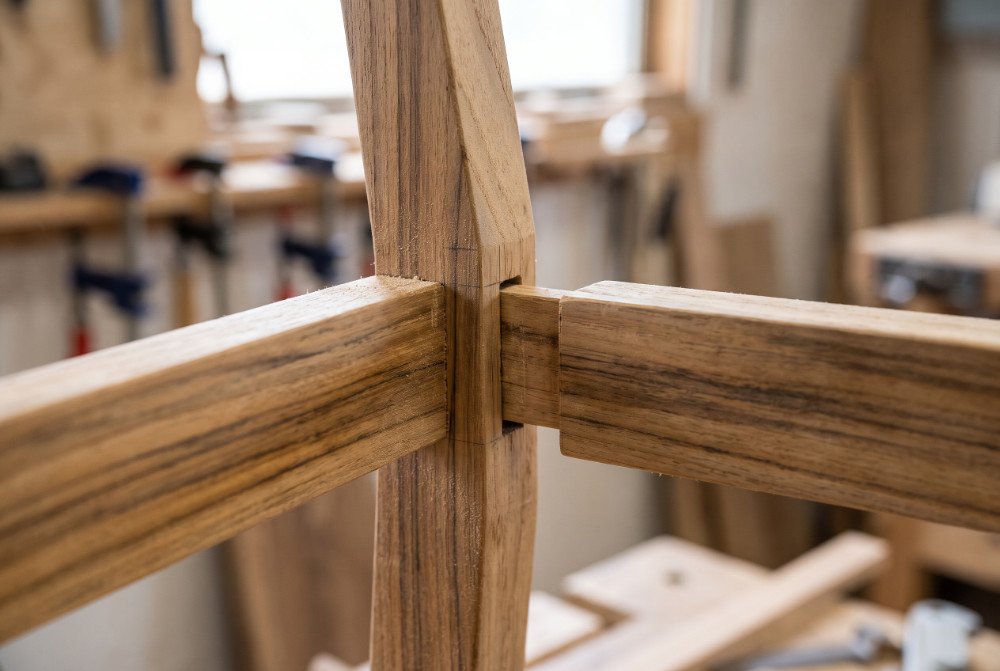
A durable commercial piece works as a system. Wood preparation, frame geometry, joint construction, assembly accuracy, and finishing all affect how the product performs after repeated use.
Wood Species and Drying: Kiln-Dried Material at a Controlled Moisture Level
Wood species matters, but species alone does not tell you whether a chair or table is ready for commercial use. Buyers should also ask how the timber is dried and how the factory controls moisture before machining and assembly.
Poor moisture control can contribute to movement, cracks, gaps, or joint problems after the furniture reaches a different climate. For a deeper look at material stability and long-term indoor performance, read the performance lifecycle of indoor teak furniture.
Joinery: Mortise and Tenon or Similar Structural Joints Instead of Glue and Staples Alone
A good-looking frame can still hide weak construction. For chairs and other load-bearing pieces, ask how the main structural members are joined and whether the joint design allows repeated commercial use.
Mortise-and-tenon construction or another suitable structural joint gives the frame mechanical support beyond adhesive alone. For a more focused example, read what retailers should check before stocking teak dining chairs, including drying, joint construction, frame stability, and production consistency.
Load and Stability: Ask What Testing the Product Has Been Through
Do not stop at a statement such as “commercial grade.” Ask what load, stability, fatigue, or durability testing has been carried out and whether the test relates to the actual model you plan to purchase.
The product category also matters. A dining chair, lounge chair, bar stool, bench, and outdoor seat may face different loading patterns, so the project requirement should guide the testing request.
At MPP Furniture, we actively apply Bureau Veritas (BV) weight standards as a rigorous baseline for our internal load testing. If a frame fails during this trial phase, we do not just patch it up; we go back to the drawing board to structurally reinforce and improve the design before production. This proactive engineering ensures the final piece can confidently survive the harsh reality of a busy commercial floor.
Standards and Test Reports to Ask For
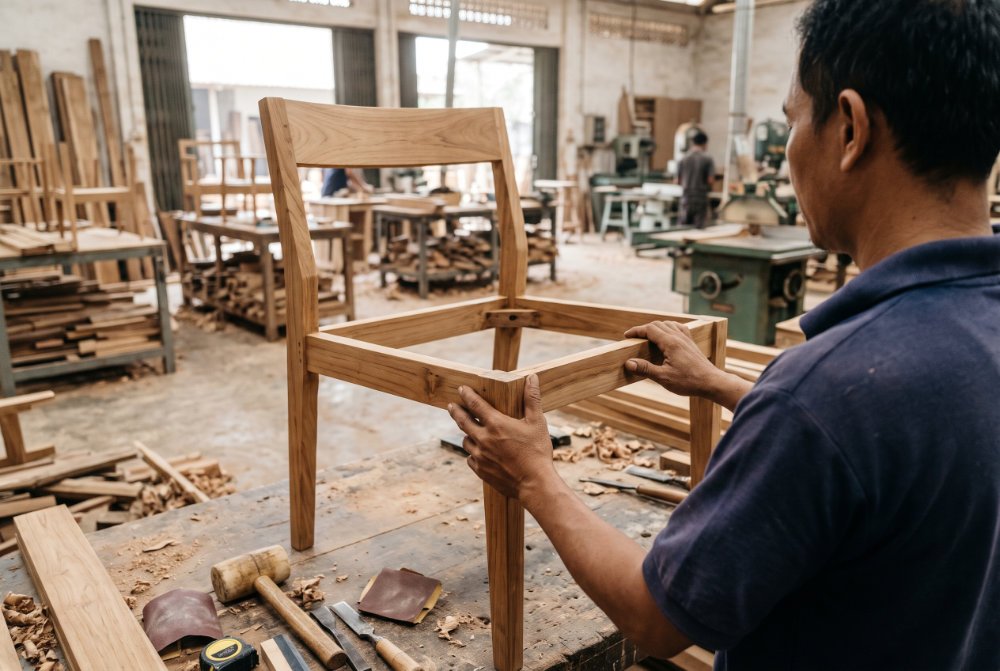
Furniture standards depend on the market, product type, application, and project specification. For indoor public and lounge seating in the US, buyers may encounter ANSI/BIFMA X5.4, while EN 16139 is commonly referenced for non-domestic indoor seating in European markets.
Outdoor contract seating may use a different standard, such as the EN 581 family. Upholstered furniture can also have separate fire-performance requirements, so buyers should confirm the applicable project, national, or local requirement before approving production.
For upholstered products, requirements may reference standards or test methods such as California TB 117-2013 in relevant US applications or BS 5852 and BS 7176 in the UK. Do not treat one fire standard as a universal hospitality requirement.
When a supplier provides a report, check the tested model, test method, edition, laboratory, date, and result. A report has more value when you can connect it directly to the furniture configuration being specified.
Transparency is key, but pragmatism matters just as much in custom manufacturing. While not every bespoke piece requires a full suite of third-party laboratory certifications, MPP Furniture relies on rigorous internal testing to guide our development. When your project specifically demands formal documentation, we collaborate with you to ensure those compliance boxes are neatly checked.
Finish Checks: Surface, Color, and Cleanability
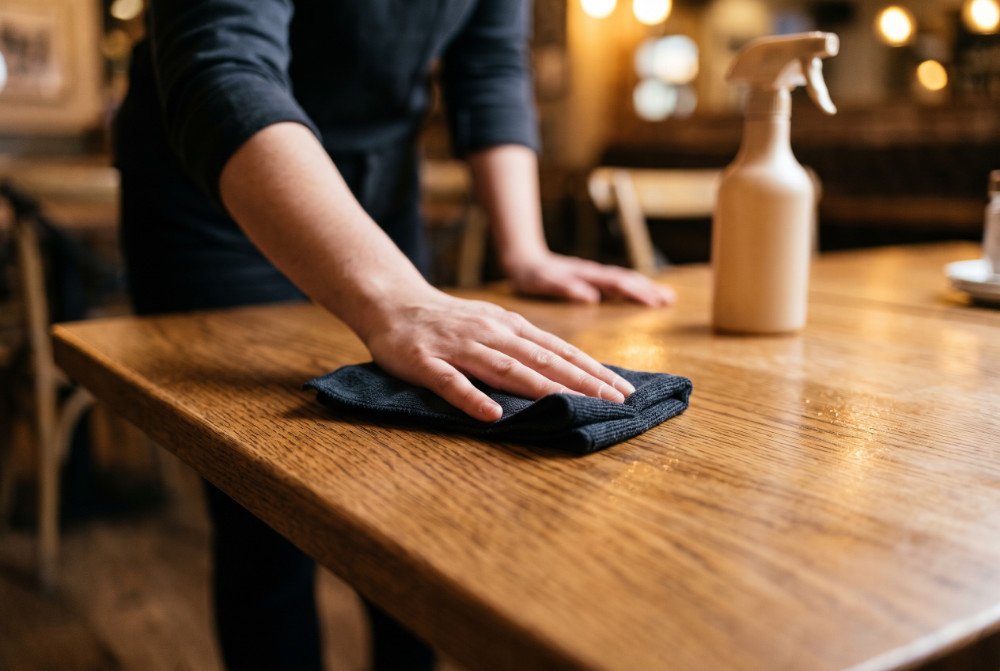
A finish is not only a color choice. In hospitality furniture specifications, it also affects cleaning, wear appearance, stain response, and how consistently future production can match the approved reference.
Finish Durability Under Cleaning Products, Spills, Heat, and Scuffing
Restaurant tables and chairs may face food, drinks, heat, frequent wiping, and cleaning chemicals. Hotel furniture may also experience luggage contact, cosmetics, guest traffic, and repeated housekeeping routines.
Ask which cleaning products are suitable for the finish and which should be avoided. For upholstered commercial areas, read how commercial leather furniture should be maintained for more detail on cleaning routines, spills, and high-traffic care.
Color Consistency Between the Approved Sample and the Production Batch
Natural materials will always show some variation, but the production batch should still follow the approved visual direction. Buyers should approve the finish against a physical reference and agree on the acceptable range before bulk production starts.
At MPP Furniture, our production approach combines handcrafted work with controlled machining and quality checks at different production stages. This helps us compare production pieces against the approved reference instead of treating the first sample as a separate exercise.
For buyers developing custom collections, the production process should connect design approval with repeatable manufacturing. You can read more about this process in our guide to working with an Indonesian custom furniture manufacturer.
Finish Choice for the Setting: Indoor, Covered, or Exposed Outdoor
An indoor restaurant, covered terrace, and fully exposed pool deck do not place the same demands on a finish. Specify the actual location before selecting the finishing system.
Outdoor furniture also needs design details that support drainage, drying, and weather exposure. For a closer look at those conditions, read our poolside furniture buyer's guide.
Maintenance Checks: What the Operator Has to Live With
Maintenance should be discussed before the order, not after the hotel or restaurant opens. Ask the manufacturer for a written care guide that can be passed directly to housekeeping, restaurant staff, or the facilities team.
Buyers must check whether components like cushions, glides, or woven sections can be easily serviced. If a solid wood or metal frame remains structurally sound, replacing a torn cushion or a worn glide is a brilliant, cost-saving move. However, if the core structure cracks, repairs become a costly band-aid, which is why addressing small wear parts early prevents expensive full replacements.
Reorder consistency matters as well, especially for hotel groups, restaurant chains, or phased developments. Confirm how the supplier records dimensions, materials, finish references, and product details so matching pieces can be ordered later.
For buyers who need help translating a project brief into production requirements, MPP provides consultation and product development support through our furniture sourcing and development services.
A One-Page Checklist to Use Before You Order
Specification: Use Case, Load, Applicable Standards, and Fire Requirement
Before requesting a final sample, define where the furniture will be used, how heavily it will be used, what load conditions matter, and which standards apply. Include any fire requirement for upholstered products in the written specification.
A reliable Indonesian furniture supplier should be able to discuss these points before bulk production rather than relying on a generic commercial-grade label.
Samples: Approved Against the Written Spec, Including Finish
Evaluate the physical sample strictly against the written specification rather than just its initial visual appeal. Check dimensions, comfort, stability, joinery, material, finish, color range, upholstery, and any agreed performance requirement.
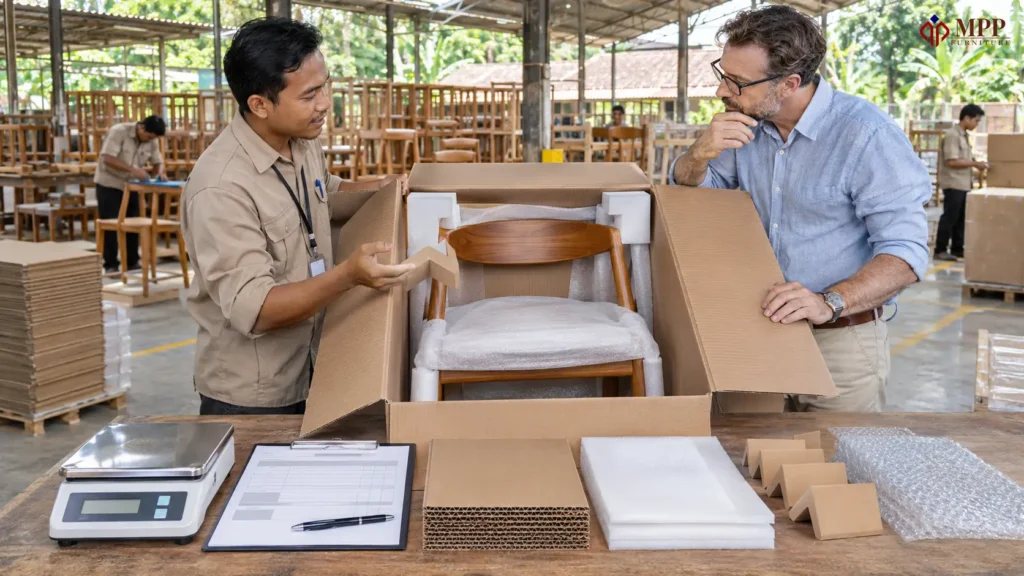
The approved sample should become the production reference. This gives both buyer and manufacturer a common standard when the bulk order is inspected.
After-Sales: Care Guide, Spare Parts, and Reorder Consistency
Ask what happens after delivery. Confirm the care guide, replacement options for wear parts, available spare components, and how future matching orders will be controlled.
These questions may seem small during purchasing, but they matter once furniture is distributed across dozens or hundreds of guest rooms, dining seats, terraces, or café locations.
Final Thoughts: Key Takeaways Before You Specify Furniture for a Hotel or Restaurant
Base your commercial furniture decisions on a concrete project specification, not just a beautiful design concept. A commercial furniture decision should connect use conditions with frame construction, joinery, testing, finish performance, maintenance, and future replacement needs.
Ask what happens after delivery. Confirm the logistical details for ordering spare components, the expected lead times for those items, and how future matching orders will be controlled.
MPP Furniture supports B2B buyers with in-house production, custom development, consultation, and quality control from design through production. If you are planning furniture for a hotel, restaurant, or café project, share your drawings, required standards, finish reference, and application with our team so we can review the product requirements before development begins.
More Frequently Asked Questions on Hospitality Furniture
1. Why can't I just buy high-quality residential furniture for my restaurant?
Residential furniture simply isn't built for the relentless daily traffic, spills, and heavy cleaning routines of a commercial space. Commercial pieces are engineered with specific structural joinery and resilient finishes to survive this accelerated wear without failing early.
2. What is the most important detail to check on a wooden dining chair?
Look beyond the beautiful wood species and check the actual joinery. A true commercial-grade chair relies on robust structural joints—like mortise-and-tenon—rather than just glue and staples to handle the constant shifting and weight of your guests.
3. Do I need formal lab testing (like BIFMA or EN) for every piece I order?
Not necessarily. We rigorously test our frames internally using Bureau Veritas weight standards as a baseline, but formal third-party lab certifications are only required if your specific project or local building codes explicitly demand them.
4. If a chair gets damaged, do I have to replace the whole thing?
Not if the core structure is intact! If a solid wood or metal frame remains structurally sound, simply replacing a worn cushion or glide is a brilliant, cost-saving move. We help by supplying matching spare components to extend your furniture's lifespan.
5. Can you ensure the wood finish matches our exact brand standards?
Absolutely. We don't just guess from product photos; we use approved physical samples as our strict production reference. This ensures the color, finish, and durability remain highly consistent from the first prototype to the final batch.
Ready to Specify Furniture for Your Next Project?
Skip the guesswork and start with a solid specification. Share your drawings, required standards, and application with MPP Furniture to review product requirements before bulk development begins.

I am a Web Designer, Technical SEO Specialist, and writer with 6+ years of experience in website optimization and search visibility. For more than a year, I have supported MPP Furniture’s growth, and I am currently expanding my role as an author to help B2B furniture buyers make more informed business decisions through informative, practical, and impactful articles.

0 Comments