Receiving a TSCA Title VI certificate from a plywood supplier can feel reassuring when you source wooden furniture for the US market. But that document may not identify every composite wood panel used in your order.
To verify TSCA Title VI compliance, you need to connect the supplier's certification evidence with the materials specified for your furniture. This guide shows what to check before approving bulk production.
The steps cover regulated materials, panel certification, component matching, supplier records, veneers, labels, and import paperwork. A cabinet example explains how to spot a document mismatch.
Does TSCA Title VI Apply to Your Wooden Furniture?
Under EPA's formaldehyde emission standards, TSCA Title VI limits formaldehyde emissions from regulated hardwood plywood with veneer or composite cores, MDF including thin-MDF, and particleboard. Solid wood itself is not a regulated composite wood product, but solid-wood furniture may contain covered panels in drawer bottoms, shelves, or cabinet backs.
Not all plywood falls within the emission standards. For example, qualifying structural plywood and hardwood plywood with lumber or hardboard cores are excluded. Ask your manufacturer to identify the construction of each panel before deciding what certification evidence applies.
Verify the Plywood Supplier’s TSCA Title VI Certification
Start with the actual panel producer, which may differ from the distributor and furniture manufacturer. Check the producer's name, production facility, regulated panel product type, and scope of the certification evidence.
Next, confirm that the third-party certifier (TPC) and its identification number appear on EPA's recognized-TPC list, including any suspension or revocation information. Compare the number with the panel or bundle label where available; EPA itself does not issue TSCA certificates.
A furniture factory that buys compliant panels generally does not need its own panel certificate. However, it must use compliant materials, keep appropriate records, and meet applicable labeling rules. The situation changes if the factory also makes regulated panels or non-exempt laminated products.
Match Certified Plywood to the Actual Furniture Components
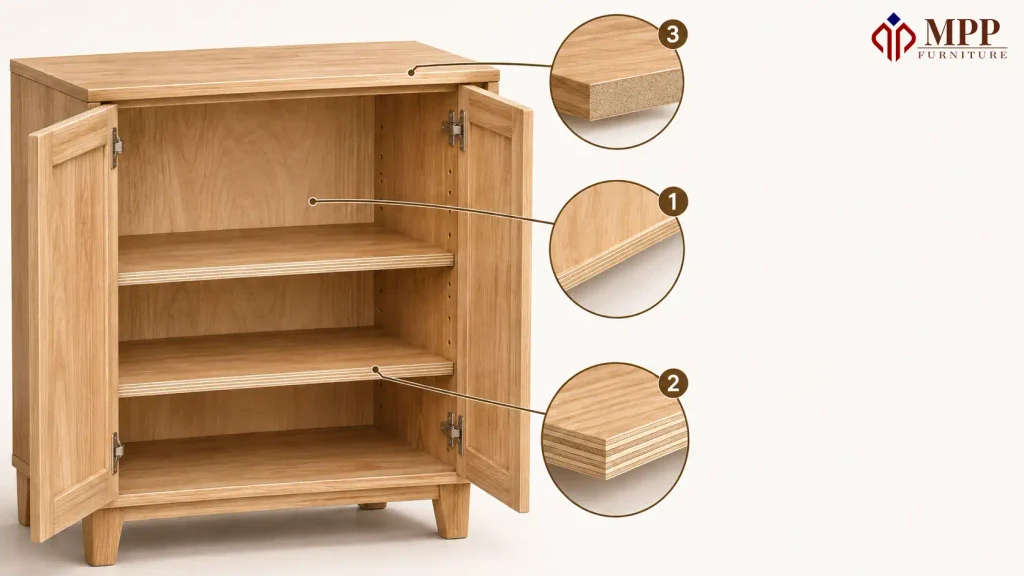
Request a bill of materials (BOM) for every furniture SKU, showing each panel's intended use, material type, thickness, core construction, and source. These specifications help identify what was approved; thickness alone does not determine certification coverage.
Example: One Cabinet With Multiple Composite Wood Components
| Component | Illustrative material | What to match |
| Back panel | Veneer-core hardwood plywood | Producer and relevant product-type certification |
| Shelves | Plywood from a different panel producer | Separate producer and certification evidence |
| Top | Wood-veneered MDF | MDF documentation and possible laminated-product obligations |
Imagine the certificate names Panel Producer A, but the invoice for the cabinet shelves identifies Producer B. The certificate for Producer A cannot, by itself, support the shelves from Producer B. Ask for matching evidence or a corrected material plan before approving the order.
At MPP Furniture, our purchasing and production teams check incoming plywood and MDF against buyer-approved specifications before production. We compare material types, panel thickness, and available supplier purchase records. When differences appear, we clarify them with the supplier before the material is used.
Finally, compare the approved sample, final BOM, and planned bulk-production materials. If a panel source or construction changes, request updated documents and written approval before production proceeds.
Request Supporting Documents for Material Traceability
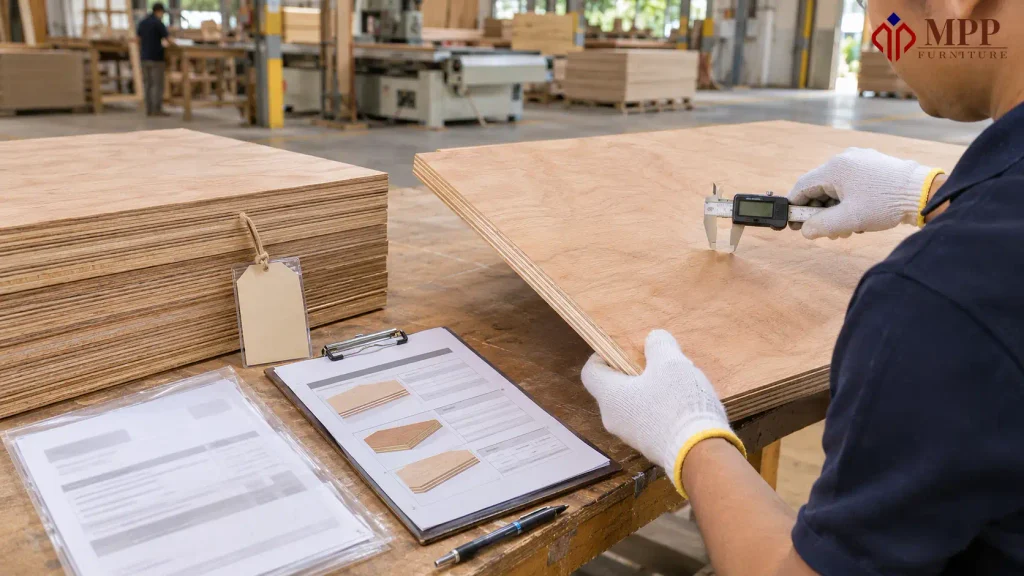
Ask for supplier invoices, purchase records, panel labels or lot identification where available, and the approved material schedule. Together, these records can help connect purchased panels with the furniture order. A SKU-level tracking sheet is useful for buyer verification, but EPA does not require that exact format.
For regulated products, invoices, bills of lading, or comparable documents must carry a TSCA Title VI compliance statement. That statement confirms the applicable goods are compliant; it is different from certification evidence issued by a TPC.
Our article on requesting manufacturer verification documents before ordering explains broader supplier checks. For this order, compare the statement, panel source, BOM, and purchase order for consistency.
Check Veneering and Material Substitutions Before Production
Applying wood or woody-grass veneer to a regulated panel core can create a laminated product with additional duties. Since March 22, 2024, non-exempt laminated products generally need hardwood-plywood certification; qualifying resin-based exemptions have documentation conditions described in EPA's laminated-product guidance.
Ask whether the furniture manufacturer buys pre-veneered panels or bonds veneer to the core itself. Check the core material, adhesive system, and certification or exemption evidence. A certified MDF core does not automatically establish compliance for a non-exempt laminated product made from it.
Include a material-change approval step in your order process. If the panel producer, construction, or veneer adhesive changes after sampling, request revised records before accepting the substitution.
Confirm Finished Furniture Labels and Import Documentation
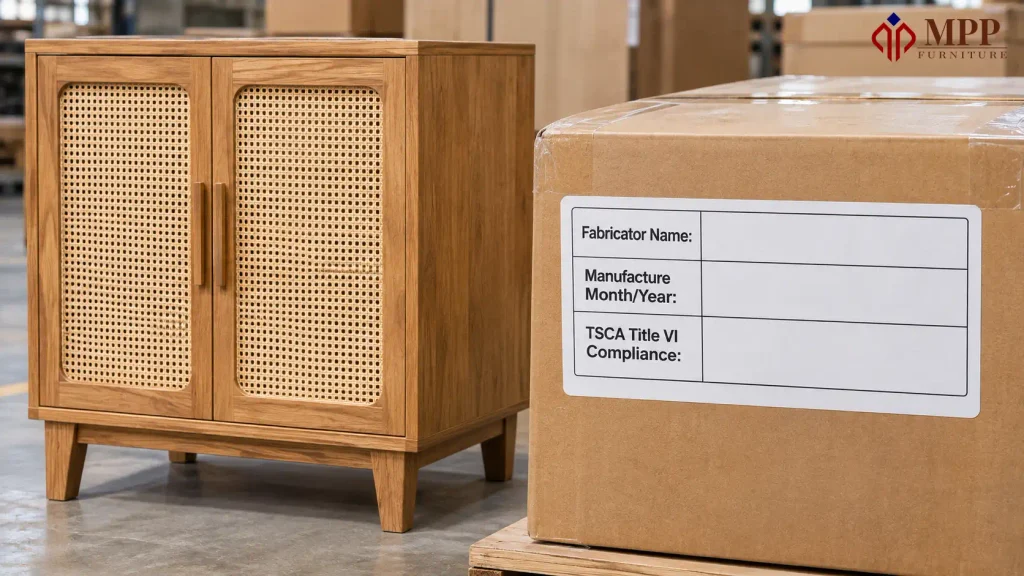
A TSCA Title VI label on a covered finished good, or its box or bundle, generally must identify the fabricator, production month and year, and compliance statement in legible English. A limited exception applies to eligible items containing no more than 144 square inches of regulated composite wood, calculated across applicable components; the underlying panels still must comply.
US importers must retain relevant invoices, bills of lading, or comparable records containing supplier compliance statements for three years. If EPA requests specified panel-producer and supplier information, importers must provide it within 30 days.
TSCA Section 13 import certification is separate from the plywood producer's third-party certification, and the importer or authorized agent is responsible for filing it. Check the final label and documents with your manufacturer and customs broker; our US furniture importing guide covers the broader customs process.
Final Thoughts: Verify the Material, Not Just the Certificate
TSCA Title VI-compliant furniture depends on compliant, regulated panels supported by matching production and supplier documentation, not simply a certificate attached to an email. Before approving a purchase order, resolve any differences between the panel evidence, actual components, and approved specifications.
When choosing an Indonesian Furniture Manufacturer, ask how its team checks incoming material and handles supplier changes. A clear answer helps buyers make a better-informed sourcing decision.
Regulatory Reference Note: This article was reviewed against US EPA guidance on TSCA Title VI and composite wood products as of November 23, 2026. EPA's October 2026 technical standards amendment takes effect on November 27, 2026.
Discuss Your TSCA Title VI Material Requirements with MPP Furniture
Share your furniture drawings, composite wood specifications, and TSCA documentation needs with MPP Furniture. Our team can discuss suitable materials and available supplier records before production, while your import team or broker reviews the applicable US filing requirements.
FAQs: TSCA Title VI for Furniture Importers
1. Is CARB Phase 2 Certification Enough for Furniture Imported Into the US?
No. Since March 22, 2019, regulated composite wood products imported into the US must meet TSCA Title VI certification and labeling requirements. A CARB-approved certifier may also be EPA-recognized, but CARB Phase 2 documentation alone does not establish current TSCA Title VI compliance.
2. Does Finished Furniture Need Separate Formaldehyde Emission Testing?
No. TSCA Title VI generally requires testing and certification of regulated composite wood panels, not finished furniture after assembly. However, non-exempt laminated products may require additional testing and certification before they are incorporated into furniture.
3. How Can Buyers Identify Certified Plywood After Panels Are Cut?
The manufacturer should have a method to identify the panel supplier and connect the material to its original labeling information. This may include panel markings and receiving records. Buyers can request evidence showing how the factory maintains that connection during production.
4. Does No-Added Formaldehyde Plywood Automatically Qualify for Exemption?
No. A no-added formaldehyde (NAF) claim does not automatically qualify a panel for exemption from TSCA Title VI testing and certification. Eligible panels need appropriate exemption approval and supporting records, while applicable labeling requirements still apply.
5. Can One TSCA Title VI Compliance Statement Cover Multiple Furniture SKUs?
Yes. EPA allows one compliance statement on an invoice, bill of lading, or comparable document, provided the statement accurately covers all applicable regulated products on that document. For mixed furniture shipments, identifying the covered SKUs separately can make verification easier.

A versatile content creator with a strong foundation in product photography and videography, and a comprehensive brand strategy. Capable of creating engaging content to connect consumers and producers, web analytics, and engaging visual content to drive interest and growth for a product or brand.

0 Comments