A private-label dining chair collection can look easy to scale with only a few SKUs. Problems usually appear later, when retailers add finishes, armchair versions, upholstery choices, repeat orders, branding, or higher volume.
You can reduce that complexity by treating custom dining chairs as one connected product system. A scalable collection should support launch, reorder, and future extensions without forcing the buyer and manufacturer to reinterpret each product.
This guide covers commercial role, design language, SKU structure, specifications, references, quantity, branding, packaging, and future development. It also explains what to look for when working with Indonesian Furniture Manufacturers beyond the first production run.
Define the Collection’s Commercial Role Before Adding SKUs
Retailers first need to decide what the collection is expected to do. A core range, premium line, entry-level assortment, and seasonal test collection need different SKU counts, materials, price positions, and order plans.
Before adding another dining chair, ask what role it has in the assortment. If removing one SKU does not leave a clear gap in customer need, price point, function, or style, it may not belong in the first launch.
Broader Indonesian furniture collections planning can help because the dining range still needs to fit the retailer’s wider assortment strategy.
Create One Design Language Across the Collection
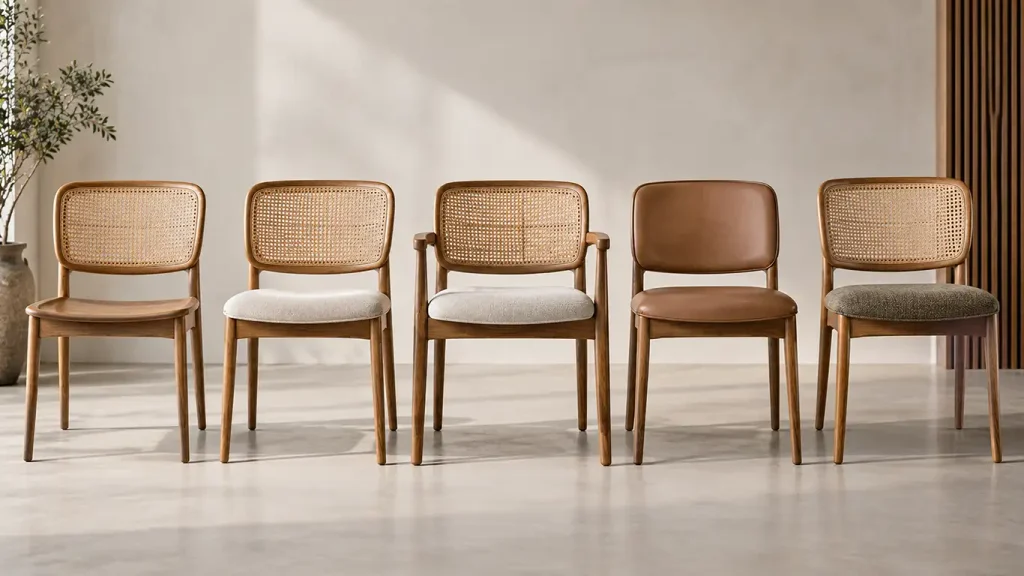
A collection does not need several chairs that look almost identical. But retailers should be able to place the models together and see that they belong to the same family.
Keep proportion, leg profile, backrest direction, material family, visual weight, or selected detailing consistent. Arms, upholstery, woven panels, seat treatment, or a limited finish range can change without breaking that identity.
For buyers developing dining as part of a wider indoor range, comparing Indonesian Indoor Furniture Manufacturers also means checking whether the same design direction can carry across related categories.
Plan a Scalable SKU Structure
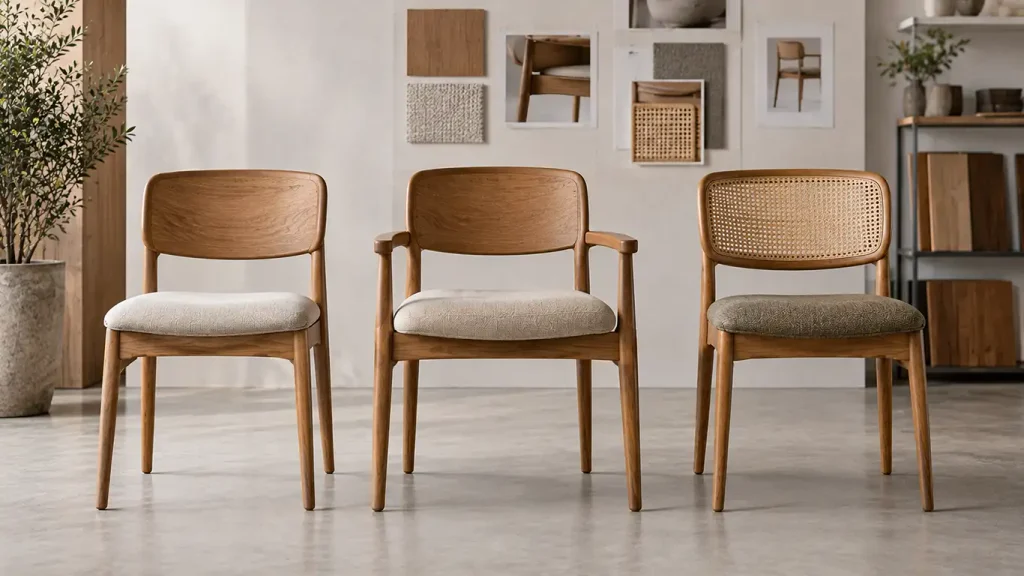
For a private-label dining chair collection, a practical structure is Core SKU → Controlled Variations → Future Extensions. This keeps development tied to commercial purpose instead of treating every chair as an isolated design.
Start With Core SKUs
Core SKUs should cover the collection’s main selling roles. Start with enough products to test proportion, construction, costing, packaging, and market response before creating many secondary options.
Once the buyer and manufacturer agree on the main silhouette, material direction, and construction logic, later products can reuse proven decisions.
Add Variations Without Multiplying Complexity
A side chair may become an armchair, an upholstered back may become woven, or one seat treatment may use another material. Every variation can add purchasing, sampling, inspection, inventory, packaging, and production work.
Before adding one, ask what commercial purpose it serves, what it can reuse, and what new work it introduces. The sales opportunity should justify that complexity.
Set Material and Specification Rules for the Entire Collection
Private-label furniture becomes easier to manage when related SKUs share rules for materials, construction, dimensions, finish direction, upholstery or rattan, and selected components.
In one MPP project, a European retailer had experienced repeated joinery failures and wood cracking with a previous supplier. Our review found that moisture control, joinery tolerance, and wood movement had to be addressed together, and the revised material and construction approach stopped the recurring complaints reported in that case.
Detailed requirements can then be recorded in a technical brief for a custom furniture manufacturer, covering dimensions, materials, price targets, MOQ, packaging, labeling, approvals, and revision records.
Create Master References for Production and Reorders
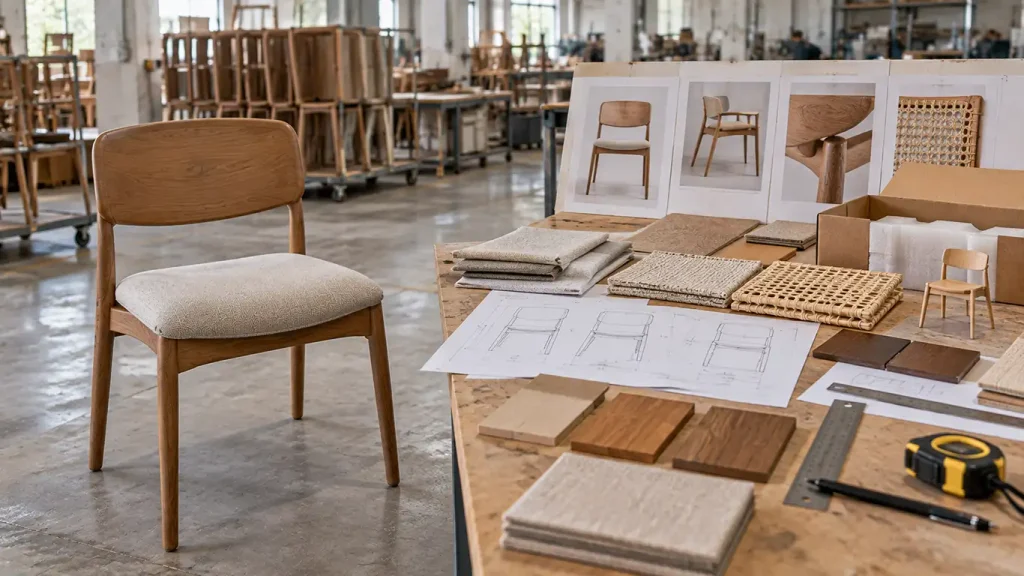
For custom dining chairs, an approved first sample is not enough if nobody records why it was approved. Buyers need master references that support production, reorders, and future SKU development.
The reference package can include the approved sample, final drawing, dimensions, material specification, finish sample, upholstery or rattan reference, hardware, packaging specification, and final revision status.
We have worked with buyers who started development with only a sketch. Before sampling, our team prepared a 3D render, technical drawing, reviewed material options, and confirmed missing details so both sides had one clear reference.
Plan MOQ, Quantity, Branding, and Packaging by SKU
Not every dining chair needs the same order quantity. Core SKUs may carry more volume, while new variations can start with more conservative quantities until demand becomes clearer.
MOQ should be considered with assortment role, inventory exposure, production efficiency, and reorder plans. MPP’s guide on how to buy furniture from Indonesian suppliers explains how mixed models, MOQ, samples, production, QC, and shipment fit into the purchasing process.
Brand labels, carton marks, barcodes, care labels, and private-label packaging should be decided before bulk production. Packaging may differ by chair type, so late decisions can create avoidable changes.
Design for Repeatability and Choose a Manufacturer That Can Grow With the Collection
A scalable custom dining chair collection should reuse proven decisions when they still make commercial sense. Before adding a new SKU, ask what commercial value it adds and whether that value justifies new materials, components, processes, or packaging.
The same test applies to the manufacturer. A capable dining room furniture manufacturer should be able to reproduce approved references, maintain consistency across several SKUs, and support repeat production while new models are developed.
This matters because supplier relationships become more valuable when reliability remains strong as volume and product range grow. McKinsey found that three-quarters of surveyed apparel brands prioritized supplier reliability and performance, while MPP documented a Swedish retailer project that moved from controlled samples to 38 pieces across multiple collections without recurring defects in the reported case.
Final Decision: Build for the Next Order, Not Just the First Launch
A private-label dining chair collection is better prepared to scale when its commercial role is clear, core SKUs have defined purposes, variations follow one family logic, specifications can be reused, and master references are recorded. Quantity, branding, packaging, future additions, and manufacturing capability should also be planned before the range grows.
The goal is not to create the largest collection at launch. It is to create a collection that can be reordered, expanded, and managed without losing its identity or production control.
Build a Private-Label Dining Chair Collection That Can Grow With Your Business
MPP Furniture supports private-label dining chair development from concept review through sampling, production, QC, branding, packaging, and repeat orders. Our aim is to help buyers turn product ideas into a repeatable furniture line that can grow with their business.
FAQ: Private-Label Dining Chair Collections
1. How many SKUs should a private-label dining chair collection start with?
There is no fixed number. Start with enough core SKUs to cover the main commercial roles, then add variations when they serve a clear customer or assortment need.
2. What makes a dining chair collection scalable?
A scalable collection uses one design language, controlled SKU variations, repeatable specifications, approved references, practical quantity planning, and production methods that support future additions.
3. Should every dining chair SKU have the same MOQ?
No. Core products, test models, and secondary variations can use different quantity plans based on demand, inventory risk, and production efficiency.
4. How can buyers keep repeat orders consistent?
Use approved samples, final drawings, material and finish references, packaging specifications, and revision records. The next order should be compared with approved information rather than interpreted from memory.
5. When should a new dining chair SKU be added to the collection?
Add a new SKU when it serves a clear commercial purpose and can reuse enough of the existing product system. If the new model adds many unique materials, components, processes, or packaging requirements without a strong sales reason, it may create more complexity than value.

A versatile content creator with a strong foundation in product photography and videography, and a comprehensive brand strategy. Capable of creating engaging content to connect consumers and producers, web analytics, and engaging visual content to drive interest and growth for a product or brand.

0 Comments