For EU and UK retailers, an EN 581 test report can look like a green light for an outdoor furniture order. But the report only helps if it matches the product, construction, and intended use you are actually buying.
This guide helps you decide which EN 581 evidence to request and which gaps need a second look before bulk production. The goal is simple: approve evidence for the product you are buying, not just a report with the right standard number on the cover.
You will see how EN 581-1, EN 581-2, and EN 581-3 apply to seating and tables, what changed in 2026, and when an older report may need review. You will also get a practical way to match the report to your SKU and final specification.
What Are EN 581-1, EN 581-2, and EN 581-3?
EN 581 is a group of outdoor furniture standards for adult seating and tables used for camping, domestic, and contract purposes. As of November 2026, the current editions are EN 581-1:2017 for general safety, EN 581-2:2026 for mechanical safety requirements and test methods for seating, and EN 581-3:2026 for tables.
These furniture safety standards serve different product types, so “tested to EN 581” is too broad on its own. Ask which part, edition, product, and use category the report covers.
Which EN 581 Test Reports Should Buyers Request for Different Outdoor Furniture?
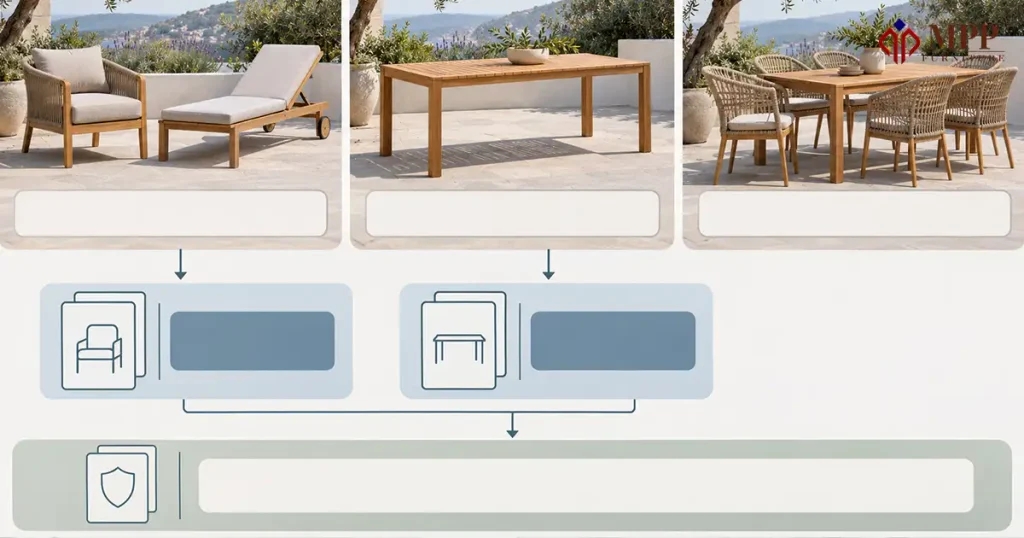
Start with the product type and intended use. Don’t focus on how many PDF files you receive; focus on clear evidence for the products in your order.
| Product | Coverage to confirm |
| Chairs, benches, and loungers | Applicable general safety requirements and EN 581-2 seating requirements |
| Dining, coffee, and side tables | Applicable general safety requirements and EN 581-3 table requirements |
| Mixed seating and table sets | Evidence for both product groups, with covered SKUs clearly identified |
Also state whether the furniture is intended for domestic or contract use before furniture testing is agreed. A retailer should not assume a report for one use category also supports another.
How to Verify Whether an EN 581 Test Report Matches Your Furniture SKU
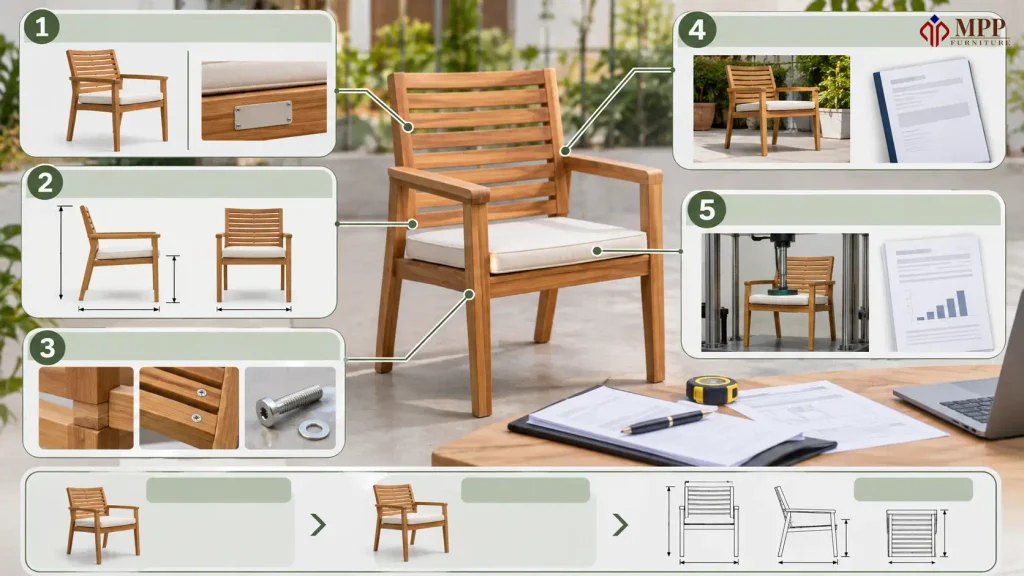
Start with the product itself. Compare the report photographs, model name, dimensions, materials, joints, fittings, support positions, and moving mechanisms with your approved sample and final drawing.
Then check the report scope: standard part, edition, intended use, test date, results, exclusions, and report number. If your retailer SKU and the factory model code differ, ask for a written cross-reference.
Do not treat “N/T” as a pass. “Not tested” is different from “not applicable”, so an omitted test needs an explanation before you rely on the report.
If anything looks unclear, ask the issuing laboratory to confirm the report and its scope. A genuine report can still be the wrong report for your SKU.
What Changed in the 2026 EN 581 Standards?
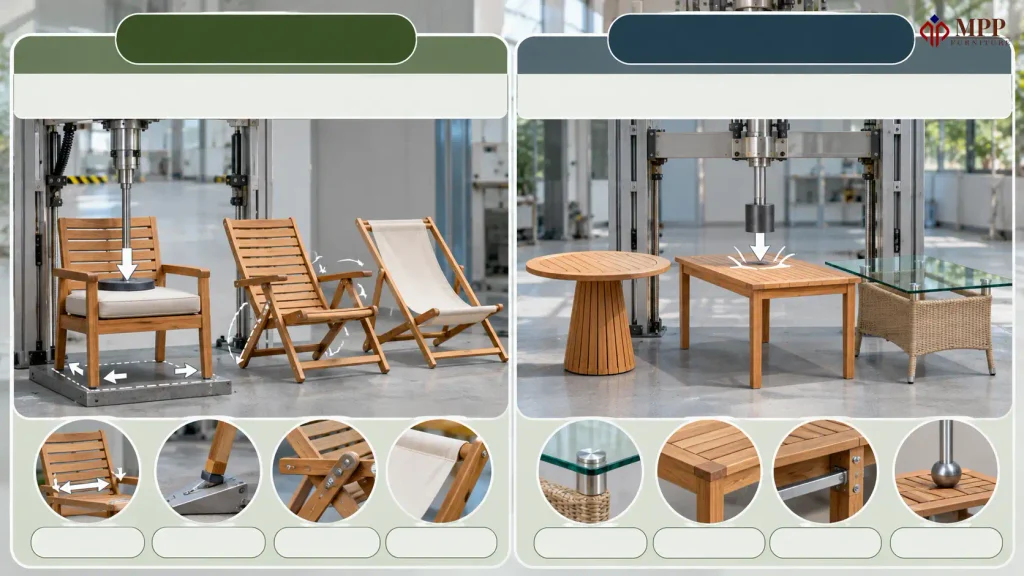
The 2026 revisions apply to EN 581-2 and EN 581-3; EN 581-1 remains the 2017 edition. CATAS reports updated seating-use definitions, a stability reference to EN 1022:2023, revised overbalance provisions, and specific methods for deckchairs and folding loungers.
For tables, changes include revised glass-top testing, new table classifications, a surface-area threshold change from 0.25 m² to 0.30 m², and added vertical durability and impact tests for certain designs. An older report is not automatically useless, but buyers should ask whether it still supports the current product and requirements.
Also separate a standard's publication from its legal status in the target market. EU and UK product safety responsibilities go beyond one EN 581 report, so keep wider technical documentation, labelling, instructions, and traceability in view. The European Commission general product safety references provide the EU reference context.
When Should Buyers Request Additional Testing or Report Evaluation?
Ask for a report review when the product has changed, the intended use is different, or the available report uses an earlier edition. Next steps may include clarification, gap assessment, targeted testing, or a new testing program, depending on what has changed.
We have seen how a small buyer request can change the physical product. In one MPP sampling project, a South African buyer wanted a chair to become stackable, so we repositioned the supports beneath the seat to prevent them from blocking the stack, as described in our teak garden furniture construction guide.
That project was not presented as an EN 581 test case. The practical lesson is to flag comparable construction changes before assuming an existing report still represents the production version.
What Should Buyers Confirm Before Approving Bulk Production?
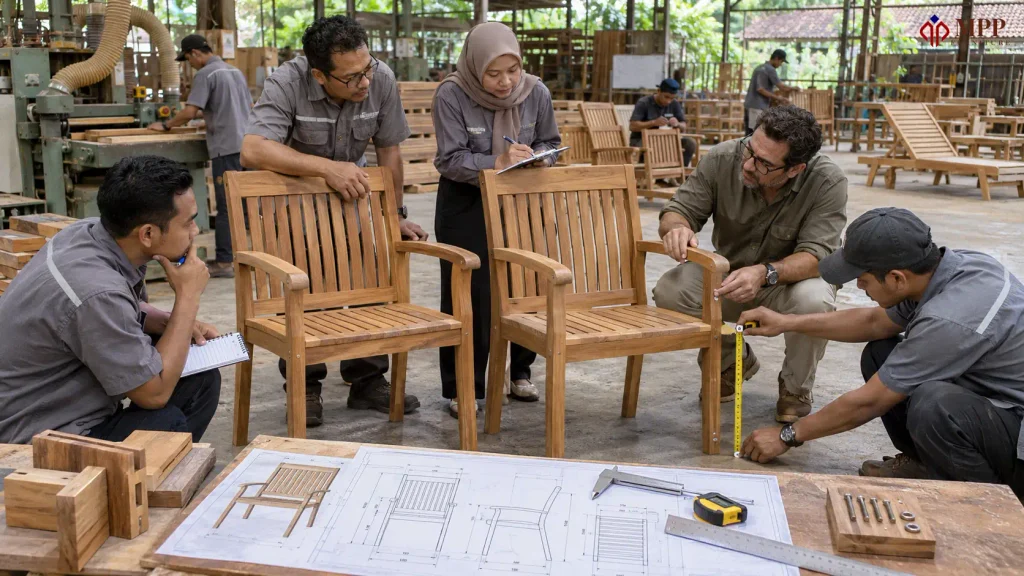
Before release, freeze the product baseline: approved sample, final drawing revision, dimensions, materials, hardware, construction details, and assembly instructions. When working with an Indonesian Custom Furniture Supplier, this step is especially important because custom development can involve changes that are not covered by an earlier test report.
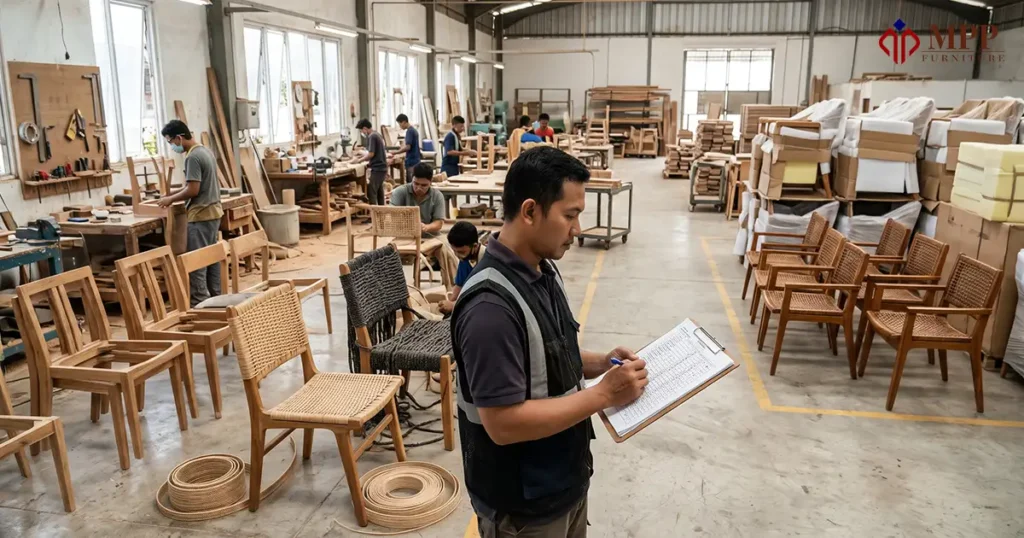
As an Indonesian Furniture Manufacturer, we compare early chair units with approved samples for profile, seat height, and joint placement. Buyers from France, the US, and Sweden have also inspected stability, function, and construction with their QC teams at our factory before mass production.
Factory QC and laboratory testing serve different purposes. Your approval record should connect the tested product, approved sample, and final specification while keeping the wider product safety documents required for your market; GOV.UK product safety advice for businesses also covers technical documentation, labelling, instructions, and traceability responsibilities.
Final Thoughts: Verify the Test Evidence Before Confirming Your Order
An EN 581 report is useful only when the tested product, intended use, and final specification match the furniture you plan to buy. Check that match, resolve gaps, and document responsibilities before bulk production starts.
For the wider sourcing process, our guide on ordering teak garden furniture in bulk from Indonesia covers specifications, quotations, production planning, inspections, shipping, and documentation.
Discuss Your Outdoor Furniture Specifications with MPP Furniture
If you are preparing an outdoor furniture collection for the EU or UK, share your SKU list, intended use, drawings, approved samples, and any existing test reports with MPP Furniture. Our team can help review the manufacturing specifications, identify product changes that may affect the testing discussion, and prepare the product details before bulk production, with support for free consultation, product development, custom design, private-label projects, and full in-house production.
FAQ: EN 581 Outdoor Furniture Test Reports
1. Does every outdoor furniture SKU need a separate EN 581 report?
Not always. The real question is whether the available evidence clearly covers your SKU or product variant. Ask the laboratory to confirm the product range covered when dimensions, construction, materials, or mechanisms differ.
2. Can a domestic-use report support contract-use outdoor furniture?
Do not assume it can. EN 581 distinguishes domestic and contract use, so the report should match the intended application. If your sales channel changes, ask the laboratory whether the existing evidence still supports the new use category.
3. Does an older EN 581 report automatically expire?
No fixed expiry period should be assumed from the report date alone. Review the standard edition, tested product, intended use, and any specification changes, then ask the laboratory whether further evaluation or testing is needed.
4. Does EN 581 testing prove weather resistance?
No. EN 581-2:2026 does not cover ageing and degradation caused by light, temperature, and moisture, and EN 581-3:2026 also excludes ageing and degradation requirements. Use separate evidence for weather-resistance claims relevant to your product and market.

A versatile content creator with a strong foundation in product photography and videography, and a comprehensive brand strategy. Capable of creating engaging content to connect consumers and producers, web analytics, and engaging visual content to drive interest and growth for a product or brand.

0 Comments