A furniture shipment delay caused by one SKU does not always mean the whole mixed-SKU container should wait. The real question is how that SKU affects packed CBM, container use, stock, or arrival timing.
This guide will help you decide whether to wait, replace the missing volume, or move the late SKU to another shipment. As an Indonesian Furniture Manufacturer, we connect production status, QC, packing, and container planning before the plan changes.
You will compare packed quantity, ready CBM, revised readiness, inventory urgency, and loading plan.
Start With the Delayed SKU, Not the Overall Production Percentage
An order that is “85% complete” may still be far from shipment-ready if the unfinished part has not cleared QC or packing. Our furniture factory lead time guide explains why production progress, packing completion, container loading, and vessel departure are separate milestones.
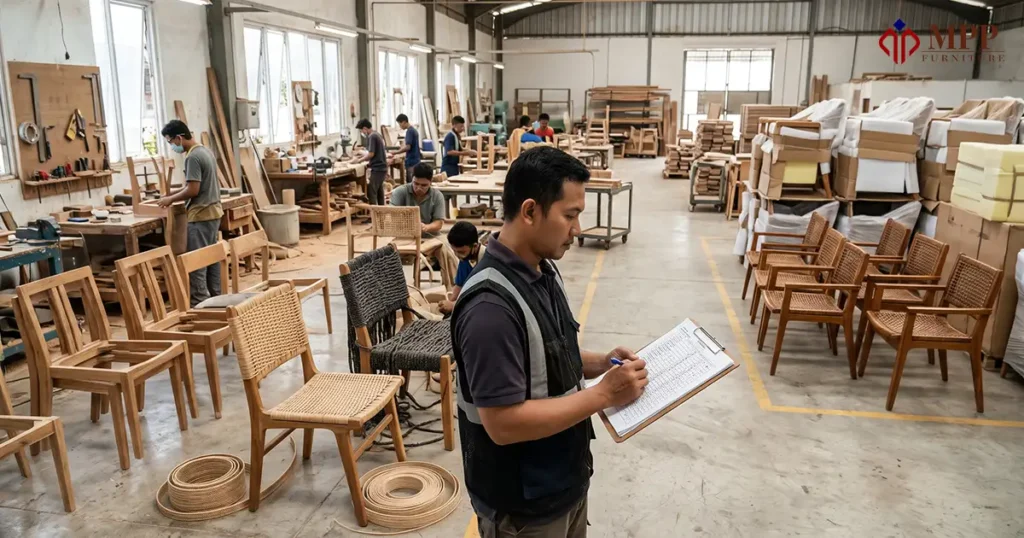
From our production reporting experience, checking each model separately gave a clearer view when materials or processes moved at different speeds. Our furniture production report template separates QC-passed, rework, and packed quantities instead of relying on one overall percentage.
Before deciding, ask for the delayed SKU, QC-passed quantity, rework, packed quantity, delay reason, and revised packing date.
Check How Much Ready CBM You Actually Have Without the Late SKU
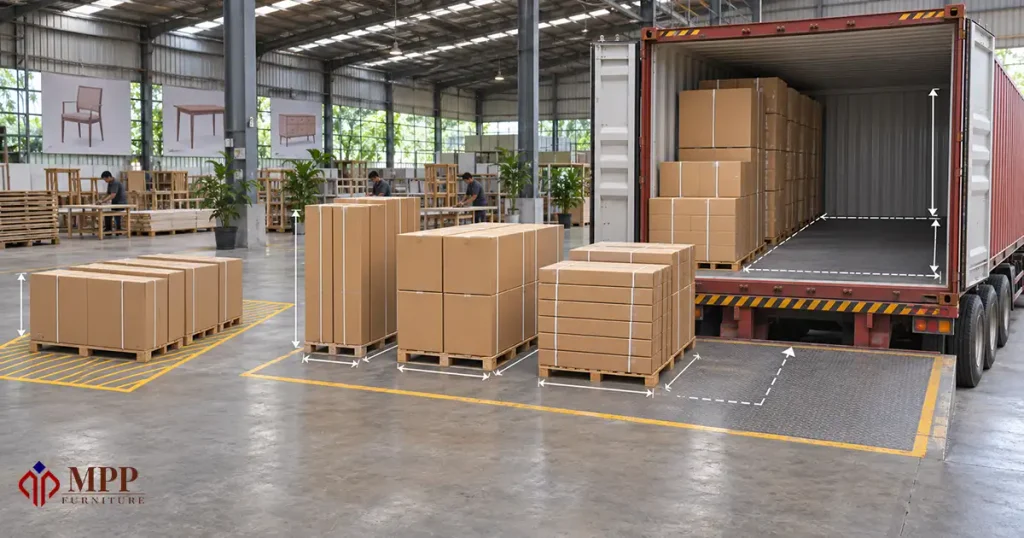
You need to know how much packed CBM remains available for the current shipment of furniture, not only how many pieces are missing.
Illustrative example: Assume three ready SKUs provide 44 CBM while one delayed sideboard represents another 10 CBM. These figures explain the decision process only and do not represent an actual MPP order.
The buyer can compare waiting for the extra 10 CBM, replacing part of the missing volume, or moving the sideboard later.
Check Whether Another Ready SKU Can Replace the Missing CBM
If another SKU is already packed, it may fill part of the missing space. Check its packed CBM, carton dimensions, inventory need, and effect on the next shipment.
Similar CBM does not always load the same way because carton dimensions, nesting, knock-down structure, and loading sequence can differ. Ask the manufacturer to run the container plan again.
Decide Whether the Late SKU Must Be in This Shipment
Retailers should look at the commercial role of the delayed item. A chair needed to complete a collection may deserve a different decision from an accent product with enough stock.
Check your showroom launch, stock level, next PO, and whether the SKU can move later. If holding the full container creates a bigger stock problem, moving one SKU later can make more sense.
Compare Waiting, Replacing, and Splitting Before Changing the Shipment Plan
Wait for the Delayed SKU
Wait when the revised delay is short, the SKU matters to the current assortment, and the extra time gives you better container use.
Replace the Late SKU With Another Ready SKU
Replace when another SKU has cleared QC and packing and moving it forward still fits your stock plan. Confirm the change through a revised loading simulation.
Split the Shipment
Move the delayed SKU to another PO or shipment when ready inventory is more urgent than shipment completeness.
| Situation | Wait | Replace | Split / Move Later |
| Delay is only a few days | Best fit | Consider | Usually unnecessary |
| Removing the SKU leaves major unused CBM | Best fit | Strong option | Consider |
| Another suitable SKU is packed | Consider | Best fit | Strong option |
| Ready products are needed for a showroom launch | Consider | Strong option | Best fit |
This table is guidance, not a fixed shipment rule. Use actual packed quantity, CBM, revised readiness, stock position, and the revised loading plan.
Compare Container Efficiency With the Cost of Waiting
A fuller furniture shipping container normally uses freight spending more efficiently, but waiting also has a commercial cost. Delayed ready stock can affect showroom timing, replenishment, or stock availability.
A short delay may justify waiting. A longer delay can make replacement or split furniture shipments more practical when ready products are more urgent.
Review Why the SKU Is Late Before Discussing Compensation
Not every delay has the same commercial responsibility. A QC correction, material issue, packaging problem, production bottleneck, or buyer-requested change should be reviewed differently.
MPP documented a bulk-production case where a buyer requested a finish change after the approved warm finish had already been applied and the products were waiting for packaging. The change required color removal and another finishing cycle, as explained in our article about changing a teak dining chair finish during production.
Discuss Commercial Compensation Based on the Agreement
Compensation can be discussed when relevant, but there is no universal discount per week or per PO. Refer to the agreement, the cause, and the actual effect on the buyer.
A discount, PO credit, cost sharing, or another agreed solution may be possible. Record the final arrangement in writing.
Ask the Manufacturer for a Revised Container Loading Simulation
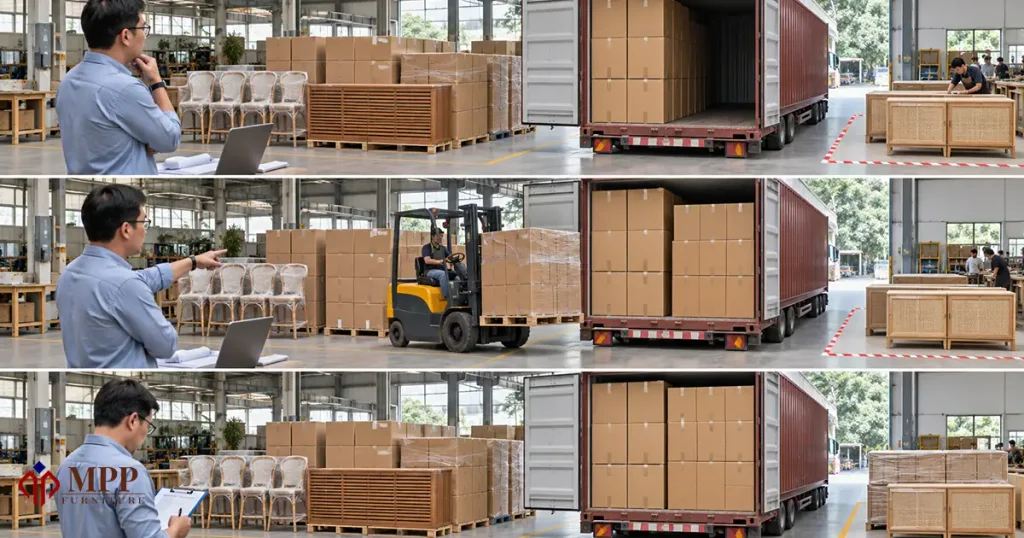
If the SKU mix changes, ask the manufacturer to recalculate the loading plan. The revision should show ship-now SKUs, packed quantities, packed CBM, replacement items, and products planned for later shipment.
At MPP, production status is followed through QC, rework, and packing rather than treating near-complete production as shipment-ready.
Confirm the Final Ship-Now and Ship-Later List Before Loading

Before loading, confirm the SKU, quantity, and packed CBM shipping now, plus what will move later. Add the delay reason, revised readiness date, replacement SKU if used, and revised loading date.
After the physical plan is agreed, shipping documents should match it. The Maersk shipping instruction guide covers cargo information, container details, VGM, and split or part-load instructions.
Final Decision: Wait When the Delay Is Small, Split When the Business Impact Is Bigger
Wait when the delay is short, and better container use justifies the later loading date. Replace or split when ready inventory is more urgent, and the late SKU can move without creating a bigger business problem.
Base the decision on shipment-ready quantity, packed CBM, revised readiness, inventory urgency, and the revised loading plan.
Need to Review a Delayed SKU Before Container Loading?
Share your SKU list, ordered quantity, packed quantity, packed CBM, delayed items, and target loading date with MPP Furniture. Our team can review the current production position and discuss whether waiting, replacing, or moving the delayed SKU gives you a more practical shipment plan. We offer free consultation for custom, OEM, private-label, and export furniture requirements, including production and shipment planning before container loading.
FAQ: Managing a Delayed Furniture SKU Before Shipment
1. Can one delayed furniture SKU hold the entire container?
Yes, if that SKU is required for the planned load and the buyer wants the complete assortment to ship together. The buyer can still compare ready CBM, replacement options, and the next available shipment before deciding to wait.
2. Should an importer wait for a delayed furniture SKU?
Wait when the revised delay is short, the SKU matters to the current assortment, and available stock can support the later arrival. Waiting can also make sense when it gives much better container utilization.
3. Can another furniture SKU replace the delayed SKU in the container?
Yes, when the replacement has cleared QC and packing. The manufacturer should calculate the loading plan again because similar CBM does not always create the same container arrangement.
4. What should buyers request before splitting a furniture shipment?
Ask for packed quantity, packed CBM, delayed quantity, delay reason, revised readiness date, replacement availability, and a revised loading simulation. Both sides should also confirm the final ship-now and ship-later list in writing.
5. Can buyers ask for compensation when a furniture shipment is delayed?
Yes, compensation can be discussed when relevant, but it depends on the cause of the delay, the commercial agreement, and its actual business effect. Any discount, credit, cost sharing, or other solution should be agreed by both sides in writing.

A versatile content creator with a strong foundation in product photography and videography, and a comprehensive brand strategy. Capable of creating engaging content to connect consumers and producers, web analytics, and engaging visual content to drive interest and growth for a product or brand.


0 Comments