As a retailer, you are absolutely right to question why the mahogany outdoor furniture price can swing so wildly from one supplier to the next. On a screen, two chairs might look like identical twins. But behind the scenes, their wood selection, joinery, finishing, and quality checks could be worlds apart.
This guide will help you understand exactly what you are paying for and whether a quotation offers genuine business value. We will break down the hidden risks, vital quotation details, and production standards that ultimately dictate your long-term retail margins.
Why Mahogany Outdoor Furniture Prices Can Vary
At its core, mahogany outdoor furniture prices vary because every factory operates with a different blueprint. A quotation is a reflection of material grades, component thicknesses, joint complexity, coating layers, and inspection rigors.
Product photos rarely capture these crucial nuances. A chair with a suspiciously low price tag might rely on thinner components, simpler joints, or cheaper hardware. On the other hand, a higher-priced version is often meticulously engineered for heavy daily wear.
If you want to discover exactly how durable mahogany furniture from Indonesia is for commercial use, the answer almost always lies in these hidden manufacturing choices.
The supplier’s service scope also moves the needle. Custom finishes, packaging development, rapid prototyping, and export documentation might be fully covered by one manufacturer, yet billed as hidden extras by another. A low number on an invoice is never a true saving if the product specification is incomplete.
What Influences the Price of Mahogany Outdoor Furniture?
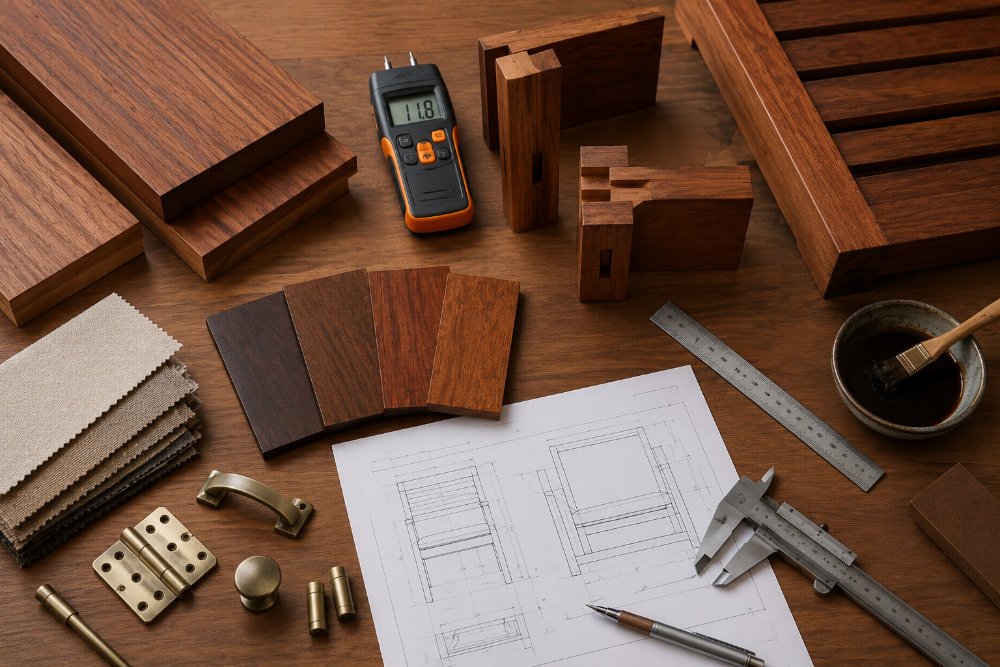
Wood quality and grading
Stricter wood selection naturally produces more waste, which influences the final mahogany outdoor furniture cost. Crafting large components with an even grain, matching color, and zero defects requires significantly more raw timber than piecing together smaller, cheaper boards.
Furthermore, raw mahogany has a known vulnerability: in its untreated state, it is highly attractive to termites and wood-boring insects. Because of this, applying a rigorous anti-insect treatment before the timber even enters the kiln drying process is an absolute must to protect the long-term integrity of the wood.
Buyers must also verify if the product uses solid plantation-grown mahogany throughout or if it cuts costs by hiding plywood or veneers in less visible areas. Dive deeper into how grading impacts your furniture in this expert insight into Indonesian mahogany.
Manufacturing craftsmanship
Strong construction is an art backed by precision. It requires accurate machining, stable load-bearing joints (like mortise-and-tenon), skilled assembly, and premium water-resistant adhesives. Additionally, proper kiln drying adds time and energy to the factory's process, but it is non-negotiable. In fact, our buyer guidance strongly recommends hitting a precise moisture target of 10 to 12 percent to prevent your beautiful furniture from cracking or warping once it reaches a different climate.
Finishing system
The right finishing system acts as a protective armor, directly impacting the outdoor mahogany furniture price. Furniture meant for a covered patio requires intensive surface preparation, carefully sealed end grains, and specialized UV-resistant coatings applied to both visible and hidden surfaces.
Product design and complexity
Custom curves, intricate carvings, mixed materials, and special dimensions demand significantly more production time. While mahogany’s excellent machinability makes it highly suitable for detailed forms, bringing a demanding design to life still requires careful programming, extensive hand-sanding, and rigorous inspection.
Customization requirements
Creating something unique for your brand takes resources. Developing custom samples, adjusting templates, sourcing special hardware, and refining custom colors will add to the initial cost. However, repeat orders usually help spread these initial development costs across a larger volume.
How Manufacturing Standards Affect Long-Term Value
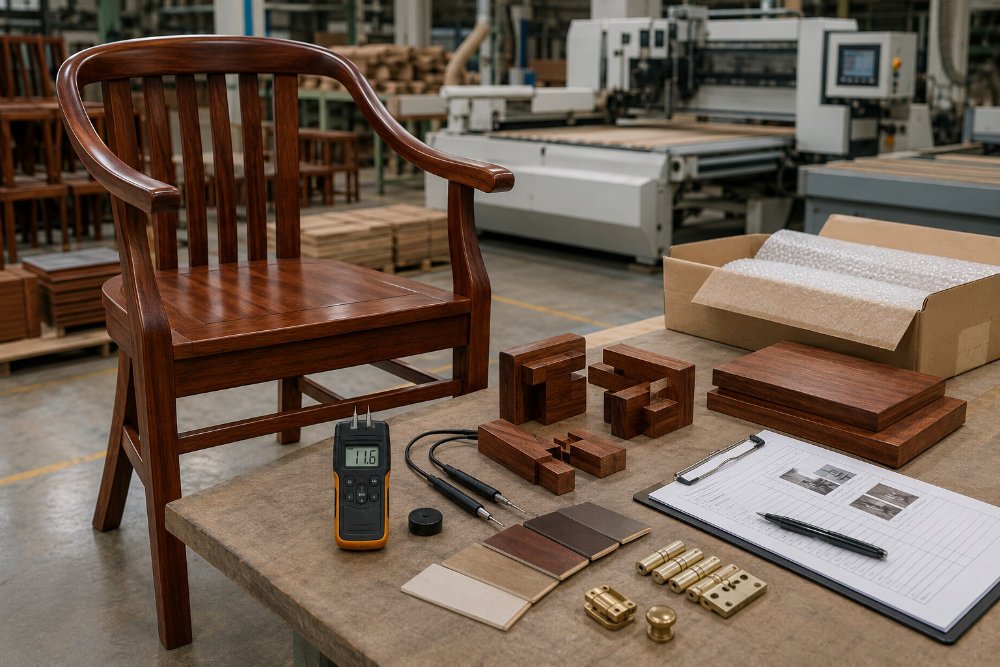
Better construction reduces product failures
Quality joinery drastically reduces the risk of wobbly frames, loose joints, and early product failure. This is absolutely critical for retailers serving hotels, restaurants, or premium residential clients who expect their furniture to withstand heavy, daily use.
Premium finishing extends outdoor durability
A carefully formulated coating system shields the wood against moisture, scratches, and daily wear. While mahogany is incredibly durable, it should still be curated for protected outdoor spaces to minimize the risk of fading and swelling from constant rain and direct sunlight.
Quality control minimizes costly returns
A reliable quality control process from the initial lumber inspection to the final packaging review ensures that every single unit arrives ready to sell. Catching a mismatched finish or a weak joint on the factory floor prevents a logistical nightmare for you down the line.
Consistent production protects your brand reputation
Brand trust is built on predictability. Retailers can confidently photograph, display, and restock a collection knowing that the dimensions, colors, and structural integrity will remain perfectly consistent from one batch to the next.
Why the Lowest Price Isn’t Always the Best Deal
Hidden costs of poor-quality furniture
A dirt-cheap quotation often hides a very expensive reality that only reveals itself after delivery. These hidden costs include repair labor, replacement parts, heavily discounted floor models, and dead stock that simply cannot be sold at full retail price.
Customer complaints and warranty claims
Dealing with defective products drains your team's energy and time. Your staff is left answering angry complaints, inspecting broken items, arranging reverse logistics, and trying to appease frustrated customers instead of focusing on new sales.
Replacement and logistics expenses
High freight costs and processing delays in international replacements can easily wipe out your initial savings. Trying to cover these losses by charging return fees? You risk completely losing 57% of your shoppers. For bulky items like mahogany furniture, reverse logistics will crush your profit margins in no time.
Impact on retailer reputation
Selling poor-quality furniture is a massive long-term risk. The 2025 Retail Returns Landscape report reveals that 71% of shoppers will abandon a retailer after a bad returns experience, and 80% will actively tell their family and friends about it. Losing loyal customers to bad word-of-mouth costs far more than a few dollars saved on a cheap factory quotation.
How to Evaluate Whether a Supplier’s Pricing Is Fair
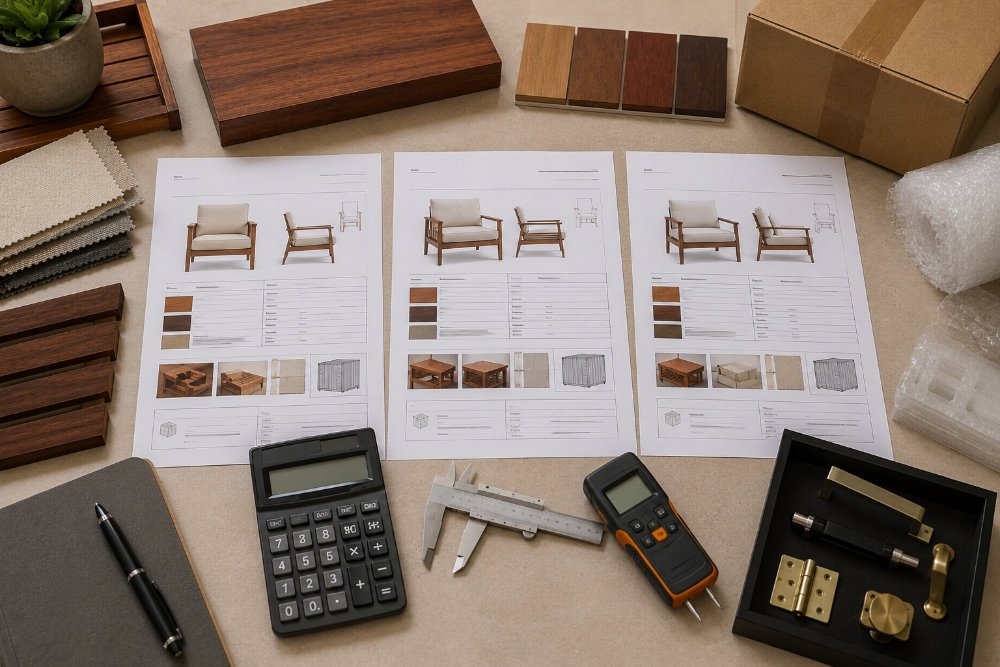
Compare specifications not just quotations
Level the playing field by giving every supplier the exact same written specification. Detail the wood species, dimensions, moisture target, joinery style, hardware, packaging, and trade terms so you are comparing apples to apples.
Ask about wood sourcing and drying processes
Dig into the supplier's foundation. Request clear details about their moisture testing protocols, legal wood documentation (SVLK), defect limits, and how they adjust drying times for your specific destination climate.
Review finishing and quality control standards
Never assume a finish is outdoor-ready. Ask explicitly if hidden surfaces and end grains are coated, how custom colors are signed off, and whether you will receive a comprehensive inspection report before the container is sealed.
Understand MOQ, lead times, and customization options
Look beyond the unit price. Sample charges, drawing revisions, tooling fees, and the pricing structure for repeat orders can significantly alter your true wholesale mahogany furniture cost.
When Is a Higher Mahogany Furniture Price Justified?
A premium price tag is completely justified when it directly translates to stricter material grading, controlled kiln drying, robust joinery, premium hardware, and export-grade packaging.
This extra investment also secures your commercial edge. An exclusive design, a custom finish, or a private-label collection empowers retailers to step outside of direct, race-to-the-bottom price competition. However, a reliable supplier should always be able to explain the "why" behind the price. If they can't clearly articulate how their manufacturing process reduces your risk, keep looking.
How a Reliable Manufacturer Supports Better Retail Margins
Partnering with a direct Indonesian furniture manufacturer rather than a trading company gives retailers total control over product quality. MPP Furniture, for example, operates a 100% in-house, 16,000 m² facility in Cirebon, Indonesia, ensuring batch-to-batch consistency from raw timber to final packaging.
With over 20 years of experience, MPP effortlessly supports scalable OEM and private-label programs, backed by a production capacity of up to 30 containers (40 ft. HQ) per month.
Ultimately, strict internal standards directly protect your bottom line. Thanks to this absolute oversight, MPP recorded a remarkably low defect rate of just 0.54% in 2024. For retailers, this translates to fewer customer complaints, predictable lead times, and a highly profitable mahogany furniture program.
Key Takeaways for Evaluating Mahogany Outdoor Furniture Prices
- It’s more than just wood: Mahogany outdoor furniture prices reflect the entirety of the process. Drying, construction, custom work, inspection, and packaging all shape the final quotation.
- Match the material to the space: Mahogany shines best in covered outdoor and semi-outdoor spaces. Always align the product specification with the planned placement.
- Compare specs, not just numbers: Calculate the true cost per saleable unit. A slightly higher factory price yields better margins when it eliminates costly repairs and warranty claims.
- Build a true partnership: For a custom program, share your vision, order volume, and target market with MPP Furniture. We can help engineer a specification that perfectly balances quality and business profitability.
FAQs About Mahogany Outdoor Furniture Prices
1. Why does mahogany outdoor furniture price vary so much?
The price fluctuates because suppliers utilize different material grades, component thicknesses, joinery methods, coating layers, hardware, and quality control procedures.
2. Is mahogany suitable for outdoor furniture?
Yes, mahogany is highly suitable for covered and semi-outdoor spaces, provided it is properly kiln-dried, sealed, and protected from constant rain and direct sunlight.
3. Is custom mahogany furniture more expensive?
Initially, yes. Customizing furniture requires development time, drawings, prototyping, and finish adjustments. However, these costs are easily absorbed as you scale into repeat orders.
4. How should retailers compare wholesale mahogany furniture prices?
Retailers must compare identical specifications—including wood grade, moisture targets, joinery, finishing systems, packaging, and inspection scopes—rather than just the bottom-line unit price.
5. Is the lowest mahogany furniture quotation the best choice?
Rarely. A rock-bottom quotation often excludes strong construction, proper sealing, and rigorous inspection, leading to massive repair and replacement costs that destroy your retail margin.
Ready to Build Your Custom Mahogany Collection?
To start planning your next mahogany outdoor furniture line, explore MPP's collections or contact us directly to discuss custom, private-label, or OEM development tailored to your target market.

I am a Web Designer, Technical SEO Specialist, and writer with 6+ years of experience in website optimization and search visibility. For more than a year, I have supported MPP Furniture’s growth, and I am currently expanding my role as an author to help B2B furniture buyers make more informed business decisions through informative, practical, and impactful articles.

0 Comments