A lower chair quote can look like the obvious win. But if the material limits your retail position, looks too generic, or the bulk order fails to match the sample, those savings can disappear fast.
For retailers, better value means matching price, expected use, appearance, and production quality. Rubberwood can suit price-led collections, while Indonesian mindi furniture becomes more interesting when you want stronger visual character and more room for custom finishing.
Why Retailers Weigh Mindi Against Rubberwood for Dining Chairs
Both woods can fit accessible solid-wood furniture programs, so buyers often start with unit cost. Rubberwood is familiar in budget production, while Mindi is often considered when a collection needs a more design-led mid-tier position.
The risk is choosing by habit. When sourcing from Indonesian furniture manufacturers, compare not only the material quote but also how the wood is treated before processing, construction, finish, repeatability, and how the chair will be marketed. Improper wood preparation will inevitably compromise the quality and stability of every manufacturing step that follows.
Rubberwood for Dining Chairs: Strengths and Limitations
Why Rubberwood Became a Popular Budget Hardwood Choice
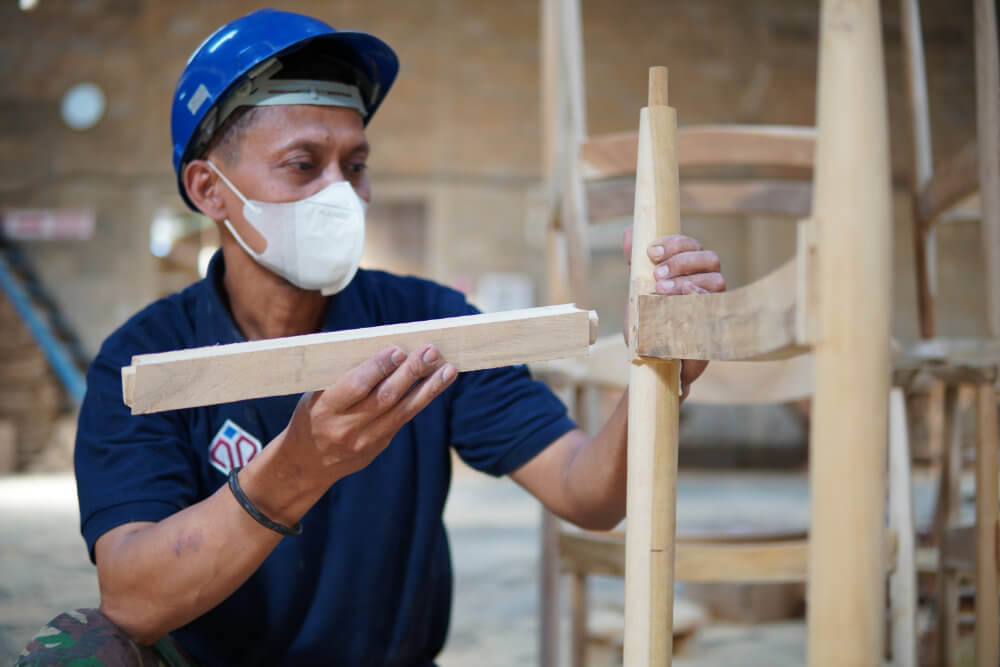
Rubberwood became popular because it gives manufacturers a workable hardwood at an accessible price and has an unlimited supply because it grows fast. For retailers building entry-level ranges, that lower starting cost can leave more room for upholstery, packaging, or a wider SKU mix.
However, Mindi is naturally pliable and prone to movement. It requires a specialized vacuum treatment to fully stabilize the timber. Skipping this critical step will inevitably compromise the chair's joints.
Durability and Structural Limitations Retailers Should Know
Rubberwood can perform well in a dining chair, but wood species alone does not determine frame life. Moisture level, leg and rail dimensions, joint design, adhesive, and assembly accuracy all affect the result.
Its natural resistance to moisture, insects, and fungi is limited, so proper drying and treatment matter. A cheap quote becomes less attractive when those controls are reduced.
In terms of natural durability, Mindi is generally considered moderately durable, supported by a solid Janka hardness rating of 990 lbf, and offers some natural resistance to insect attacks.
However, just like Rubberwood, a cheap quote becomes less attractive if proper drying (kiln dry) and chemical treatments are skipped. Proper preparation is non-negotiable for export-quality dining chairs.
How Rubberwood Typically Performs After Repeated Daily Use
Repeated sitting tests joints, not brochures. With proper drying and sound joinery, Rubberwood can handle normal indoor use, but weak connections may loosen over time.
Retailers should ask how the factory checks frame movement and joint stability. That tells you more than a simple claim that the wood is “strong.”
Mindi Wood for Dining Chairs: Strengths and Limitations
Structural Strength Compared to Rubberwood
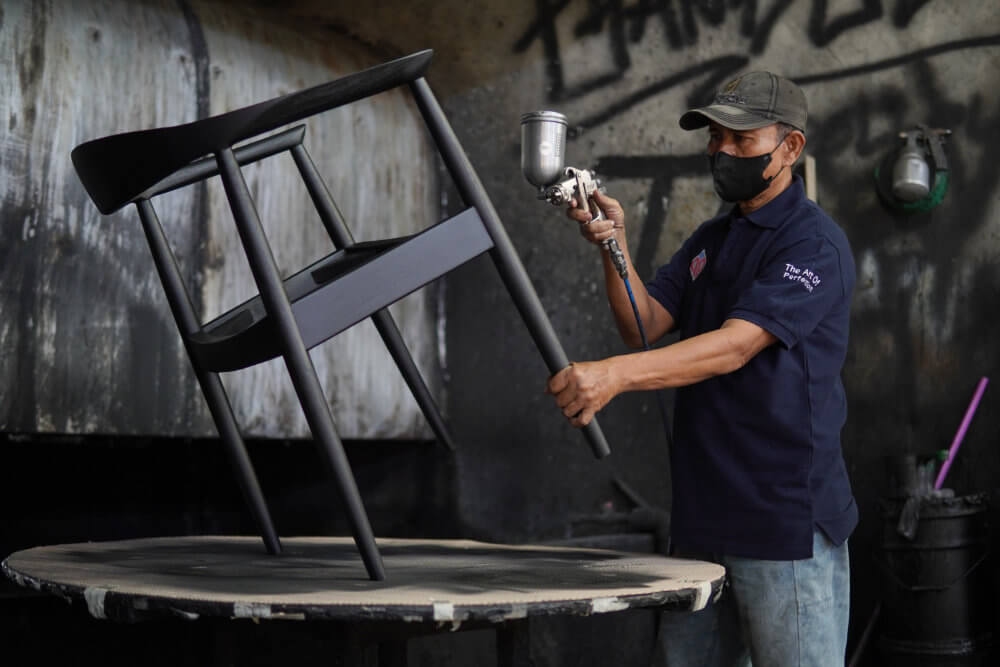
Mindi should not be treated as automatically stronger than Rubberwood in every chair. Structural performance depends on moisture control, component size, joint geometry, adhesive application, and assembly accuracy.
MPP's guide to technical factors when sourcing Mindi furniture explains why controlled moisture and proper structural joinery matter. For buyers, the better comparison is two chairs built to the same specification.
Grain and Finish Consistency Across Production Batches
Mindi has more visible grain character than the plain, uniform look commonly associated with Rubberwood. It also accepts stains well, giving buyers more freedom with natural, warm, dark, or custom finishes.
That is one reason Mindi wood can work well for furniture aimed at design-conscious markets. Bulk orders still need controlled sanding, stain formulas, and color matching so later batches stay close to the approved sample.
Where Mindi Sits on the Cost Spectrum Relative to Rubberwood
Mindi generally sits above Rubberwood in material and market position, but the gap changes with design, finish, upholstery, quantity, and construction. A curved frame with a hand-applied finish will price differently from a simple straight-frame chair.
For a closer look at Mindi wood furniture cost, buyers should look beyond the timber price. Machining, finishing, QC, packaging, and order scale also shape the FOB quote.
Learn more: Understanding raw material traits is only the first step. For a broader look at how this hardwood behaves across both seating categories during bulk production, read our retail guide on Mindi wood for dining and occasional chairs.
Mindi vs Rubberwood: Comparing Value for Retailers
| Buying Factor | Rubberwood | Mindi Wood |
| Price position | Usually lower | Usually higher |
| Visual character | More uniform | More pronounced grain |
| Finish direction | Practical | Broad stain flexibility |
| Structural performance | Specification-dependent | Specification-dependent |
| Retail position | Budget to entry | Budget to mid-tier |
| Batch consistency | Process-dependent | Process-dependent |
Cost per Unit Versus Expected Product Lifespan
A lower unit cost does not automatically mean better value. Buyers also need to consider expected service life, replacement risk, and whether the construction supports the price promised to customers.
There is no sound rule that a Mindi chair will always outlast a Rubberwood chair. Compare lifespan only when dimensions, joinery, finish, and intended use are similar.
Customer Perception and How Each Material Is Typically Marketed
Rubberwood is often sold as an affordable solid-wood option. Mindi gives retailers more room to sell visible grain, custom finishes, and a step-up visual feel.
A custom dining chair manufacturer can help match proportions, finish, upholstery, and construction details to the intended retail position. This is where material choice starts affecting merchandising, not just factory cost.
Supply Consistency and Production Lead Time
Supply consistency means more than timber availability. Buyers need repeatable color, moisture, dimensions, machining, and finish across production runs.
Lead time should be confirmed by specification, not assumed from the species. Order volume, finish complexity, upholstery, sampling changes, and factory schedule can affect timing more than the wood name.
Which Material Fits Your Dining Chair Strategy
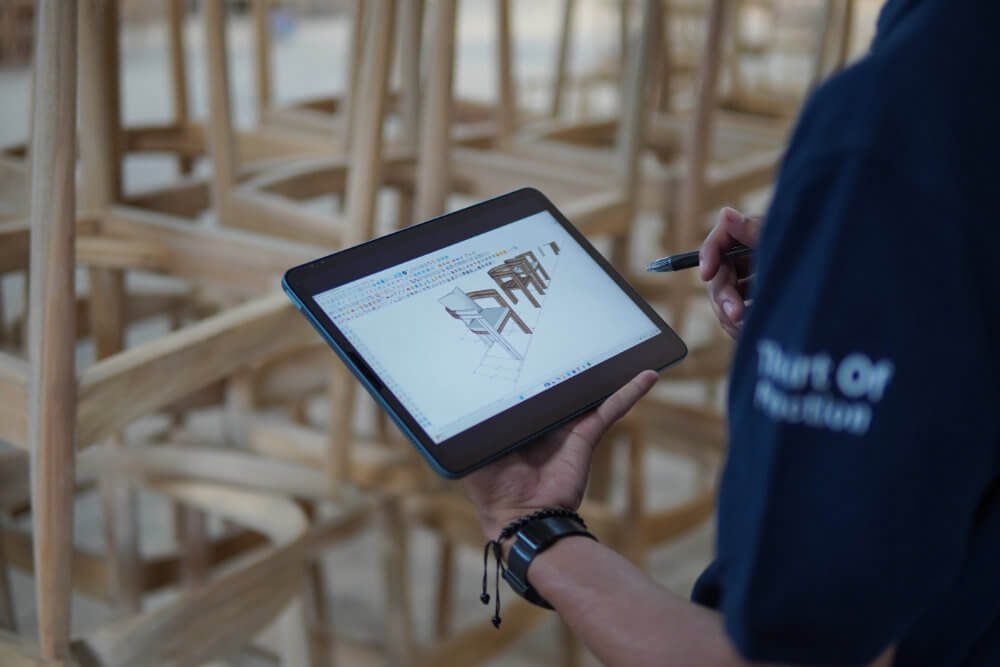
Choose Rubberwood when entry price is the main concern and the collection does not depend heavily on visible grain or a higher material story. Proper drying, joinery, treatment, and QC still matter.
Consider Mindi when the collection needs more grain character, finish flexibility, and a mid-tier position without moving into premium hardwood pricing. MPP's custom furniture manufacturing services can support product development, finish discussion, and custom design before production.
Before a full order, compare samples using the same design, dimensions, joinery, finish, upholstery, and test requirements. That makes it easier to separate a true material difference from a construction difference.
Final Thoughts: Main Takeaways
Rubberwood and mindi are not interchangeable, even if they appear at similar price points. Rubberwood fits price-led collections, while mindi delivers stronger structural performance and premium finishing for mid-tier positioning. Ultimately, a lower unit cost only brings true value if the chair's lifespan supports the price promised to your market.
To make the best decision, test both materials side by side before committing to a bulk order. This hands-on approach helps you separate genuine material qualities from simple factory construction differences. If your retail strategy points toward mindi, reach out to MPP Furniture to start developing your custom, production-ready sample.
FAQs About Mindi Wood vs Rubberwood Dining Chairs
1. Is Mindi wood better than Rubberwood for dining chairs?
Mindi is often the better fit when retailers want visible grain, flexible finishing, and mid-tier positioning. Rubberwood can still make more sense when entry price leads the decision.
2. Is Rubberwood strong enough for dining chairs?
Yes, when it is properly dried and paired with suitable dimensions, joints, adhesive, and assembly standards. Poor construction can make any wood perform badly.
3. Is Mindi wood more expensive than Rubberwood?
Mindi generally sits above Rubberwood in price position. The final gap depends on design, finish, upholstery, volume, and production specification.
4. What should retailers compare before choosing Mindi or Rubberwood?
Compare the same chair design, dimensions, joinery, finish, upholstery, and testing requirements. This keeps the comparison fair and useful.
Ready to Develop Your Dining Chair Collection?
If your retail strategy points toward mindi, test both materials side by side to separate genuine material qualities from simple factory construction differences. Reach out to MPP Furniture to start developing your custom, production-ready sample.

I am a Web Designer, Technical SEO Specialist, and writer with 6+ years of experience in website optimization and search visibility. For more than a year, I have supported MPP Furniture’s growth, and I am currently expanding my role as an author to help B2B furniture buyers make more informed business decisions through informative, practical, and impactful articles.
0 Comments