A dining chair can look great in a sample room and still become a retailer’s headache once bulk production starts. Loose joints, uneven stain, or the wrong price position can turn a promising design into hard-to-move stock.
That is why Mindi deserves a closer look for indoor dining and occasional chairs. The real question is where it performs well and what your supplier must control before you commit.
Why Mindi Wood Is Back on Retailers’ Radar
Mindi wood is regaining well-deserved attention as manufacturers secure more consistent raw material access after a period of limited supply. For retailers who previously dropped Mindi from consideration during those tighter periods, this newfound stability is prompting a serious reassessment for their mid-tier collections.
Understanding Mindi's precise fit for specific categories such as dining and occasional chairs is the critical first step before confidently reintroducing it to a lineup. Once on the factory floor, this material offers visible grain, solid-wood character, and exceptional workability without automatically pushing a SKU into the teak price tier.
Beyond the structural benefits, it gives product teams the creative runway to seamlessly develop natural, dark-stained, or upholstered collections. For a deeper dive, our guide to Mindi wood furniture explains its core qualities and ideal indoor applications.
What Is Mindi Wood and How Does It Compare to Other Hardwoods
Mindi’s Grain Pattern, Color Range, and Natural Characteristics
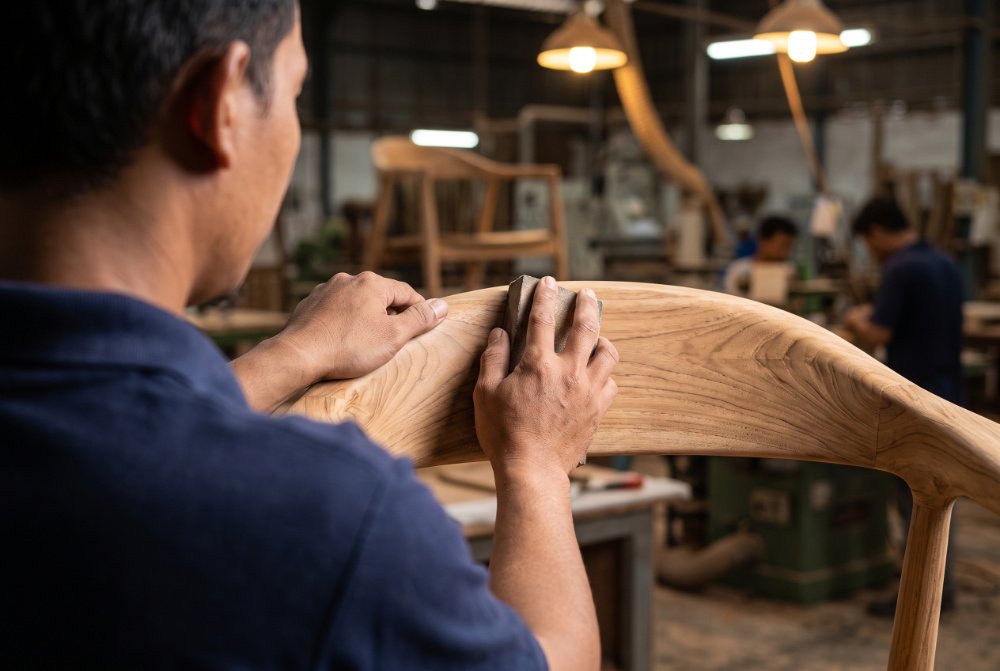
Mindi, or Melia azedarach, is a medium-density hardwood commonly sourced as mindi wood from an Indonesian furniture supplier for indoor collections. When evaluating mindi wood dining chair characteristics, buyers will notice it usually has a light to medium-brown tone with a visible, generally straight grain.
Its workable character suits shaped rails, curved backs, and detailed chair parts. Mindi is not an outdoor substitute for teak, but it can be a practical indoor seating material.
How Mindi’s Density and Workability Compare to Teak and Mahogany
With a Janka Hardness rating of 990 lbf, Mindi sits in an ideal middle ground for indoor manufacturing. Its moderate density and straight grain make it exceptionally easy to work, ensuring it cuts, planes, sands, and glues well during bulk production.
Compared with teak, Mindi is lighter and has less natural weather resistance, so each wood serves a different job. Our Mindi wood vs teak guide explains that choice in more detail.
Mahogany is generally denser and heavier, while Mindi can be easier to machine for shaped chair parts and may support a lower material-cost position. See our Mindi wood vs mahogany comparison for more context.
Where Mindi Sits in the Price-to-Quality Spectrum for Retailers
Mindi fits well when a retailer wants real hardwood character without the cost or outdoor performance of teak. The retail tier still depends on design, finish, joinery, and brand positioning.
Mindi should not be sold as “cheap teak.” Its stronger story is a mid-tier indoor hardwood with design freedom and an approachable cost base.
Why Mindi Wood Suits Dining Chair Production
Structural Strength Considerations for Dining Chair Frames
Dining chairs face repeated sitting, leaning, pulling, and sideways movement, so frame design matters as much as wood species. With Mindi, primary load-bearing joints should be built for repeated stress rather than simple alignment.
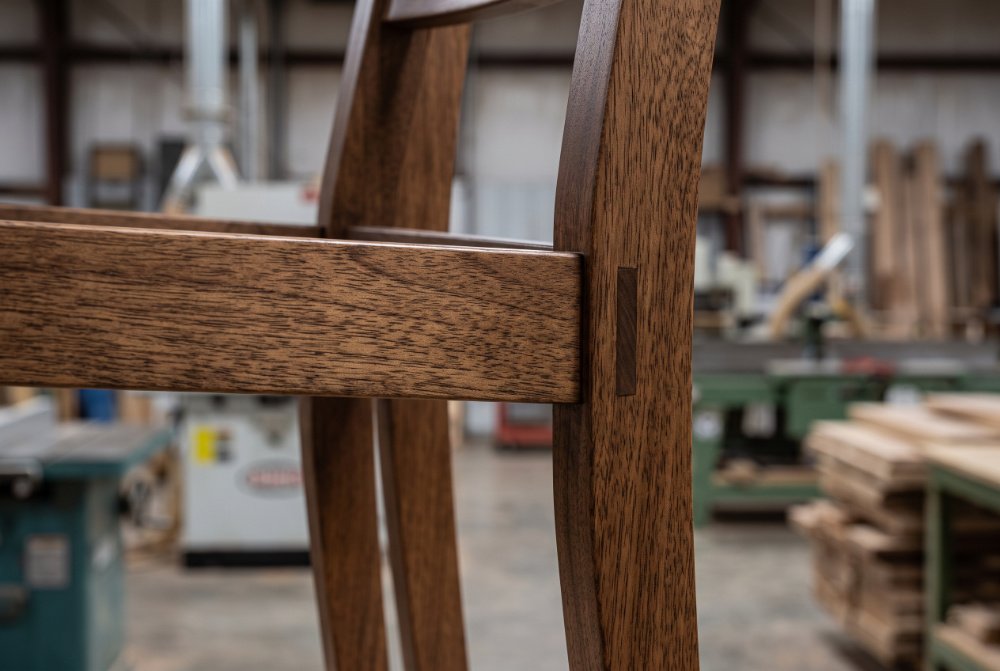
MPP’s technical reference favors mortise-and-tenon construction for main structural connections, with dowels used as secondary support.
How Mindi Takes Stain and Finish Consistently Across Chair Sets
Mindi accepts stains and finishes well, but retailers need more than one attractive sample. A four-, six-, or eight-chair set should look consistent, and later replenishment should stay close to the approved reference.
That depends on controlled sanding, sealer application, color formulas, and batch references. By managing surface preparation and finishing directly in our own facility, MPP Furniture eliminates guesswork. This factory-direct approach to Indonesian mindi furniture ensures the finish tones on your custom prototype translate accurately across the entire bulk production.
Cost Advantages for Retailers Building Mid-Tier Dining Collections
Mindi can reduce material cost compared with premium hardwood options while still giving customers solid-wood character. That leaves more room for upholstery, finishing, design details, or packaging.
The better question is not “How cheap can this chair be?” but “How much value can we build at the target retail price?”
Related article: When pricing out your next dining collection, material choice plays a major role in your final margins. Discover how to balance structural performance with unit costs in our comprehensive comparison on Mindi Wood vs Rubberwood for Dining Chairs.
Why Mindi Wood Suits Occasional Chair Production
Balancing Lightweight Construction With Everyday Durability
A well-built Mindi wood occasional chair is often moved between bedrooms, living rooms, boutiques, and hospitality spaces, so lower weight can be useful. Mindi is lighter than many denser hardwoods, but durability still depends on frame proportions, joinery, moisture control, and intended use.
A lighter chair is not automatically a weaker chair. Good construction keeps it easier to handle without sacrificing day-to-day performance.
Design Flexibility Across Accent and Occasional Chair Styles
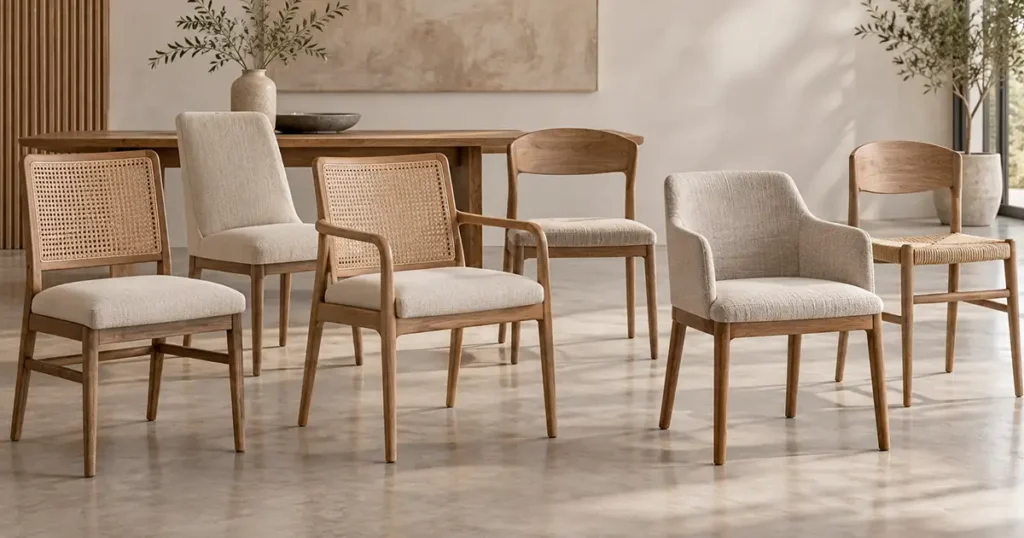
Mindi’s workability supports curved backs, shaped arms, upholstered seats, woven details, and rattan combinations. It can also move from pale natural finishes to deeper stains or painted looks.
For exclusive ranges, MPP’s custom furniture development services support OEM, private-label, and made-to-order concepts from development through production.
What Retailers Should Verify Before Adding Mindi Back to Their Lineup

First, check whether the Mindi is kiln-dried and processed consistently. MPP’s technical reference uses an 8 to 12% moisture-content target for indoor export furniture.
Next, verify the wood's origin and log size. MPP Furniture’s internal grading team notes that premium, structurally sound Mindi typically comes from Central Java. Additionally, selecting the correct log diameter minimizes excessive knots, protecting both the chair's clean aesthetics and structural integrity.
Once the raw material is verified, ask how the factory handles chair joinery, finishing standards, and sample-to-bulk control. Our technical checks for Mindi furniture cover the production points buyers should review before volume orders.
Legal sourcing should also be documented, especially for repeat programs. A dependable Mindi wood supplier in Indonesia should explain the material source and provide the supporting paperwork.
Finally, ask whether the current supply can support restocking at the approved quality level. When comparing Indonesian furniture manufacturers, ask about raw-material planning, production capacity, QC checkpoints, and variation control across repeat orders.
Final Thoughts: Key Takeaways Before Reconsidering Mindi Wood
Mindi makes sense when your dining or occasional chair lineup needs a mid-tier hardwood with visible grain, finishing flexibility, manageable weight, and room for custom development. It should be selected for what it does well, not because it is expected to behave exactly like teak or mahogany.
Before adding it back to your range, review drying, frame construction, finish control, legal sourcing, and restocking capacity. MPP combines skilled handcrafting, machinery, in-house quality checks, and custom design support. This manufacturing consistency is backed by a proven track record maintaining a 99% client satisfaction rate and a 0.56% complaint ratio across all shipments.
If Mindi fits your target position, test current availability, construction needs, and finish options before sampling.
FAQs About Mindi Wood Dining and Occasional Chairs
1. Is Mindi Wood Strong Enough for Dining Chairs?
Yes, Mindi can suit indoor dining chairs when the frame is properly engineered, kiln-dried, and joined for repeated load. Construction quality matters as much as the timber itself.
2. Is Mindi Wood Durable for Everyday Indoor Furniture?
Yes, Mindi wood durability suits many everyday indoor uses when moisture, joinery, and finishing are properly controlled. It is less suited to full outdoor exposure than teak.
3. Is Mindi Wood Better Than Teak for Dining Chairs?
Not in every situation. Mindi can be a better commercial fit for indoor, mid-tier collections, while teak is stronger when natural weather resistance matters more.
4. Does Mindi Wood Take Dark Stains Well?
Yes. Mindi takes dark stains well, but consistent sanding and controlled finishing formulas are needed when several chairs must match as one set.
5. What Should Retailers Check When Sourcing Mindi Chairs From Indonesia?
Check kiln drying, moisture control, structural joinery, finishing standards, legal sourcing records, sample-to-bulk consistency, and material availability for restocking. These checks reveal more about future performance than a polished sample alone.
Ready to Add Mindi Wood to Your Lineup?
To start planning your next dining or occasional chair line, explore MPP's furniture collections or contact us to discuss custom, private-label, or OEM development.

I am a Web Designer, Technical SEO Specialist, and writer with 6+ years of experience in website optimization and search visibility. For more than a year, I have supported MPP Furniture’s growth, and I am currently expanding my role as an author to help B2B furniture buyers make more informed business decisions through informative, practical, and impactful articles.
0 Comments