A retailer can spend more on a solid mahogany dining table and still end up with the wrong product for the customer. At the same time, a well-built mahogany veneer table can perform better than expected, yet lose buyer trust if the construction is explained poorly.
The real problem is not choosing between “real wood” and “cheap veneer.” It is deciding which construction gives you the right balance of selling price, stability, repair potential, and customer expectations.
For retailers building a new dining collection, that difference affects margins, positioning, complaints, and how easily the product can be sold on the showroom floor. So before you specify solid mahogany by default, it helps to look at what each construction actually does.
Why This Isn’t a Simple “Solid Is Always Better” Decision
Solid mahogany has a strong premium story because the material itself carries value, visual depth, and long-term repair potential. But that does not mean it is automatically the better construction for every retail program.
A properly made veneered panel can offer better dimensional stability than a poorly dried or badly engineered solid panel, especially across a wide dining tabletop. The result depends on the substrate, bonding, edge treatment, finish, and overall construction, not only on whether the surface is solid wood.
Price positioning also matters. A customer buying a premium dining table may value long ownership, refinishing potential, and the story of solid mahogany, while a mid-market customer may care more about appearance, price, and day-to-day stability.
This is why retailers should treat solid versus veneer as a product-fit decision. The right construction depends on who you are selling to and what that customer expects from the table.
How Solid Mahogany Construction Affects Price and Durability
Why Solid Panels Cost More in Material and Processing
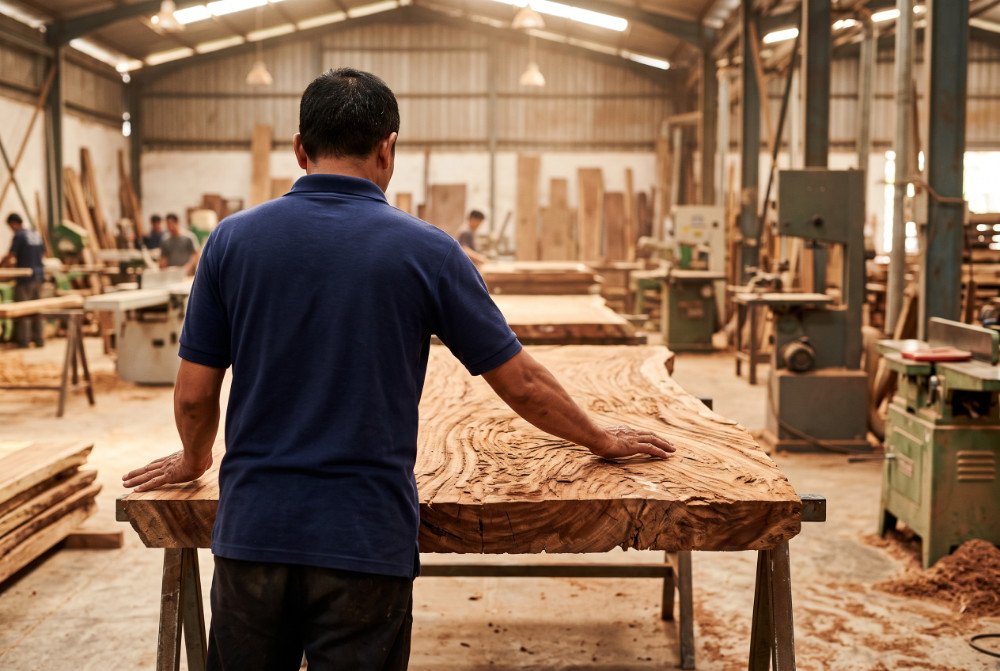
Solid mahogany uses more hardwood per table, so material cost is naturally higher. Wide panels also require careful timber selection, drying, cutting, matching, machining, sanding, and joinery before finishing.
Waste can also be higher because manufacturers need to work around defects, grain variation, and usable board dimensions. For retailers, this means the solid mahogany table price reflects more than the amount of wood alone.
Finding wide, flawless mahogany boards for a large tabletop is both difficult and expensive. Thick solid timber requires longer kiln-drying to relieve internal stresses, and creating a perfect panel often means discarding raw lumber with natural defects, significantly driving up the final unit cost.
Mahogany itself is already positioned as a premium furniture material because of its color, density, finishing response, and long service potential. For more background on those characteristics, read is mahogany wood good quality.
How Solid Wood Handles Humidity and Temperature Changes Over Time
Solid wood constantly seeks equilibrium with its environment, fluctuating with seasonal humidity. While the ideal moisture content (MC) for indoor furniture is 6-8%, large solid panels can still move significantly, making proper drying and joinery critical. High-quality veneer over a stable substrate often outperforms solid wood here, as engineered cores are far less reactive to these shifts.
This does not make solid mahogany unstable by default. It means the construction must allow the material to behave like wood instead of forcing it to remain completely static.
Many assume using solid mahogany is enough to guarantee durability, but at MPP Furniture, we see material selection as just the first step. For wide surfaces like dining tabletops, solid wood naturally risks warping or expanding if not engineered correctly. That is why our production heavily focuses on strict Moisture Content (MC) control, machining accuracy, and proper panel construction to conquer the wood's natural characteristics.
If you are also considering how mahogany appearance changes after delivery, read how long mahogany wood takes to develop patina in furniture. Color maturity and structural movement are different issues, but both are affected by how the material is processed and used.
Repair and Refinishing Advantages Solid Wood Offers Over Decades of Use
Solid mahogany has one major long-term advantage: there is more wood available for repair. Scratches, dents, worn finish, and surface damage can often be sanded and refinished more deeply than on veneered surfaces.
That matters most in premium positioning, where customers may expect to keep a dining table for many years. A retailer selling long-hold furniture can use repairability as part of the value story rather than focusing only on the first purchase price.
This advantage becomes less important in shorter ownership cycles or more price-sensitive markets. In those segments, paying more for deep refinishing potential may not match what the end customer actually values.
How Veneer Construction Affects Price and Durability
Why Veneer Allows a Lower Price Point Without Losing the Mahogany Look
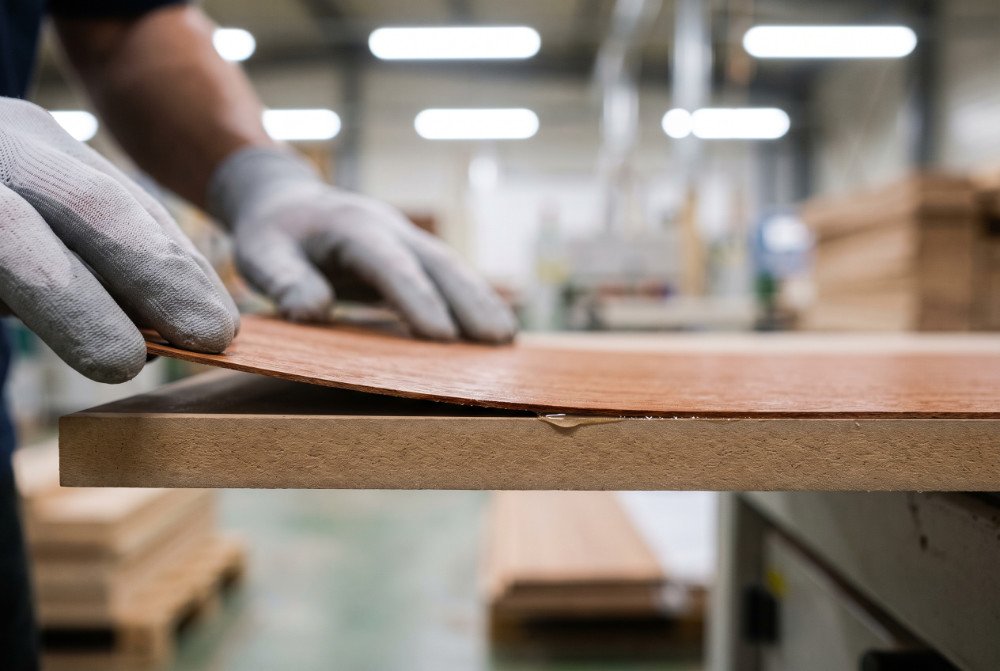
Mahogany veneer uses a thin layer of real mahogany over a supporting panel. This allows manufacturers to use the visual character of mahogany across a large surface while reducing the amount of solid hardwood required.
For retailers, that can open a lower price tier without moving away from the mahogany story. The grain, color direction, and finish can still support a premium-looking dining collection when the veneer is selected and applied well.
This can also help retailers build a broader assortment. For a deeper look at where dining tables sit inside a wider mahogany program, read 7 mahogany furniture pieces that retailers should import from Indonesia.
What Substrate Quality Means for Veneer’s Long-Term Durability
The word “veneer” does not tell you enough about quality. A mahogany veneer dining table can perform very differently depending on whether the substrate, adhesive, edge construction, and finish system are well specified.
A stable substrate can help a wide tabletop remain flatter across humidity changes. But poor bonding, weak edges, moisture entry, or low-grade core material can lead to swelling, separation, or visible damage.
Medium Density Fiberboard (MDF) and high-grade plywood are industry standards for reliable veneer. MDF is favored for premium tables because its perfectly flat surface resists warping. Conversely, using cheap particle board makes the table vulnerable to edge swelling and moisture penetration, leading to rapid deterioration.
Retailers should therefore ask for the full construction specification. If you are comparing suppliers, the better question is not “Do you use veneer?” But “What is under the veneer, how is it bonded, and how are the edges protected?”
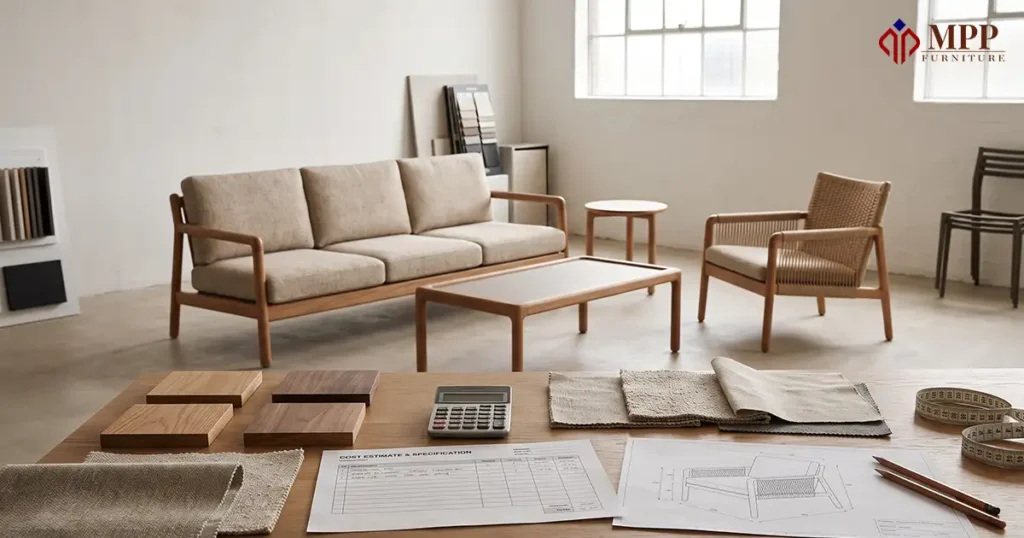
For buyers developing custom specifications with furniture manufacturers from Indonesia, this is where early product development becomes useful. Construction decisions, much like calculating the right dining table dimensions for your target market, can be aligned with target price, use conditions, and retail positioning before sampling begins.
Under MPP Furniture's production standards, veneer quality is never judged solely by its surface appearance. When manufacturing veneered tabletops, we meticulously engineer the core material quality, bonding strength, edge construction, and finishing precision as one cohesive unit. For buyers, this means two identical-looking mahogany veneer tables can have vastly different lifespans depending entirely on how the underlying panel is built.
Limitations on Refinishing and Repair Compared to Solid Wood
Veneer can be repaired, but the repair window is narrower because the decorative mahogany layer has limited thickness. Deep sanding can cut through the veneer and expose the substrate underneath.
This means retailers should be careful when presenting veneer as equivalent to solid mahogany in long-term restoration potential. The product may still be durable for normal use, but it does not offer the same freedom for repeated refinishing.
That difference matters most when your customer expects furniture to be restored after many years. In a mid-market program, however, the lower purchase price and good dimensional stability may be more commercially relevant.
Matching Construction Type to Your Price Tier and Customer
Building a new dining collection requires understanding the broader opportunity at stake. The global furniture market is projected to reach USD 729.61 billion in 2026, with the home furniture segment continuing to dominate the majority of that share. In a market this large, retailers must offer options—like solid mahogany for premium buyers and high-quality veneer for the mid-market—to capture demand across different income levels.
Solid mahogany fits premium positioning when customers expect material authenticity, repair potential, and long ownership. It also works well when the dining table itself is meant to be a statement piece rather than a price-led product.
Mahogany veneer fits mid-market positioning, where buyers still want the mahogany appearance but have stronger price limits. The construction can also be useful for wide surfaces where panel stability matters.
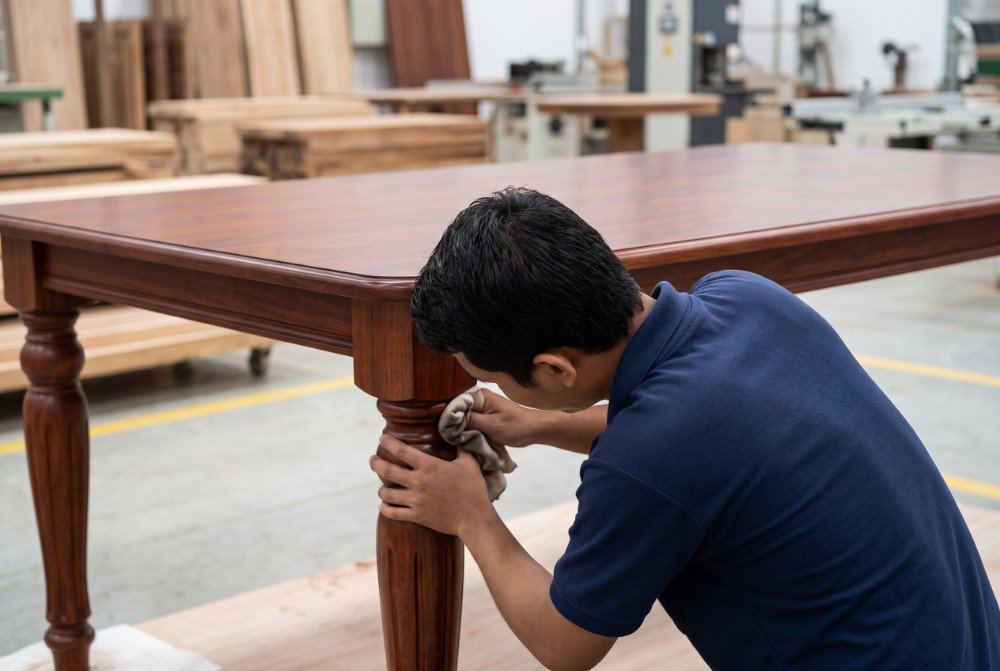
Retailers do not have to choose one construction for the whole collection. A mixed approach can use solid mahogany for legs, frames, aprons, or high-contact parts, while using veneered panels where cost control or dimensional stability makes more sense.
A practical mixed strategy uses solid mahogany for legs and structural aprons to provide durability where chairs frequently bump. Meanwhile, the expansive tabletop is crafted from premium veneer over an MDF core for a warp-resistant surface. This delivers the premium feel of real wood while maintaining strict cost control and dimensional stability.
This also gives retailers more freedom to build a price ladder. One collection can serve customers who want solid construction, while another can reach buyers who care more about appearance and budget.
The 'solid vs veneer' debate often oversimplifies the strategy of placing materials where they perform best. At MPP Furniture, we consult with buyers to identify where solid mahogany adds premium value and where veneer provides better stability and cost efficiency. Our in-house manufacturing capabilities give us the flexibility to precisely align construction methods with your price targets before bulk production begins.
Final Thoughts: Key Takeaways Before You Choose Construction Type
Solid mahogany versus veneer is not a simple quality contest. Solid wood gives you stronger repair potential and premium material value, while a well-made veneered construction can support better price control and stable wide panels.
For retailers, the better choice depends on price tier, customer expectations, intended use, and how the table is constructed from the inside out. Substrate quality matters for veneer, while drying, joinery, and panel engineering matter for solid mahogany.
A mixed-construction strategy can also make commercial sense because it lets you serve more than one customer segment without losing the mahogany identity. The goal is not to use the most expensive material everywhere; it is to use the right construction where it creates the most value.
Finding the right construction balance is easier when your factory understands your market positioning. At MPP Furniture, our 16,000 m² in-house facility in Indonesia allows us to control the entire process, from timber grading to precision machining for both solid and veneered panels. With a 2024 defect rate of just 0.54%, we ensure your mahogany dining collections are built consistently across every production batch.
Frequently Asked Questions: Solid vs Veneer Mahogany Tables
1. Which construction is better for environments with changing humidity?
High-quality veneer over an MDF substrate is generally better for fluctuating climates because it resists warping and expansion. Solid mahogany can still perform well, but it requires strict moisture control and proper kiln-drying to prevent the wood from shifting.
2. Does mahogany veneer last as long as solid wood?
With a strong core and well-bonded edges, a mahogany veneer table can offer excellent long-term durability for daily use. However, its lifespan for repeated restoration is shorter, as the thin wood layer cannot be sanded down deeply like solid mahogany.
3. Why is a solid mahogany tabletop significantly more expensive?
The high cost comes from the raw material value, the difficulty of finding wide, flawless boards, and the longer kiln-drying time required. Manufacturers also experience higher material waste when cutting around natural defects to yield a perfect solid panel.
4. Can a single dining collection use both solid and veneer constructions?
Absolutely. A mixed-construction approach—such as using solid mahogany for the legs and aprons alongside a veneered MDF tabletop—is highly recommended. This strategy delivers structural durability, dimensional stability, and excellent cost control without losing the premium look.
Ready to Build Your Mahogany Dining Collection?
To start planning your next dining line, explore MPP's mahogany furniture collections or contact MPP Furniture to discuss custom, private-label, or OEM development perfectly matched to your price tier.

I am a Web Designer, Technical SEO Specialist, and writer with 6+ years of experience in website optimization and search visibility. For more than a year, I have supported MPP Furniture’s growth, and I am currently expanding my role as an author to help B2B furniture buyers make more informed business decisions through informative, practical, and impactful articles.
0 Comments