A wood finish can look right on its own, and a rattan tone can look right on its own, but the actual chair can still feel wrong when both materials meet. The risk grows when that chair must also work beside a dining table, bench, cabinet, or related SKU.
For buyers, the problem is not simply choosing the wrong color. It is approving two materials separately without checking whether they still express the same collection direction once grain, weave, proportion, and full-scale application come into view.
If you are developing indoor dining chairs with an Indonesian furniture manufacturer, treat wood finish and rattan tone as one visual decision. The goal is to move from moodboard to an approved reference that both your team and the factory can use.
Start With the Visual Direction of the Dining Collection
Before comparing finish swatches, define what the collection should communicate. Natural, warm, contemporary, light Scandinavian, Japandi, or darker and more refined are useful directions because they give later material decisions the same visual reference.
You are not choosing a favorite color. You are deciding how the chair should relate to the table and supporting products.
For buyers still deciding which material pairing belongs in the range, start with our guide to wood and rattan dining chairs. It covers the broader material-selection decision before finish and tone approval.
The same collection-first logic appears in our guide on how to choose Sungkai wood and leather for custom dining chair collections.
Understand Why the Same Finish Name Can Look Different on Teak and Sungkai
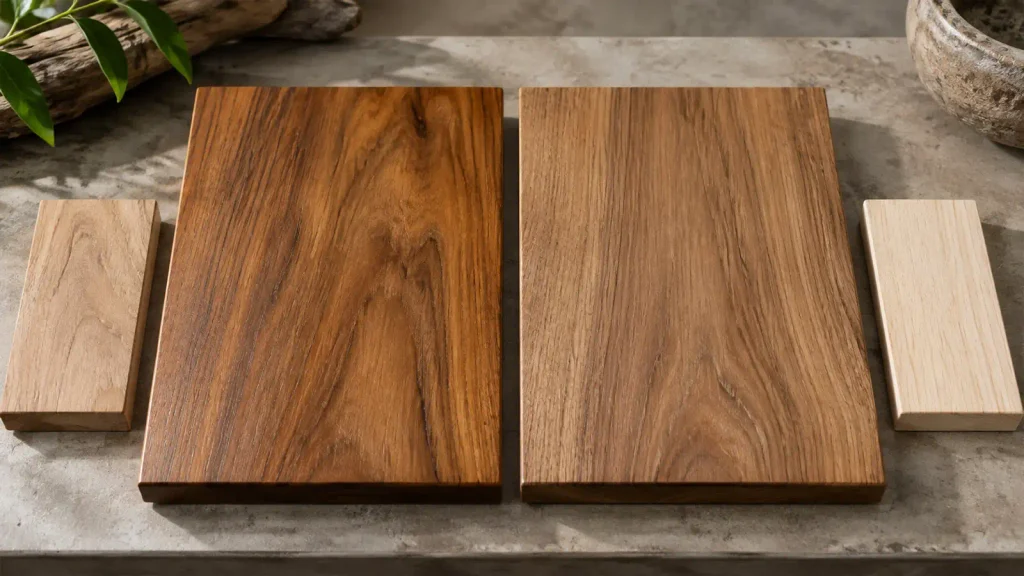
“Natural,” “walnut,” and “light brown” are useful finish labels, but they are not absolute colors. Teak and Sungkai have different base tones, grain character, and surface appearance, so the same finish direction can read differently once applied.
In our product development process, we do not treat a finish name as the final visual reference. We review the finish on the selected wood species because the wood underneath can shift warmth, grain visibility, and the overall impression.
Approval should be based on the actual finish applied to the chosen species, not only a reference image or finish name. A finish name gives direction; the physical finish sample gives both sides something specific to compare.
For the separate commercial question of species positioning, read whether a teak dining chair is worth the premium.
Decide Whether the Rattan Should Blend With or Contrast the Wood Frame
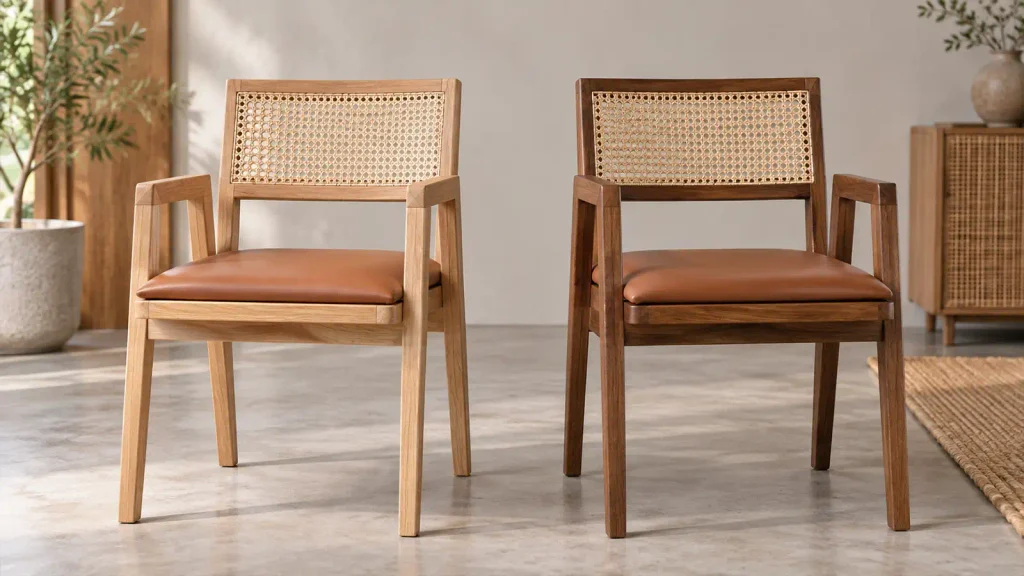
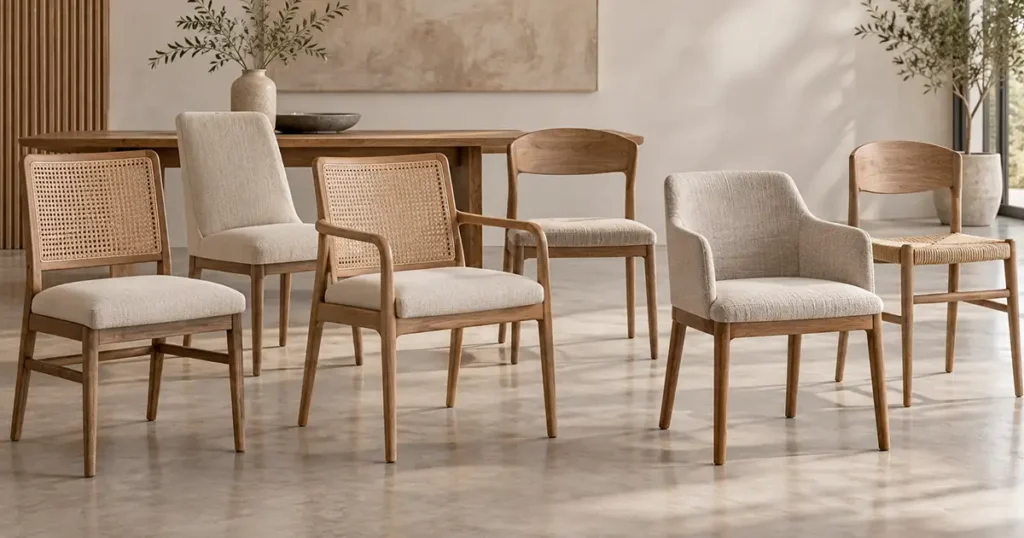
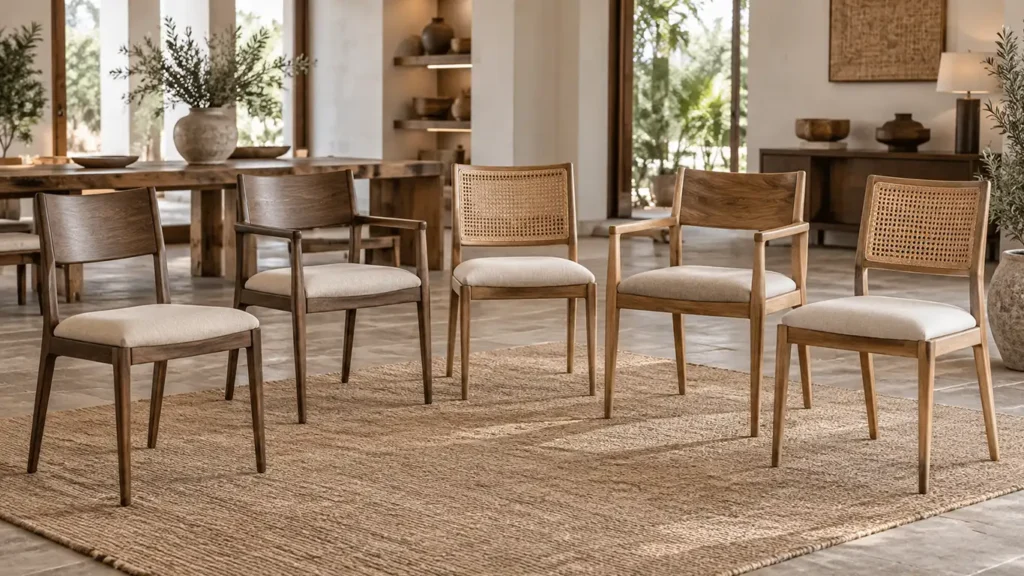
Once the wood finish direction is clear, decide what role the rattan should play. It can stay within a similar tonal family for a calmer relationship, or create deliberate contrast so the woven surface becomes a stronger part of the chair.
Light wood with light natural rattan can create a softer, more unified appearance. A warmer or darker finish with lighter rattan creates more separation and makes the mixed-material character easier to read.
Neither approach is automatically better. The contrast should follow the collection direction and feel deliberate.
For a broader styling principle, see Architectural Digest’s guide to mixing dining tables and chairs, which recommends using a shared visual element to connect different pieces.
Consider How the Rattan Pattern Changes Its Perceived Tone
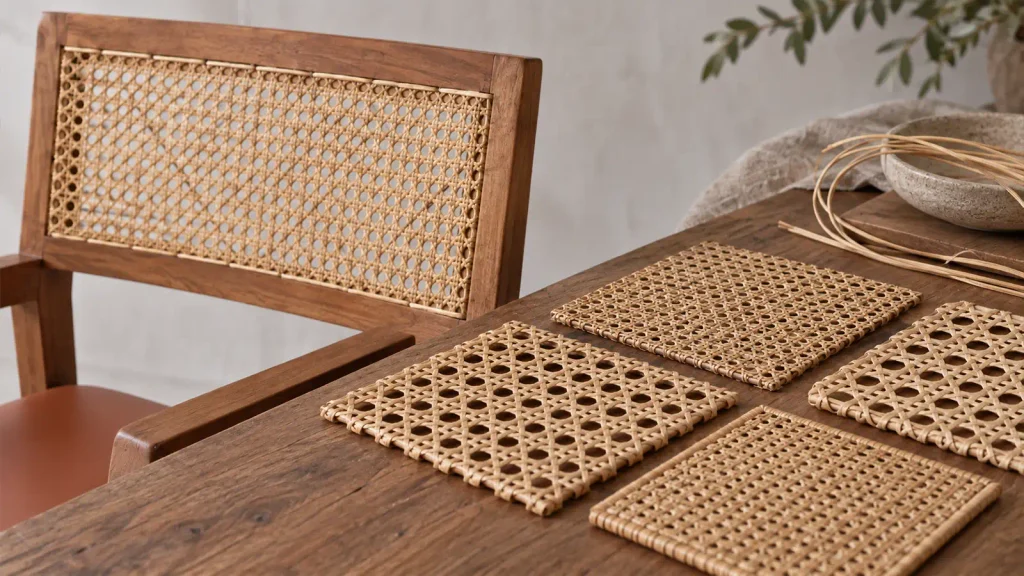
Rattan tone is not read from color alone. Weave density, spacing, pattern, strand width, open space, and the total woven area can make the same material appear lighter, denser, quieter, or more dominant.
A small rattan sample may look subtle in your hand but become much stronger across a full backrest. The effect can change again when the same material appears on both the seat and back.
Do not approve rattan color without considering the actual weave application. Review tone and pattern together before final approval.
Match the Dining Chair With the Table and Related SKUs
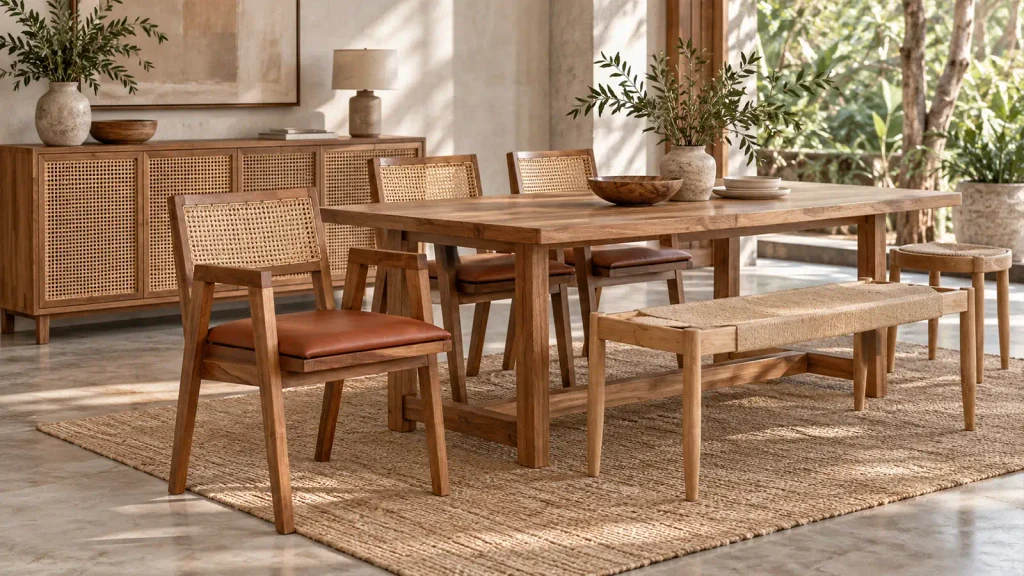
A dining chair can look balanced by itself and still feel disconnected once several units are placed around the table. Compare the chair finish, rattan accent, and visual weight against the table, bench, armchair, cabinet, or other supporting SKUs.
Cohesive does not mean identical. A table may use a slightly deeper wood tone while the chairs remain lighter, as long as both still belong to the same design language.
If these chairs are part of a wider range, read our guide to evaluating a dining room furniture manufacturer to check whether one supplier can maintain approved finish standards across chairs, tables, benches, and sideboards.
For a wider assortment, our Indonesian Indoor Furniture Manufacturer category shows related indoor pieces within one collection direction.
Approve the Wood Finish and Rattan as One Combination
Separate swatches can be misleading. In one MPP product development, the wood finish and woven color both looked suitable when reviewed separately, but once combined on the actual chair, the wood appeared warmer than expected beside the woven material.
We adjusted the finish reference before approving the sample. That experience is one reason we review wood and rattan as one visual combination instead of treating two approved swatches as the final decision.
Review the Materials Side by Side
Place the actual wood finish beside the intended rattan tone and weave reference under the same lighting. Compare undertone, warmth, contrast, grain visibility, and which material attracts more visual attention.
Then return to the original collection direction. If the pairing no longer expresses that direction, adjust the finish or woven reference before moving to a complete sample.
Confirm the Combination on the Actual Chair Sample
Swatches help narrow the direction, but the actual chair shows proportion. It reveals how much wood remains visible, how large the woven area feels, and whether both materials still work with the silhouette at full scale.
For a closer look at turning approved references into a physical sample, read how to develop custom teak indoor dining chairs with leather. The material pairing is different, but the same sample-approval logic applies.
Define What Visual Variation Is Acceptable Before Bulk Production
Natural wood and rattan will show variation, so the target should not be a perfectly identical color across every chair. Buyer and manufacturer should agree on an acceptable wood-tone range, rattan-tone range, and chair-to-chair contrast before bulk production begins.
At MPP Furniture, we compare early production chairs with the approved finish reference, rattan reference, and physical sample. We also review several units side by side because a small tone difference on one chair can become easier to see across a dining set.
The goal is controlled visual consistency within an approved natural range. For deeper reading on carrying approved references into repeat production, see our guide to keeping curved Sungkai dining chairs consistent in bulk production.
Final Decision: Approve the Combination, Not Just the Individual Materials
A good wood finish does not automatically create a good chair when paired with a good rattan tone. The final decision is whether both materials work together on the chair and whether that chair still belongs beside the table and related SKUs.
A practical sequence is: Collection Direction → Wood Finish on Selected Species → Rattan Tone → Weave Pattern → Material Combination → Related SKUs → Physical Sample → Approved Visual Reference. This gives your team something clearer than a moodboard and more useful than two disconnected swatches.
Developing an Indoor Dining Chair Collection With Wood and Rattan?
If you already have a moodboard, finish reference, rattan direction, or chair concept, MPP Furniture can help translate that idea into a combination that can be sampled, reviewed, and prepared for production. Our support includes free consultation, free new product development, custom design assistance, material references, physical sampling, full in-house production, and quality control at each production stage, while you remain in control of the collection direction and final approval.
FAQ: Wood Finish and Rattan for Indoor Dining Chairs
1. Should wood finish and rattan tone match exactly on indoor dining chairs?
No. Wood finish and rattan tone can stay within a similar tonal family or create intentional contrast. The right relationship is the one that supports the collection direction and still looks cohesive with the table and related SKUs.a
2. Why can the same wood finish look different on Teak and Sungkai?
Teak and Sungkai have different natural base tones, grain patterns, and surface characteristics. Buyers should approve the finish on the selected wood species instead of relying on a finish name such as “natural” or “walnut” alone.
3. Can the same rattan tone look different with another weave pattern?
Yes. Weave density, spacing, strand width, open area, and the size of the woven surface can change how light, dark, textured, or visually dominant the rattan appears. Rattan tone should be reviewed together with the intended weave application.
4. Is it enough to approve the wood finish and rattan sample separately?
No. Separate samples are useful for narrowing the direction, but buyers should also review the wood and rattan side by side and confirm the combination on the actual chair sample. The full chair shows proportion, material dominance, and how both materials interact at real scale.
5. How much visual variation is acceptable in wood and rattan dining chairs?
There is no universal range because both wood and natural rattan can vary in tone and appearance. Buyer and manufacturer should agree on acceptable tone ranges and compare several chairs against the approved visual reference before bulk production continues.

A versatile content creator with a strong foundation in product photography and videography, and a comprehensive brand strategy. Capable of creating engaging content to connect consumers and producers, web analytics, and engaging visual content to drive interest and growth for a product or brand.

0 Comments