Choosing an Indonesian Furniture Manufacturer is not only a sourcing decision. It is a brand decision because your customers do not see the factory behind your products.
They see your store name, your catalog, your product promise, and your service. So when a chair breaks, a table arrives with poor finishing, or a shipment is late, they blame your store, not the manufacturer.
That is why the wrong supplier can damage more than one order. It can hurt your reviews, repeat purchases, cash flow, and long-term customer trust.
This article explains how the wrong manufacturer can damage your retail business, what warning signs to watch for, and how to choose a reliable Indonesian furniture partner that protects your store’s reputation.
Why Choosing the Right Indonesian Furniture Manufacturer Is Critical
For furniture retailers, brand image depends on product consistency. Your showroom, online catalog, marketing photos, and customer expectations are all built around one promise: the product your customer receives should match what you show. That is why your manufacturing partner plays a direct role in your brand promise.
If the wrong manufacturer delivers defective products, the damage does not stop at production. A broken chair, scratched finishing, unstable table, or poor rattan weaving can lead to customer complaints, refunds, bad reviews, and lower trust in your store. Over time, this can affect repeat purchases and sales performance.
This matters because furniture is not a low-risk impulse product. Customers expect durability, comfort, and visual consistency. When they buy a dining table, lounge chair, cabinet, or rattan item, they expect it to look good and last.
At the same time, Indonesia remains a strong sourcing destination for retailers because of its natural materials, such as teak, sungkai, mahogany, and rattan. The country is also known for skilled craftsmanship and flexible customization options, which are valuable for stores that want distinctive products.
You can also read MPP’s guide on whether Indonesian furniture is worth sourcing for a broader view of Indonesia as a sourcing destination.
So, before asking, “Can I source from Indonesia?” it is better to ask, “Can this manufacturer protect my brand after the furniture reaches my customer?”
7 Ways the Wrong Manufacturer Can Damage Your Business
1. Inconsistent Product Quality
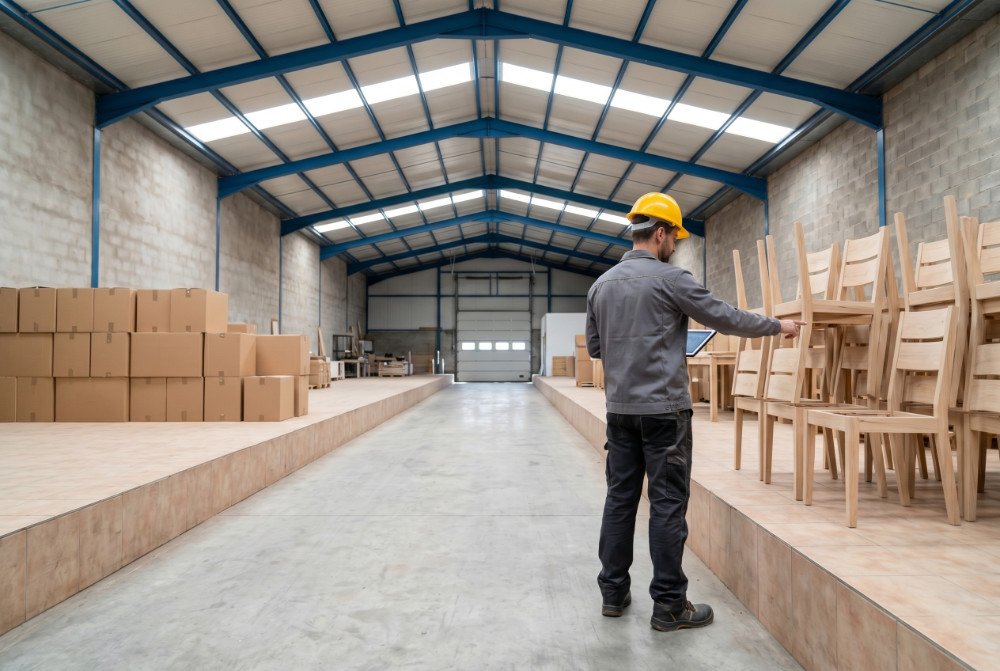
Quality inconsistency is one of the fastest ways to lose customer trust.
A customer may receive a good product in the first order, then a poor one in the next. When that happens, they usually do not wait for an explanation. They moved to another store, because they have many options.
Inconsistent quality also creates internal problems. Your product photos may no longer match the actual product. Your sales team has to explain defects. Your warehouse team spends more time checking goods. Your customers may ask for refunds or replacements.
A reliable manufacturer should be able to repeat sample quality in bulk production. That requires controlled materials, trained workers, proper machinery, and quality checks during production, not only before packing.
2. Delayed Shipments That Cost You Sales
When you place an order with a furniture manufacturer in Indonesia, you already have a sales plan behind it.
You may have a launch date, a showroom setup, a marketing campaign, or seasonal demand to catch. But when the supplier delivers late, your business can miss the sales window. Your campaign costs may already be spent, but the products are not ready to sell.
A delayed shipment can also leave showroom space empty or your store with low stock. If you have already promoted a new collection, customers may lose confidence when the products are unavailable.
Lead time issues often come from poor planning, weak material control, overloaded production lines, or unclear communication. At MPP Furniture, in-house production helps us manage timelines more clearly, with 45 to 60 days to run products, depending on order details and material readiness.
3. Poor Communication and Misunderstandings
Furniture production involves many details, from dimensions and materials to finishing, packaging, labels, and carton marks.
When communication is poor, small misunderstandings can become expensive mistakes. For example, a retailer may request a specific stain color, but the supplier does not confirm the finishing sample. Or the buyer sends a design update, but the production team still follows the old version.
Good communication must come from both sides.
One real case at MPP involved a buyer from Europe who wanted to change the finishing color after production had already reached the coloring stage. If the products were still in the frame stage, the change could still be handled more easily. But because the finishing work was already completed, the change required extra labor, additional materials, overtime, and a revised shipment schedule.
This shows why clear and early communication matters. It not only makes you feel comfortable. It prevents errors, extra costs, and delays before the goods reach the container.
4. Lack of Quality Control Systems
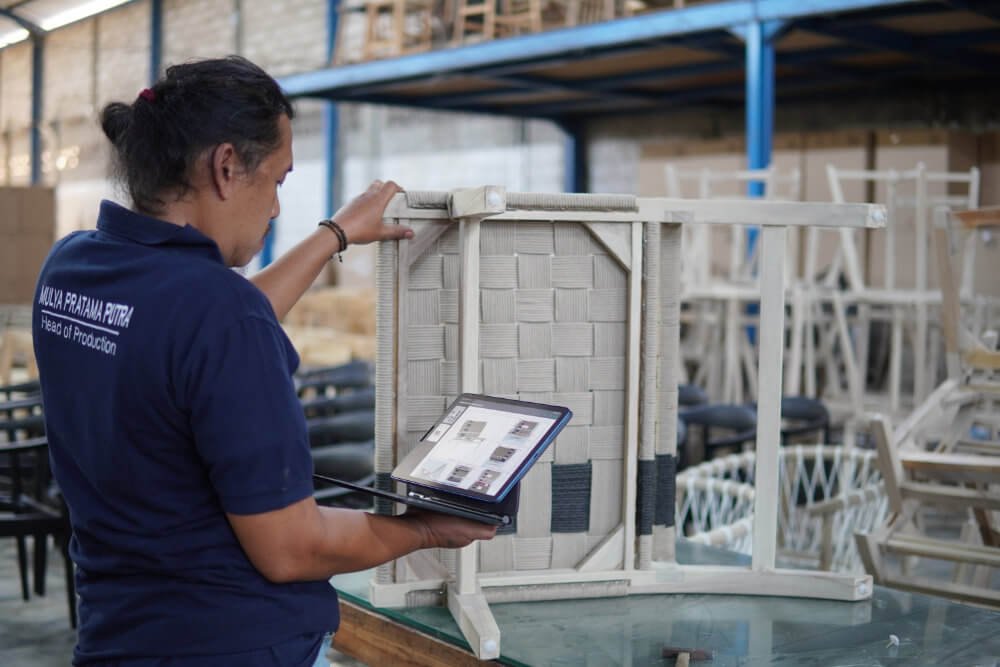
Quality control is not an extra step. It is a required system from raw material selection to final packing.
Without a clear QC process, defective parts can pass from one stage to the next. For example, wood with poor knots may pass during raw material selection, continue into kiln drying, move into machinery, and only be noticed after the product is almost finished.
At that point, the cost is already higher. The factory may need to rework the item, replace parts, or delay shipment.
A reliable manufacturer should check quality at each stage: material selection, drying, cutting, joinery, sanding, finishing, assembly, packing, and loading. This reduces the risk of defective products reaching your store.
5. Legal and Export Compliance Issues

Furniture export is not only about making products. It also involves documents, wood legality, packing lists, commercial invoices, shipment terms, and export procedures.
If the supplier does not understand export requirements, your order can face delays during shipment or clearance. This creates stress for both the importer and retailer.
For wooden furniture from Indonesia, documents such as SVLK are part of legal sourcing and export readiness. For the US market, MPP also checks product requirements before shipment. If a product uses plywood, TSCA may be needed. If the product includes upholstery or cushions, legal labels may be required.
Without the right documents, your container can be held at the port. This can lead to demurrage costs, delayed delivery, or, in the worst case, goods that cannot be released.
6. No Scalability for Growing Retailers
Some furniture suppliers from Indonesia can handle one small order, but struggle when your business grows.
This becomes a problem when you expand your collection, open more stores, or increase order volume. A supplier without stable production capacity may struggle with repeat orders, mixed containers, custom items, and tighter delivery schedules.
Retail growth requires a manufacturer that can support long-term planning. That means stable production flow, trained teams, proper machinery, clear scheduling, and enough capacity to handle repeat demand.
A manufacturer should not only serve the first order. It should support your next stage of growth.
7. Damage to Your Brand Reputation
When customers receive poor furniture, they do not write reviews about the factory. They write reviews about your store.
They may say the product is not worth the price. They may share photos of defects. They may ask for refunds. They may never buy again.
In retail, reputation is built slowly but can be damaged quickly. One bad shipment can create months of customer service work. Repeated issues can weaken your brand position in the market.
This is why your Indonesian Furniture Manufacturer is part of your brand promise, even if your customers never know their name.
Red Flags When Evaluating an Indonesian Furniture Manufacturer
Before placing an order, slow down when you see these warning signs.
Prices that look too good often hide a trade-off. The supplier may use lower-grade wood, mix different materials without clear notice, simplify construction, or outsource production to workshops without proper machinery.
A lack of material transparency is another warning sign. A reliable manufacturer should be able to explain the wood type, rattan grade, finishing method, moisture control, and construction approach. If the answer is vague, the production system may also be unclear.
Be careful if the supplier avoids factory visits, virtual audits, or production questions. A real manufacturer should be open about how products are made, who handles production, and how quality is checked.
Also, check their export track record. If they cannot show experience with international buyers, export documents, or packing standards, your order may carry extra risk.
Most of all, do not rely on samples alone. A good sample does not prove that the factory can repeat the same result in bulk production. Use samples to check design, proportion, and finishing, but validate the production system before committing.
For a deeper supplier evaluation guide, read MPP’s article on choosing the best Indonesian furniture manufacturers for export.
What a Reliable Furniture Manufacturer from Indonesia Should Offer
1. Consistent Quality Standards
Look for clear standards for materials, construction, finishing, and packing. At MPP Furniture, wooden and rattan products are handcrafted with precision, supported by proper machinery and stage-by-stage quality control to reduce variation in bulk production.
2. Clear Communication and Documentation
Retailers need clarity from inquiry to shipment. MPP provides quotations, product specifications, production schedules, sample approvals, packing details, and export documents so buyers can plan orders with fewer surprises.
3. Export Experience and Certifications
A reliable supplier should understand export documents, wood legality requirements, packaging needs, and destination-market requirements. This helps reduce the risk of shipment delays and clearance issues.
4. Scalable Production Capacity
A good manufacturer should support both trial orders and business growth. This is important for retailers testing new collections, opening new locations, or building private label lines.
MPP supports custom furniture, OEM, and private label projects with free consultation and free product development. This allows buyers to test product ideas first, then scale with a clearer plan.
5. On-Time Delivery Commitment
No manufacturer can remove every supply chain risk, but a reliable one plans honestly.
A serious partner gives realistic timelines, explains what can affect production, and updates the buyer before small issues become larger delays. This helps retailers protect launch schedules, showroom planning, and customer expectations.
Before sending a deposit, it also helps to review a more detailed checklist for identifying the right manufacturer before sending a deposit.
How to Safely Source Furniture from Indonesia
Start with supplier validation. Review the website, product range, export experience, factory capability, and communication quality.
Next, request samples. Use them to check design, dimensions, materials, construction, and finishing. But remember, samples are only one part of the evaluation.
After that, ask about production control. Find out whether the supplier manages production in-house or depends heavily on outside workshops. Ask how they control quality at each stage.
For first orders, consider a smaller trial shipment if possible. This helps you test product consistency, communication, packing, and delivery before increasing volume.
Also, use clear written agreements. Include product details, materials, finishing codes, tolerances, payment terms, delivery timeline, and quality expectations.
For more practical sourcing guidance, read MPP’s article on 3 factors when sourcing from Indonesian furniture manufacturers.
You can also explore MPP’s Indonesian furniture collections to review product range, materials, and style direction.
Why Global Retailers Trust the Right Indonesian Furniture Manufacturer
Global retailers do not choose a manufacturer only because the product looks good in a catalog. They choose a partner who can protect their business after the order is placed.
For retailers, the right Indonesian furniture manufacturer gives three things: confidence, control, and continuity.
Confidence means you know the products are made with clear standards before they reach your customers. Control means you have enough visibility during production, so you are not left guessing after sending a deposit. Continuity means the manufacturer can support repeat orders, new collections, and long-term product planning.
This is where MPP Furniture works as more than a production vendor. We support retailers with handcrafted wooden and rattan furniture, custom and private label development, and a process that helps buyers move from idea to shipment with fewer surprises.
For growing retailers, this matters because sourcing is not only about today’s container. It is about building a product line that your customers can trust again and again.
That is why the right manufacturer becomes part of your business system. They help protect your store's reputation, support your product strategy, and give your team a more reliable way to source from Indonesia.
For retailers comparing Indonesian furniture suppliers, the safest choice is not always the cheapest one. It is the manufacturer that can protect your customers’ experience after every shipment.
Conclusion: Your Indonesian Furniture Manufacturer Is Your Brand Partner
The wrong Indonesian Furniture Manufacturer can damage your store’s reputation through poor quality, delays, weak communication, compliance problems, and inconsistent bulk production.
But the right manufacturer can help your business grow with reliable products, better planning, custom development, and stronger customer trust.
In short, choosing a supplier means choosing the quality your customers will associate with your store.
If you are comparing manufacturers in Indonesia, start with a simple discussion. Share your product needs, market goals, and concerns. A reliable partner should help you make a better decision before you place an order.
Protect Your Store Reputation Before the First Order
Share your furniture requirements with MPP Furniture and get practical input on materials, production, customization, and export readiness.
FAQs: Choosing a Reliable Indonesian Furniture Manufacturer
1. Can the wrong Indonesian furniture manufacturer damage my store’s reputation?
Yes. Poor quality, late delivery, weak packaging, and unclear communication can lead to customer complaints, refunds, bad reviews, and lost repeat purchases.
2. How do I know if an Indonesian furniture manufacturer is reliable?
Check whether they control production in-house, explain materials clearly, provide export documents, have quality checks at each stage, and can repeat sample quality in bulk production.
3. Why should furniture retailers avoid choosing only by price?
Very low prices often mean lower-grade materials, skipped production steps, weaker construction, or outsourced production with less control.
4. Should I request samples before ordering from Indonesia?
Yes. Samples help you check design, dimensions, finishing, and structure. But you should also validate the factory system before approving bulk production.
5. What makes MPP Furniture a reliable manufacturing partner?
MPP Furniture supports retailers with in-house production, handcrafted wooden and rattan furniture, quality checks at each stage, custom and private label services, free consultation, and free product development.

Hi, I’m Salman, founder of MPP Furniture, an Indonesian furniture manufacturer serving global retailers and project-based clients.
I began my career in my family’s export-oriented furniture company, gaining hands-on experience in production, construction, finishing, material performance, and product development. With a clear understanding of how international buyers evaluate furniture quality and reliability, I founded MPP Furniture to deliver export-ready products with consistent standards.
Here, I share insights from the perspective of a furniture manufacturer working directly with production teams on the factory floor, focusing on manufacturing and supplier evaluation.
Connect on LinkedIn
0 Comments