Developing custom furniture for your brand can help you build a stronger product identity. It allows your collection to look different, feel more aligned with your market, and carry design details that customers can remember.
Your design is an asset. It may involve design costs, product ideas, brand value, and development time. Without clear protection, that effort can lose value if the concept is copied, reused, or offered to another buyer.
This guide will help you reduce design-copying risks before production starts, from NDA and ownership terms to staged file sharing, approval records, and choosing the right custom furniture manufacturer in Indonesia.
Why Design Protection Matters When Ordering Custom Furniture from Indonesia
Your furniture design is a business asset. It can carry strong commercial value because it reflects your product idea, market positioning, and brand identity.
Every detail matters: the profile shape, frame proportion, material mix, finishing tone, and overall look. When customers recognize your collection through these details, your products become harder to compare with generic catalog items.
That is why design protection should start before you order custom furniture. Once you share drawings, dimensions, and production details, the manufacturer can understand how the product is built. This information is needed for quotation and sampling, but it should be handled with care.
Without clear protection, your design can be copied, reused, or offered to another buyer. As a result, your exclusive collection may lose market value, competitors may sell similar products and push you into a price war, and your brand story becomes weaker because the design no longer feels special.
Before developing a new collection, it helps to understand how custom furniture from Indonesia can support brand identity.
What Counts as Your Design Asset in Custom Furniture Manufacturing
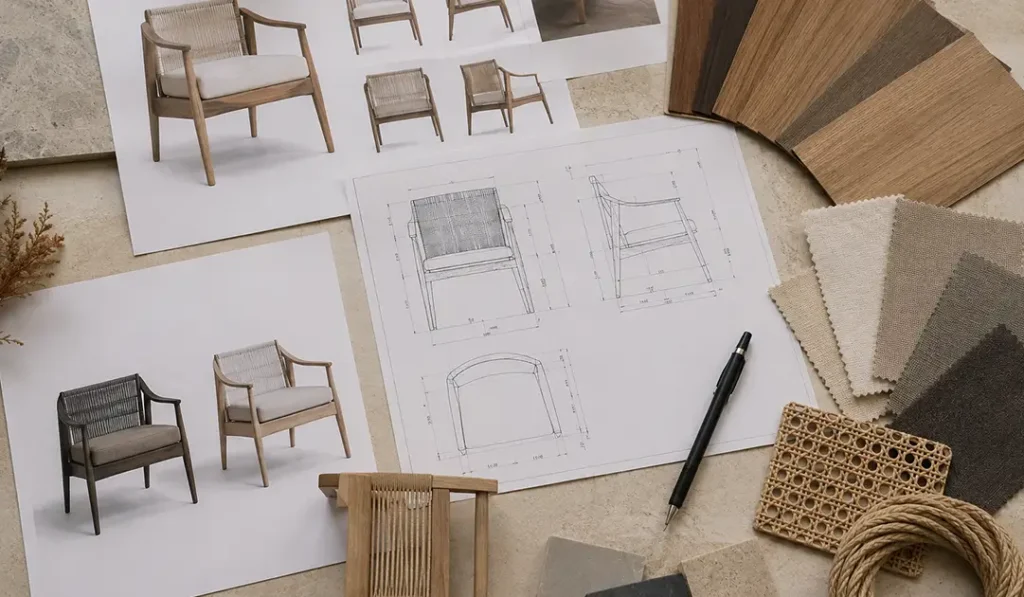
Your design asset is not limited to the finished product. It can include any visual, technical, or commercial detail that helps define how your furniture should look, feel, and be produced.
In industrial design, protected design elements often relate to the product’s appearance, such as shape, pattern, lines, or color.
WIPO also explains that trade secrets can include technical information, such as designs and drawings, as long as it is kept confidential and has business value.
It can include:
- CAD drawings or technical drawings
- 3D renders and product mockups
- Dimensions and size references
- Finishing tone, color reference, or sample code
- Brand labels, tags, packaging direction, or private label details
- Approved sample photos
These files help the manufacturer understand your product direction, quotation scope, and sample target. But because they can also make the design easier to reproduce, share them only with the right supplier and at the right stage.
For early pricing, start with general references, target dimensions, material direction, and estimated quantity. Detailed files can be shared later after the capability and confidentiality terms are clear.
In practice, buyers usually share renders, technical drawings, dimensions, material direction, and finishing references with MPP. Detailed construction decisions, such as joinery, reinforcement, and production structure, are handled by the manufacturer to support product strength, stability, and export quality.
For a smoother first discussion, read MPP’s guide on what to prepare before contacting a custom furniture manufacturer.
Understand the Difference Between Product Ownership and Design Ownership
In short, according to Cornell Law School, product ownership means you own the finished products you buy. On the other hand, according to WIPO, design ownership means you own or control the right to use, sell, reproduce, or produce the design.
For example, if you order 200 dining chairs, those 200 finished chairs belong to you after the agreed payment and delivery terms are completed. But that does not always mean the design itself automatically belongs to you, unless the ownership and usage rights are clearly written.
This is why written terms matter. Before production starts, both sides should clarify whether the design belongs to the buyer, the manufacturer, or is jointly developed under agreed-upon usage terms.
A safe rule is simple: do not rely on assumptions. If the design should stay private, state it clearly in writing. If the manufacturer is not allowed to show it in a catalog, trade show, website, or sample room, include that in the agreement.
Tips to Reduce Design Copying Risks When Working with Manufacturers
Every business has risk, but the risk becomes lower when you work with a clear process. These steps can help buyers protect their designs before they order custom furniture from Indonesia.
1. Use an NDA Before Sharing Sensitive Design Files
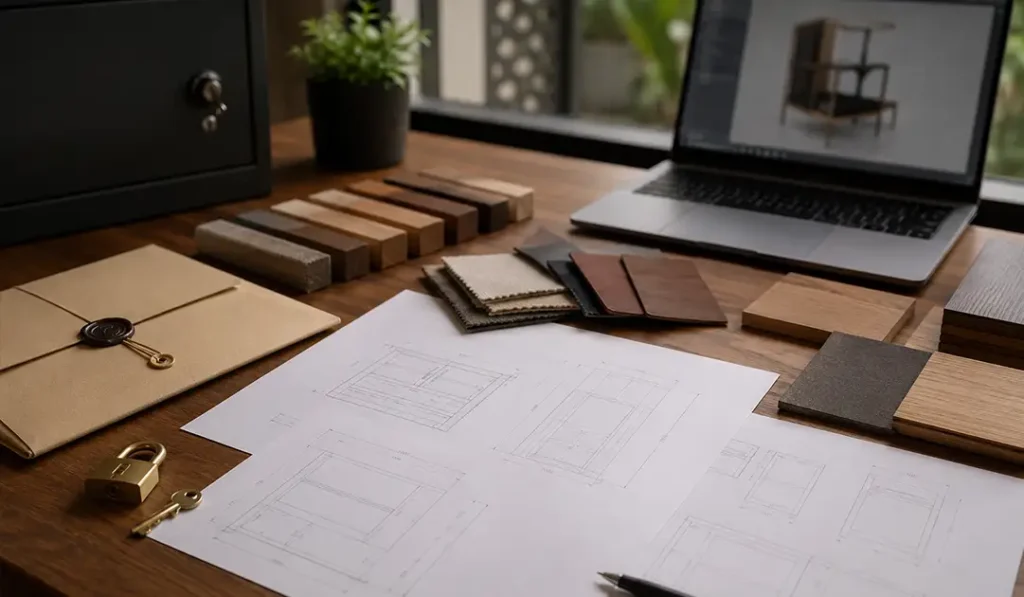
An NDA is useful before sharing confidential files such as CAD drawings, detailed renders, technical drawings, or original product concepts.
The NDA should define what information is considered confidential. This may include product designs, sketches, drawings, renderings, dimensions, materials, finishes, business plans, and development notes.
An NDA does not replace IP registration or a full manufacturing contract, but it sets a professional starting point. It shows that both sides understand the information should only be used for the discussed project.
2. Clarify IP Ownership and Usage Rights in Writing
Before sampling or production starts, clarify what the manufacturer can and cannot do with your design.
Your written terms can cover:
- Who owns the original design
- Whether the manufacturer can use the design for another buyer
- Whether the sample can be displayed publicly
- Whether photos can be used for marketing
- Whether the design can be modified for other projects
- Whether the design is exclusive to your brand
- How long does the confidentiality or exclusivity period apply
Keep the wording clear. For example: “This design is exclusive to our brand and may not be produced, sold, displayed, or offered to other buyers without written permission.”
This is especially important for private label furniture, OEM furniture Indonesia projects, and exclusive development programs.
3. Control How Much Design Information You Share at Each Stage
Design information should be shared step by step, not all at once. At the first inquiry stage, you can share the product type, overall dimensions, order volume, target price, material direction, and packaging standard.
After the supplier confirms capability and confidentiality terms are clear, you can share technical drawings for a more accurate quotation. After sampling is approved and you are ready to place the order, you can share private label details such as labels, tags, carton marks, and packaging artwork.
This approach keeps communication practical. The manufacturer gets enough information to help you, while your most sensitive files are shared only when the relationship becomes more serious.
4. Keep a Clear Record of Design Approvals and Revisions
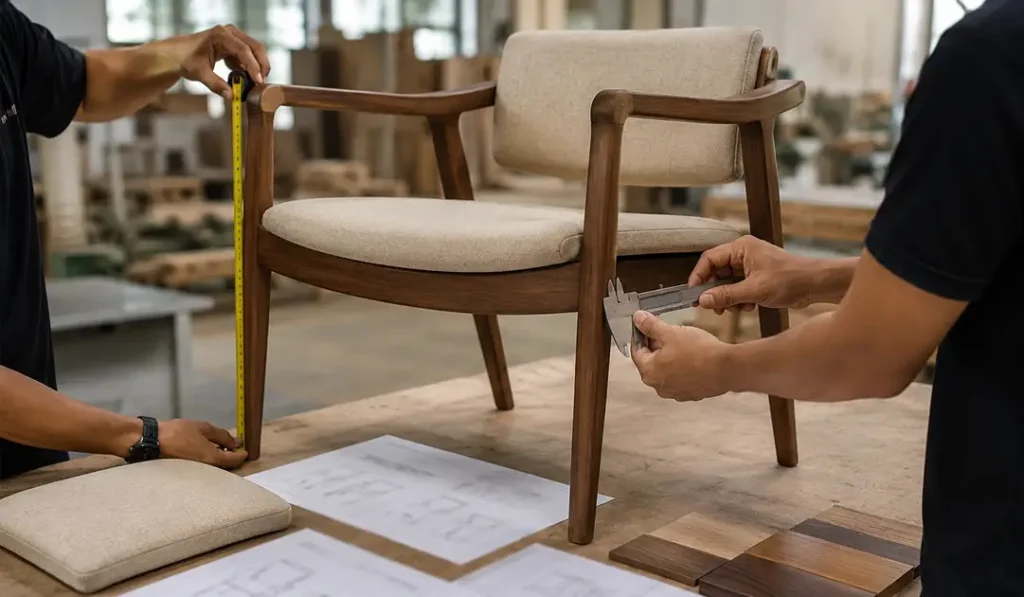
Custom furniture production involves many small decisions, such as leg angle, cushion thickness, backrest height, finishing tone, and size adjustment. After sampling is finalized, keep every approval in writing.
Save dated revisions, final product details, approved photos, and updated specifications. This reduces miscommunication during production and gives both sides the same reference.
In one MPP project, the buyer’s QC team checked the product using an older detail sheet, while production followed the latest approved dimension. After reviewing the email records, we found that the updated final product detail had not been shared internally from the buyer’s R&D team to their QC team.
This is why final document alignment matters before mass production. For wider planning, link this step with your custom furniture procurement process.
5. Choose a Trusted Manufacturer, Not Just the Cheapest Supplier
The cheapest supplier is not always the safest choice for custom furniture. A trusted manufacturer protects your design process through clear communication, sample approval, production records, and quality control.
A reliable Indonesian furniture manufacturer should not treat your design as a random catalog item. They should understand that your design is part of your brand value, so it needs to be handled with care, accuracy, and confidentiality.
MPP Furniture supports custom furniture, OEM, private label, and exclusive development with in-house production and structured approval steps. This helps buyers keep their product direction clear from design discussion to final production.
Be Clear About OEM, ODM, and Exclusive Development Terms
When ordering custom furniture from Indonesia, buyers often use terms like OEM, ODM, private label, and exclusive design. These terms sound similar, but they create different expectations.
1. OEM: When You Own the Design Direction
OEM furniture means the buyer provides the design direction, specifications, or brand requirements, and the manufacturer produces based on the agreed-upon brief.
This is common when a retailer or importer already has a product idea, CAD drawing, reference sample, or existing collection direction.
In OEM work, your design ownership and usage terms should be clear before production starts. If the product is meant only for your brand, include that in writing.
2. ODM / EDM: When the Manufacturer Helps Develop the Design
ODM or development-based custom work means the manufacturer helps turn your idea into a production-ready product.
You may bring a moodboard, rough sketch, or inspiration image. Then the manufacturer helps refine structure, dimensions, materials, finishing, comfort, and production feasibility.
Since material choices affect durability, finishing, comfort, and production cost, it helps to read a guide on how to choose materials for custom furniture designs before finalizing your ODM or development brief.
Because the manufacturer contributes design and technical input, the ownership terms should be discussed early. Decide whether the final design belongs to you, the manufacturer, or is exclusive to your brand under certain order conditions.
3. Exclusive Development: When the Design Should Stay Private
Exclusive development means the design should not be offered to another buyer. This is important for retailers building a signature collection, hospitality groups creating a project identity, or brands launching a private label line.
Ask the manufacturer whether they can keep your design out of public catalogs, showroom samples, website images, and sales presentations.
Final Thoughts: Protecting Your Design Starts Before Production
Protecting your design starts before production, not after the sample is finished. The clearer your NDA, ownership terms, file-sharing process, and approval records are, the lower the risk of confusion or unwanted design use.
Your design is part of your brand value, so it should be treated as a business asset from the first supplier discussion. A trusted manufacturer will respect that by keeping communication clear, confirming revisions in writing, and following the approved production reference.
In short, safer custom furniture development comes from preparation and the right partner. If you plan to build an exclusive collection, work with a custom furniture manufacturer in Indonesia that understands confidentiality, OEM, private label, and long-term brand protection.
Planning to order custom furniture from Indonesia for your retail brand, project, or private label collection?
Talk with MPP Furniture to review your design, material direction, sample plan, and confidentiality needs before production starts.
FAQs: Protecting Designs When Ordering Custom Furniture
1. Do I need an NDA before ordering custom furniture from Indonesia?
Yes, an NDA is recommended before sharing sensitive files such as CAD drawings, 3D renders, technical drawings, original sketches, or confidential product concepts.
2. Who owns the design if I pay a manufacturer to produce it?
Payment for finished products does not always define design ownership. Design ownership, usage rights, reproduction limits, and exclusivity should be agreed in writing before production starts.
3. Can an Indonesian manufacturer help develop my design?
Yes. Many Indonesian custom furniture manufacturers can help refine structure, materials, finishing, comfort, and production feasibility. Make sure the final design usage terms are clear.
4. What is the safest way to share design files with a supplier?
Share files in stages. Start with general references and basic requirements, then share detailed files after the supplier confirms capability and confidentiality terms.
5. What should I ask before starting OEM or private label furniture production?
Ask about confidentiality, design ownership, sample approval, catalog use, revision policy, exclusivity, packaging, labels, and whether the design will be offered to other buyers.

Hi, I’m Salman, founder of MPP Furniture, an Indonesian furniture manufacturer serving global retailers and project-based clients.
I began my career in my family’s export-oriented furniture company, gaining hands-on experience in production, construction, finishing, material performance, and product development. With a clear understanding of how international buyers evaluate furniture quality and reliability, I founded MPP Furniture to deliver export-ready products with consistent standards.
Here, I share insights from the perspective of a furniture manufacturer working directly with production teams on the factory floor, focusing on manufacturing and supplier evaluation.
Connect on LinkedIn
0 Comments