Let’s be honest: sourcing mahogany furniture from Indonesia can be an absolute game-changer for your retail business or commercial project. The country is home to incredibly skilled artisans, endless custom production possibilities, and access to premium, plantation-grown mahogany that is perfect for stunning indoor collections.
But here is the catch. If you dive in without a clear roadmap, the dream of importing beautiful, high-margin furniture can quickly turn into a logistical headache. We are talking about inconsistent quality, frustrating shipment delays, hidden costs, and worst of all, products that simply don’t resonate with your target market.
This guide is your backstage pass to doing it right. We will walk you through the most common mahogany furniture sourcing mistakes and show you exactly what to ask, approve, and verify before you ever hit the "approve for bulk production" button.
Why Understanding These Sourcing Risks Matters
Picture this: you receive a breathtaking prototype. The finish is flawless, the joints are seamless, and it looks like it belongs on the cover of an interior design magazine. But a beautiful sample is only half the battle; repeatable quality is what actually protects your profit margins.
Bulk production is a completely different beast. It requires rigid material control, crystal-clear specifications, the right machinery, and relentless inspections throughout the entire manufacturing process. Mahogany, as magnificent as it is, is a natural material. It breathes. If it isn't properly dried and finished, wood movement will wreak havoc on your panels, joints, and beautiful coatings once it reaches a different climate.
Understanding these risks transforms you into an empowered buyer who evaluates actual production capabilities instead of just pretty photos and rock-bottom prices. A reliable Indonesian furniture supplier partner won't just sell you a chair; they will transparently walk you through their entire process, from wood selection to packing. Ultimately, informed sourcing prevents costly mistakes and builds the foundation for a highly profitable, long-term partnership.
What Can Go Wrong When Sourcing Mahogany Furniture from Indonesia?
Even veteran buyers can stumble if they lose sight of the details. Here are nine critical mistakes you need to avoid to ensure your next container arrives exactly as envisioned.
Mistake #1: Choosing a Supplier Based on Price Alone
We all love a great deal, but in furniture manufacturing, the lowest quote is rarely a bargain. When a price seems too good to be true, the factory is likely cutting corners somewhere. They might be using lower-grade lumber, thinner structural parts, weaker joinery, fewer layers of coating, cheap hardware, or flimsy packaging that won't survive the ocean freight.
Instead of jumping at the lowest number, compare every offer against the exact same technical drawings, material specs, and packing terms. Partnering with a reputable Indonesian mahogany furniture manufacturer who offers transparent pricing will always yield a much higher return on investment than a cheap supplier who compromises on your brand’s reputation.
Mistake #2: Not Verifying Wood Quality and Drying Standards
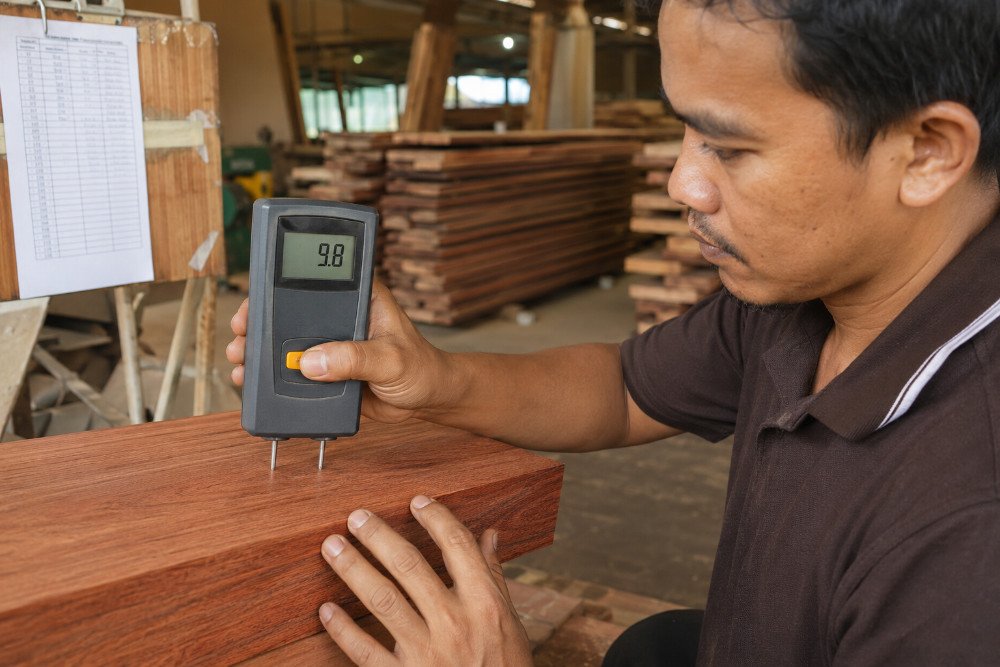
Wood is alive, and it reacts to its environment. If mahogany is shipped with a moisture content that doesn't match your destination's climate, it will shrink, swell, or crack. It's not a matter of if, but when. According to international woodworking standards (such as the USDA Wood Handbook), the ideal moisture content for indoor export programs should typically target around 10 to 12 percent.
Never assume the wood is properly prepared. Ask your supplier directly about their lumber grade, the specific kiln-drying method they use, their target moisture range, and demand to see the recorded readings before any machining or assembly begins. For a deeper dive into how this process works, check out our comprehensive Indonesian mahogany furniture buyer's guide to master material preparation and export checks.
Mistake #3: Overlooking Finishing and Construction Details
Photos are incredibly easy to manipulate. A beautifully lit picture might hide weak dowel joints, rough undersides, uneven sanding, or a finish that chips easily.
You need to approve everything in writing: component thickness, specific joinery methods, hardware quality, precise finish color, gloss levels, and the exact coating system being used. If you are ordering for high-traffic environments like hotels or restaurants, you must evaluate how the factory's finishing process impacts Indonesian mahogany durability for commercial spaces.
Mistake #4: Failing to Confirm Production Capacity and Lead Times
Creating a masterpiece sample in a small workshop is one thing; reproducing that masterpiece 500 times in 45 days is another entirely. A common trap is assuming a factory can scale up without losing quality.
Before signing a contract, ask the hard questions: What is their actual monthly capacity? How much kiln space do they have? Do they have a dedicated finishing room to prevent dust contamination? For context, a capable manufacturing partner handling commercial volumes typically operates a large-scale facility such as a 16,000 m² space supported by over 200 skilled craftsmen to comfortably output up to 30 containers per month without bottlenecks.
Mistake #5: Not Clarifying Customization Requirements
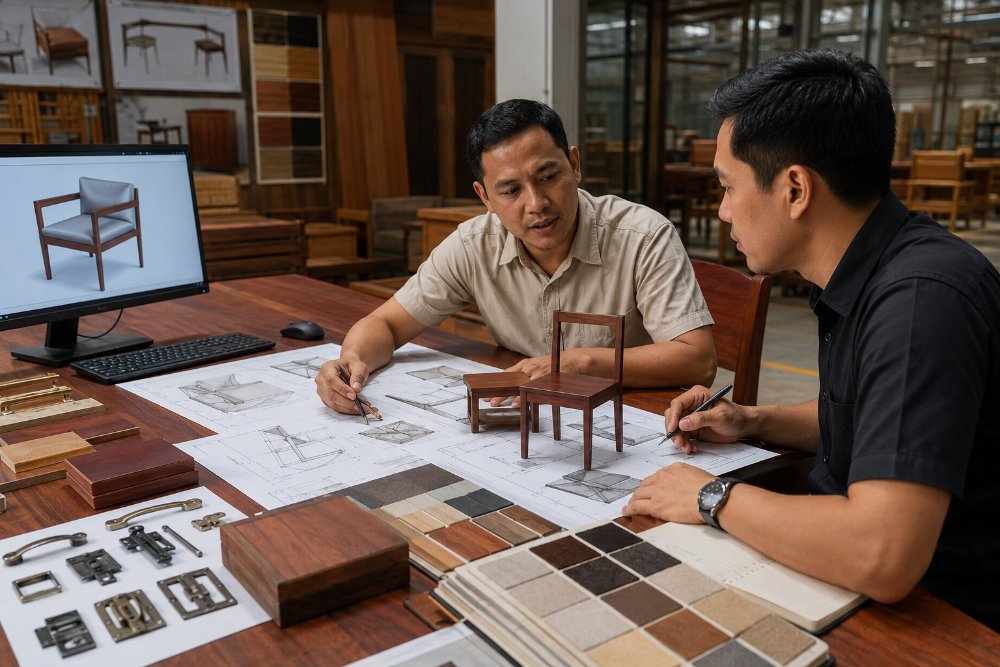
Custom furniture development is an art, but managing it shouldn't feel like a game of telephone. When your instructions are scattered across WhatsApp chats, endless email threads, and quick phone calls, mistakes are guaranteed.
Consolidate everything into one master file. This document should include 2D/3D drawings, exact dimensions, construction methods, color codes, hardware specs, and packaging instructions. If your team lacks technical drawings, look for an ODM (Original Design Manufacturer) partner who offers in-house design development free of charge. Moreover, ensure they guarantee design exclusivity so your custom pieces are never duplicated or sold to competitors.
Mistake #6: Ignoring Quality Control Procedures
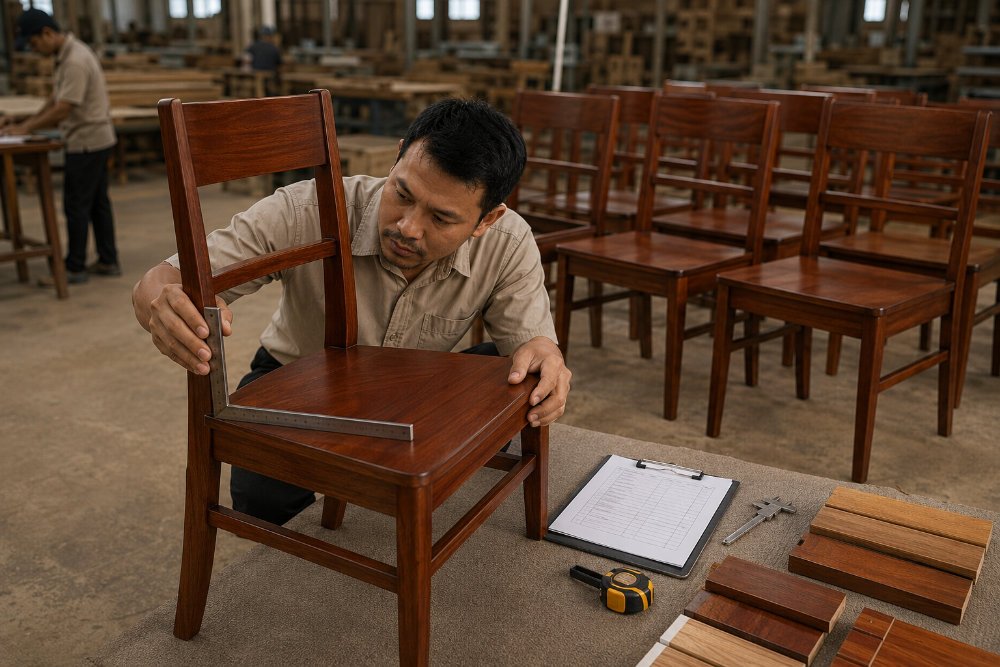
If you wait until the final pre-shipment inspection to check your goods, it is already too late. Finding a structural flaw when 200 chairs are already packed in cartons means you are facing massive delays.
Quality control must be baked into every stage: lumber preparation, machining, assembly, sanding, and finishing. The most reliable consistency comes from 100% in-house production, where no part of the process is outsourced. By controlling everything from the sawmill to the final packing, experienced factories can drastically reduce errors, sometimes achieving a defect rate as low as 0.54% across thousands of pieces.
Look at our mahogany wood insight from an experienced Indonesian furniture supplier.
Mistake #7: Not Checking Legal and Sustainability Compliance
Imagine your goods arriving at your home port, only to be seized by customs because you lack the proper timber legality documents. In Indonesia, the SVLK (Sistem Verifikasi Legalitas Kayu) certification is non-negotiable for exporting wood products.
Don't wait until the ship sets sail to discuss paperwork. Confirm species details, source records, and ensure the supplier's export documents match the specific legal requirements of your destination country. When in doubt, consult your local customs broker.
Mistake #8: Underestimating Shipping and Packaging Requirements
You’ve successfully navigated production, and the furniture looks incredible. But if it is tossed into basic single-wall cartons, it will arrive with crushed corners, scratches, or moisture damage from the humid ocean transit.
Packaging must be engineered for the product. Heavy items need reinforced boxes; delicate finishes require foam wrapping and moisture-absorbing silica gels. Request clear carton specs, corner guards, and a logical container loading plan before production even wraps up.
Mistake #9: Treating Sourcing as a One-Time Transaction
One of the most overlooked mistakes in sourcing mahogany furniture from Indonesia is adopting a transactional, "one-and-done" mindset. Sourcing this way often leads to rushed decisions, weak communication, and suppliers who won't prioritize your order when things get busy.
The smartest buyers treat their manufacturers as true business partners. A long-term relationship guarantees consistent color matching on repeat orders, priority capacity planning, and a team that will actually fight to solve problems quickly rather than pointing fingers.
A Checklist for Sourcing Mahogany Furniture from Indonesia
Ready to place your order? Keep this checklist handy to ensure you cover all your bases before wiring that deposit:
- Verify the supplier's manufacturing and export experience: Check their production scope, what processes are done in-house, and their history with similar products.
- Confirm wood quality, kiln-drying, and moisture content standards: Don't skip the technical data. Moisture control is the heartbeat of wood furniture.
- Review product samples for construction and finishing quality: Ensure the physical sample matches your expectations perfectly before approving bulk production.
- Clarify specifications, MOQ, lead times, and packaging requirements: Keep every detail in one shared, approved master file.
- Ensure quality control procedures and export documentation are in place: Confirm they have the legal right to export (SVLK) and a multi-stage QC process.
- Evaluate the supplier's ability to support long-term business growth: Look at their facility. Can they handle your volume when your business doubles next year? Also, review the ideal mahogany furniture applications to ensure their expertise aligns with the types of products you plan to launch.
Key Takeaways for Sourcing Mahogany Furniture from Indonesia
- Successful sourcing depends on far more than finding the lowest price; value and reliability always win in the long run.
- Verifying quality, production capability, and legal compliance early on drastically reduces your sourcing risks and protects your margins.
- Clear, centralized communication prevents costly manufacturing mistakes and eliminates the "he-said, she-said" disputes during production.
- Strong, evidence-based supplier relationships contribute to consistent product quality, smoother operations, and long-term business success.
- Work with an experienced manufacturing partner to source with absolute confidence. Backed by over 20 years of experience, MPP Furniture operates a fully in-house facility in Cirebon, Indonesia, ensuring strict quality control across every batch. We deliver reliable OEM, ODM, and private label solutions combining skilled handcrafting with precision machinery, from free design development right down to export-ready packaging.
FAQs (Frequently Asked Questions)
1. What is the biggest mistake when sourcing mahogany furniture from Indonesia?
Choosing a supplier based strictly on price[cite: 7]. A suspiciously low quote often means the factory is cutting corners on wood quality, strong construction, or protective packaging[cite: 7].
2. What is the ideal moisture content for mahogany furniture?
For most indoor export programs, the target moisture content should be around 10 to 12 percent[cite: 7]. Always request the actual kiln-dry readings from the factory before production begins[cite: 7].
3. What documents are required to legally export wood furniture from Indonesia?
The SVLK (Sistem Verifikasi Legalitas Kayu) certification is non-negotiable for exporting any wood products from Indonesia[cite: 7]. This proves the timber is legally and sustainably sourced[cite: 7].
4. How can I verify a factory's true production capacity?
Ask for their monthly output metrics, current workload, equipment list, and worker numbers[cite: 7]. To be absolutely sure, request a live video tour of their facilities or schedule an in-person visit[cite: 7].
5. What must be approved before bulk production starts?
Everything from drawings, dimensions, and wood species to finish samples, hardware, and packaging[cite: 7]. Insist on a physical, signed master sample to serve as your unquestionable standard for the entire order[cite: 7].
Ready to Source High-Quality Mahogany Furniture?
Work with an experienced manufacturing partner to source with absolute confidence[cite: 7]. Explore MPP's mahogany furniture collections or contact us to discuss reliable OEM, ODM, and private label solutions[cite: 7].

I am a Web Designer, Technical SEO Specialist, and writer with 6+ years of experience in website optimization and search visibility. For more than a year, I have supported MPP Furniture’s growth, and I am currently expanding my role as an author to help B2B furniture buyers make more informed business decisions through informative, practical, and impactful articles.

0 Comments