Indoor furniture retail is harder to win on price alone. Home Furnishings Association research based on 9,000 U.S. consumers found that 63% begin their furniture journey by looking for inspiration online, while 43% complete purchases online. Provoke Insights also found that 45% of furniture shoppers use both online and in-store channels
This gives customers more opportunities to compare products, prices, and perceived value before making a purchase, putting more pressure on retailers to justify what they sell and what they charge.
Protecting profit margin, therefore, is not simply about getting the lowest factory price. It also depends on choosing products that can sell, matching material and construction to the target price, working with a dependable supplier, controlling packing cost, and communicating product value clearly.
Choose Product Models for Commercial Fit, Not Design Appeal Alone
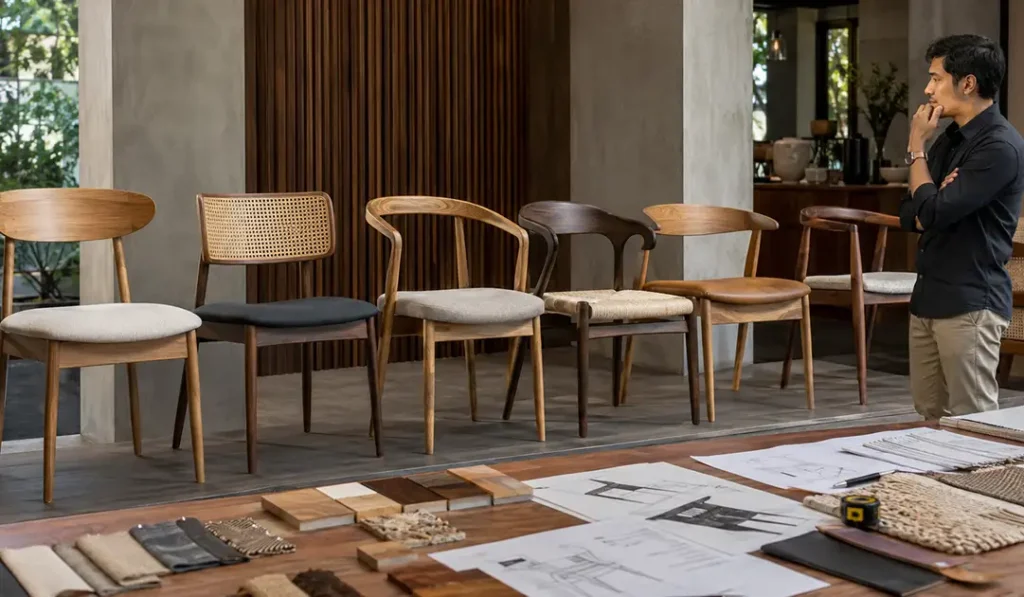
A beautiful chair can still be a poor retail product if the cost, target customer, and selling price do not line up. Before sourcing a model, retailers should ask: who will buy it, at what price, and why would they choose it over a similar option?
Design complexity deserves the same commercial check. Extra curves, mixed materials, difficult joinery, unusual hardware, or labor-heavy finishing can raise production cost. If customers cannot see or appreciate the difference, those details may reduce margin without adding enough selling value.
But making every model basic creates another problem. Similar-looking products are easier to compare by price. Distinctive proportions, finishes, woven details, or exclusive design elements can give customers a clearer reason to buy without relying on discounts.
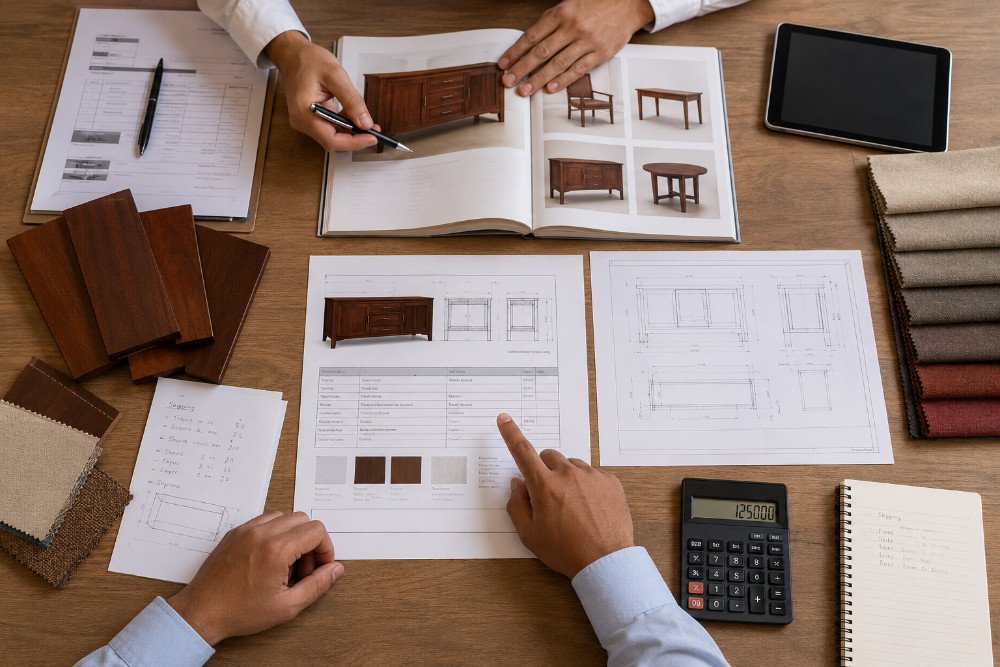
Match Material and Construction to the Target Price
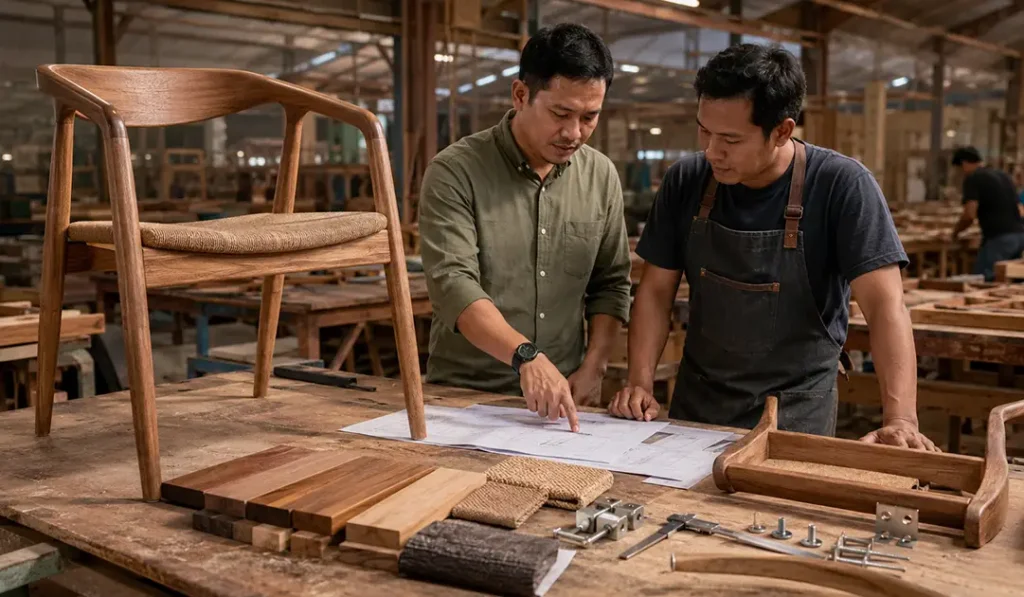
Material should fit the target customer and product position, not simply follow the most expensive specification available.
Start with the intended retail price, then work backward. Material, dimensions, finishing, hardware, and construction should fit the cost range the product can support.
Spending more makes sense when it adds visible value, better performance, or a stronger reason to buy. Over-specification can quietly reduce margin when a pricier wood species, thicker component, extra finishing step, or complex joint raises factory cost without changing what the customer is willing to pay.
Cost cutting also has limits. Reducing specification in areas that affect stability, finish consistency, or durability can create complaints later. The goal is to spend where the product and customer need it.
In one MPP Furniture development case, a product repeatedly failed a laboratory impact test. The team proposed increasing the thickness of the wooden frame to reduce the risk of cracking. The revised construction passed the test, but it also required a higher price because of the additional material cost.
This is a good example of why lowering specifications is not always the better commercial decision.
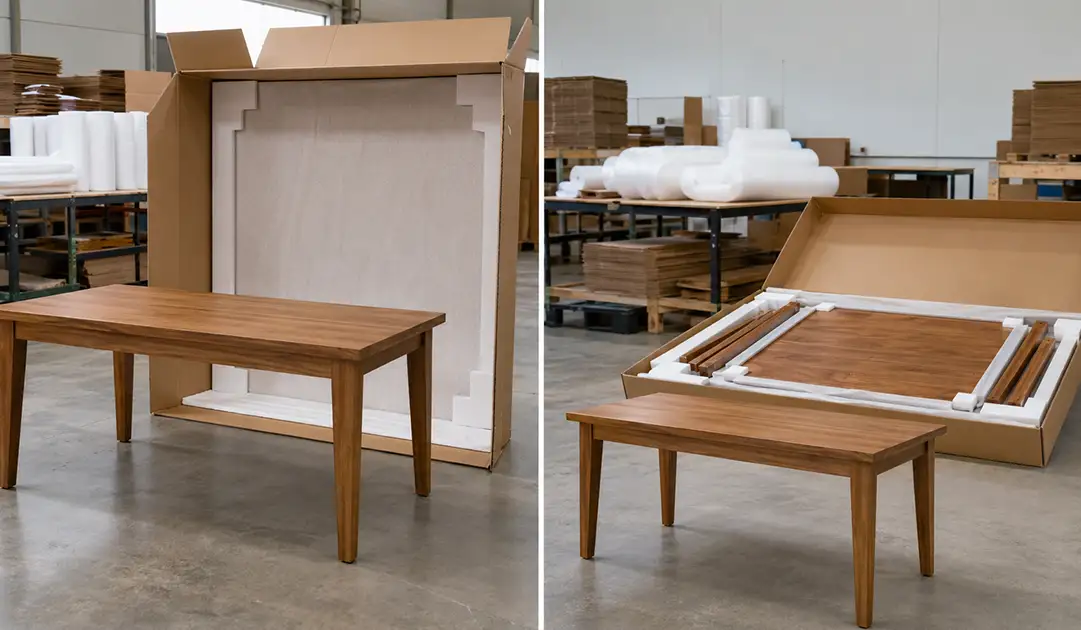
Construction affects logistics too. Knock-down, or KD, construction can reduce packed volume for suitable products, but it should be judged together with joint strength, hardware, assembly time, instructions, carton size, and customer experience.
For retailers sourcing Indonesian indoor furniture, wood species, finishing, and weaving options should be selected based on the intended price position and customer expectation, not simply on what is available.
Choose a Supplier That Protects Total Commercial Cost, Not Just the Quoted Price
Cheaper quotations can look attractive when retailers compare the same product across different suppliers. But price alone does not show whether a supplier can repeat the approved quality, meet production requirements, or deliver on schedule.
A supplier affects production consistency, manufacturing capability, and delivery reliability. So furniture retailers should also look at production control, quality control, communication, and how well the supplier understands the product being developed.
MPP Furniture, for example, works as an Indonesian furniture supplier with in-house wood processing, kiln drying, production, finishing, and packing. Its Cirebon facility covers 16,000 m², employs more than 200 craftspeople, and has more than 20 years of export experience.
Its production combines skilled handwork with machinery where accuracy and repeatability matter. MPP also supports product development, which becomes useful when a retailer has a target price but the first design comes in too high.
Instead of cutting specifications at random, the manufacturer can review the indoor furniture design and identify where materials, dimensions, construction, or finishing can be adjusted with less effect on selling value.

Use Packing to Protect the Product Without Adding Unnecessary Cost
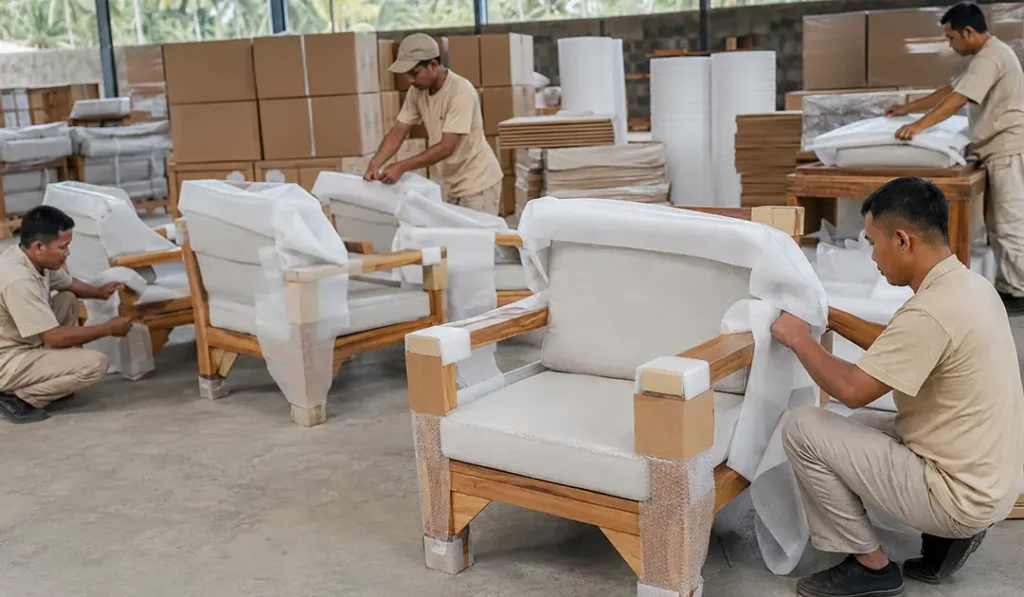
Packing should protect the product well enough for shipping without adding unnecessary material, volume, or weight.
Packing may look like a small part of the total product cost, but its impact can be significant. If the product is not packed properly, it can lead to scratches, crushed corners, broken parts, claims, and replacements.
On the other hand, over-protecting the product can add cost without adding enough value. More carton material, larger carton dimensions, and additional weight can increase packing and shipping costs.
Packing should match the product's shape, finish, vulnerable points, hardware, construction, and shipping route.
MPP Furniture experienced this with a product that had previously shipped safely using L-shape packing. After one shipment arrived with product damage, the packing was reviewed because unloading and handling conditions during transit can vary and cannot be fully controlled. The packing was then changed from an L-shape to a full box to provide better protection.
This is why packing should be discussed with the supplier from the early inquiry stage. It gives the supplier time to assess the product and recommend a packing method that provides enough protection without adding unnecessary cost.
Make the Product Easy to Compare, Understand, and Buy
Clear product presentation helps retailers compete on value instead of relying mainly on price. A well-made product can still struggle if customers do not understand why it deserves its price.
Customers should be able to understand dimensions, material, finish, construction, options, care needs, and the main differences from competing products. Photography should show the full piece, useful details, texture, scale, and a realistic room setting.
Zolak's 2026 furniture merchandising review found that all 10 brands it analyzed used alternate-angle images, detail shots, and in-context imagery. All 10 also provided detailed product information.
Abbacus Technologies also recommends defining the target audience, product differentiators, and product priorities before building a virtual showroom. The same logic applies to standard product pages, where retailers still need to decide what information and product differences customers should notice first.
If two dining chairs look similar but one retailer clearly explains the wood, finish, weaving, dimensions, and design details, the price difference becomes easier to understand.
Summary
Protecting profit margins in indoor furniture retail is not simply about getting the lowest factory price. It starts with choosing product models that fit the target customer, matching material and construction to the intended price, working with a supplier that can deliver consistently, and using packing that protects the product without adding unnecessary cost.
At the same time, the product still needs to communicate its value clearly in both showroom and digital channels. In short, stronger margins come from making better commercial decisions across the whole product and sourcing process, not from cutting costs in every possible area.
Have an indoor furniture design but still need to match it with the right material, construction, or target price?
Discuss your product with MPP Furniture and explore suitable development options before moving into bulk production. .
FAQs: Protecting Indoor Furniture Retail Profit Margins
1. How can indoor furniture retailers protect profit margins?
By choosing sellable products, matching specifications to the target price, working with a reliable supplier, controlling packing costs, and communicating product value clearly.
2. Is the lowest factory price always better for furniture retailers?
No. A lower factory price can still lead to higher total costs if production, quality, delivery, or packing are inconsistent.
3. How do material and construction choices affect furniture profit margins?
They affect both production cost and selling value. The specification should fit what the target customer is willing to pay.
4. Can furniture packing affect retailer profit margins?
Yes. Poor packing can cause damage and claims, while excessive packing can increase material, volume, weight, and shipping costs.
5. How can furniture retailers compete without relying on discounts?
By offering distinctive products and making their materials, design, finish, and other selling values easy for customers to understand.

Hi, I’m Salman, founder of MPP Furniture, an Indonesian furniture manufacturer serving global retailers and project-based clients.
I began my career in my family’s export-oriented furniture company, gaining hands-on experience in production, construction, finishing, material performance, and product development. With a clear understanding of how international buyers evaluate furniture quality and reliability, I founded MPP Furniture to deliver export-ready products with consistent standards.
Here, I share insights from the perspective of a furniture manufacturer working directly with production teams on the factory floor, focusing on manufacturing and supplier evaluation.
Connect on LinkedIn
0 Comments