A buyer can like a bedside table design but still find the quotation too high. That does not always mean the design is wrong; sometimes the full-solid specification is what pushes the product beyond the target price.
You do not have to choose between accepting the quotation, asking for a discount, or changing the design. A better route is to review the specification behind the product and see which parts can change while the original look, proportions, and function stay in place.
This article explains how buyers can review a custom bedside table component by component, compare a full-solid version with a revised version, and decide whether the new specification fits the target market better. If you are developing furniture with an Indonesian Furniture Supplier, this type of review can make the costing discussion more practical.
Start With the Buyer’s Original Bedside Table Request
Start by recording what the buyer wants to keep. This normally includes dimensions, overall shape, proportions, finish direction, drawer or storage function, and the original material specification.
Next, separate what the bedside table should look like from how every component must be manufactured. A solid wood bedside table may be the original request, but that does not automatically mean every internal panel, drawer part, or hidden component must use the same material.
MPP already explains in its guide to Custom Bedroom Furniture from Indonesia that dimensions, materials, finishes, storage, and other details can be adjusted around the buyer’s market. Here, the purpose is more specific: identify which specifications must stay fixed and which ones can still be reviewed.
Understand Why the Full-Solid Specification Creates a Pricing Problem
The pricing problem may come from the specification rather than the design itself. When full solid Sungkai is applied across more components, the material allocation can push the bedside table cost beyond what the buyer can support.
So the better question is not only, “Can the manufacturer make this cheaper?” You should also ask, “Which specifications are actually needed to preserve the product our customer sees and uses?”
MPP has already covered how wood, other materials, finishing, labor, packaging, and production choices affect pricing in Furniture from Indonesia: What Affects Pricing Costs. Here, the focus is narrower: whether selected specifications can change without turning the bedside table into a different product.
Review the Bedside Table Component by Component Before Changing the Design
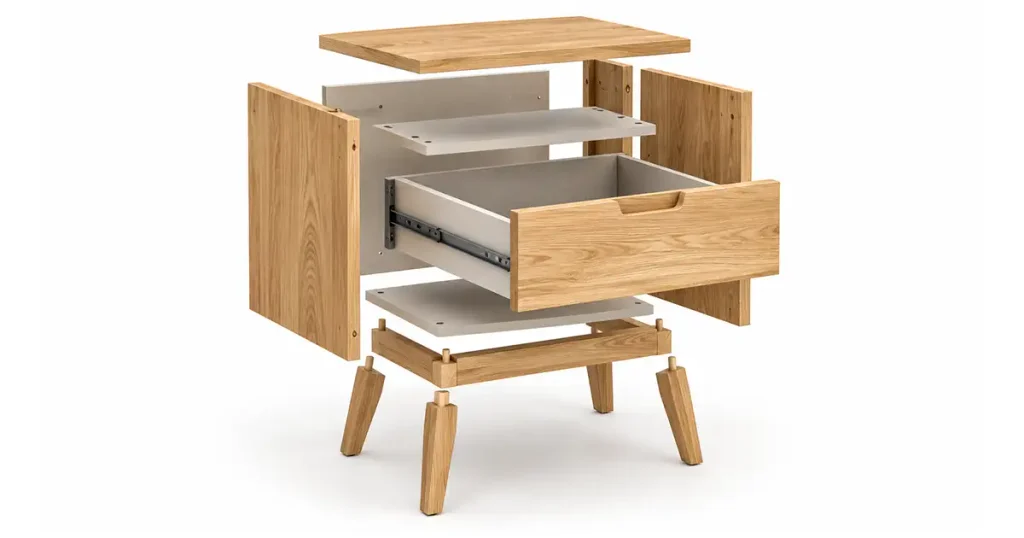
Do not replace the material across the whole product. Break the bedside table into parts and review each component based on visibility, function, structural role, finishing requirements, and how much it contributes to the design buyers recognize.
Protect the Parts That Define the Original Design
The parts that create the visual identity should receive the most protection during a cost review. This can include the silhouette, dimensions, proportions, visible wood surfaces, drawer-front appearance, leg or profile direction, and finishing appearance.
If changing one of these areas would make the bedside table look noticeably different in a showroom, it should not be treated as an easy saving. The purpose is to protect the design direction the buyer already approved, not create a different bedside table.
Identify Parts Where the Material Specification Can Be Reconsidered
After the visible and design-sensitive areas are identified, the manufacturer can review internal or less-visible components. You can then ask whether each part needs the same material as the exterior, and whether another option can meet the required function, thickness, hardware setup, finish, and product position.
This is where bedside table materials such as plywood may enter the discussion. A plywood bedside table is not the goal; the goal is a mixed-material specification where each material has a defined role.
Use Material Optimization Instead of Redesigning the Bedside Table
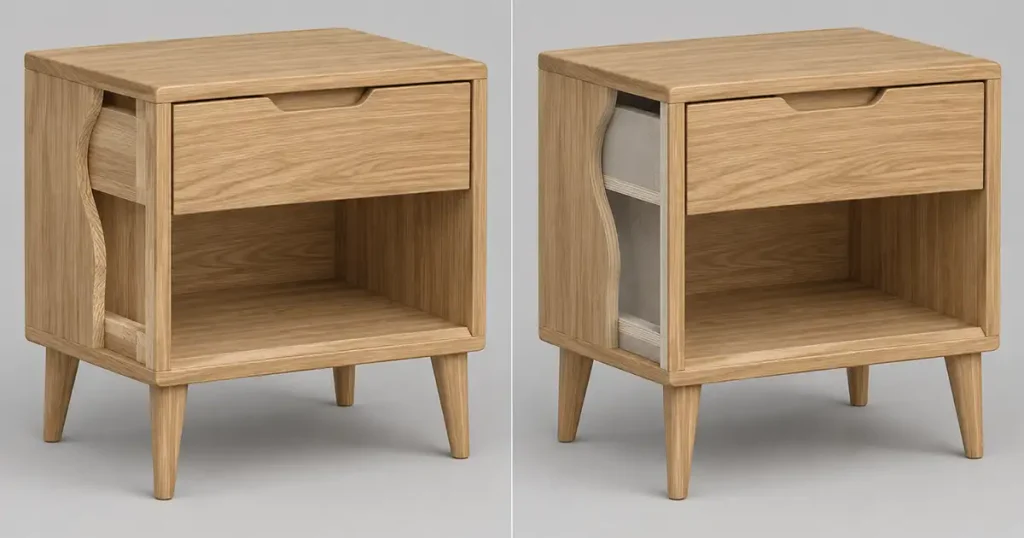
In the custom bedside table case behind this article, the buyer requested an existing design in full solid Sungkai. After the first costing did not match the intended market price, the product needed a specification review before changing the main design.
Our review starts by separating the parts that define the visible design from components where the material specification can still be discussed. The external design, dimensions, proportions, visual direction, and intended function remain the reference, while selected components can be evaluated for another material when the change fits the construction, finish, and intended use.
This is material optimization, not an attempt to remove as much solid wood as possible. A good bedside table manufacturer should explain why a material change is proposed, what stays the same, what changes, and what to expect from the revised version.
Understand the Trade-Off Before Approving the Material Change
Every cost reduction comes with a trade-off, even when the product still looks similar. Buyers should review whether a material change affects premium perception, visible wood character, finishing consistency, construction requirements, intended use, or the position of the product in the collection.
We have seen what can happen when a lower quotation comes from a different material standard. In one case discussed in our furniture pricing guide, a European buyer chose a cheaper supplier and later found that the teak used was mostly sapwood or lower-grade material than expected.
That experience is why material optimization should be agreed at specification level rather than discovered after production. You should still be able to keep the full-solid specification when its material story and premium position matter more than the possible saving.
Re-Evaluate the Product as a Revised Specification

Once both sides agree on the proposed change, treat the product as a revised specification rather than an informal saving idea. Compare the original and revised material allocation, quotation, appearance, function, and any technical notes affected by the change.
In previous MPP custom furniture development, some buyer requests started with only a sketch. Before sampling, our team prepared a 3D render, developed the technical drawing, reviewed material options, and confirmed the remaining details with the buyer so the sample was based on an approved reference.
We apply the same discipline when a material specification changes after costing. MPP’s guide on How to Create a Technical Brief for a Custom Furniture Manufacturer recommends recording the version, date, change note, and approval status so costing, sampling, production, and QC can work from the same approved specification.
Once the revised sample and specification are approved, the next step is making sure those standards can be maintained during production. For another bedroom furniture example, see how MPP approaches moving an approved mahogany headboard into bulk production, including production references, specification control, and QC checks.
Decide Whether the Revised Specification Fits the Target Market Better
The final question is not simply, “Is the revised bedside table cheaper?” Buyers should ask whether the revised price fits the retail segment, whether the original appearance is still protected, whether the product still meets its intended function, and whether the material story still fits the brand.
The saving also needs to be meaningful enough to justify the specification change. If the price difference is small but the material story becomes weaker, keeping the original full-solid version may make more sense for a premium collection.
A furniture production-cost study from the University of Lampung treats cost analysis as an input for company planning and business sustainability. When you compare products across an Indonesian Bedroom Furniture range, judge the final version by price, design, function, and market position rather than price alone
Final Thoughts: Optimize the Specification Before Changing the Design
A bedside table that is over budget does not automatically need a redesign. Protect the elements that make the product recognizable, review the specification component by component, and change only the areas where the commercial benefit is worth the material and production trade-off.
The final specification should be judged by design preservation, product requirements, and target-market fit. That gives retailers and buyers a clearer way to decide whether a revised custom bedside table still belongs in the collection they planned.
Review Your Bedside Table Specification With MPP
Have an existing bedside table design that is above your target price? Send us the drawing, material request, target market, and price direction, and our team can review the specification, discuss possible material adjustments and their trade-offs, and prepare a clearer development direction before sampling or production.
FAQ: About Custom Bedside Table Cost and Materials
1. Can a custom bedside table cost less without changing the original design?
Yes, in some cases. The external design can remain the same while selected material or construction specifications are revised, but the manufacturer should first review which components affect appearance, function, and construction.
2. Does every part of a solid wood bedside table need to be solid wood?
Not automatically. Each component should be reviewed based on visibility, structural role, finish, function, and the product position expected by the buyer.
3. Can solid wood and plywood be used in the same bedside table?
Yes, when the construction and finish are suitable for mixed-material use. The exact material allocation should be agreed before sampling or production.
4. Should buyers review a new sample after changing bedside table materials?
A revised sample is useful when the change may affect appearance, construction, finish, function, hardware fixing, or other approved details. It gives the buyer and manufacturer a physical reference before bulk production.
5. What should buyers compare after receiving a revised quotation?
Compare the original and revised material allocation, appearance, function, price, and market position. A lower quotation only makes sense when the resulting product still fits the intended customer and brand.

A versatile content creator with a strong foundation in product photography and videography, and a comprehensive brand strategy. Capable of creating engaging content to connect consumers and producers, web analytics, and engaging visual content to drive interest and growth for a product or brand.



0 Comments