Japandi bedroom furniture often looks effortless, which is why buyers need to judge it carefully. A calm result comes from controlling proportion, texture, and visual weight, not simply placing light wood and rattan together.
For retail buyers, strong Japandi bedroom furniture depends less on how many natural materials are used and more on how those materials are balanced. This guide will help you assess that balance before product development.
We will look at light wood as the visual base, rattan as a controlled accent, and restraint across bedroom SKUs. You can also review MPP’s Indonesian Bedroom Furniture range for product references.
What Defines a Japandi Bedroom Visually
A Japandi bedroom design usually combines clean silhouettes, warm-neutral colors, natural texture, simple detailing, and furniture that does not feel visually heavy. The room should feel edited, with enough quiet space for forms and materials.
Architectural Digest describes Japandi through Japanese and Scandinavian influences, with minimalism, function, nature, and calmness at the center. For buyers, the practical lesson is simple: furniture should communicate restraint through form before added texture.
Natural materials alone are not enough. A bed or wardrobe can use wood and cane but still feel too busy if the silhouette is bulky or several surfaces compete for attention.
Why Light Wood Works as the Visual Foundation
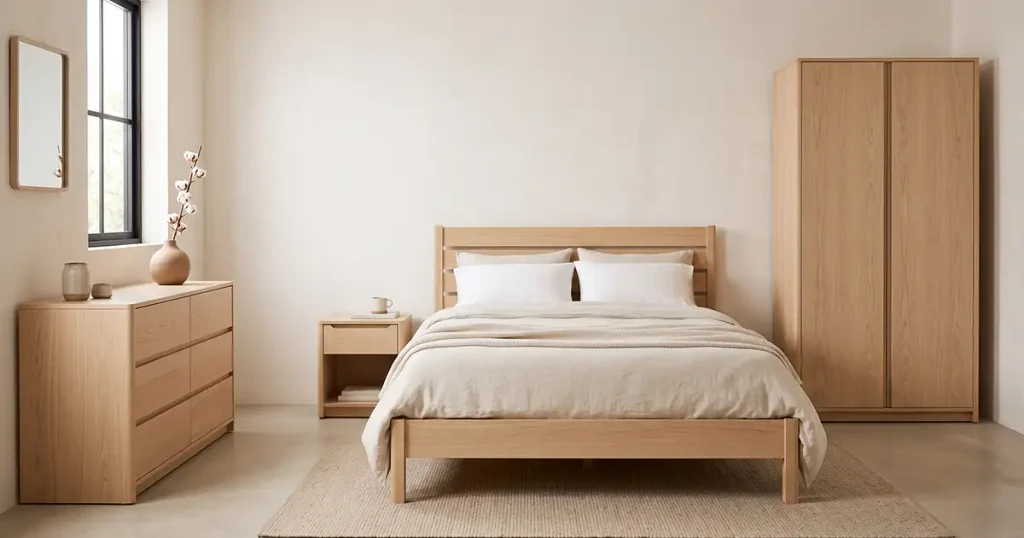
Light wood bedroom furniture works well in a Japandi direction because large wooden surfaces set much of the visual temperature. Beds, wardrobes, dressers, and nightstands can feel more open when the wood tone is soft and the grain supplies natural character.
We saw this in a U.S. indoor furniture project where the buyer first requested White Oak, then approved Sungkai after reviewing our sample because the color direction and surface feel fit the collection plan. It showed us how strongly material tone can influence a collection.
For a deeper material discussion, read our guide to light Sungkai wood furniture for indoor retail collections. Here, light wood furniture is the quiet foundation for other accents.
How Rattan Adds Texture Without Making the Design Feel Heavy
Rattan bedroom furniture adds texture through weave, shadow, and open surface areas. Used with purpose, it can break up a solid wood plane and add handcrafted character without extra ornament.
From the wood and rattan bedroom furniture we have developed, woven areas work best when they have one clear visual role. MPP has produced bedroom pieces with Sungkai and rattan, including a Sungkai headboard with rattan webbing as a strong visual feature.
For more detail, see Rattan and Sungkai Wood: The Perfect Furniture Combination from Indonesia. For a Japandi brief, the question is not how much rattan you can add, but where it contributes the most visual value.
Why Balance Matters More Than Using More Natural Materials
Using more natural materials does not automatically create better Japandi furniture. If the bed, nightstand, dresser, wardrobe, and bench all use large woven panels, the range can become visually busy.
For supporting pieces such as nightstands, visual consistency does not always require every component to use the same material specification. If the target price becomes a concern during development, see how buyers can reduce bedside table cost without changing the original design by reviewing which specifications need to remain visible and which can be reconsidered.
Too much rattan can also move the mood toward tropical, coastal, or bohemian references. Those directions are valid, but they communicate something different from the restraint expected in Japandi bedroom furniture.
Try removing rattan from one or two supporting SKUs. If the products still feel related through wood tone, proportion, silhouette, and repeated details, the collection has a stronger visual system.
Use Wood as the Base and Rattan as a Controlled Accent
A practical way to review a Japandi bedroom collection is Base, Accent, Repeat. Use wood as the dominant base, place rattan where it has a clear visual purpose, then repeat the collection language through proportions, leg forms, edge details, or finish.
Bed as the Main Textural Focal Point
The bed is often the best place for a stronger woven accent because the headboard naturally draws attention. A light wood frame with a woven rattan headboard can create one focal area while keeping the rest of the structure calm.
In one U.S. bedroom project, MPP developed Queen and King bed frames with woven details and tailored finishes. Those SKUs became best-sellers and generated repeat orders, showing that one distinctive textural feature can give a product strong identity without repeating the same treatment everywhere.
Keep Supporting Furniture More Restrained
Nightstands, dressers, and wardrobes can stay more wood-dominant so the bed keeps its visual role. A bench may repeat a smaller woven detail, while a dresser can remain mostly solid wood and still feel related through tone, proportion, and form.
If your team later wants to adjust headboard details, dimensions, materials, or finishes, our custom bedroom furniture guide explains the available development options. The visual principle is simple: repeat the design language, not the same material coverage.
Different Light Woods Can Create Different Japandi Moods
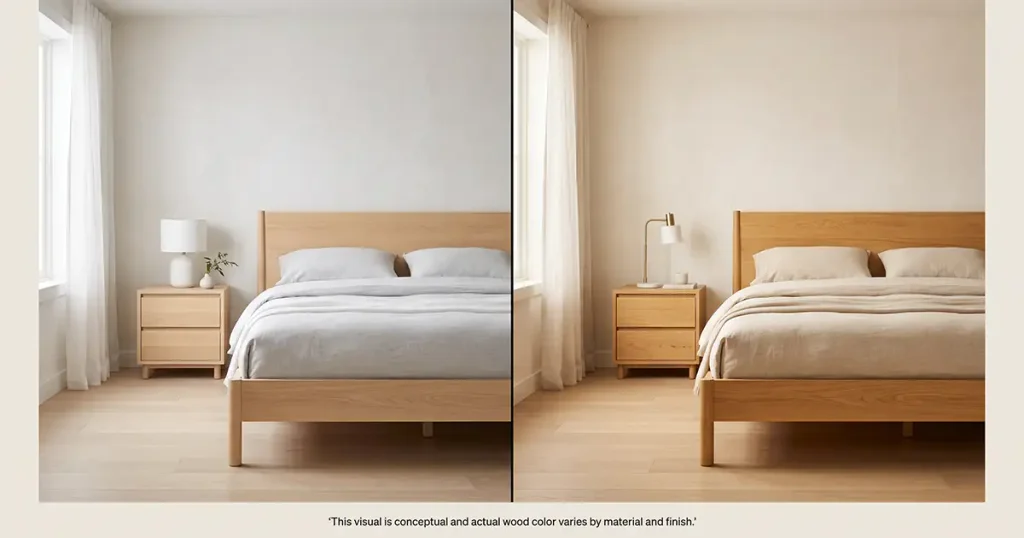
Different light woods can shift the mood even when the furniture shapes stay similar. Sungkai tends to support a lighter, pale-yellow to light-brown direction, while Mindi can create a warmer golden-brown mood.
For buyers, this means a Japandi brief should describe more than the style name. You should also define whether the collection should feel pale and airy, warmer and grounded, or somewhere between those directions.
If material selection becomes the next decision, see our Sungkai vs Mindi Wood guide. That article covers the material differences in more depth, while this article stays focused on visual mood.
From Japandi Inspiration to a Coordinated Bedroom Collection
Once the visual direction is clear, buyers can translate it across several SKUs. A coordinated bedroom furniture collection should share a wood tone, texture level, silhouette direction, and repeated design cues rather than treating every product separately.
Our bedroom development experience shows that a bed may act as the hero product while nightstands, dressers, wardrobes, and benches play supporting roles. The next step is to turn those shared references into a development plan, which we explain in our guide to bedroom furniture collection development.
If you are looking for an Indonesian Furniture Supplier that works with light wood, rattan, mixed-material bedroom furniture, and custom development, MPP can help review the visual direction before sampling begins. A clear material hierarchy gives your team a stronger starting point for a cohesive Japandi furniture range.
From Japandi Inspiration to a Coordinated Bedroom Collection
If your team already has a Japandi mood board but is still deciding how light wood, rattan, and supporting details should be distributed across the range, share your references, target wood tone, planned SKUs, and preferred rattan placement with MPP Furniture. Our team can help translate that visual direction into a more focused bedroom collection plan through free consultation and product development support before sampling begins.
FAQ: Japandi Bedroom Furniture Design
1. What makes bedroom furniture look Japandi?
Japandi bedroom furniture usually combines clean forms, natural materials, warm-neutral tones, and restrained texture. The pieces should feel calm and related without depending on heavy decoration.
2. Can rattan be used in Japandi bedroom furniture?
Yes. Rattan can add natural texture and handcrafted character to Japandi bedroom furniture, especially on headboards or selected accent areas. It works best when it supports the design rather than dominating every SKU.
3. Should every bedroom furniture SKU use rattan?
No. A coordinated range can use rattan on selected focal pieces while supporting products remain more wood-dominant. Wood tone, proportion, leg form, and finish can still connect the collection.
4. Does Japandi furniture always need light wood?
No. Light wood is common because it supports an airy, natural mood, but Japandi furniture is defined more by restraint, proportion, natural texture, and simple forms than by one exact wood color.
5. How can buyers keep a Japandi bedroom collection visually consistent?
Set shared visual rules before developing each SKU, including wood tone, rattan placement, texture level, silhouette, and repeated details. Then review the products together as one collection rather than as separate designs.

A versatile content creator with a strong foundation in product photography and videography, and a comprehensive brand strategy. Capable of creating engaging content to connect consumers and producers, web analytics, and engaging visual content to drive interest and growth for a product or brand.

0 Comments