Indoor furniture can generate sales throughout the year because buyers respond to many purchasing triggers, from daily use and new homes to renovations, replacements, and commercial projects.
However, having many buying triggers does not mean every month will deliver the same sales volume. Retailers still need the right product mix, stock plan, and reorder schedule to turn regular demand into a steady business program.
For buyers working with an indoor furniture manufacturer, the goal is not only to fill one container. It is to build a collection that can be reviewed, reordered, and updated based on real sales performance.
Why Indoor Furniture Is Less Dependent on One Selling Season
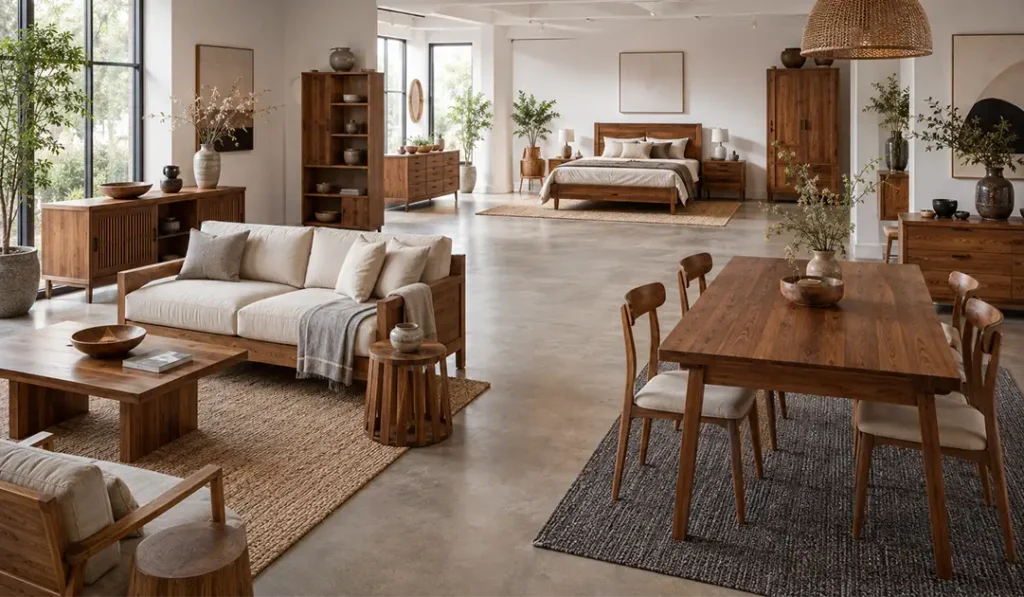
Indoor furniture supports everyday needs, so its relevance is not limited to one selling period. Beds, dining tables and chairs, sideboards, and living room pieces are used across different rooms and daily activities.
Sales can still rise during holidays, housing peaks, promotions, or major retail events. But these periods are not the only sources of demand.
Retailers should separate two ideas:
- Year-round relevance means customers may have a reason to buy indoor furniture in any month.
- Equal monthly sales means every month produces the same result, which is unlikely.
Indoor furniture can remain commercially useful throughout the year, but retailers still need to study local customer behavior, housing activity, price sensitivity, and promotional timing.
Different Rooms Create Different Buying Opportunities
A broad indoor furniture range gives retailers several customer entry points. Each room answers different needs, price levels, and purchase triggers.
Living Room Furniture Supports Daily Use and Replacement Needs
The living room is used every day for relaxing, gathering, and receiving guests. Because of this, products such as coffee tables, consoles, side tables, sofas, and armchairs can become practical entry points for customers.
Frequent use can also lead to wear, replacement needs, layout changes, or a new interior style. Smaller accent pieces may also attract customers who are not ready to purchase a complete living room set.
Dining Furniture Serves Residential and Commercial Markets
Dining furniture serves homes, restaurants, cafés, hospitality projects, and rental properties.
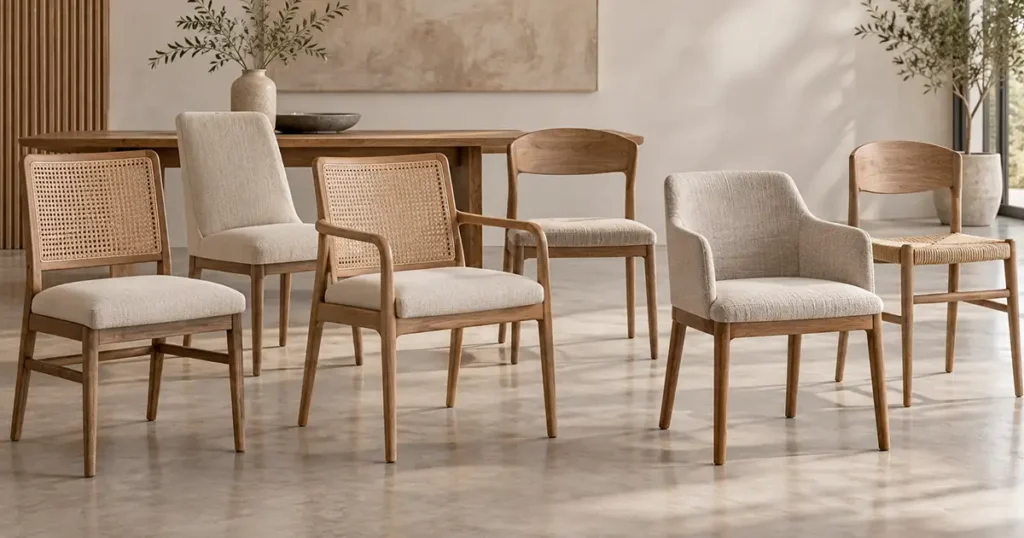
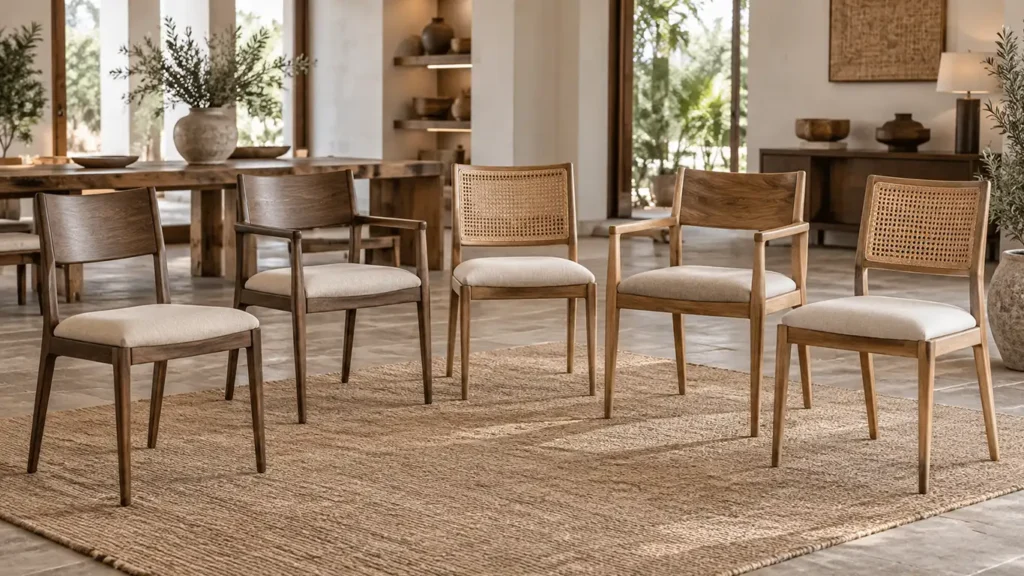
Dining tables, chairs, benches, and sideboards can be sold as complete sets or separate products. Dining chairs may also support repeat purchases because customers often order several units at once or add more units later.
Bedroom Furniture Responds to Practical Life Changes
Bedroom furniture includes bed frames, nightstands, dressers, wardrobes, vanity tables, and storage pieces.
Demand may follow moving, marriage, growing families, property furnishing, or product replacement. These products combine practical needs with style, so customers often look for pieces that work together in one room.
Why a Balanced Indoor Assortment Can Reduce Retail Risk
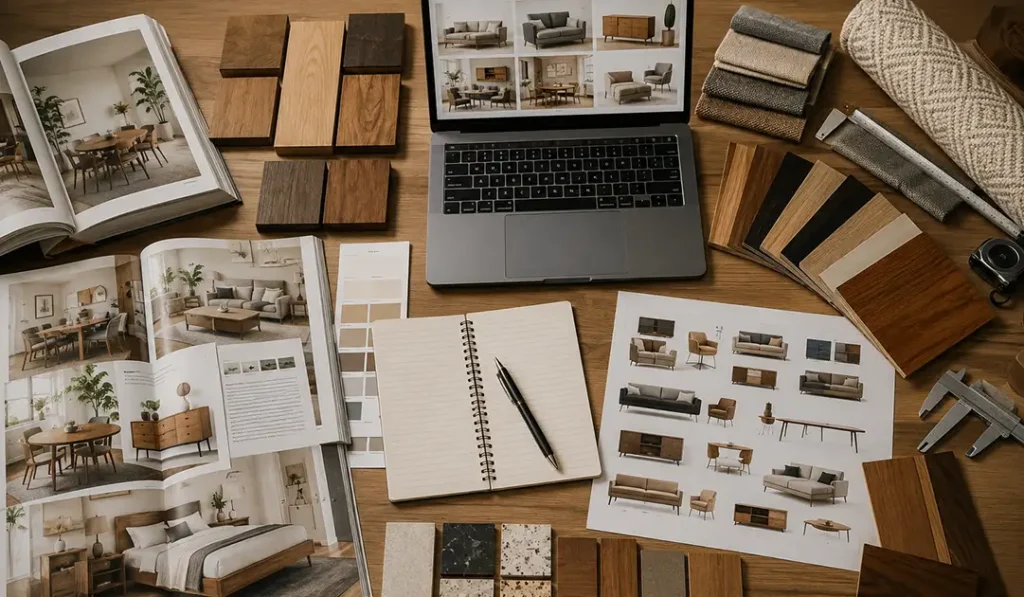
A balanced assortment can reduce dependence on one product because customers enter the category through different needs, rooms, and price points.
Furniture retailers can divide the collection into three groups:
- Core products are regular-selling items that form the base of the collection. These may include dining chairs, beds, tables, and armchairs.
- Supporting products help complete a room and increase basket size. Side tables, benches, consoles, and nightstands can support larger purchases and make the collection feel more connected.
- Higher-value products can raise the total order value, but they may move more slowly. Large wardrobes and display cabinets usually need more careful stock planning because they require more space and higher investment.
However, too many similar products can divide sales and increase storage costs. Each item should have a clear role, so the collection remains focused and stock moves more smoothly.
Retailers should also match the product mix with their target customers. A compact online seller may need different dimensions, price points, and product types from a large showroom or hospitality supplier.
Material direction can also help organize the range. Sungkai furniture for light indoor collections can support modern, Japandi, or Scandinavian styles, while Mahogany furniture for warm indoor collections can support a richer, mid-premium direction.
Custom furniture development can also help retailers avoid offering products that look too similar to competitors. MPP Furniture supports B2B buyers with free product development, size adjustments, finish options, and private-label collection services.
Why Year-Round Selling Still Requires Inventory and Reorder Planning
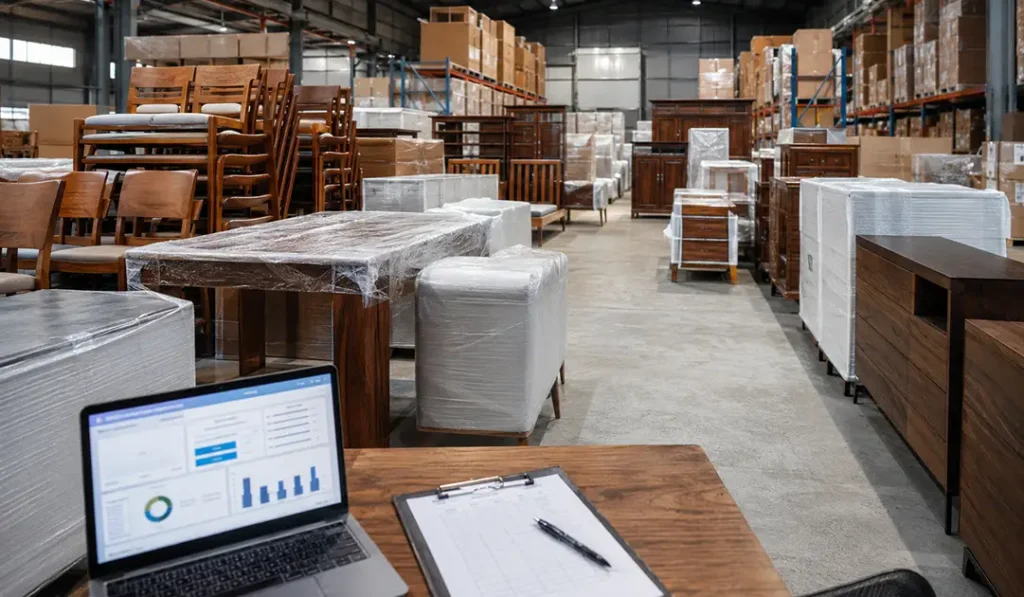
Having many buying entry points does not mean retailers can stock products without a clear plan. Poor inventory decisions can create overstock, slow-moving items, lost sales, and higher warehousing costs.
Overstock can happen when several products look too similar, when a product cannot compete on price, or when retailers reorder without reviewing sales by SKU. Without proper forecasting, buyers may restock the wrong products while stronger items run low.
Stockouts create a different risk. A retailer may run out of a core product, reorder too late, or fail to account for production, packing, shipping, and customs time. When this happens, customers may move to a competitor that offers a similar product with immediate availability.
A mismatched collection can also affect sales. For example, a customer may like a dining chair but delay the purchase because there is no suitable dining table to complete the set.
Retailers should review products by sales speed and role:
- Fast-moving products need more frequent stock checks and earlier reorder decisions.
- Supporting products should remain available when they help complete a set or room collection.
- Higher-value products may need lower stock levels and closer sales review because they often require more space and investment.
The full collection should not be managed as one group. Each product has a different sales pattern, storage cost, lead time, and reorder need.
A practical inventory review should include sell-through, current stock, incoming stock, supplier lead time, and expected promotion periods. This gives retailers a clearer basis for deciding what to reorder, when to reorder, and how much to order.
Plan Indoor Furniture Sourcing as a Continuous Program
Retailers can manage year-round indoor furniture more effectively when sourcing is treated as a continuous program instead of a series of unrelated purchases.
For example, one of our U.S. buyers reviews which products are still relevant, which items are selling well, and where new product opportunities may exist. Based on that review, the buyer develops new samples while continuing to reorder proven items that are already performing in the market.
Once a sample is approved, the buyer may place a small test order, such as 30 units, to measure market response. After the products are launched, the buyer reviews sales, returns, customer comments, and stock movement.
When the product performs well, the buyer places a repeat order to maintain stock and support continued sales. If the response is weaker, the design, finish, size, or product role can be reviewed before the next order.
This approach helps retailers develop new products with lower risk while keeping proven products available. It also gives both the buyer and manufacturer a clearer basis for planning production, stock, and future collection updates.
Why Source Indoor Furniture from Indonesia?
Indonesia can suit retailers that want solid wood materials, handcrafted character, production capacity, and custom product development in one sourcing program.
At MPP Furniture, advanced machinery such as CNC equipment is combined with skilled handwork. Machinery supports accuracy and repeat production, while manual work adds detail to shaping, sanding, assembly, and finishing. This combination helps indoor furniture retain a more authentic character without limiting production capacity.
MPP also manages production in-house, from sawmilling and kiln drying to construction, finishing, inspection, and packing. This gives the production team better control over material preparation, dimensions, finish consistency, and final product quality.
For retailers seeking an Indonesian furniture manufacturer, these capabilities can support differentiated collections without giving up production control or export preparation.
You can also explore what makes Indonesian indoor furniture different from other sourcing countries for more insight into how Indonesian production combines semi-handmade craftsmanship, machinery, and export-ready manufacturing.
Final Thoughts: Build a Year-Round Program, Not Just a Product List
Indoor furniture can remain commercially relevant throughout the year, but sales will still vary between periods and product categories. Retailers should not treat year-round relevance as a reason to hold every product in large quantities.
A balanced assortment, clear SKU roles, inventory review, and planned reordering can help retailers reduce overstock and keep proven products available. The strongest approach is to test products, study actual sales, and update the collection based on market response.
For a stronger long-term program, treat indoor furniture sourcing as a process that can be reviewed, tested, reordered, and updated.
Plan Your Indoor Furniture Collection with MPP
Share your target market, product references, finish direction, expected volume, and reorder plan with MPP Furniture to start building a collection for repeat sales.
FAQs: Selling Indoor Furniture All Year
1. Can indoor furniture sell throughout the year?
Yes. Indoor furniture can sell throughout the year because demand comes from daily use, moving, renovations, replacements, changing household needs, and commercial projects.
2. Does year-round demand mean equal sales every month?
No. Year-round demand means customers may have a reason to buy in any month, but sales volume can still rise or fall based on local demand, promotions, housing activity, and price sensitivity.
3. Which indoor furniture categories can support regular sales?
Living room, dining room, bedroom, storage, and accent furniture can support regular sales because each category serves different rooms, budgets, and buying triggers.
4. How can retailers reduce the risk of overstock?
Retailers can reduce overstock by giving each SKU a clear role, reviewing sell-through, limiting similar products, and reordering based on real sales performance.
5. Why should indoor furniture sourcing be planned as a continuous program?
A continuous sourcing program helps retailers test new products, reorder proven items, adjust weaker designs, and maintain stock based on actual market response.

Hi, I’m Salman, founder of MPP Furniture, an Indonesian furniture manufacturer serving global retailers and project-based clients.
I began my career in my family’s export-oriented furniture company, gaining hands-on experience in production, construction, finishing, material performance, and product development. With a clear understanding of how international buyers evaluate furniture quality and reliability, I founded MPP Furniture to deliver export-ready products with consistent standards.
Here, I share insights from the perspective of a furniture manufacturer working directly with production teams on the factory floor, focusing on manufacturing and supplier evaluation.
Connect on LinkedIn
0 Comments