A good chair sample can make a supplier look ready for a larger order. But for retail buyers, the bigger question is whether that manufacturer can control tables, benches, sideboards, chairs, and mixed-material pieces as one coordinated program.
This article will help you separate product capability from collection capability. You will see what to check before placing a multi-SKU order with one dining room furniture manufacturer.
We will cover collection scope, construction, materials, finish control, sampling, scheduling, QC, packaging, and shipment. By the end, you should know whether one factory can manage the collection or whether some products should stay with separate suppliers.
Define What Your Complete Dining Collection Actually Includes
Retailers should define the collection as a production scope, not only a design concept. A complete range may include chairs, tables, benches, sideboards, bar stools, and mixed-material pieces.
Map SKU count, quantity, materials, construction type, finish family, packaging, and target shipping date. The Indonesian Indoor Furniture Manufacturer category shows the wider product scope that can sit inside one indoor program.
Five related products are several production paths that must meet at the same collection deadline.
Check Whether the Manufacturer Can Handle Different Furniture Constructions and Materials Across the Collection
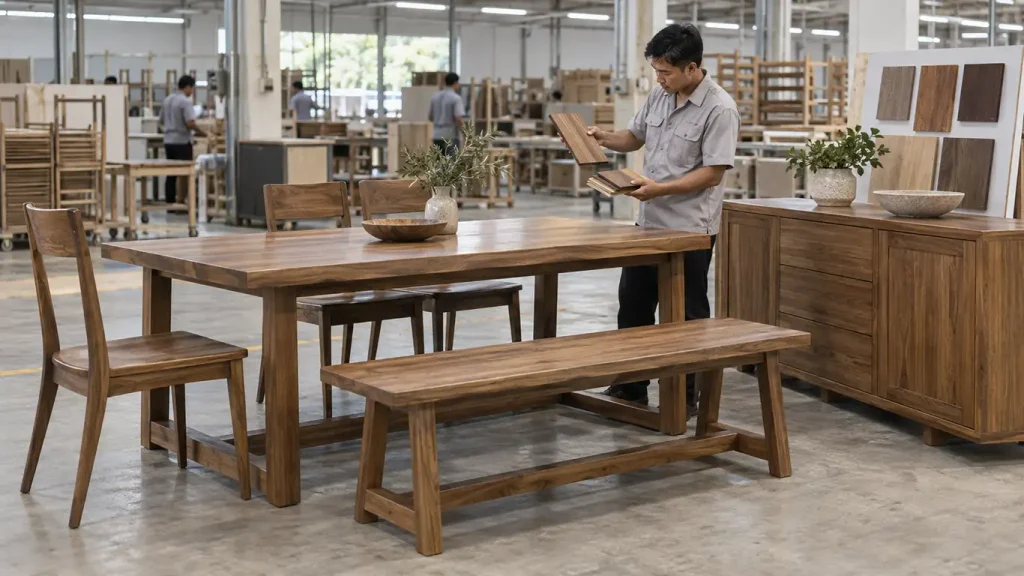
An indoor furniture manufacturer may handle chairs, tables, benches, and sideboards, but each product places different demands on machinery, joinery, assembly, weaving, hardware fitting, and finishing. Ask how each SKU is produced instead of assuming a broad catalog proves capability.
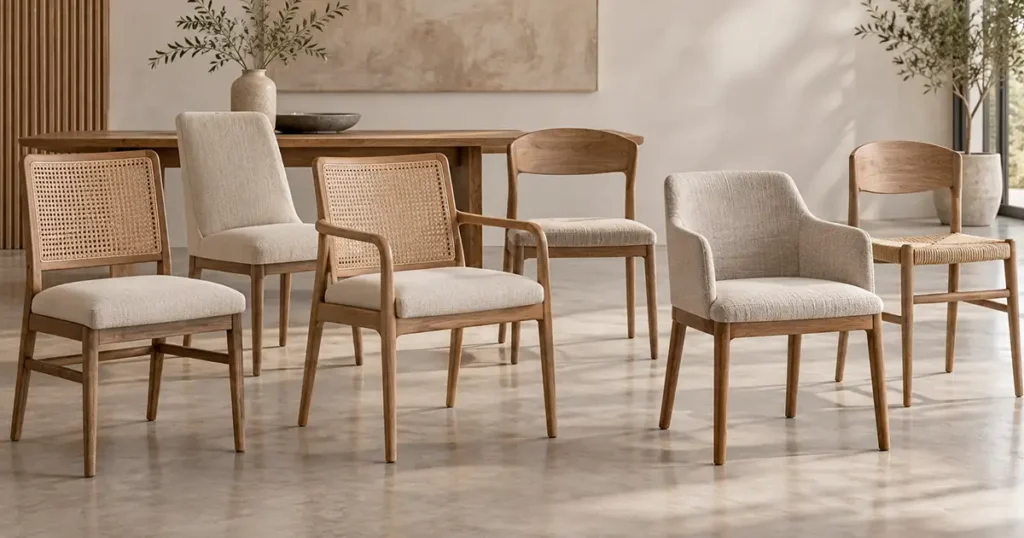
Check whether solid wood, rattan, upholstery, metal, glass, or stone are handled in-house or through outside partners. Our guide to wood and rattan dining chairs shows why materials, construction, woven work, comfort, and repeatability need to be considered together.
In July 2026, we worked with an Australian buyer who first requested Teak for an indoor dining chair collection. After reviewing the retail price, finish direction, and lighter natural look, we discussed Sungkai, and the buyer preferred that direction after sampling.
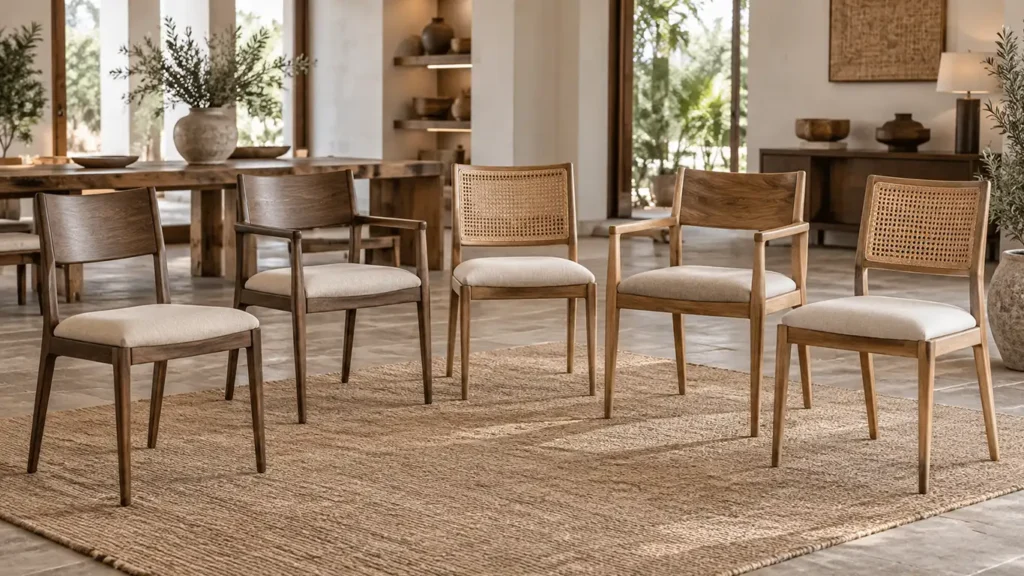
For buyers planning multiple chair SKUs within one coordinated range, you can also explore our dining chair collection to see how different chair designs, materials, and specifications can fit within a broader indoor dining program.
Check Whether Finish Standards Can Stay Consistent Across Multiple SKUs
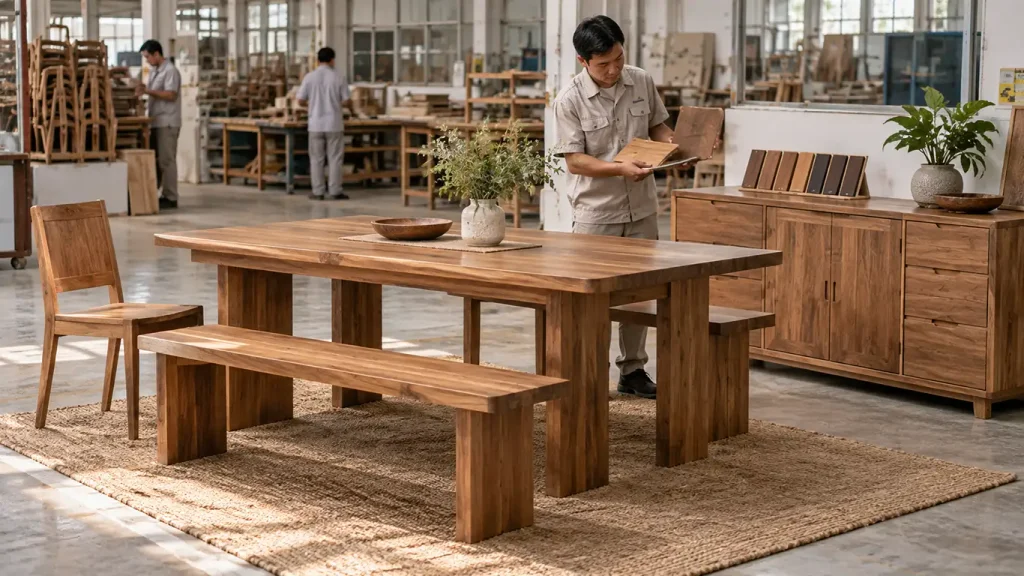
Collection consistency does not require every product to look identical. A table surface, chair frame, rattan panel, and cabinet front can read differently, so buyers need a shared visual reference plus SKU-specific acceptance limits.
In one MPP product development, the wood finish and woven color looked suitable separately, but the wood looked warmer once both appeared together on the chair. We adjusted the finish reference before sample approval.
Approve finish references on actual materials and compare related products side by side. Our article on how to match wood finish and rattan tone explains this collection-first logic at chair level.
Review How the Manufacturer Develops and Approves Multiple Samples
A collection creates more dependencies than one sample approval. If a chair finish changes after the table is approved, the revision may affect another product, cost, packaging, or timing.
For custom dining room furniture, ask for one approval trail per SKU covering the latest drawing, material, finish, sample status, comments, and final approval. In our production process, we use the approved sample as a working reference and correct early differences before they spread across the batch.
A supplier should tell you what is approved, what is still open, what changed, and whether that change affects another SKU. This makes the communication and approval workflow part of production control, not just customer service.
Evaluate Production Capacity as a Multi-SKU Schedule, Not Just a Monthly Number
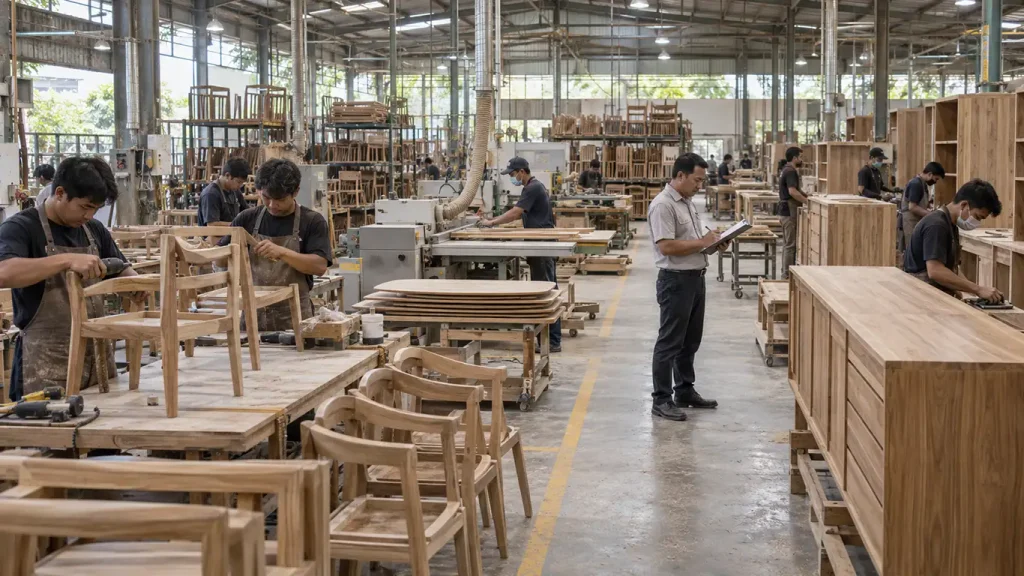
Monthly output does not tell you whether your collection can be ready together. Chairs may need more handwork, tables may use different machines, and sideboards may need hardware fitting and extra packing time.
Ask your dining furniture manufacturer when each SKU enters production, finishing, inspection, and packing, and which products compete for the same resources. An Indonesian Furniture Manufacturer should be judged on how the schedule works across the collection, not only on one capacity figure.
Identify the SKU with the longest production path because it may control the shipment date. That gives your team a better basis for launch planning.
Check QC Consistency Across the Whole Collection
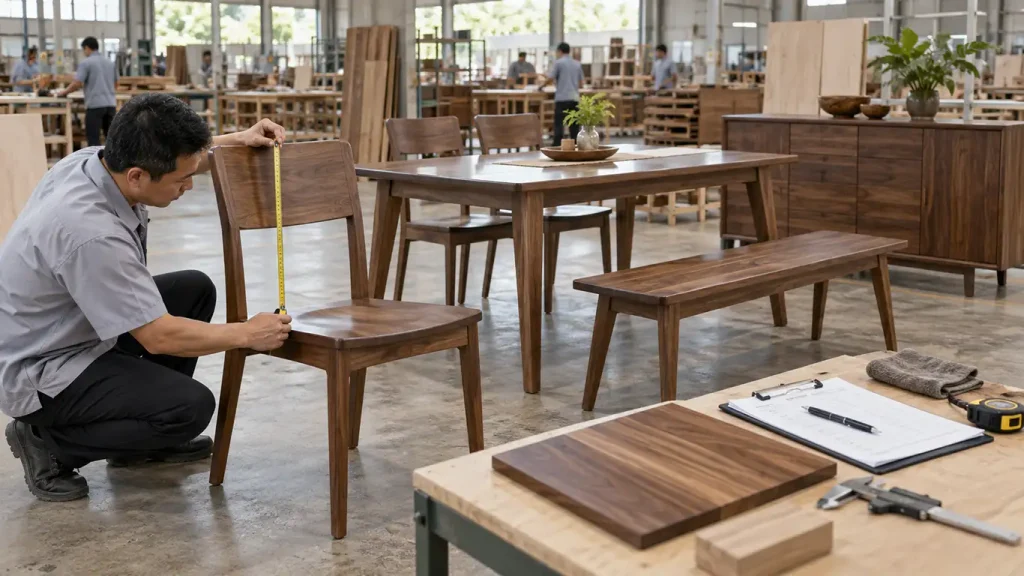
QC should work on two levels. Each SKU needs checks for dimensions, construction, function, workmanship, finish, and materials, while the collection needs checks for finish relationships, labeling, revision status, and packaging references.
In our chair production checks, we compare several early units side by side because changes in profile, seat height, joint position, or silhouette are easier to see across several pieces. Our guide to wood and rattan dining chair bulk production shows how an approved sample becomes a working QC reference.
For seating, ISO 7173:2023 can support strength and durability testing, but it does not replace factory checks for appearance, finish, workmanship, or cross-SKU consistency.
Evaluate Packaging and Shipment Coordination Across Different Product Types
A complete collection can combine assembled chairs, knock-down tables, hardware packs, cabinet doors, woven surfaces, and different carton sizes. Buyers should check SKU labels, carton markings, protection, hardware control, packing lists, quantities, and loading sequence.
Review packaging during product development, not after production is finished. A late change can affect carton size, container use, loading order, and delivery cost.
The guide on how to choose the best Indonesian furniture manufacturers for export covers broader checks such as production, samples, packaging, communication, and export readiness. Here, the question is narrower: can those systems work together for your dining collection?
Final Decision: Choose Collection Capability, Not One Good Sample
One good sample proves a manufacturer can make one product well once. Collection capability means the supplier can repeat approved standards across different SKUs while controlling materials, finishes, revisions, schedules, QC, packaging, and shipment as one program.
You can consolidate the collection when the manufacturer shows control across those areas. If one product depends on a process the supplier cannot manage reliably, splitting that part of the collection may be safer.
Planning a Complete Indoor Dining Collection?
If you have a moodboard, drawings, finish direction, or planned SKUs, MPP Furniture can review how they fit into one production program. We support retailers, importers, wholesalers, and private-label brands with consultation, product development, custom design support, in-house production, and quality control while you keep final approval.
FAQ: Complete Indoor Dining Collection Manufacturing
1. Can one furniture manufacturer produce a complete dining room collection?
Yes, when the manufacturer can control different constructions, materials, finishes, schedules, QC, packaging, approvals, and shipment across every SKU. Product variety alone is not enough.
2. What should buyers check before consolidating several dining furniture SKUs?
Check construction, materials, finish references, sample approvals, scheduling, QC, packaging, communication, and shipment planning. Ask for evidence of how these parts connect across the collection.
3. Is one approved dining chair enough to evaluate a manufacturer?
No. An approved chair shows that the product can be made once, but buyers should still review early production units and the manufacturer’s ability to manage related SKUs consistently.
4. Is it better to use one manufacturer or several suppliers?
Neither option is always better. One manufacturer can reduce coordination work when it has the required capability, but several suppliers may be safer when some products need processes outside one factory’s proven scope.
5. How should buyers evaluate production capacity for a multi-SKU dining collection?
Do not judge capacity only by monthly output. Review the production route, timing, factory load, finishing schedule, inspection point, packing date, and shipment target for every SKU.

A versatile content creator with a strong foundation in product photography and videography, and a comprehensive brand strategy. Capable of creating engaging content to connect consumers and producers, web analytics, and engaging visual content to drive interest and growth for a product or brand.

0 Comments