Choosing wood and rattan dining chairs can look simple until the first sample arrives. The wood may feel too heavy, the weave too rustic, or the chair disconnected from the dining table.
For retail buyers, that is the real risk. A material pairing can look good in a reference image and still be wrong for the collection because customer expectations, price, comfort, maintenance, and production consistency were not considered together.
If you are developing with an Indonesian furniture manufacturer, start with a different question: “Which combination fits the customer, the collection, and the way this chair needs to be produced at scale?” That leads to better material decisions before sampling.
Start With Your Target Customer, Price Point, and Collection Style
Do not start with “Teak or Sungkai?” Start with who will buy the chair, the intended retail price, and what the collection should communicate.
A premium natural-material range may need stronger wood presence and a richer finish. A lighter contemporary or Japandi collection may work better when the frame feels quieter and the woven area carries more of the visual identity.
The right combination is not the most expensive one. It is the one that supports the collection’s commercial position and gives customers a reason to value the product.
Choose the Wood Based on the Look and Positioning You Need
For solid wood dining chairs, the wood species affects more than the frame. It changes color, grain presence, finish direction, perceived value, and how strongly the frame reads visually.
When Teak Makes More Sense
Teak makes more sense when the wood itself needs to support a premium material story. Its warmer character can give the chair stronger visual presence when customers are expected to value the material choice.
That does not mean Teak belongs in every premium collection. For a deeper look at when the extra material cost can support the retail position, read Is Teak Worth the Premium for Dining Chairs?.
When Sungkai Makes More Sense
Sungkai can make more sense when the collection needs a lighter appearance, flexible finishing, or a more accessible price position. It also works when the mixed-material design matters more than making the wood species the product’s main selling point.
In July 2026, we worked with a buyer from Australia who initially requested Teak for an indoor dining chair collection. After reviewing the target retail price, finish direction, and overall collection, we discussed Sungkai because the buyer wanted a lighter, more natural look.
After the sample was developed, the buyer felt the Sungkai direction fit the collection better. For a deeper explanation of this pairing, read Rattan and Sungkai Wood: The Perfect Furniture Combination from Indonesia.
Decide Whether Natural Rattan or a Synthetic Woven Material Fits the Collection Better
The woven material should support the same customer and collection direction as the wood. Buyers should compare appearance, variation, care expectations, and the level of visual consistency needed across the range.
Natural Rattan
Natural rattan works well when the collection benefits from organic texture, natural variation, and a stronger craft story. Controlled differences in tone and texture are part of the material.
Synthetic Woven Material
Synthetic woven material can make more sense when the collection needs tighter control over color, texture, or side-by-side consistency. It can also suit customers who prefer simpler care, but the material specification still needs to be defined.
Neither option is automatically better. Choose based on customer expectations, visual direction, maintenance, and how much variation the collection can accept.
Treat the Wood Finish, Woven Tone, and Dining Collection as One Composition
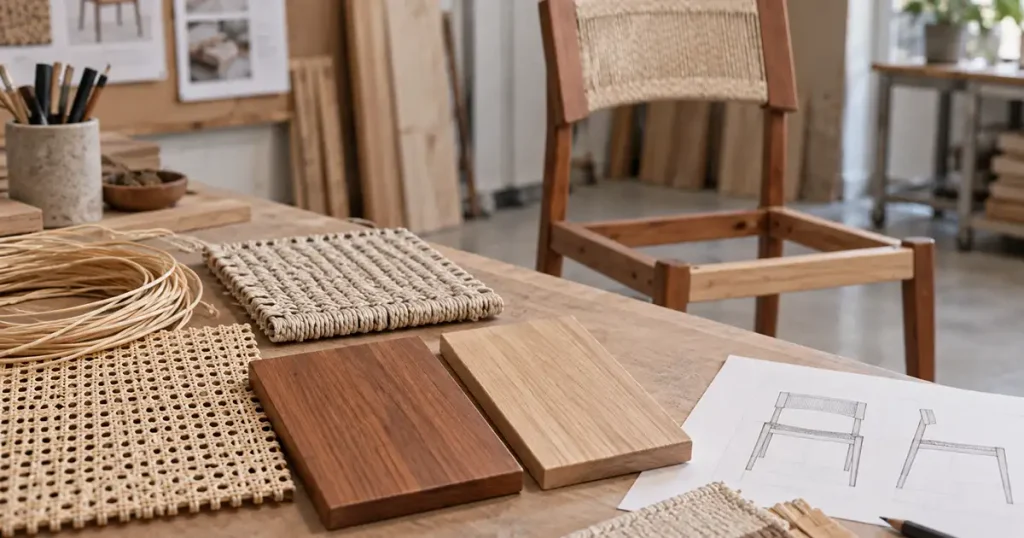
Do not approve the wood finish and woven material as separate decisions. A pale wood frame with a light weave creates a different retail impression from a darker finish paired with natural cane or stronger contrast.
During one product development process, we reviewed a wood finish and woven color separately and both looked suitable. Once combined on the chair, the wood tone appeared too warm, so we adjusted the finish reference before approving the sample.
This is why we review the materials as one visual composition. For more examples of how mixed materials shape product direction, read Indonesian Furniture Wood and Rattan Combos.
The same thinking should continue across the wider indoor furniture collection. Buyers developing a wider range can review our Indonesian Indoor Furniture Manufacturer category to see how related pieces can share one design language.
Check Construction, Weaving, Comfort, and Maintenance Together
Rattan should not be treated as decoration added after the wooden frame has been decided. Frame geometry, attachment areas, weave pattern, and tension need to work as one chair.
Comfort works the same way. Seat depth, back angle, frame proportions, and woven support all affect how indoor dining chairs feel.
Maintenance should also match the target customer. A chair can look right but still be wrong if its care requirements do not fit expected use.
Ask Whether the Combination Can Be Repeated Consistently in Bulk
For wood and rattan dining chairs, a strong prototype proves that the chair can be made well once. A retail program needs the same direction to remain recognizable across a larger order.
Buyers should review wood tone, finish range, woven color, spacing, tension, attachment position, dimensions, and side-by-side appearance. Natural variation can remain, but buyer and manufacturer should agree on what is commercially acceptable.
At MPP Furniture, we use the approved sample as a working production reference. If early pieces begin to differ in spacing, finishing, dimensions, or other approved details, we correct the variation before it spreads across the batch.
If your launch also depends on factory and shipping schedules, read our guide to order timing for furniture from Indonesia. It helps connect product approval with the wider retail rollout.
Lock the Final Combination Through an Approved Sample Before Bulk Production
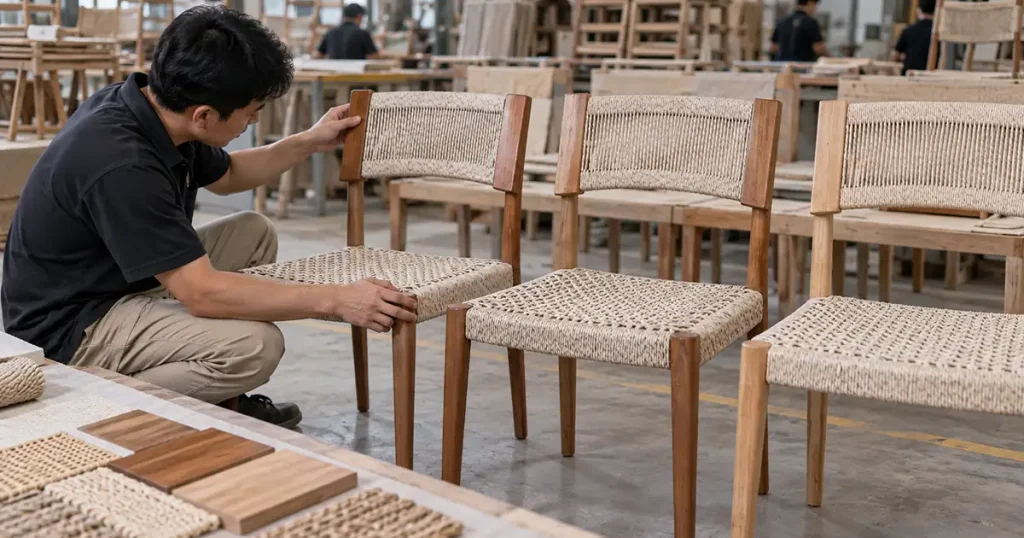
Before bulk production, the approved sample should confirm the wood species, finish reference, woven material, tone, pattern, attachment, dimensions, comfort, and accepted natural variation. When possible, review it beside the dining table or related SKU.
The approved sample then becomes a production reference, not only a showroom piece. At MPP Furniture, we compare dimensions, finish, woven details, construction, and workmanship with that reference as production moves forward.
For buyers ready to move from material selection into development, read How to Develop Custom Teak Indoor Dining Chairs With Leather for Retail Collections. The material pairing is different, but the same logic applies from specification to sample, approval, and repeatable production.
Final Decision: Choose the Combination That Fits the Collection, Not Just the Chair
Teak is not automatically better than Sungkai, and natural rattan is not automatically better than synthetic weave. The better combination is the one that fits your target customer, retail position, collection language, comfort expectations, maintenance needs, and production requirements.
For buyers, this means judging the chair as part of a commercial collection rather than as an isolated design object. When material, finish, construction, and collection direction support each other, the chair becomes easier to explain, approve, and reproduce.
Developing a Wood and Rattan Dining Chair Collection?
MPP Furniture helps retailers, importers, wholesalers, and private-label brands turn collection ideas into production-ready furniture through free consultation, free new product development, custom design support, in-house production, and quality control. If you already have a reference design or collection direction, our team can help review the wood, woven material, finish, construction, and sample before bulk production so the approved chair can be reproduced consistently at scale.
FAQ: Wood and Rattan Dining Chairs
1. What wood is best for wood and rattan dining chairs?
There is no single best wood. Teak can support a stronger premium material position, while Sungkai can fit lighter designs and more accessible collection positions.
2. Is natural rattan or synthetic rattan better for indoor dining chairs?
Neither is automatically better. Choose based on appearance, customer expectations, maintenance, acceptable variation, and production consistency.
3. Should dining chairs match the dining table exactly?
No. The chair and table do not need identical materials or finishes, but they should share a clear design language through tone, proportion, visual weight, or repeated material details.
4. Why should buyers approve a sample before bulk production?
The approved sample records the agreed material, finish, weave, comfort, construction, appearance, and acceptable variation. It gives both buyer and manufacturer one reference for production checks.
5. What should retailers check when ordering rattan dining chairs in bulk?
Check finish range, woven tone, weave spacing, tension, attachment, dimensions, comfort, natural variation, and side-by-side consistency.

A versatile content creator with a strong foundation in product photography and videography, and a comprehensive brand strategy. Capable of creating engaging content to connect consumers and producers, web analytics, and engaging visual content to drive interest and growth for a product or brand.

0 Comments