A bedroom furniture collection can become hard to control when several SKUs move at the same time. Buyers may approve a bed, nightstand, dresser, wardrobe, and bench separately, then find that the finish, hardware, proportions, or construction rules do not match.
This guide will help you decide what should move first, what can run in parallel, and what should wait. The goal is to reduce revisions and give each SKU a clearer path from concept to sample approval and furniture production.
The sequence should follow three factors: commercial role, technical risk, and dependency on shared decisions. The same logic then carries into sample approval, production readiness, and repeat orders.
Define Each SKU’s Commercial Role and Identify the Collection’s Anchor

Retailers should first define why each SKU exists in the assortment. A bed may be the hero product, a nightstand an attachment item, a dresser a higher-ticket storage piece, and a wardrobe a premium item within an Indonesian Bedroom Furniture program.
The anchor usually sets the visual direction, but it does not always need to be developed first. In a 2022 MPP bed order, the inner mattress size did not match the buyer’s market standard, so the product had to be reworked before delivery; high-impact dimensions should be confirmed early.
Prioritize High-Risk SKUs and Decisions That Affect Other Products
High-risk SKUs should move early when they contain more uncertainty. Storage beds, large wardrobes, multi-drawer dressers, woven headboards, or complex knock-down pieces need more checking because one unresolved detail can affect structure, hardware, packaging, or cost.
Headboards can also require early decisions on dimensions, wood construction, finish direction, and other product-specific details. For a more specific development example, see how we approach an Indonesian solid mahogany headboard from design review to production preparation.
You should also identify decisions shared across several products. We have received buyer requests that started with only a sketch, so our team first prepared 3D renders, technical drawings, material options, and missing details before sampling; a clear technical brief for custom furniture development helps put those decisions in order.
Approve Shared References Before Dependent Work Begins
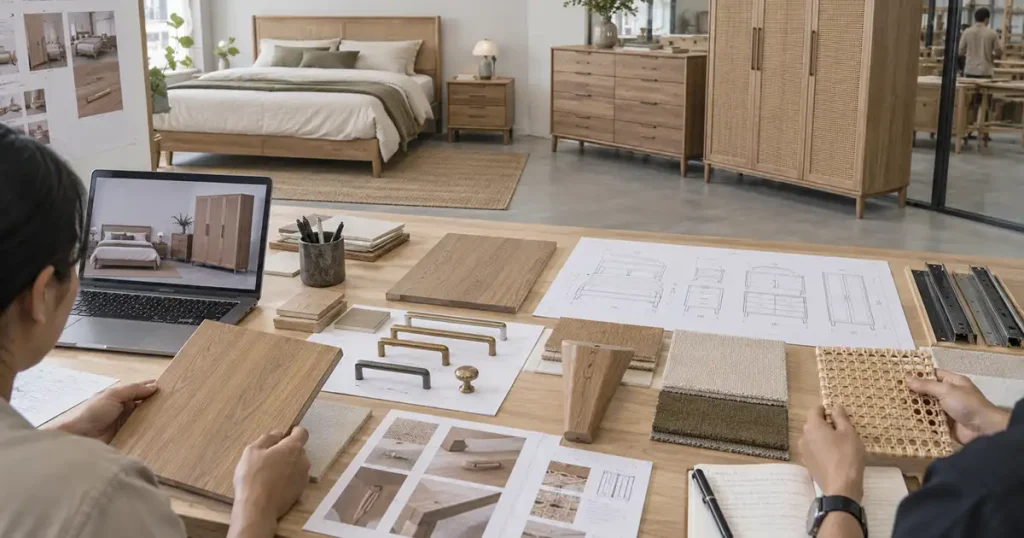
Shared references are decisions several SKUs will reuse, such as wood species, finish color, handle style, leg profile, rattan pattern, or drawer construction. Approve them before dependent products move forward.
Research on design freeze in product development supports this logic: some parameters need to be fixed earlier because later work depends on them. For example, the bed may establish the finish while the dresser establishes the handle family and drawer construction.
Group SKUs by Shared Components and Development Dependencies
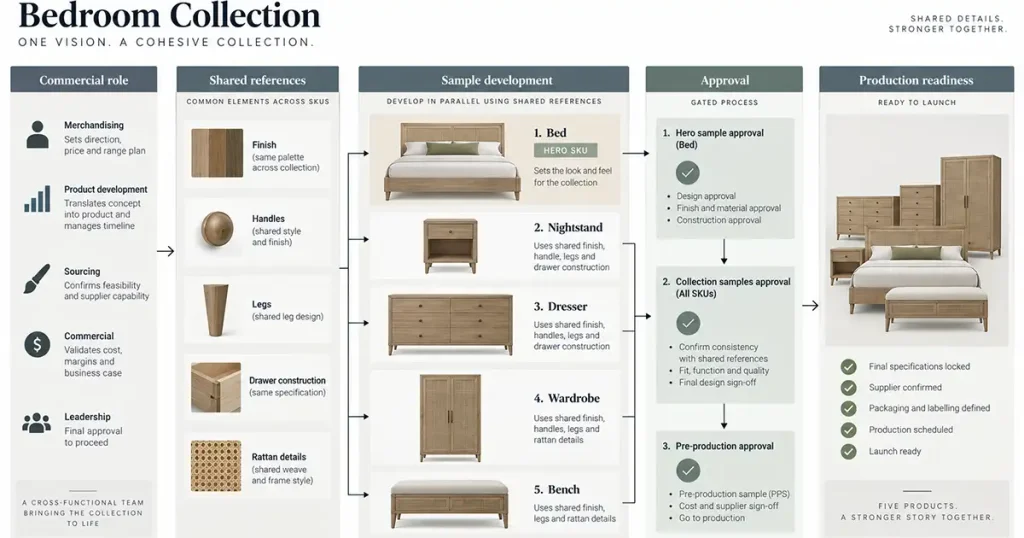
Not every SKU has to wait for the full furniture collection. Bed structure, dresser drawer development, finish testing, packaging study, and costing can run in parallel when they do not depend on an unresolved decision.
Dependent work should wait. Experienced Indonesian Furniture Manufacturers can help separate parallel tasks from decisions that need an approved reference first, especially when custom bedroom furniture uses the same finish, handles, legs, or construction rules across several SKUs.
Approve Individual Samples and Review the Collection Together
Approve Each Sample Against Its Required References
Each sample should be checked against its approved drawing, dimensions, material, finish, hardware, function, packaging needs, and revision status. The bedroom furniture order checklist also recommends written confirmation of design, material, finishing, hardware, quality expectations, and packaging before mass production.
Buyers from France, the US, and Sweden have also tested products with their QC teams directly in our factory before mass production. The review helped confirm stability, function, and construction before the sample became a production reference.
Check Cross-SKU Consistency Before Final Sign-Off

A sample can pass on its own and still look wrong beside the rest of the bedroom furniture collection. Before sign-off, compare finish tone, handles, proportions, edge details, rattan work, and upholstery direction.
Treat this as a second approval layer. Individual approval asks whether one SKU is correct; collection review asks whether the SKUs belong together.
Confirm Production Readiness for Each SKU and Launch Group
Sample approval is not the same as production readiness. Before furniture production starts, each SKU should have a final drawing, confirmed material, approved finish, fixed hardware, closed revisions, tested construction, packaging method, and recorded approval.
Retailers should connect development timing to the selling calendar. MPP’s furniture import planning timeline recommends working backward from the target selling date because sampling, approval, production, QC, packing, shipping, and receiving all affect the schedule.
If one SKU remains unresolved, you may release the collection in launch groups. Agree early which products must launch together and which can follow later.
Preserve Approved References for Reorders and Future SKUs
The first development cycle should create reusable production references, not just attractive samples. Keep the final drawing, finish panel, hardware specification, upholstery or rattan reference, packaging standard, revision number, QC notes, and approved sample record.
Poor documentation is one reason repeat quality can change. MPP’s article on maintaining furniture quality across repeat orders explains that drawings, finish references, revision tracking, and standardized specifications reduce later interpretation differences.
Our production experience also shows the value of stable references. Repeat production can sometimes be around seven days faster because the team already knows difficult areas and the production sequence; this is not a fixed rule.
Final Decision: Agree on the Development Sequence Before Moving Forward
The right sequence is not simply SKU 1, then SKU 2, then SKU 3. Buyers should define commercial roles, identify technical risk, map dependencies, approve shared references, separate parallel work from waiting work, and review the full bedroom furniture collection.
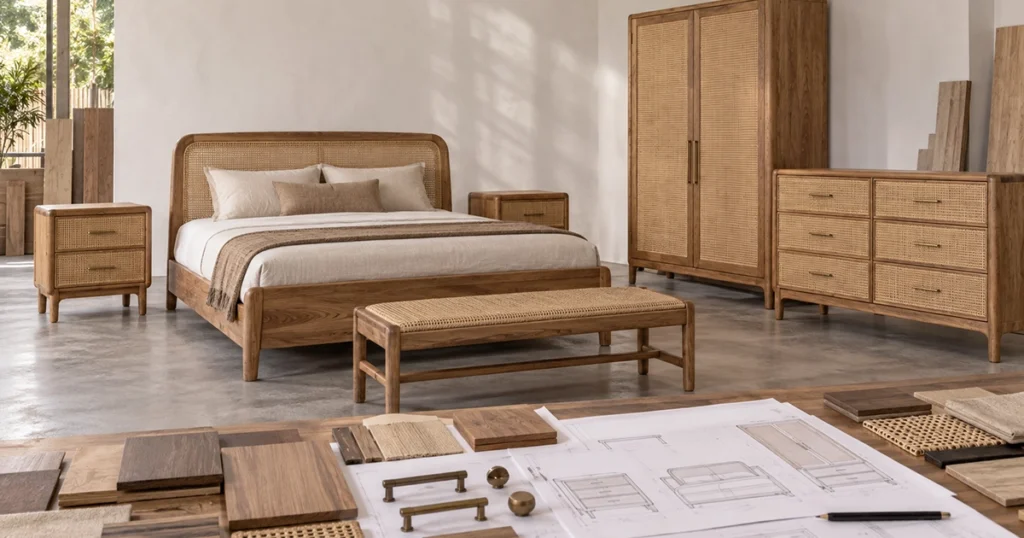
Once shared finish, hardware, construction rules, and design language are approved, future SKU expansion becomes easier. A retailer can add a vanity, tallboy, bench, or storage piece without rebuilding the furniture collection from zero.
At MPP, product development and furniture production use in-house coordination, handcrafted work, machinery, and quality control at each stage. Our published figures report 99% client satisfaction and a 0.56% complaint ratio, with free consultation, free product development, and exclusive custom design services.
Plan Your Bedroom Furniture Development with MPP
If you are preparing a multi-SKU bedroom furniture collection, send your SKU list, priority items, references, material direction, target finish, drawings, and planned launch period. We can review the development order before sampling starts, so dependencies and approval responsibilities are clear.
FAQ: Bedroom Furniture Development Across Multiple SKUs
1. Which bedroom furniture SKU should be developed first?
Start with the SKU or decision that has the strongest mix of commercial importance, technical risk, and influence on other products. The hero product may be first, but not always.
2. Should all bedroom furniture samples be developed at the same time?
No. Independent tasks can run in parallel, but dependent SKUs should wait until shared material, finish, hardware, or construction references are approved.
3. What should be approved before developing related bedroom SKUs?
Approve shared references such as wood species, finish color, handle family, leg profile, rattan pattern, upholstery direction, and common construction rules.
4. Should buyers approve each sample separately or review the whole collection?
Both. Each SKU needs technical approval, and the full collection also needs a consistency review before final release.
5. What should buyers keep for repeat orders and future SKU development?
Keep final drawings, finish references, hardware specifications, sample records, revision history, packaging standards, and QC references. These records make reorders and new SKU development easier.

A versatile content creator with a strong foundation in product photography and videography, and a comprehensive brand strategy. Capable of creating engaging content to connect consumers and producers, web analytics, and engaging visual content to drive interest and growth for a product or brand.
0 Comments