A bedroom furniture sample can look right, function well, and match the approved finish, yet still be incomplete as a production reference. Retail buyers also need to know how the real unit will be protected, packed, handled, shipped, and assembled after arrival.
This guide shows you what to confirm before the final sample moves into bulk production. The goal is to replace assumptions with actual packed-unit data, so your team can plan production, furniture shipping, and receiving with fewer late changes.
When working with Indonesian Furniture Manufacturers, you should review the furniture and its shipping configuration as one connected approval process. We will cover packed-unit approval, SKU-specific risk, packing trials, hardware placement, actual CBM, collection-level efficiency, and repeat-order references.
Product Approval Is Not the Same as Packed-Unit Approval
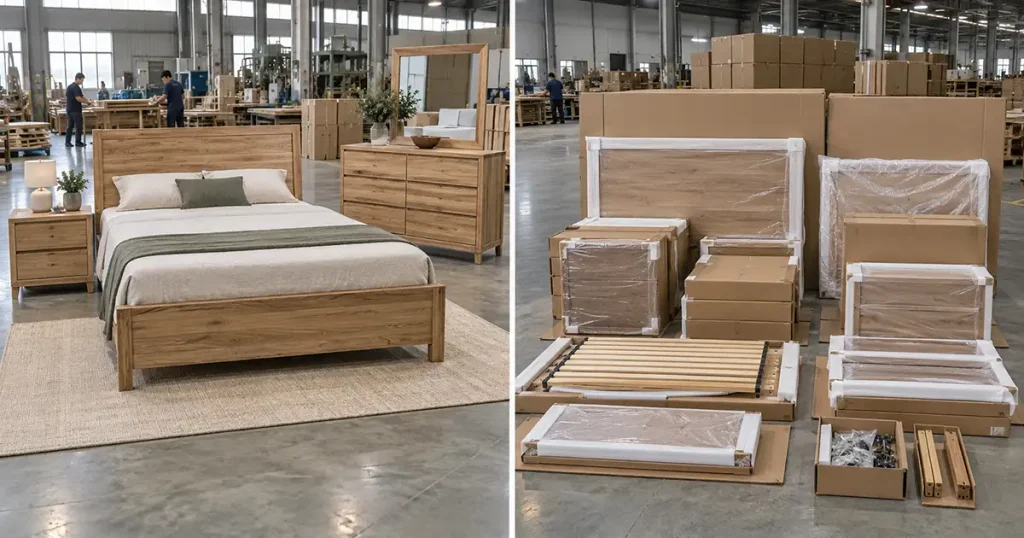
Product approval usually confirms design, dimensions, material, finish, hardware, construction, and function. Packed-unit approval asks a different question: can this exact product be disassembled if needed, protected, handled, shipped, unpacked, and rebuilt in the intended way?
MPP's guide on bedroom furniture collection development already separates sample approval from production readiness and includes packaging method among the items that should be settled before production. Buyers from France, the US, and Sweden have also checked stability, function, and construction with their QC teams directly at our factory before mass production.
If furniture packaging remains open after product approval, the factory may still need to revise detachable parts, hardware position, carton size, or assembly instructions. The furniture may be approved as a product, but the shipping unit may still need validation.
Define the Actual Shipping Configuration Before Bulk Production
Before bulk production starts, decide how each SKU will leave the factory. A nightstand may ship fully assembled, while a bed may ship as a headboard, footboard, rails, slats, legs, and hardware across several cartons.
Your shipping configuration affects protection, carton count, packed dimensions, handling, assembly time, and furniture logistics. This is why export packaging should be discussed while the final sample is still available, not after hundreds of units are already in production.
Packaging Risk Is Different for Each Bedroom Furniture SKU
Bedroom furniture does not share one packing risk. Beds have long rails and fittings, dressers are heavier and have drawers, wardrobes may use large panels and loose components, while nightstands expose finished corners, handles, and legs.
For buyers sourcing from Indonesian Bedroom Furniture Manufacturers, each SKU's packing plan should match its construction, weight, vulnerable areas, handling method, and assembly needs. The same logic applies across indoor furniture because the packing risk changes with product form.
MPP's article on bedroom furniture collection variations explains that one visible variation can create another carton size, packing method, QC reference, or production instruction. That means a small commercial change can still create a different packed-unit requirement.
Use a Packaging Trial to Expose Problems Before Production Starts
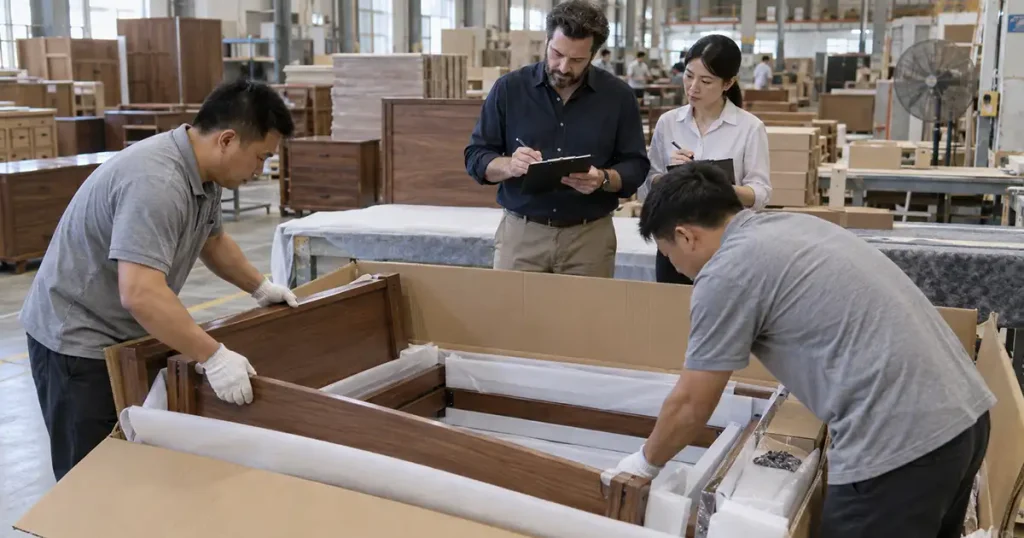
A packaging trial forces the approved furniture and the proposed packing method to work together. It may reveal a part that is difficult to remove, a carton that does not fit as planned, hardware that can move, or more packed volume than expected.
In a 2022 MPP bed order, the inner mattress size did not match the buyer's market standard, so the product had to be reworked before delivery. That case was a product-dimension issue rather than a packaging failure, but it shows why physical validation before release matters when one dimensional decision can affect later work.
Use the trial to observe disassembly, protection, carton loading, internal movement, unpacking, and reassembly. Our published development process treats the packaging method as part of production readiness rather than a decision left until production is already running.
Validate Vulnerable Components and the Internal Carton Layout
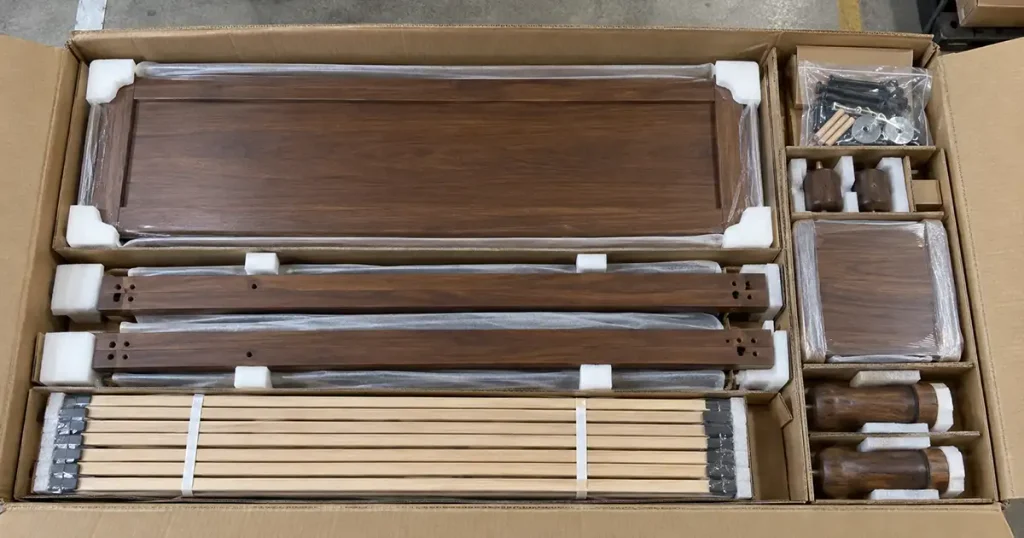
The internal carton layout should limit movement and stop one component from damaging another. Pay attention to finished panels, corners, drawer fronts, handles, legs, woven sections, upholstery, glass, mirrors, and loose fittings.
Your role as a buyer is not to specify every foam or carton detail. You should confirm that vulnerable areas are protected, finished surfaces do not rub against loose parts, and the internal layout still makes sense after packing and unpacking.
Confirm Hardware Location and Reassembly Sequence
Hardware should have a fixed, documented location inside the package. You should know which carton holds it, how it is identified, whether it can move, and whether it can contact a finished surface.
Also confirm the reassembly sequence. Clear component identification and hardware placement can reduce confusion for warehouses, installers, retailers, and end customers.
Record Actual Packed Dimensions Instead of Relying on Estimates
Product dimensions and packed dimensions are not the same. Cartons, protection, detachable parts, and multi-carton arrangements change the final shipping size.
After the packaging trial, record actual length, width, height, carton count, gross weight, and packed CBM for each SKU. These figures give your furniture shipping and furniture logistics teams a firmer basis than early estimates built only from product dimensions.
The same product-specific thinking matters when buyers evaluate a furniture manufacturer's production capacity in Indonesia. MPP's capacity guide explains that product complexity and custom packaging can affect how quickly an order moves through production.
Review Packaging Efficiency at the Collection Level
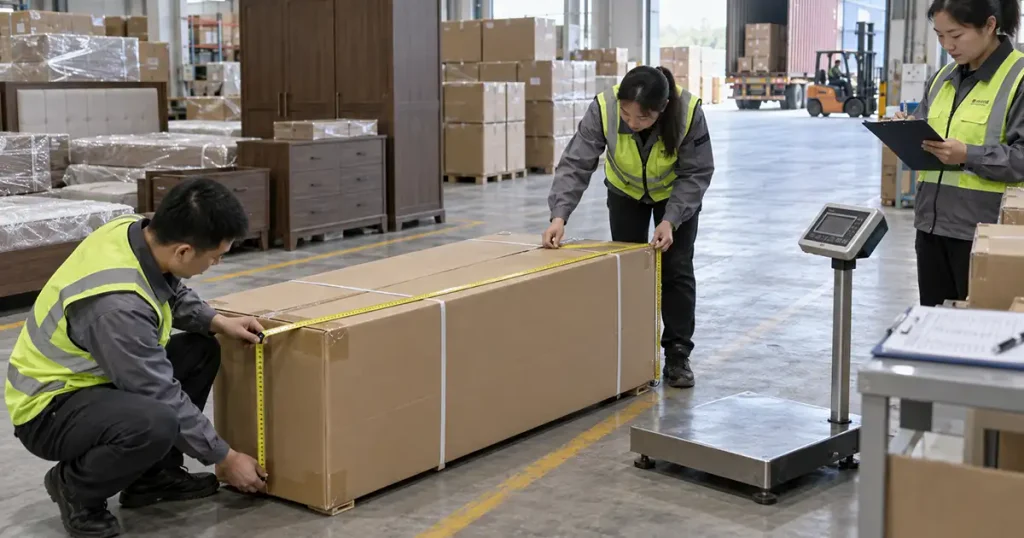
A package can look efficient at SKU level but work poorly when the full bedroom furniture collection is combined. Review carton count, packed CBM, carton shapes, gross weight, order quantities, and how the assortment fits the planned shipment.
Good furniture packaging is not about using less material at any cost. You need a practical balance between protection, handling, assembly, and space use across the full order.
Turn the Approved Packaging Into a Repeat-Order Reference
Once the packed unit is approved, record it as part of the repeat-order reference. Keep carton dimensions, carton count, gross weight, CBM, hardware position, internal layout, protection points, packing photos, carton markings, packing instructions, and revision number.
MPP's bedroom development article recommends keeping packaging standards and revision records to reduce interpretation differences later. In our production experience, repeat production can sometimes be around seven days faster because the team already knows difficult areas and the production sequence, although this is not a fixed rule.
Revalidate Packaging When the Product or Packaging Changes
Do not assume an old packaging approval still applies after a meaningful change. A new dimension, heavier component, different hardware, revised carton layout, new assembly method, or changed distribution method can affect packaged-product performance.
ISTA's packaged-product retesting guidance states that testing should be repeated when changes to the product, package, or process may affect performance, and when there is doubt about the effect of a change. This does not mean every furniture revision automatically requires formal ISTA laboratory testing.
Final Decision: Approve the Furniture and Its Shipping Configuration Together
A final sample should represent more than the product buyers see in a showroom. Before bulk production, you should know how the product will be disassembled if needed, protected, packed, measured, handled, shipped, and assembled again.
The production reference should combine the approved furniture with the approved shipping configuration and actual packed data. This gives both buyer and manufacturer a clearer reference for bulk production, export packaging, furniture shipping, and future repeat orders.
At MPP, product development and furniture production use in-house coordination, handcrafted work supported by machinery, and quality control at each stage. Our published figures report 99% client satisfaction and a 0.56% complaint ratio.
Preparing Your Bedroom Furniture Collection for Bulk Production?
If you are preparing a multi-SKU bedroom furniture collection, send MPP Furniture your SKU list, drawings, material direction, finish references, target market, packaging requirements, preferred shipping configuration, and expected order quantities. Our team can review the project from product development through packing preparation before bulk production starts, supported by free consultation, free product development, exclusive custom design services, full in-house production, and quality control throughout the manufacturing process.
FAQ: Bedroom Furniture Packaging Before Bulk Production
1. Should furniture packaging be approved before bulk production?
Yes. Buyers should review the actual packed configuration before bulk production when packing affects protection, disassembly, hardware placement, packed dimensions, weight, CBM, handling, or assembly.
2. What should retail buyers check during a furniture packaging trial?
Check the shipping configuration, vulnerable areas, internal movement, hardware location, carton count, packed dimensions, gross weight, CBM, unpacking process, and reassembly sequence.
3. Why should packed dimensions be measured from the actual packed sample?
Because furniture dimensions do not include cartons, protection materials, detachable parts, or multi-carton arrangements. Actual packed measurements give buyers more reliable data for furniture logistics, shipment planning, and costing.
4. When should furniture packaging be revalidated?
Packaging should be reviewed again when changes to the product, package, assembly process, or distribution method could affect packaged-product performance. ISTA also recommends retesting when a product, package, or process change may affect performance, or when there is doubt about the impact of the change.
5. What packaging information should buyers keep for repeat orders?
Keep the approved carton dimensions, carton count, gross weight, CBM, hardware position, internal layout, protection points, packing photos, carton markings, packing instructions, and revision number. These references help the manufacturer reproduce the same approved packing configuration in future orders.

A versatile content creator with a strong foundation in product photography and videography, and a comprehensive brand strategy. Capable of creating engaging content to connect consumers and producers, web analytics, and engaging visual content to drive interest and growth for a product or brand.



0 Comments