Many retail buyers want enough choice in a bedroom furniture collection to serve different tastes, room sizes, and price points. That makes sense because a collection with too little variation can feel repetitive and limit commercial flexibility.
The better question is not, “How many SKUs can we add?” It is: “How much new production complexity does each variation create?” There is no universal number; complexity depends on how many new specifications and production dependencies each variation creates. For buyers working with Indonesian Indoor Furniture Manufacturers, this shift connects assortment planning with the realities of furniture manufacturing.
This article explains how to compare commercial variation with manufacturing variation, decide which specifications should stay shared, and identify where structural changes create more work. It also shows how these decisions affect QC, repeat orders, and future furniture collection growth.
Do Not Use SKU Count Alone to Measure Collection Complexity
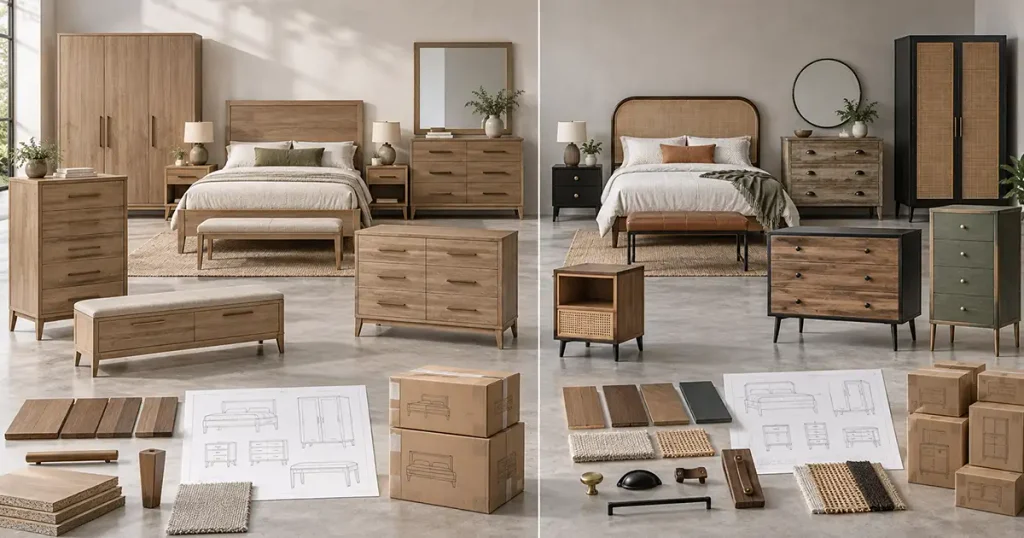
SKU count is easy to see, but it does not tell you how difficult a furniture collection will be to produce. A twelve-SKU range can be easier to manage than a seven-SKU range when most products reuse the same materials, finish system, hardware family, construction rules, and inspection references.
Product variety management research supports this logic. Manufacturing complexity grows not only from the number of variants, but also from differences in components, processes, planning requirements, and the amount of commonality across the product family.
For indoor furniture programs, this matters because beds, nightstands, dressers, wardrobes, and benches may share many production references even when they are sold as separate SKUs. A bedside table that reuses an approved finish, leg profile, handle, and drawer construction may add less work than one bed that introduces a new storage system and packing method.
Separate Commercial Variation From Manufacturing Variation
Commercial Variation
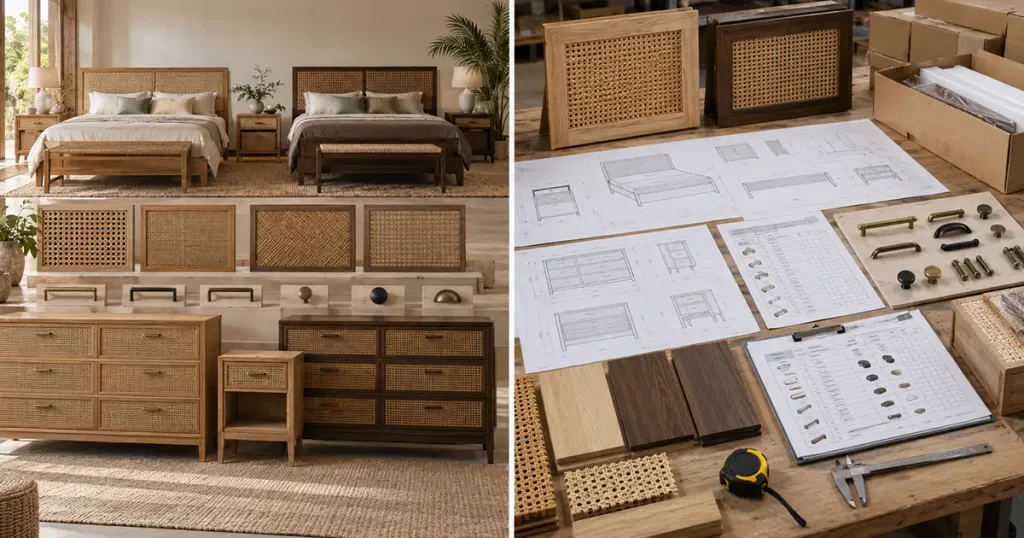
Commercial variation is what customers can see, compare, and buy. Different bed sizes, finish colors, rattan details, storage options, or hardware can make a bedroom furniture collection feel broader and help retailers serve different market needs.
Retailers use Indonesian Bedroom Furniture to build assortments that match their brand, target customer, and price position. In one MPP project for a US buyer, Queen and King bed frames with woven details and tailored finishes became two exclusive SKUs that developed into best-sellers and generated repeat orders.
Manufacturing Variation
Manufacturing variation is what the factory must manage behind that choice. One visible change can require another drawing, BOM, finish reference, hardware purchase, carton size, QC check, or production instruction, so two commercial variations may create very different workloads.
Identify Which Specifications Should Be Shared Across the Collection
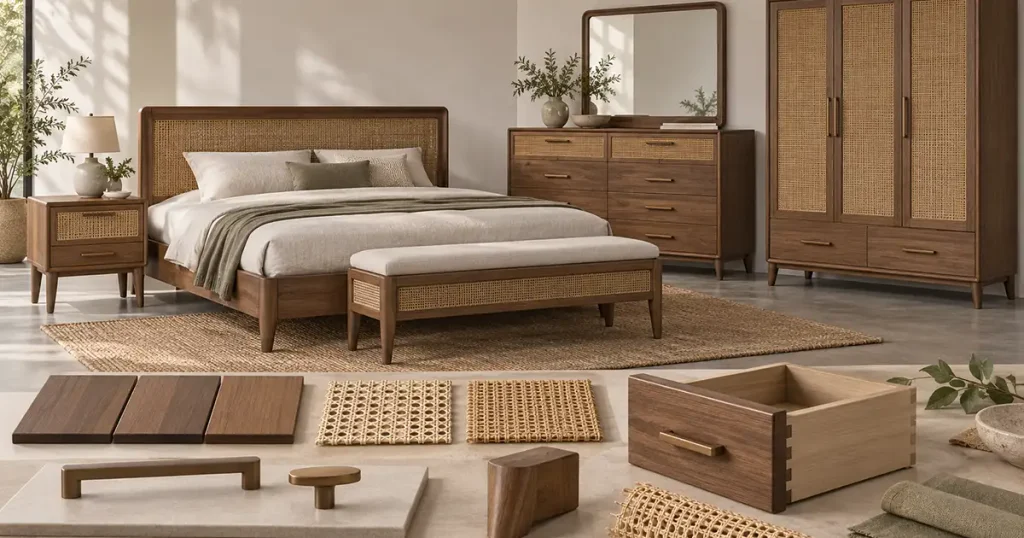
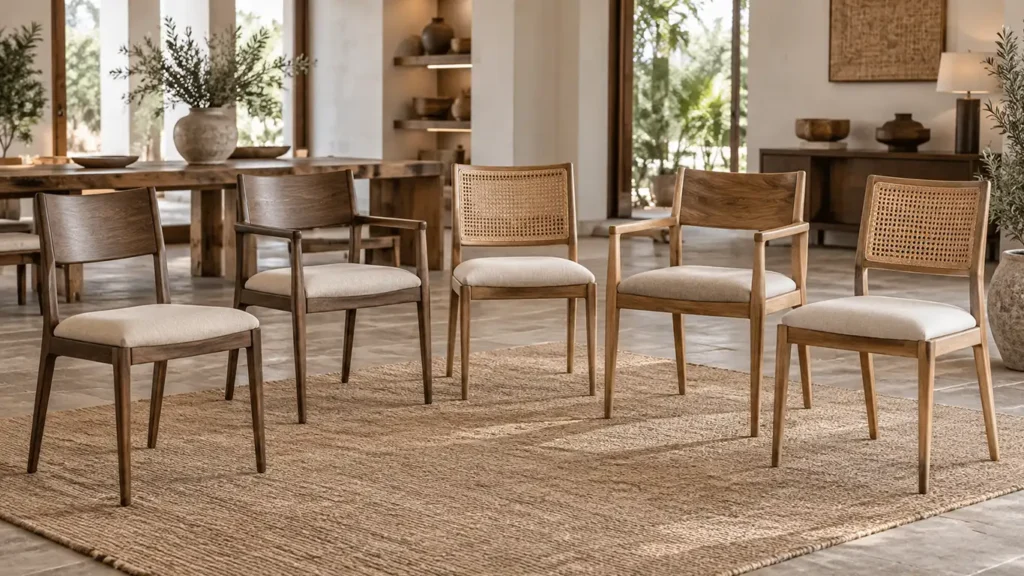
A scalable collection usually has a stable specification backbone. Shared wood species, finish families, handles, leg profiles, drawer construction, rattan patterns, edge details, and joinery rules reduce unnecessary interpretation across multiple SKUs.
MPP’s article on bedroom furniture collection development shows why shared references should be approved before dependent work moves forward. We have also received buyer requests that started with only a sketch, so our team had to prepare 3D renders, technical drawings, material options, and missing details before sampling could move ahead.
Understand Change Propagation
Shared specifications also create dependency. If one handle family is used across two nightstands, two dressers, a chest, and a wardrobe, a late handle change can affect six SKUs, so you should ask how far one revision will spread before approving it.
Distinguish Structural Variation From Late-Stage Differentiation
Structural Variation
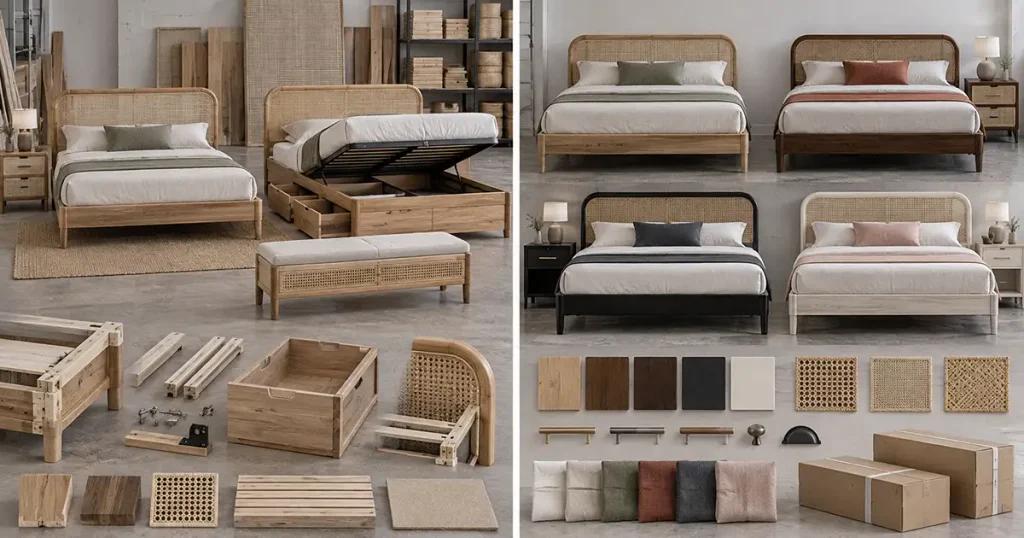
Structural variation changes the product early in the production route. Examples include a storage bed instead of a standard bed, a new drawer system, different knock-down construction, a new mattress dimension, or a different wardrobe layout.
Our 2022 bed order shows why these changes deserve close attention. The inner mattress size did not match the buyer’s market standard, so the product had to be reworked before delivery, showing how one dimension can affect more than a single drawing.
Late-Stage Differentiation
Late-stage differentiation happens after much of the common structure is already established. With custom bedroom furniture, finish color, selected hardware, upholstery color, rattan pattern, branding, or carton labels can create visible choice while allowing more of the same production route to remain in place.
Count the Production and QC Requirements Created by Each Variation
Every new variation should be checked for the work it adds to production and QC. Ask whether it needs a new material, component, machine setup, assembly method, finish process, packaging method, inspection point, or approved sample.
From our production side, every unique specification also becomes something that must be documented, checked, and reproduced later. MPP’s article on preventing custom furniture quality drop explains that drawings, finish references, revision tracking, and standardized specifications reduce interpretation differences between production cycles.
Stable references can also make repeat work faster. In our production experience, repeat production can sometimes be around seven days faster because the team already knows difficult areas and the production sequence, although this is not a fixed rule.
Evaluate the Commercial Value Against the Complexity Cost of Each Variation
Not every product variation deserves a place in the collection. The variation should create enough commercial value to justify the added specifications, production references, and QC work behind it.
MPP’s guide on bedroom furniture collections for retailers explains how shared finishes, hardware, materials, and design rules can connect a product family. You can use those shared decisions as a base, then add variation where customers can clearly see or value the difference.
This also matters for future growth. A technical brief for a custom furniture manufacturer can record which specifications are fixed, which can vary, and which are dependent, so a new vanity, bench, tallboy, or storage piece can join the collection without restarting development from zero.
So, How Many Variations Are Too Many?
There is no universal number. A bedroom furniture collection has too many variations when the commercial value of the next variation becomes smaller than the specification, production, QC, and repeat-order burden it creates.
Warning signs appear when most new SKUs need unique structures, unique hardware, separate finish references, separate packaging rules, or independent QC instructions. Another sign is when adding one new SKU feels like starting a new custom furniture project instead of extending an existing system.
The goal is controlled variation, not unlimited customization. Build enough customer-facing choice to support sales, but keep enough shared specifications that your furniture manufacturing process remains repeatable, inspectable, and ready for the next collection extension.
Final Thought: Scale Variety Without Losing Production Control
A strong bedroom furniture collection does not need to limit customer choice. What matters is how much of that choice can be built on shared materials, structures, hardware, finishes, and production references.
For retailers, the goal is to add variations that have a clear commercial reason while keeping unnecessary manufacturing differences under control. This makes the collection easier to produce, inspect, reorder, and expand as new SKUs are added.
From our manufacturing experience, scalable collections are easier to manage when buyers and the factory agree early on which specifications should stay common and which can change. Controlled variation gives your brand room to grow without turning every new product into a completely new development project.
Planning a Bedroom Furniture Collection With Multiple SKUs?
If you are developing a multi-SKU bedroom furniture collection, send MPP Furniture your SKU list, drawings, material direction, finish references, and target market. We can review which specifications should stay shared, where variation adds commercial value, and where unnecessary production complexity may appear before sampling starts, supported by free consultation, free product development, in-house production, and quality control throughout the manufacturing process.
FAQ: Bedroom Furniture Collection Variations
1. How many variations should a bedroom furniture collection have?
There is no universal number. A collection remains manageable when most variations reuse established materials, construction rules, components, production methods, and QC references.
2. Does adding another SKU always make furniture production more complex?
No. A new SKU that reuses the same structure, finish system, hardware, and manufacturing route may add relatively little production complexity.
3. Which specifications should be shared across a bedroom furniture collection?
Common candidates include wood species, finish families, hardware, leg profiles, drawer construction, joinery rules, and selected design details. They should stay shared when changing them does not create enough commercial value to justify additional production work.
4. Why are structural variations harder to manage than finish variations?
Structural changes can affect drawings, materials, machining, assembly, packaging, and QC from an early production stage. Finish variations usually enter later, so more of the original production route can stay unchanged.
5. How can retailers make a bedroom furniture collection easier to expand?
Build new SKUs around reusable specifications and approved production references. Add differentiation where customers can clearly see or value it, instead of rebuilding the structure of every new product.

A versatile content creator with a strong foundation in product photography and videography, and a comprehensive brand strategy. Capable of creating engaging content to connect consumers and producers, web analytics, and engaging visual content to drive interest and growth for a product or brand.

0 Comments