You may already have a dining chair design you like, then receive the first quotation and find that the dining chair cost is above your target. For retailers, importers, wholesalers, and private-label buyers, that does not always mean the design itself has to change.
This guide shows how you can review dining chair materials and other specifications without losing the original design direction, structural performance, or market position. The goal is to bring the quotation closer to your target price while keeping the chair suitable for the collection you plan to sell.
We will cover what should stay, what can change, how a material change affects construction, and how to compare a revised quotation before ordering. When you work with a dining chair supplier such as MPP Furniture, the discussion with your Indonesian furniture supplier should balance design, performance, and price rather than simply move to the cheapest material.
The Gap Between Design Intent and Target Price
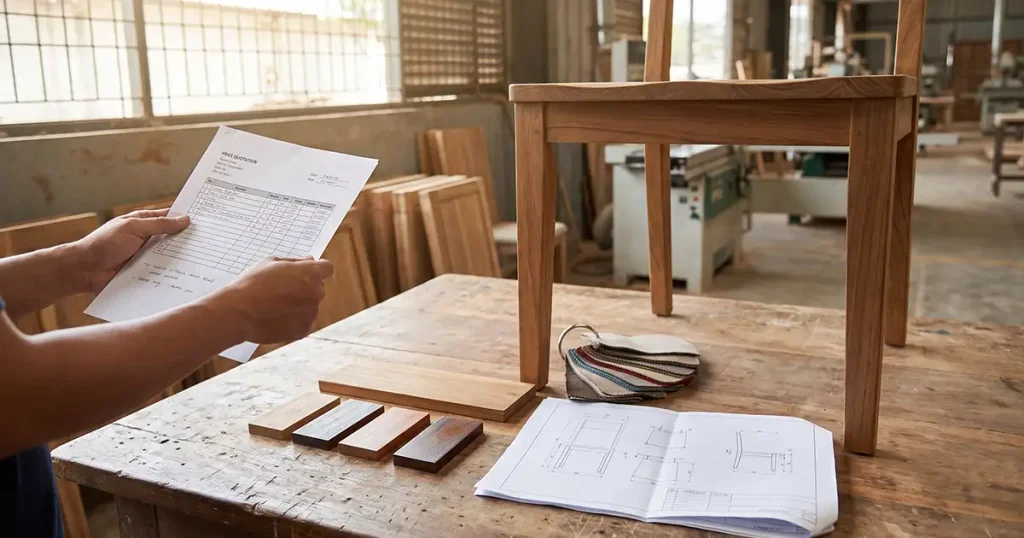
Start with the gap between the quoted price and the price your collection can support. A small difference may need only one or two adjustments, while a larger gap may require a wider review of material, construction, finish, upholstery, weaving, or packing.
Wood species is only one part of the quotation. Machining, curved components, joinery, finishing steps, upholstery or woven work, labor, order quantity, and packing can all influence the final unit cost.
A good dining chair manufacturer should help identify which specification creates enough cost to be worth changing. Before asking for cheaper wood to reduce dining chair cost, first find the specification that is creating the price gap.
Identify Which Parts of the Dining Chair Must Stay the Same
Before changing the specification, define why you selected the chair. It may be the silhouette, proportions, a curved rail, leg shape, woven detail, leather panel, or the overall visual direction.
Treat those features as design anchors, then separate them from items with more room for adjustment. Wood species, finish system, upholstery grade, woven material, selected component dimensions, or packing may be more flexible.
For custom dining chairs, the goal is not to make every specification cheaper. It is to reduce cost while keeping the features that make the chair attractive to your customer and suitable for its intended retail position.
Evaluate Whether Material Substitution Actually Closes the Price Gap
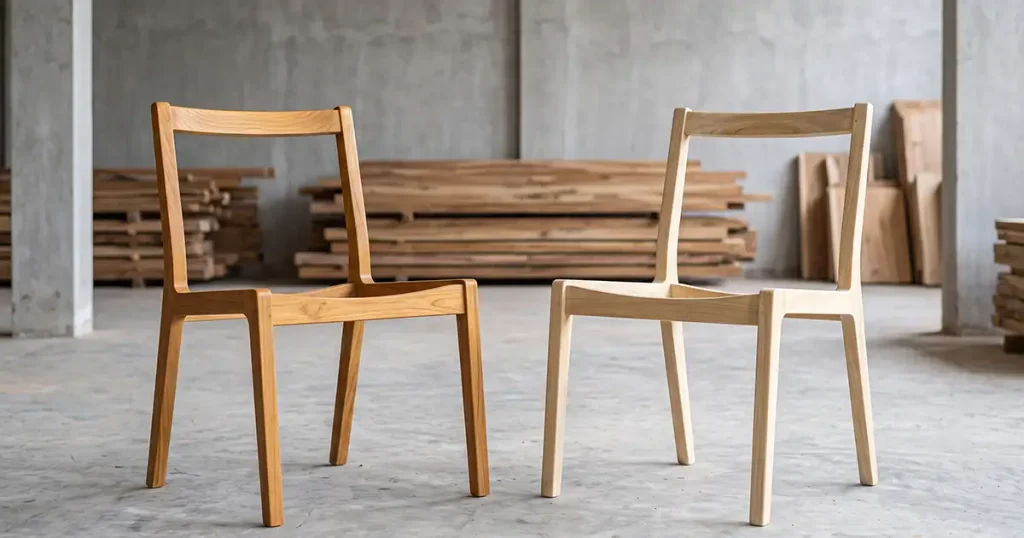
Changing the wood can reduce cost, but the saving should be measured through a revised quotation rather than assumed. If machining, finishing, upholstery, weaving, labor, and packing stay similar, the final saving may be smaller than expected.
Material substitution should therefore be reviewed as part of the full product specification. Your dining chair supplier should show whether the proposed change moves the chair close enough to the target price to justify the visual or technical trade-off.
Case Study: Switching from Teak to Sungkai
In July 2026, MPP worked with an Australian buyer who initially requested Teak for an indoor dining chair collection. After reviewing the target retail price, finish direction, and preference for a lighter natural look, we discussed Sungkai and developed a new sample before the revised direction was approved.
MPP has also documented clients who shifted from Teak to Sungkai for more price-sensitive programs. Sungkai is not an automatic answer; the material still needs to fit the price gap, design, use, and collection position, as explained in our Teak or Sungkai dining furniture guide.
Recheck the Chair Construction Before Applying New Materials
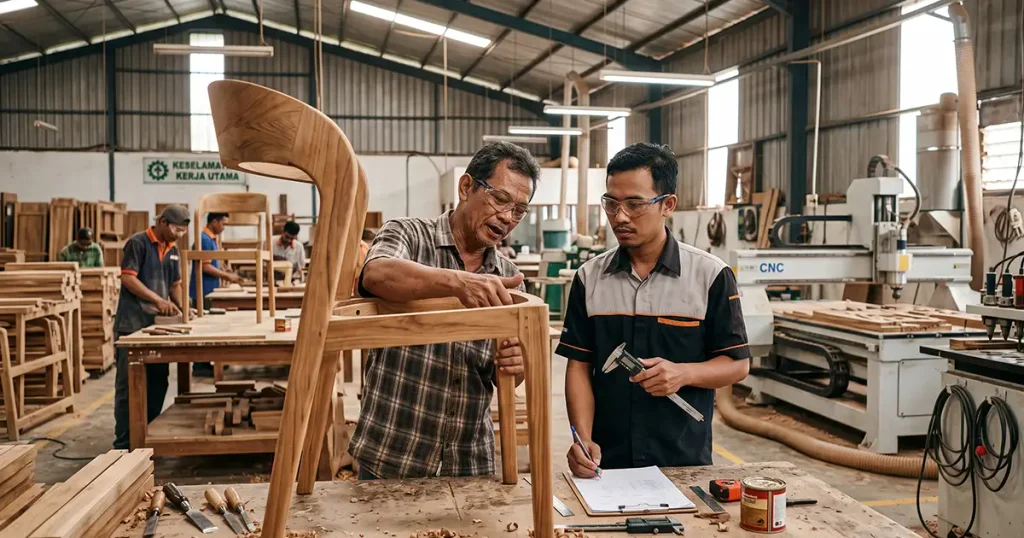
A material change should trigger a construction review because different materials do not behave in exactly the same way. A 2025 Materials study found that alternative chair materials required different thicknesses to meet the same structural conditions, while geometry changes also affected material use and cost.
The study compared plywood, polypropylene, and polycarbonate, not Teak and Sungkai, so it does not prove a specific thickness change between those woods. The useful principle is that material choice and structural configuration should be reviewed together.
Joints and Load-Bearing Areas
Review the leg-to-seat connections, rails, back joints, curved parts, and other areas that carry repeated loads. In MPP's published dining-chair process, we use controlled kiln drying below 12% moisture content and precision mortise-and-tenon work supported by CNC machining; MPP also reported a 0.56% defect rate in 2024.
For buyers, material value depends on how the chair is built around it. Our article on whether Teak is worth the premium for dining chairs explains how material, construction, durability, and retail position work together.
Component Thickness and Structural Support
Some components may need different dimensions or added support after a material change. Your manufacturer should keep the original visual direction where possible while reviewing less visible structural details that may need adjustment.
The revised chair still needs to perform properly, not just look similar in a drawing. Check the new material against the joints, curved parts, component proportions, intended use, and finishing direction before approval.
Review How Material Changes Affect Appearance and Positioning
A new wood species may keep the same silhouette but still change how the chair looks at retail. Grain, natural tone, color variation, finishing response, and surface character can affect how customers judge the finished product.
MPP's previous material work shows that Teak can support a stronger premium material story, while Sungkai can suit lighter indoor collections and a more accessible price position. The revised chair should also make sense within the wider collection, not only as a standalone product. If you are developing matching tables, benches, cabinets, or related pieces, review our Indonesian Dining Room Furniture collection to see how material, finish, proportions, and visual direction can stay consistent across multiple SKUs.
The full composition matters when wood is combined with rattan, leather, fabric, or another woven surface. In one MPP development process, the wood finish and woven color looked suitable separately, but the wood appeared too warm after they were combined, so we adjusted the finish reference before approval. Our wood and rattan dining chair guide explains the case further.
Compare the Revised Quote on an “Apples-to-Apples” Basis
A lower revised quotation is useful only when you know what changed. Compare the original and revised versions using the same quantity, upholstery or weaving, finish level, packing method, Incoterm, dimensions, and other specifications outside the adjustment.
If several variables move at once, the lower price may not come from the material change alone. A larger quantity, simpler packing, lower upholstery grade, or different finish can also reduce the unit price.
Ask your dining chair supplier to mark every revised specification clearly so purchasing, design, and QC teams review the same chair. A side-by-side specification sheet can show the original material, revised material, construction changes, and commercial terms.
Approve the Revised Sample Before Placing the Order

Do not approve a purchase order only because the revised price now fits the budget. If material, construction, finish, or another visible specification changed, review the chair for appearance, dimensions, comfort, stability, joints, workmanship, and material expectation.
At MPP, the approved sample is used as a working production reference for dimensions, finish, woven details, construction, and workmanship. Our documented process also calls for correcting early differences in spacing, finishing, dimensions, or other approved details before that variation spreads through the batch.
In short, an over-budget chair does not always need a total redesign. The better decision is the version that still balances design, performance, market position, and the target price your business can support.
Need to Bring a Dining Chair Closer to Your Target Price?
If you already have a dining chair design, reference sample, or initial specification, MPP Furniture can help review the material, construction, finish, upholstery or woven details, quantity, and target price before you commit to bulk production. For custom dining chairs, our team can work with you to identify which specifications should stay, which can be adjusted, and how those changes affect the revised quotation and sample, so you can move toward production with a clearer balance between design, performance, market position, and cost.
FAQ: Adjusting Dining Chair Materials and Specifications
1. Can a dining chair supplier reduce cost without changing the overall design?
Often, yes. Protect the silhouette, proportions, and signature design details first, then review specifications such as wood species, finish, upholstery, weaving, selected component dimensions, or packing..
2. Does switching from Teak to Sungkai always reduce dining chair cost?
No. Sungkai can reduce the material portion of a quotation, but machining, construction, finishing, upholstery, labor, quantity, and packing still affect the final unit cost.
3. Which dining chair specifications can be adjusted when a quotation is over budget?
Possible areas include wood species, finish system, upholstery or woven material, selected component dimensions, and packing. Each change should still fit the intended design, performance, and market position.
4. Does changing the wood species require construction changes?
It can. Your dining chair manufacturer should review joints, component dimensions, curved parts, structural support, and load-bearing areas before approving the revised material.
5. Should buyers approve a new sample after changing the material?
Yes, when the material or construction change can affect appearance, comfort, stability, finish, or workmanship. The revised sample or updated approved specification should then become the production reference.

A versatile content creator with a strong foundation in product photography and videography, and a comprehensive brand strategy. Capable of creating engaging content to connect consumers and producers, web analytics, and engaging visual content to drive interest and growth for a product or brand.

0 Comments