For US furniture retailers, choosing between Indonesia, Vietnam, and China has become more complicated. Tariff changes in July 2026 shifted the cost comparison again, making earlier sourcing budgets less reliable.
A supplier that looked cheaper six months ago may no longer offer the best landed cost. Worse, a retailer could commit to a collection only to discover that product-specific duties reduce the expected margin.
So, which country makes more financial sense for 2027? The answer is not simply the country with the lowest tariff, because furniture type, shipping costs, and manufacturing capabilities can change the result.
What Changed for US Furniture Tariffs on July 24, 2026
On July 24, 2026, the temporary 10% Section 122 import surcharge expired after reaching its 150-day limit. On the same day, new Section 301 tariffs addressing forced-labor import restrictions took effect across approximately 60 economies.
According to the US Trade Representative's July 23 announcement, Indonesia falls under the 10% tier, while Vietnam, Thailand, and China fall under the 12.5% tier.
These are additional country-based duties, not necessarily the final tariffs paid by furniture importers. Each product's Harmonized Tariff Schedule (HTS) classification determines its ordinary duty and whether other trade measures or exemptions apply.
For instance, when searching the official USITC HTS Database, wooden furniture is categorized into highly specific subheadings. A slight design difference can shift your product into a different tariff bracket. Common classifications to watch include:
- 9403.30 – Wooden furniture of a kind used in offices
- 9403.40 – Wooden furniture of a kind used in the kitchen (e.g., dining tables, fitted cabinets)
- 9403.50 – Wooden furniture of a kind used in the bedroom (e.g., beds, wardrobes)
- 9403.60 – Other wooden furniture (e.g., living room tables, sideboards)
For retailers preparing 2027 orders, the practical step is to verify the exact HTS code and its complete duty treatment before comparing quotations.
How the Three Countries Compare Right Now

The new country-level rates create different starting points for US furniture importers.
| Sourcing country | New Section 301 tariff | Main consideration |
| Indonesia | 10% | Lower rate for covered products |
| Vietnam | 12.5% | Established large-scale production |
| China | 12.5% | Existing China-specific duties may apply |
These figures exclude ordinary HTS duties and other applicable trade measures.
Indonesia: the 10% tier on the new layer
Indonesia holds a 2.5-percentage-point advantage over Vietnam and China under the new tariff measure for products subject to these rates.
For US buyers sourcing solid wood, teak, or rattan furniture, that difference can create savings across larger orders. However, its value depends on production pricing, shipping costs, and the final product classification.
Indonesia's appeal extends beyond tariffs, particularly for businesses seeking distinctive designs and handcrafted collections. For a deeper explanation of these sourcing advantages, read the benefits of buying furniture from Indonesia.
Vietnam: the 12.5% tier, with the largest and most mature supply base
Vietnam remains a major furniture production center, particularly for high-volume manufacturing and standardized collections.
Its 12.5% tariff creates a small disadvantage against Indonesia under the new measure. However, competitive factory pricing, established supply networks, and production capacity may offset that difference.
For retailers ordering large quantities of repeat designs, Vietnam can remain commercially attractive despite the higher country-level rate.
China: 12.5% plus existing Section 301 duties, which leaves many furniture lines near 37.5% in published estimates
China faces the new 12.5% duty alongside existing Section 301 tariffs on certain products.
Where an existing 25% China-specific duty applies, the combined additional duties can reach 37.5% before ordinary duties. This is a product-specific illustration, not a universal tariff on Chinese furniture.
China remains competitive in industrial-scale manufacturing and established component supply chains. However, US buyers should assess whether production efficiencies justify the additional duty exposure.
Why the Headline Rate Is Only Half of the Comparison
Beyond country-level rates, specific furniture categories fall under separate and often heavier trade measures. Under Section 232, certain upholstered wooden furniture, kitchen cabinets, and vanities currently face 25% duties. Increases to 30% for covered upholstered furniture and 50% for cabinets and vanities are scheduled for January 1, 2027, subject to applicable agreements or policy changes.
Importantly, products subject to Section 232 are excluded from the new forced-labor Section 301 measure. Therefore, buyers should not automatically add those two tariffs together.
Anti-dumping and countervailing duties may also apply to specific products and countries. Freight, insurance, destination handling, and exchange rates can further change the final comparison. Because tariff policies have shifted several times throughout 2026, importers must build a flexible review point into their sourcing plans before finalizing any vendor contracts.
For buyers wanting to understand these additional charges, our guide to hidden costs when buying furniture from Indonesia explains expenses that can affect import margins.
What a Tariff Table Does Not Tell You
Material and product fit: solid wood and rattan craft versus other product categories
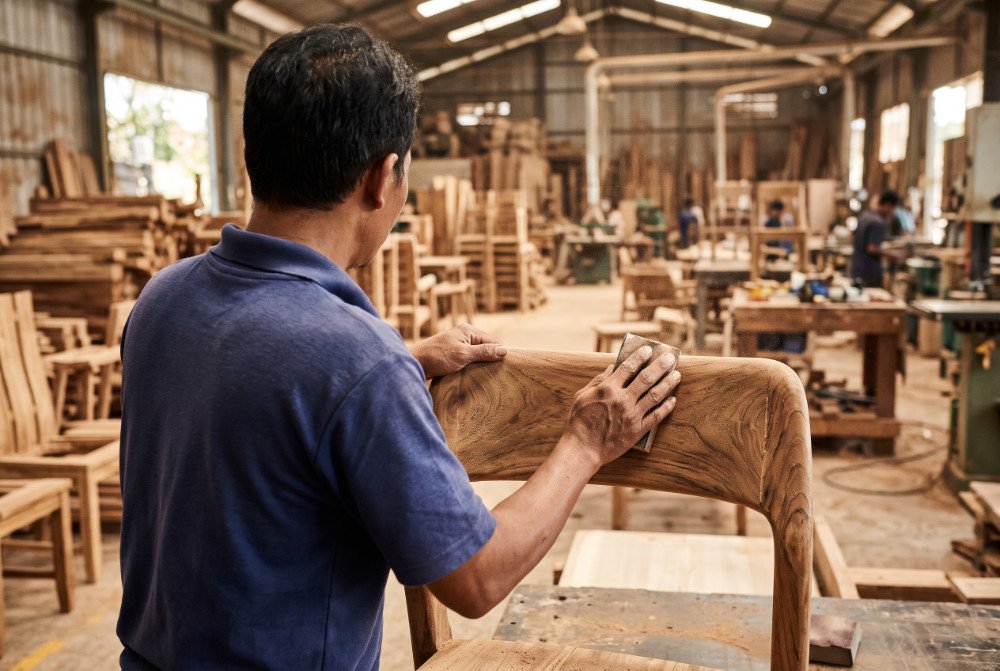
Countries do not manufacture every furniture category with the same strengths. Indonesia has established capabilities in solid wood, teak, and handcrafted rattan furniture. Vietnam and China offer extensive manufacturing systems suited to various standardized and high-volume product categories.
At MPP Furniture, we combine skilled handcrafting with machinery and production-stage quality control to maintain design consistency. For buyers, product suitability and finishing accuracy should matter alongside tariff differences.
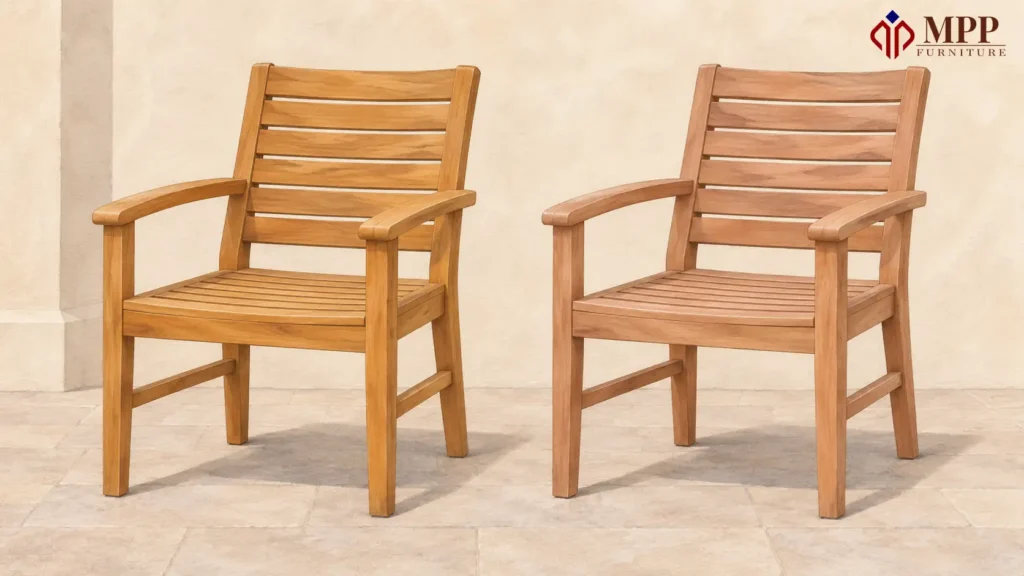
Material specifications also influence factory quotations, particularly for teak furniture. In one MPP project, an Australian buyer chose sungkai instead of teak for indoor dining chairs after reviewing the target price, preferred appearance, and a new sample. Compare material suitability and the complete quotation alongside the tariff rate. For further details on this, our teak furniture pricing guide explains how material grades, construction, and finishing affect costs.
Legal wood documentation: SVLK and FLEGT for Indonesia, plus Lacey Act declarations for US entry
Indonesia's SVLK system supports timber legality verification, while FLEGT licensing relates primarily to timber trade with the European Union.
For US imports, the Lacey Act establishes separate legal sourcing requirements, including declarations for covered plant-based products. Importers must strictly obtain the required wood species and harvest-origin information.
Proper documentation reduces the risk of preventable customs delays, but certification does not replace the importer's legal responsibilities. Customs delays or confiscated goods will immediately destroy any tariff savings you calculated.
Therefore, treat documentation transparency as a baseline for supplier quality before placing any 2027 orders. Request actual certificate numbers, not just an SVLK logo in a PDF brochure.
At MPP Furniture, we believe in radical transparency to protect your import margins. You can instantly verify our active Exporter status (valid through January 5, 2029) by checking our S-LK Number: 192-ISE-LPVI-022-IDN (under Mulya Pratama Putra, audited by PT Intishar Sadira Eshan). For a detailed walkthrough on how to check these credentials, read our guide on how to verify an Indonesian manufacturer's SVLK certification.
MOQ, lead time, and how flexible each supplier is

Minimum order quantities and production schedules also influence sourcing decisions. Large-volume suppliers may offer attractive prices but require greater inventory commitments. Flexible product development and mixed-container options can help retailers test collections without overcommitting capital.
For instance, a US buyer working with MPP split 60 chairs into three variations of 20 units each. Using the same frame design kept production efficient while allowing the buyer to test customer preferences without committing to one version.
At MPP Furniture, we discuss MOQs and custom development based on buyer requirements, supported by in-house production. For a closer look at scheduling, read how far in advance retailers should plan furniture imports from Indonesia.
A Simple Way to Compare Quotes Across Three Countries
The most useful comparison starts with identical product specifications, quantities, finishing standards, packaging requirements, and Incoterms.
For example, consider a furniture shipment with a $20,000 customs value, assuming a 0% ordinary duty and no other applicable duties or exemptions.
| Country | Assumed additional duty | Duty amount |
| Indonesia | 10% | $2,000 |
| Vietnam | 12.5% | $2,500 |
| China | 37.5% | $7,500 |
Illustrative calculation only. The China example assumes an existing 25% Section 301 duty applies.
Indonesia saves $500 against Vietnam in this example, but that difference can disappear if its combined factory and logistics costs are higher.
To calculate actual landed cost, add the factory quotation, international freight, insurance, applicable duties, customs charges, inland delivery, and other import expenses. Use the correct customs valuation basis and confirm tariff treatment with your customs broker.
If you are comparing new suppliers, our guide to importing furniture from Indonesia explains how to assess production, documentation, and logistics before ordering.
Final Thoughts: Key Takeaways Before You Choose a Sourcing Country for 2027
Indonesia's lower new tariff offers a measurable advantage over Vietnam, while China's existing product-specific duties can create greater cost pressure.
Still, no country wins every comparison. Product design, production quality, freight, documentation, and supplier flexibility can matter more than a small tariff difference.
Before confirming your 2027 sourcing strategy, review the latest duties for each HTS classification and compare fully landed quotations.
As one of the experienced Indonesian furniture manufacturers, MPP Furniture supports US buyers with handcrafted wooden and rattan furniture, custom development, and export coordination.
If you are reviewing your supplier mix for 2027, share your product specifications with our team to discuss manufacturing options and prepare a clearer sourcing comparison.
Frequently Asked Questions (FAQs) About US Furniture Sourcing Tariffs
1. What is the 2026 US import tariff rate for Indonesian furniture?
Indonesia falls under the 10% tier for the new Section 301 tariffs, giving it a 2.5% advantage over Vietnam and China (12.5%).
2. Do country-level tariffs apply to all furniture types?
No. Final duties depend on your product's specific HTS code. Some categories may face additional Section 232 duties or anti-dumping measures.
3. Should I choose a supplier based only on the lowest tariff?
No. Always base your decision on the fully landed cost, which includes the factory price, freight, insurance, and all applicable customs duties.
4. What documents are needed to avoid customs delays?
US importers must provide Lacey Act declarations (wood species and origin). Sourcing from SVLK-certified Indonesian manufacturers helps ensure full compliance.
Ready to Plan Your 2027 Sourcing Strategy?
To start planning your 2027 US imports with clearer information on product specifications, documentation, and realistic production timelines, explore MPP's custom furniture development or contact our team directly.

I am a Web Designer, Technical SEO Specialist, and writer with 6+ years of experience in website optimization and search visibility. For more than a year, I have supported MPP Furniture’s growth, and I am currently expanding my role as an author to help B2B furniture buyers make more informed business decisions through informative, practical, and impactful articles.
0 Comments