Mix and match bedroom furniture can work well for retailers, importers, and hospitality buyers who want a bedroom line that feels more flexible than a standard matching set. But in a retail collection, flexibility still needs direction.
From MPP Furniture’s production experience, mix-and-match bedroom furniture is not random styling. It is a controlled collection system where materials, finishes, accents, and hardware must be clear enough for sampling, costing, production planning, and repeat orders before the first bulk order starts.
Every material needs a role. Wood, rattan, fabric, leather, finish, and hardware should support one clear bedroom story. As an Indonesian furniture manufacturer, MPP Furniture helps buyers create cohesive bedroom furniture lines that look good in a showroom, present clearly in a catalog, and stay realistic for sampling, pricing, and repeat production.
Why Mix-and-Match Bedroom Furniture Needs a Clear Collection Direction
A matching bedroom set is easy to understand, but it can also feel too standard. Many retailers now want a bedroom furniture set alternative that feels more exclusive without looking messy.
The problem starts when products are selected one by one. A bed may use one wood tone, the nightstand may use another handle style, and the wardrobe may carry a different accent. Each item may look fine alone, but the full collection can feel disconnected.
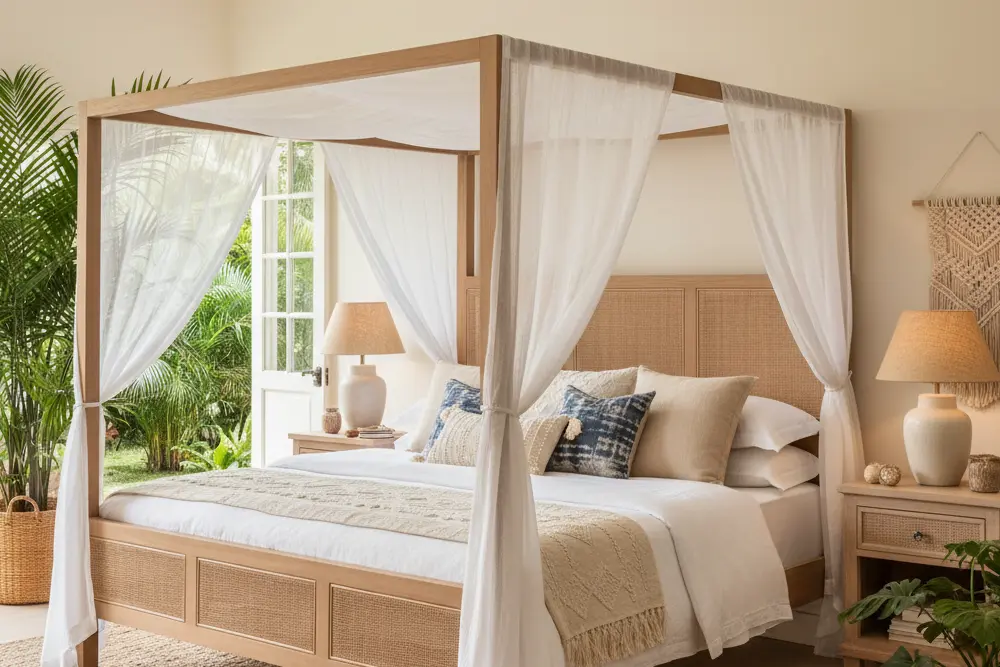
In 2025, MPP Furniture worked with a US buyer who requested a natural-finish bed combining sungkai wood with Kembang Tanjung rattan weaving on the headboard. The buyer also shared bedroom style and color references, which helped our production team plan the material direction, finishing target, and production cost more clearly before sampling.
A clear direction helps retailers sell a complete bedroom story instead of separate items. It also gives the manufacturer a better base for material planning, finish control, sample approval, and repeat production.
For broader planning, buyers can review MPP’s guide to Indonesian bedroom furniture collections.
Start with an Anchor Material Before Adding Other Materials
The safest way to plan mix and match bedroom furniture is to start with one anchor material. This material gives the collection its main visual base and helps buyers control the rest of the design decisions.
For Indonesian bedroom furniture, the anchor material is often solid wood, such as sungkai, teak, mahogany, or mindi. Sungkai is often chosen for lighter indoor collections because it has a clean grain, warm tone, and flexible finishing options. Teak can support a higher price range, while mahogany can fit warmer and more classic bedroom lines.
The anchor material should appear enough to hold the full bedroom furniture collection together. For example, if sungkai wood is the base material, it can appear across the bed frame, nightstand, dresser, wardrobe, and bench. The pieces do not need the same shape, but they should share the same material logic.
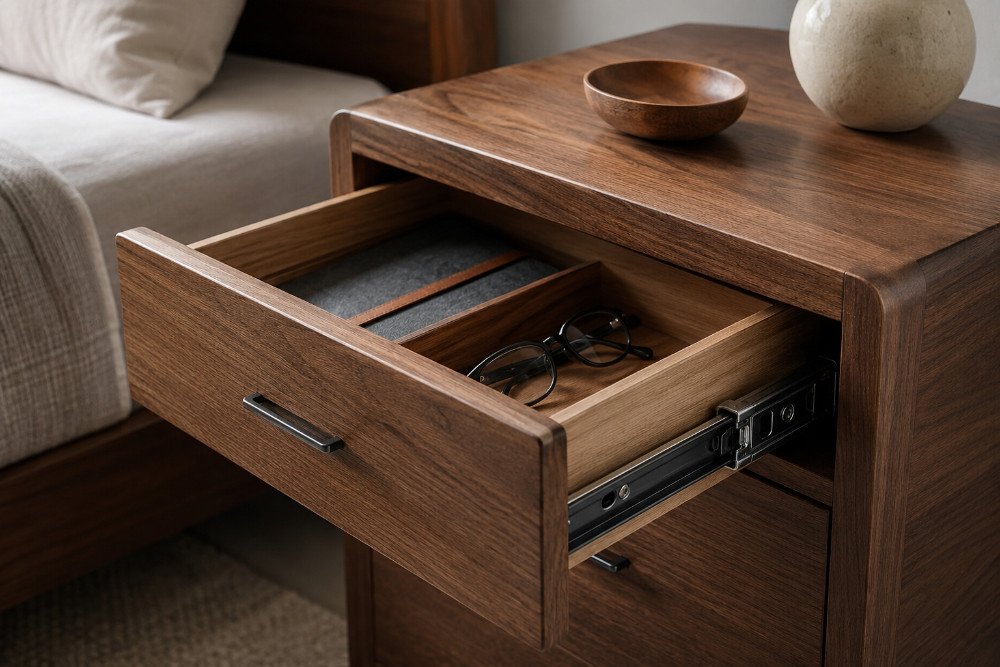
Accent materials should support the anchor material, not compete with it. Rattan can add texture, fabric can add softness, leather can add a premium touch, and metal hardware can add a more refined look. A simple question helps: what job does this material do?
Build a Material Hierarchy Across the Bedroom Collection
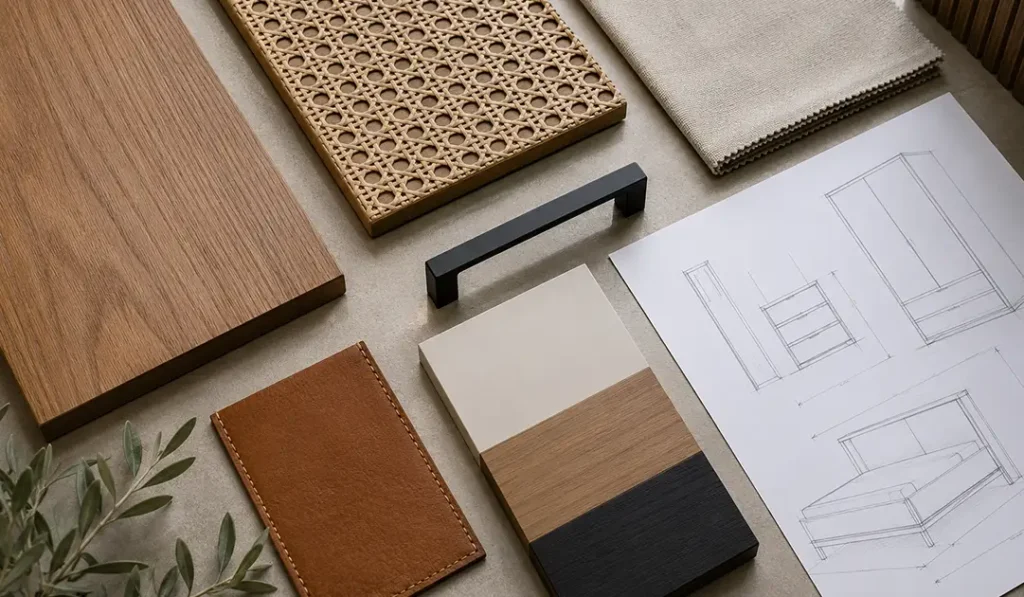
A strong material mix needs hierarchy. Without it, every material tries to become the focus.
For most retail bedroom collections, the structure can be simple: one anchor material, one accent material, one soft material if needed, and one detail direction. The anchor material builds the base, the accent material adds identity, the soft material adds comfort, and the detail material connects smaller points across the range.
For example, a sungkai bedroom line can use sungkai as the main frame material, rattan on the headboard and drawer fronts, fabric on a bench cushion, and black metal handles across storage pieces. When each material has a specific job, the collection feels more controlled and the manufacturer can estimate material usage, production steps, finishing needs, and packing details more accurately.
How to Keep Different Bedroom Pieces Visually Connected
A bedroom collection does not need every item to look identical. The bed, nightstand, dresser, wardrobe, mirror, and bench can have different shapes, but they should still feel like one family.
The easiest way to create that connection is to repeat selected elements across the range. Buyers can repeat finish family, accent material, rattan pattern, handle style, leg profile, frame thickness, or edge detail. The point is not to make every SKU look the same. The point is to give customers enough visual cues so they understand that the pieces belong to one cohesive bedroom furniture collection.
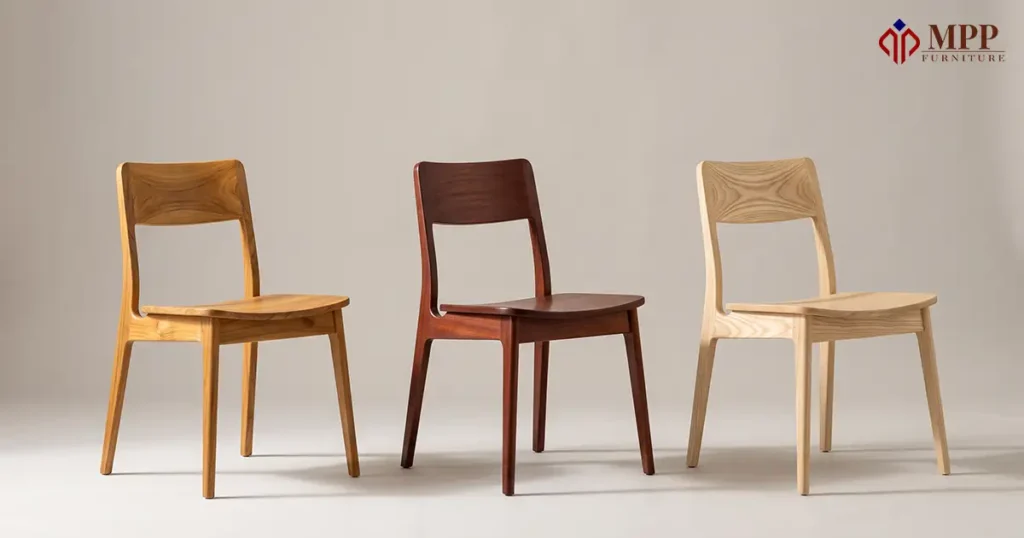
Finish direction is one of the strongest ways to connect mixed bedroom furniture. A light natural bed should not suddenly be paired with a red-brown dresser unless that contrast is part of the collection plan. In a showroom or catalog, even small tone differences can make the pieces look like they came from different suppliers. This matters because research on wooden furniture color and interior evaluation shows that furniture color and material harmony can affect how people judge an interior space.
In MPP Furniture’s production process, finish references are treated as production guides, not only color samples. Before sample approval, buyers should confirm finish tone, sheen level, surface feel, and acceptable color range, so the factory has a clear reference for bulk production and future repeat orders.
One repeated detail can also connect different bedroom pieces without making the set too uniform. This detail can be the same handle shape, rattan pattern, leg profile, rounded edge, frame thickness, or logo plate placement. For private label buyers, this detail also helps strengthen brand identity while keeping product construction practical.
Practical Material Mix Examples for Retail Bedroom Collections
Different markets need different material mixes. The goal is to build a bedroom furniture collection that fits your customer, price point, and production plan.
Sungkai wood + rattan works well for natural, coastal, Japandi, tropical, and boutique hotel collections. Sungkai gives structure, while rattan adds texture and a handcrafted look. In MPP Furniture’s production experience, this combination works well across bed frames, nightstands, wardrobes, dressers, and benches without making the collection feel too heavy.
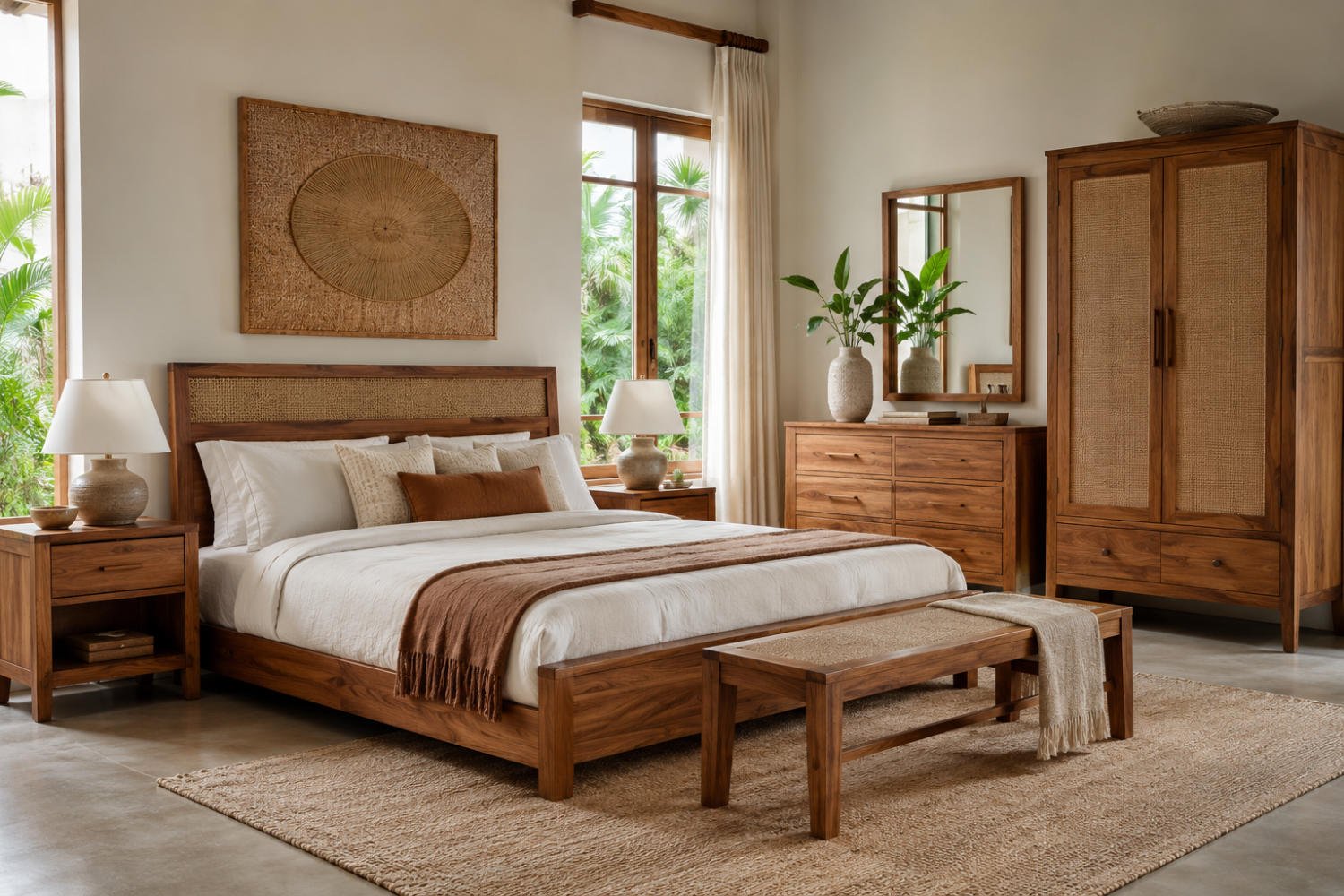
Sungkai wood + fabric works well when the buyer wants softness. This is useful for upholstered headboards, bedroom benches, and hospitality rooms where comfort matters. Buyers should also consider fabric texture, cleaning needs, foam thickness, stitching direction, and how the fabric pairs with the wood finish.
Sungkai wood + leather can support a more refined bedroom collection when used with control. It works well for headboard panels, drawer pulls, bench seats, or small accent areas. Too much leather can raise cost and make production harder to repeat.
Wood finish + controlled hardware can connect a bedroom collection at lower design risk. A shared handle style, drawer pull, hinge finish, or metal accent can make several pieces feel related. This is useful when buyers want a collection that feels different but still needs stable production.
What Buyers Should Check Before Approving a Mix-and-Match Bedroom Collection
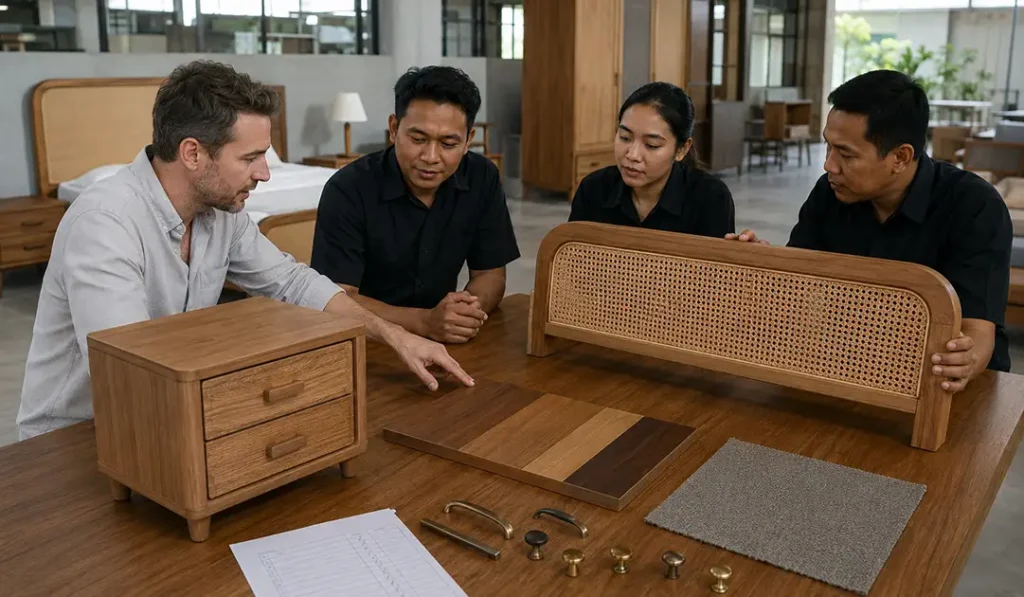
Before approving a sample, buyers should check whether the collection is ready for production, not only whether the sample looks attractive.
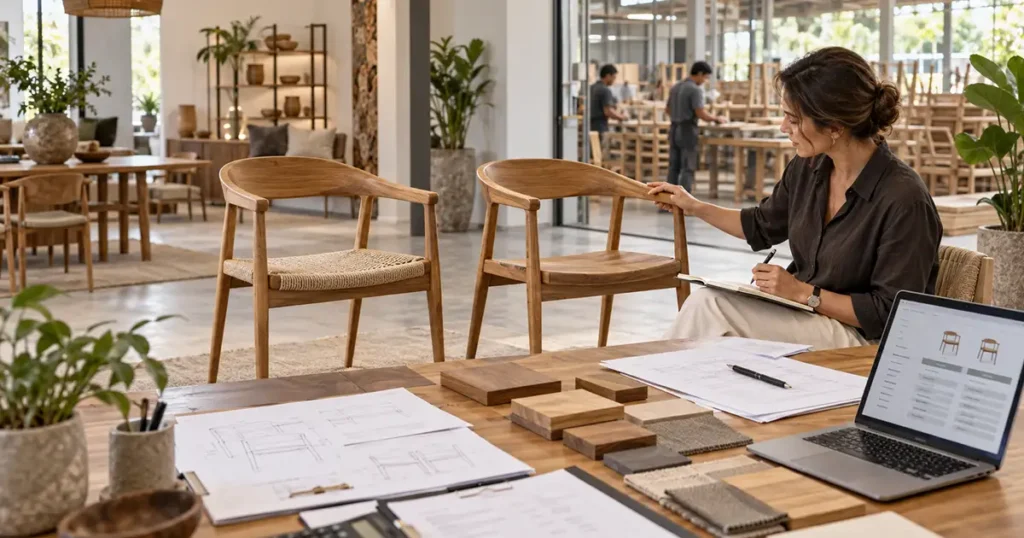
From MPP Furniture’s experience, sample approval should be treated as a production checkpoint, not only a design review. For mixed bedroom collections, this means checking whether material, finish, hardware, dimensions, and packaging details can be repeated consistently in bulk production.
Review these points before moving forward:
- Is the anchor material confirmed?
- Are accent materials limited and clear?
- Is the finish family approved with a physical sample?
- Are rattan pattern, hardware, and placement consistent?
- Do dimensions fit the target market and mattress size?
- Can the same material and finish be repeated in future orders?
When Mix-and-Match Becomes Too Complex for Production
Mix-and-match bedroom furniture becomes difficult to produce when too many details change at the same time. Different wood tones, rattan patterns, hardware styles, fabric options, or custom dimensions can slow sampling, increase production costs, and make repeat orders harder to maintain.
From MPP Furniture’s production experience, collections are easier to scale when the main construction stays consistent while customization focuses on visible details, such as finishes, hardware, rattan panels, or headboard designs.
This approach gives retailers the flexibility to create distinctive bedroom collections while keeping production efficient and quality consistent across future orders.
Final Thoughts: Mix-and-Match Bedroom Furniture Works Best When Materials Are Controlled
Mix and match bedroom furniture can help retailers build a bedroom collection that feels more flexible, exclusive, and easier to position than a standard matching set. But for B2B production, the mix needs control.
The best starting point is simple: choose one anchor material, define each accent material, repeat the same finish family, and carry one signature detail across the collection. This helps the bed, nightstand, dresser, wardrobe, mirror, and bench feel connected without making every piece identical.
For retail buyers, this means better showroom consistency, cleaner catalog presentation, smoother sample approval, and easier repeat production. It also helps the manufacturer plan material use, finishing, hardware, packaging, and QC checks with fewer unclear details.
MPP Furniture supports retailers, importers, hospitality buyers, and project-based businesses through free consultation, product development, custom bedroom furniture, OEM, private label production, in-house manufacturing, and quality control at each production stage.
Plan a Production-Ready Bedroom Collection with MPP Furniture
MPP Furniture can help review your material direction, finish family, accent details, and production needs before sampling starts. As an Indonesian furniture manufacturer, we support custom bedroom furniture, OEM, private label production, and repeat-order planning for B2B buyers.
FAQs About Mix and Match Bedroom Furniture
1. Can retailers mix and match bedroom furniture in one collection?
Yes. Retailers can mix and match bedroom furniture in one collection when the materials, finishes, proportions, and details follow one clear direction.
2. How do you make mix-and-match bedroom furniture look cohesive?
Start with one anchor material, repeat the same finish family, and carry one signature detail across the collection.
3. What materials work well for mix-and-match bedroom furniture?
Wood works well with rattan, fabric, leather, and controlled hardware. For example, sungkai wood with rattan can create a natural bedroom line, while sungkai wood with fabric or leather can support a softer or more premium direction.
4. Should bedroom furniture match exactly?
No. Bedroom furniture does not need to match exactly. A coordinated bedroom furniture collection can feel more exclusive than a full matching set when the pieces share material logic, finish family, proportion, or repeated detail.
5. What should buyers check before approving a mixed bedroom collection?
Buyers should check the anchor material, accent material, finish sample, rattan pattern, hardware style, dimensions, packaging needs, and repeat order feasibility before bulk production.

A versatile content creator with a strong foundation in product photography and videography, and a comprehensive brand strategy. Capable of creating engaging content to connect consumers and producers, web analytics, and engaging visual content to drive interest and growth for a product or brand.
0 Comments